


 3
3 2
2


Raw Lessons --- The Violence They Breed, The Silence They Choose
I must admit, I was not at all prepared for what Teach You a Lesson turned out to be. I wasn't entirely sure what to expect, but it certainly wasn't the visceral, stomach-churning piece of television that unfolded. The opening of this drama doesn't gently ease you into its world; it deliberately traps you in a front-row seat to absolute, predatory carnage. Watching two bullied students systematically stripped of their basic humanity by a peer who believed terrorism was a birthright simply because of his father’s immense power was agonizing. But what truly made my blood boil wasn’t just the explicit physical violence; it was the stifling, heavy realization that the entire adult infrastructure around them had consciously chosen to look away. The writer, director, and phenomenal cast deliver something far more terrifying than the original webtoon: a grounded, furious psychological dissection of an education system that has completely decayed from the inside out.
The drama is undeniably a tough watch, showcasing horrific incidents that intensify from one episode to the next. Yet before the first episode even concluded, I fully understood the desperate need for an organization like the Educational Rights Protection Bureau and welcomed it completely. And the fact that there were adults out there who worked so hard, using every means possible to ban it or shut it down, speaks volumes to the priorities of politicians and others who don't care to right wrongs that do not immediately affect them. That a rogue agency had to be created to operate on a razor’s edge, not for cheap revenge or shock factor, but for the sake of saving humanity, and not just for the ones being bullied but the bullies as well- is ingenious.
What I truly admire about the series is how deliberately it builds its case to prove that juvenile delinquency is no longer merely a matter of playground scuffles; it has evolved into an organized, predatory industry. And while protecting juveniles is admirable, when they become the ones the world needs protecting from, and the law does nothing, the law itself becomes the injustice—not just to the victims, but to the delinquents themselves who are crying out for intervention through their behavior. If they are going to commit adult crimes, then they need to be punished accordingly. What I loved most, however, is how unapologetically the drama demonstrates that to break a cycle of abuse, you must strike hard at the root cause. I am by no means a proponent of violence, but the narrative makes an uncompromising argument: in extreme situations where the system completely abandons you, force becomes the only definitive answer. And we see this time and time again throughout the show. Furthermore, the fact that the ERPB isn't out to punish, but rather to reframe the entire approach to juvenile reform by holding parents and other adults accountable as well, is what's truly intriguing. They aren't just there to hand out corporal or physical punishment to the kids; they are dismantling the safety nets that allowed these kids to become monsters in the first place, forcing the instigators to finally face the real-world consequences of their actions. Watching how effectively they cut through the bureaucratic red tape and systemic enablement makes me genuinely wish the ERPB were a real agency.
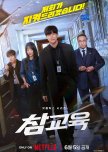
The true triumph of Teach You a Lesson lies in its casting. The actors completely reject the flashy, stylized, and romanticized tropes of typical vigilante K-dramas. Instead, they ground their characters with a heavy, exhausting moral weight. Na Hwa-jin, played by Kim Mu-yeol, delivers a masterful, deeply charismatic performance that carries the show's entire emotional arc. There is a constant, suffocating tension in his performance; you can feel the profound grief of a man whose own fiancée was murdered by a juvenile offender two years prior. He acts with a terrifyingly controlled authority, not as a vigilante who enjoys the chaos, but as an exhausted professional executing a grim, dirty necessity because the laws are shattered. He beautifully balances intimidating physical force with an intensely protective, almost desperate instinct for the victims.
Lee Sung-min wows again. As the Minister of Education and mastermind behind the ERPB, he brings his trademark gravitas to the screen, perfectly embodying the institutional despair that gave rise to this rogue agency. Lee doesn't play Gang-seok as a slick, power-hungry politician; instead, he portrays a broken, grieving father whose daughter was stolen by a system that protects abusers over victims. His performance anchors the show’s ethical stakes, making us fully understand why an adult in a position of authority would choose to burn down existing structures just to save a child.
Jin Ki-joo is phenomenal as the former Special Forces sergeant turned ERPB inspector. She completely matches Kim Mu-yeol’s burning intensity while injecting a distinct, fierce physicality into her scenes. Han-rim is crucial because she strips away the narrative's typical lone wolf fantasy. She plays Han-rim with a sharp, no-nonsense edge that highlights her tactical competence while anchoring the team's moral compass. Meanwhile, Pyo Ji-hoon (P.O) provides a brilliant, necessary contrast to the raw trauma surrounding the team, offering a grounded stability that I thoroughly enjoyed.
The most disturbing question the drama forces me to confront is: How do teenagers become this brutal, and why do adults let it happen? There are many, many things I loved about this drama. To begin with, I love how fiercely the drama critiques the legal structures governing minors. The bullies in this show are highly intelligent; they don't just break the law, they weaponize it. They know exactly how old they are, and they treat youth protection legislation as an absolute shield against accountability. When a teenager realizes that their actions carry zero legal or societal consequences, the psychological barrier against inflicting maximum pain completely dissolves. Insulated from punishment, their sadism evolves into a sport. The series is arguably far harsher on the adults than it is on the children, and rightfully so. It frames adult apathy as the primary fuel that allows bullying to thrive. I liked that the show refuses to paint educators as one-dimensional villains. Instead, it shows how terrified and exhausted they truly are. Trapped between overreaching youth legislation and the constant fear of losing their livelihoods to predatory parents, looking away becomes a survival mechanism. If they pretend like they don't see it, then they don't have to engage with a system that will inevitably scapegoat them. It's brutal.
But more than anything, I loved how loudly the narrative screamed that bullies do not exist in a vacuum. It fiercely attacks the toxic culture of hyper-protective, elite parenting. Wealthy, influential parents view their children not as human beings who need moral guidance, but as extensions of their own social status. When a child commits a horrific act, the parent’s immediate instinct is to buy, threaten, or politically manipulate the problem away. They treat severe violence as a minor indiscretion, completely validating and reinforcing their child's predatory behavior. What’s even worse is how these parents completely dehumanize those who are being bullied. They act as though these victims aren’t precious to their own families, as though they aren’t deeply loved and deserving of the exact same respect they demand for their own despicable children. Nothing infuriates me more than these grotesque acts of belittlement.
There is so much more that can and should be written about this drama, but I will summarize my thoughts by saying Teach You a Lesson is a deeply uncomfortable, heavy-hitting reality check. While the concept of a rogue government task force using physical enforcement is an unrealistic, highly controversial quick fix that raises massive ethical dilemmas, the emotional and systemic truth underneath it hits like a sledgehammer. It exposes the terrifying vacuum left behind when the law, the schools, and the parents completely abandon their moral responsibilities. It is a tough, violent, and agonizing watch, but it serves as a glaring, uncompromising mirror to a society that routinely ignores the screams of its children until the damage is entirely irreversible.
The drama is undeniably a tough watch, showcasing horrific incidents that intensify from one episode to the next. Yet before the first episode even concluded, I fully understood the desperate need for an organization like the Educational Rights Protection Bureau and welcomed it completely. And the fact that there were adults out there who worked so hard, using every means possible to ban it or shut it down, speaks volumes to the priorities of politicians and others who don't care to right wrongs that do not immediately affect them. That a rogue agency had to be created to operate on a razor’s edge, not for cheap revenge or shock factor, but for the sake of saving humanity, and not just for the ones being bullied but the bullies as well- is ingenious.
What I truly admire about the series is how deliberately it builds its case to prove that juvenile delinquency is no longer merely a matter of playground scuffles; it has evolved into an organized, predatory industry. And while protecting juveniles is admirable, when they become the ones the world needs protecting from, and the law does nothing, the law itself becomes the injustice—not just to the victims, but to the delinquents themselves who are crying out for intervention through their behavior. If they are going to commit adult crimes, then they need to be punished accordingly. What I loved most, however, is how unapologetically the drama demonstrates that to break a cycle of abuse, you must strike hard at the root cause. I am by no means a proponent of violence, but the narrative makes an uncompromising argument: in extreme situations where the system completely abandons you, force becomes the only definitive answer. And we see this time and time again throughout the show. Furthermore, the fact that the ERPB isn't out to punish, but rather to reframe the entire approach to juvenile reform by holding parents and other adults accountable as well, is what's truly intriguing. They aren't just there to hand out corporal or physical punishment to the kids; they are dismantling the safety nets that allowed these kids to become monsters in the first place, forcing the instigators to finally face the real-world consequences of their actions. Watching how effectively they cut through the bureaucratic red tape and systemic enablement makes me genuinely wish the ERPB were a real agency.
The true triumph of Teach You a Lesson lies in its casting. The actors completely reject the flashy, stylized, and romanticized tropes of typical vigilante K-dramas. Instead, they ground their characters with a heavy, exhausting moral weight. Na Hwa-jin, played by Kim Mu-yeol, delivers a masterful, deeply charismatic performance that carries the show's entire emotional arc. There is a constant, suffocating tension in his performance; you can feel the profound grief of a man whose own fiancée was murdered by a juvenile offender two years prior. He acts with a terrifyingly controlled authority, not as a vigilante who enjoys the chaos, but as an exhausted professional executing a grim, dirty necessity because the laws are shattered. He beautifully balances intimidating physical force with an intensely protective, almost desperate instinct for the victims.
Lee Sung-min wows again. As the Minister of Education and mastermind behind the ERPB, he brings his trademark gravitas to the screen, perfectly embodying the institutional despair that gave rise to this rogue agency. Lee doesn't play Gang-seok as a slick, power-hungry politician; instead, he portrays a broken, grieving father whose daughter was stolen by a system that protects abusers over victims. His performance anchors the show’s ethical stakes, making us fully understand why an adult in a position of authority would choose to burn down existing structures just to save a child.
Jin Ki-joo is phenomenal as the former Special Forces sergeant turned ERPB inspector. She completely matches Kim Mu-yeol’s burning intensity while injecting a distinct, fierce physicality into her scenes. Han-rim is crucial because she strips away the narrative's typical lone wolf fantasy. She plays Han-rim with a sharp, no-nonsense edge that highlights her tactical competence while anchoring the team's moral compass. Meanwhile, Pyo Ji-hoon (P.O) provides a brilliant, necessary contrast to the raw trauma surrounding the team, offering a grounded stability that I thoroughly enjoyed.
The most disturbing question the drama forces me to confront is: How do teenagers become this brutal, and why do adults let it happen? There are many, many things I loved about this drama. To begin with, I love how fiercely the drama critiques the legal structures governing minors. The bullies in this show are highly intelligent; they don't just break the law, they weaponize it. They know exactly how old they are, and they treat youth protection legislation as an absolute shield against accountability. When a teenager realizes that their actions carry zero legal or societal consequences, the psychological barrier against inflicting maximum pain completely dissolves. Insulated from punishment, their sadism evolves into a sport. The series is arguably far harsher on the adults than it is on the children, and rightfully so. It frames adult apathy as the primary fuel that allows bullying to thrive. I liked that the show refuses to paint educators as one-dimensional villains. Instead, it shows how terrified and exhausted they truly are. Trapped between overreaching youth legislation and the constant fear of losing their livelihoods to predatory parents, looking away becomes a survival mechanism. If they pretend like they don't see it, then they don't have to engage with a system that will inevitably scapegoat them. It's brutal.
But more than anything, I loved how loudly the narrative screamed that bullies do not exist in a vacuum. It fiercely attacks the toxic culture of hyper-protective, elite parenting. Wealthy, influential parents view their children not as human beings who need moral guidance, but as extensions of their own social status. When a child commits a horrific act, the parent’s immediate instinct is to buy, threaten, or politically manipulate the problem away. They treat severe violence as a minor indiscretion, completely validating and reinforcing their child's predatory behavior. What’s even worse is how these parents completely dehumanize those who are being bullied. They act as though these victims aren’t precious to their own families, as though they aren’t deeply loved and deserving of the exact same respect they demand for their own despicable children. Nothing infuriates me more than these grotesque acts of belittlement.
There is so much more that can and should be written about this drama, but I will summarize my thoughts by saying Teach You a Lesson is a deeply uncomfortable, heavy-hitting reality check. While the concept of a rogue government task force using physical enforcement is an unrealistic, highly controversial quick fix that raises massive ethical dilemmas, the emotional and systemic truth underneath it hits like a sledgehammer. It exposes the terrifying vacuum left behind when the law, the schools, and the parents completely abandon their moral responsibilities. It is a tough, violent, and agonizing watch, but it serves as a glaring, uncompromising mirror to a society that routinely ignores the screams of its children until the damage is entirely irreversible.
Was this review helpful to you?


