

 3
3 2
2


This review may contain spoilers
Here We Are Again -- Impressed!!
My much-anticipated Weak Hero Class 2 is finally here. As we all know, following the traumatic events of the first season, Yeon Si-eun transfers to Eunjang High School, hoping for a fresh start. However, he soon faces a new wave of violence and more formidable enemies. Haunted by his past inability to protect his friends, Si-eun is determined to confront the escalating dangers head-on while navigating new friendships. Together, they face a ruthless gang known as the Alliance. This new season delves deeper into Si-eun's emotional scars and his determination to protect his new friends, adding significant emotional weight to the action. Every fight feels personal, raising the stakes. Similar to the first, I kept thinking, how are these high school kids; where are their teachers, parents, families -- how do the adults around them not know what their minor children's are involved in; just overwhelming but I understand we as viewers were given the view into these students lives from their prespective. If I was irritated with anyone in this drama, it was Si-eun's mom. She seemed to be clueless about her son's emotional and mental state, or maybe she was desperate. Regardless, I found myself wondering what had happened to his dad.The introduction of Park Hu-min, Seo Jun-tae, and Go Hyeon-tak, with their distinct personalities and growing bonds with Si-eun, makes a strong impression. I was drawn to Park Hu-min's unique and even comedic approach to fighting, which brings a new dynamic to the series. And I must say that Park Ji-hoon's portrayal of the evolving Yeon Si-eun is award-worthy, showcasing his character's intelligence, emotional depth, and strategic acumen. This second season stays true to its predecessor, with even more intense action. It delivers visceral and impactful fight sequences that leave viewers feeling every blow.
I know this is an adaptation, but I welcome the changes from the Webtoon. The drama takes some creative liberties as an adaptation, particularly with character backstories. I like that this season strongly emphasizes Si-eun forming new bonds, especially since his first season was a nightmare, especially with O Beom Seok's betrayal. I like that it is more grounded, restrained, and thoughtfully shaped by his past, in a way. I felt this season was more methodical. One can see that he had matured, and that is a testament to the writing and, of course, the acting.
This second season is a worthy successor to the first, delivering intense action and exploring deeper emotional themes, albeit a bit more subdued than the first, which I believe is intentional. The new cast members are well-written and acted, but Park Ji-hoon remains the standout, consistently delivering a compelling performance. I have seen a few reviews concerning the changes from Webtoon this season and how it affected the overall impact, but I disagree. Despite the changes, the drama remains an intense action drama, featuring impactful storytelling and compelling character dynamics. This season, just like the last, took me on another gripping and emotionally charged journey through the brutal world of high school violence, highlighting the power of friendship and resilience in the face of overwhelming odds.
Was this review helpful to you?
This review may contain spoilers
Revenge is indeed best served very cold
The Glory; what a drama. I am not much of a Song Hye Kyo fan. But was this drama well written or what; I mean, not a boring moment. The first episode was rough, and I have to admit I skipped through a lot of torture and violence. It was just overt and too much to reconcile or bear. That, the world harbors kids (I mean they were children really) who felt so entitled and thought the world revolved around them, that it gave them the right to inflict such animosity and hate on another child just because they are different, or was is it "just because" they felt like it was uncalled for, inexcusable and shame on everyone that stood by and watched and did nothing, they as good as inflicted the violence and pain but more than anything shame on the teachers, the parents, the caretakers, the friends or so-called friends, well there was no love lost between any of them so I can't even call them friends who thought it entertaining and okay to humiliate, demean, deface, another human being.By the time we got to Moon Dong Eun as an adult, I was fully invested in her journey. Everything from how she lived her life in narration to Park Yeon Jin (stellar acting) was so captivating. I found myself hanging on to every word she wrote, even the way she spoke/wrote her words. That first encounter after 17 years at the gym of their old school was so fulfilling, especially when she clapped for Yeon Jin as she walked up the stage for her award. But the best part was Yeon Jin thinking the past was fully forgotten and dead in the past. That she could not even recall her monstrous acts made her an even more awful human being than she already was -- that she didn't realize the decisions and choices she made would follow her to her grave is very telling of her arrogance and malignant miserliness. Her audacity to think MDE deserved everything that happened to her, not only that she in some way is to blame, was exhausting to watch. That her young child, not even 5 or 6 years of age, instinctively knew how awful burning someone or beating them or torturing them was and she an adult never even considered it was telling for me. It was the moment I realized Yeon Jin deserves everything coming her way -- everyone involved or who stood idly is also deserving.
It was not all gloom and darkness with The Glory; many funny moments peppered in throughout the episodes. I especially enjoyed the, at first, very professional relationship between Kang Hyun Nam and MDE, and even more so as they started to warm up. Yeom Hye Ran did a great job making me feel the pull/push relationship and the slow drawing in of MDE, and even the love and admiration between the two. And, of course, Lee Do Hyun was consistently excellent in how he personified Joo Yeo Jung; how he grew to accept and live with his painful past, despite it being part of him daily. His patience and acceptance of MDE for what she was, not trying to make her into what he thought she should be -- never pushing or probing, just hoping. I loved how he didn't judge or question when she told him her story, but readily accepted his role as her head swordsman.
I would be remiss if I didn't mention how amazing Jung Ji So was as a teenage Moon Dong Eun. She is such a great talent; I am in awe of her. Can I say Jung Sung II was brilliant in his role as a have-it-all rich husband, father, and man -- he was admirable - not too entitled or arrogant, just a man used to getting his way, not by force, but because it was always available. Unlike the inherently entitled, self-absorbed, and cruel Jeon Jae Joon (Park Sung Hoon, who was brilliant in his role), who obviously lived his life believing the world owed him everything, but then growing without love or self-worth, can do that to a kid.
What's intriguing about The Glory is that it takes its time with everything. Nothing is rushed, not even the conversations. So it went without saying that the revenge plot would take its time, almost painfully so. But I think that was the point; for the culprits to know, sense, and feel the revenge coming, but not know how, when, where, and through whom it would come.
Watching the Glory was like peeling back the layers of a big fat onion; the more you reveal, the twisted it gets. Kudos to the writer for such brilliant scriptwriting, the director, and the actors for gripping the writing alive. I look forward to the second half and the actual revenge plots unfolding.
Was this review helpful to you?
Love is a Learned Behavior
When I first started watching this drama, I wondered why the title "Mine," pretty soon it became clear why; despite all its riches, nothing this family owns is truly their own, not even themselves. More than Mine's premise, what drew me to it was an article I read where the writer Baek Mi Kyung explained why she cast the two female leads in their respective roles. She said that “As a writer, the fact that I’m able to work with the unfailingly talented actresses Lee Bo Young and Kim Seo Hyung is an honor in and of itself." “Because they’re actresses who are powerful in terms of both their acting and their auras, I think the script was even more empowered after they were cast. Also, they’re so well-suited to their roles that they leave nothing to be desired in terms of matching up with their characters. I think of [their casting] as a blessing.” True to the last word.Many elements made this show, everything from the high-end production design, the set, the beautiful outfits and styles, and even the OST, sets the tempo and brings character to the drama, Kim Seo Hyung, though elevates Mine with her performance. She thoroughly embodies the layered character of Seo Hyun so brilliantly that without her, Mine wouldn't be as good as it has become. And the same goes for Ok Ja Yeon in the role of Kang Ja Kyung / Lee Hye Jin, who was thrilling to watch in The Uncanny Counter but even more so in this drama. I loved how this show depicted women - fearless, kind, compassionate, capable of giving and receiving love, but most importantly, admitting to one's mistakes. As they say, never underestimate the power of a kind woman; kindness is a choice that comes from incredible strength. There is nothing more thrilling than strong wounded women steadfastly facing their demons and winning, even if it's just the beginning of the fight.
Mine was a great drama to the end; kudos to the screenwriter, director, and actors for bringing this fantastic story to life. However, as sad as I was to see it come to an end as appreciative of the important message it left behind in that one can ever truly own anything if they don't own themselves first, and to love others, one must first love themself. And that just as love is a learned behavior, if one never learns how to receive it, they will never know how to give it back.
Mine could've been a multitude of stores, but I liked that rather than be a story about sexual minorities, it was a story about love and finding one's true self in themself. And what elevated it to the status of brilliant was the way the drama portrayed Jung Seo Hyun and Seo Hee Soo’s relationship not as sisters-in-law fueled by jealousy or hierarchy but as sisters who find themselves stuck in a world filled with hatred but learn through it all to care and protect each other to the end deeply. Brilliant drama! I enjoyed and relished all the actors who did a great job making me believe them each in their own way but Kim Seo Hyung the most.
Was this review helpful to you?
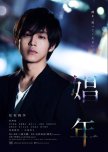
A frank and direct movie
A frank and very direct movie that's most probably not for everyone, but if you like your movies with a little edge, then you might have found what you are looking for in Call Boy. A story about a young man who ventures into the world of prostitution to find out who he is and what he stands for. I like that movie for how it presented sex, in particular paid sex. I think for me, it wasn't about the graphic sex but more the actor's portrayal of it and what leads him into the world, to begin with, and how he comes out of it. It doesn't vilify prostitution but rather uses it as a stepping stone or the lead does as an emotional discovery and transformation from who he was to what he became by the end of the movie. He goes through experiences that he may not have expected with each client he meets and manages to find his place in life at the end of the journey. Learning life lessons the hard way.Was this review helpful to you?
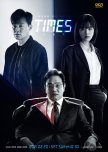
Present vs. Past -- good first outing
I like Times' concept of a reporter with a president for a father. For as long as I can remember, people have said politics has no relation to morals. Still, I think Seo Jung In's father ( Kim Yeong Cheol) may have been the last honest politician. But that's not all that Times' about; it's more about the desperate need of a daughter played by Lee Joo Young to save her father's life, which leads to the uncovering truths that shake her and the country. In that sense, I completely understand why, when presented with the opportunity to turn back time, save her father, and reveal the truth, she jumped at it regardless of time and space. Who among us given that opportunity wouldn't take it.There's always a reverence to watching time-crossing/travel dramas; if not done right, they can be downright confusing, and most of such dramas except for maybe Signal and Karios as time-crossers and Train as time-traveling have fallen in that pit. It's too early to pass judgment on Times as of yet, but I will say I was a bit confused halfway through the first episode as it wasn't clear to me whether the female lead was suddenly transported to the future or if the first half was a flashback from the past. That said, I liked Times' first outing, and I am interested in seeing how Lee Seo Jin plays into things but more so how the show will work the time-crossing element compared to the dramas I noted.
Was this review helpful to you?
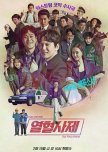
Kim Nam Gil should be enough to make one want to watch anything he's in -- Fiery indeed!
The Fiery Priest is everything from action to comedy to suspense and thrills. Nothing about this drama is wrong, from the acting (Kim Nam Gil and all other actors) to the writing to the directing and the fight scenes just fantastic. I've been following Kim Nam Gil for quite a while now. Not only is he a talented actor but a great person. I've enjoyed him starting from his "When Spring Comes" days to date and loved everything about him as a catholic priest with a fiery temper and a twist. To say that he was perfect for this role and the drama is an understatement. His acting is on point, be it in the comedic moments or the sad ones. Finding out he and most of his teammates filmed all their fighting scenes themselves made me appreciate the drama even more but Kim Nam Gil even more. He made me swoon more than I already do, something I didn't think possible. He more than deserved the award he received as best actor for the drama.To that, credit must be given where due. The storyline, script, character development, and backstories were so well done. The comedic moments were so good I couldn't stop laughing, and I especially loved all the church scenes and characters with Father Kim leading the fray to affect the change he wanted not just for his district but the nation. As great as Kim Nam Gil was in his role, he couldn't have done it without his other leads in Kim Sung Kyun, Lee Ha Nui, Go Joon (he melts me every time he is on screen), Geum Sae Rok. And the support he received from Jeon Sung Woo, Ahn Chang Hwan, Baek Ji Won (Sister Sarah) I have to say I couldn't get enough of her and Eum Moon Suk in his role as Jang Ryong, what unique talents they all are-- I was in awe of them.
There's nothing I didn't like about this series; I even loved the OSTs. I was thrilled to know there may be a second season and patiently, or should I say impatiently await its release, either way, I'm beyond psyched for it and Kim Nam Gil for reprising his role as Father Kim.
Was this review helpful to you?
Was this review helpful to you?
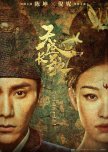
My Obsession with The Rise of the Phoenixes
I was absolutely captivated by The Rise of the Phoenixes on Netflix! This drama quickly became an obsession, drawing me in with its intricate plot, stunning visuals, and compelling character arcs. While the final three or so episodes left me feeling incredibly disappointed with the ending – a common sentiment, it seems – I still wholeheartedly believe it's a series that demands to be seen. What truly sets The Rise of the Phoenixes apart is its incredible atmosphere and meticulous attention to period detail. It’s a grand, complex, and mature narrative, deeply steeped in rich culture and historical flourishes. The creative team behind it is undeniably talented, and the exuberant cast brings every character to life with remarkable depth. Zhao Lixin as Military Academy Headmaster Xin Ziyan, Chen Kun as Prince Ning Yi, and Ni Ni as Feng Zhiwei were all phenomenal, delivering truly memorable performances. And let's not forget the standout, Hai Yitian, who was absolutely brilliant in his portrayal of the Crown Prince, perfectly capturing his weak and conniving nature, making him a character you loved to despise.At its heart, this drama masterfully weaves together the cutthroat world of royal politics, inner strife, raw greed, consuming obsession, unbridled power hunger, and intricate psychological games. Yet, beneath all the strategic maneuvering and betrayals, The Rise of the Phoenixes is fundamentally a heartbreaking story of an unattainable, forbidden love. It's the kind of love that simultaneously shatters you into pieces and then, paradoxically, glues you back together – a truly agonizing yet beautiful depiction of romance. Despite its twisted and complicated narrative, the series is exceptionally well-acted, directed, and intellectually written, making it, by far, one of the most beautiful dramas I've ever seen. I thoroughly enjoyed the nuanced character development across its 60+ episodes, as well as witnessing the lengths Prince Ning Yi went to protect those he loved and, of course, to exact his meticulously planned revenge. These elements made for an exceptionally engaging viewing experience.
While I'm not typically a Chinese drama watcher, especially not the lengthy historical ones, The Rise of the Phoenixes was a fantastic exception. The music was also incredibly immersive, adding another layer of depth and emotion to the viewing experience. Despite my reservations about the ending and the convoluted romance, which I suppose also made it feel incredibly real in its complexity, I highly recommend this drama. Its flaws, perhaps, are part of what makes it such a uniquely compelling and unforgettable journey.
Was this review helpful to you?
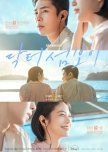
A Slow-Burn Drama That Actually Earns Its Warmth
I was not intending to watch this, but thought why not, and I am glad I did. It is exactly the kind of drama I enjoy, a character-driven drama about a man who has mastered emotional distance. Do Ji-ui is a polished Seoul plastic surgeon who is suddenly assigned to a remote island clinic through the public health doctor program. The premise is familiar, but the execution is gentle and sincere. The drama lets the island slowly dismantle Ji-ui’s defenses instead of forcing a quick transformation.The plot blends humor, medical cases, and a quiet mystery surrounding the island. The real focus is Ji-ui’s internal journey. The ocean terrifies him. The island frustrates him. The villagers disarm him. The clinic nurse, Yook Ha-ri, becomes the person who challenges him to confront the parts of himself he has avoided. The pacing is steady and unhurried. Small moments carry emotional weight. A shared meal, a misdiagnosis, a ferry ride, a conversation at sunset. The mystery elements add to the tension without overshadowing the emotional core of the story.
The Characters
Do Ji-ui is written with such restraint. He is not the typical cold male lead. He is someone who has built his identity around competence and control. The island strips both away. His trauma around water is handled with nuance, and his growth feels earned. I must say Lee Jae-wook delivers a grounded performance as Ji-ui with quiet tension. His posture, his eyes, his pauses all communicate a man who is constantly bracing himself. When he softens, it is subtle. When he breaks, it feels earned.
Yook Ha-ri, on the other hand, is the emotional anchor of the drama. She is warm without being naive. She is competent without being hardened. Her past is revealed slowly, and it reframes her kindness as a deliberate choice. She is not there to heal Ji-ui. She is there to challenge him and to stand beside him. Shin Ye-eun, in this role, brings a natural warmth to Ha-ri. Her performance is understated, which I believe is intentional, and that is why it works so beautifully. She lets emotional beats land without forcing them.
The chemistry between the leads is a slow burn, but it works. It grows through shared silences and small gestures rather than dramatic declarations. It feels adult and sincere.
The Islanders, well, the supporting cast as Islanders, give this drama its texture. They are stubborn, funny, flawed, and deeply human. They have their own conflicts and loyalty. Their presence makes the island feel lived in and believable. They are not props for the leads. They are part of the world that shapes Ji-ui’s transformation.
I think the reason this drama resonates with me is its message: healing is not a single breakthrough. It is a series of small, uncomfortable steps toward connection. I love how the writer, director, and actors shaped the island as a metaphor for the parts of ourselves we avoid. The memories we bury. The fears we rationalize. The relationships we keep at a distance. Ji-ui’s journey is not about becoming a better doctor or a better man. It is about learning to stay. In a place. In a relationship. In his own life. The show also highlights the gap between urban and rural healthcare. It reminds us as viewers that dignity and care should not depend on geography.
What I love about this drama is that it isn't loud and does not need to be. It does not rely on shock twists or exaggerated conflict. It trusts its characters and its emotional honesty. It is the kind of story that lingers because it is sincere. So, if you enjoy character-driven narratives, slow-burn romance, and stories about emotional reclamation, this drama delivers beautifully.
Was this review helpful to you?

This review may contain spoilers
A Mature and often Humorous look at Relationships in Modern Society
Matrimonial Chaos is fantastic in how it delves into the complexities of love, marriage, and divorce, offering a mature and often humorous look at relationships in modern society. The central premise revolves around two married couples whose lives become intertwined through a series of coincidences and past connections. The main couple, Jo Seok-moo and Kang Hwi-roo, are on the brink of divorce. Seok-moo is a meticulous, introverted, and somewhat stubborn man who enjoys his alone time, while Hwi-roo is his exact opposite: easygoing, spontaneous, and a bit messy. Their clashing personalities lead to constant bickering and a deep-seated incompatibility that ultimately pushes them to decide on divorce. Jin Yoo-young and Lee Jang-hyun add another layer to the narrative. Yoo-young is Seok-moo's quiet, intelligent, and reliable first love, now married to the charismatic yet enigmatic Jang-hyun. Jang-hyun, despite his charming exterior, is revealed to be a serial philanderer. As Seok-moo and Hwi-roo navigate their separation, they frequently cross paths with Yoo-young and Jang-hyun, leading to unexpected revelations about their own relationships and the true meaning of love and partnership. The drama explores how these four individuals, along with their families and friends, grapple with the messy realities of marriage, the pain of divorce, and the potential for reconciliation or new beginnings.One of Matrimonial Chaos's greatest strengths is its well-developed, flawed, and incredibly relatable characters, brought to life by an outstanding cast.
The characters and the actors:
As a character, Seok-moo is a meticulous, somewhat rigid, and socially awkward individual who often struggles to express his true feelings. He values order and personal space, finding his wife Hwi-roo's free-spirited nature chaotic and frustrating. He constantly complains about their differences, leading him to initiate the divorce. However, beneath his grumpy exterior, he is a deeply thoughtful person who genuinely cares, even if he doesn't show it in conventional ways. His journey is about self-reflection and learning to communicate and appreciate his partner's unique qualities. Cha Tae-hyun delivers a masterclass in portraying Seok-moo, who is initially frustrating but gradually becomes endearing. His comedic timing is excellent, providing much-needed levity to the drama's heavier themes. He skillfully portrays Seok-moo's internal struggles and gradual emotional growth, making his transformation feel authentic and earned. His nuanced performance allows the audience to sympathize with Seok-moo's perspective, even when his actions are difficult to understand.
On the other hand, Hwi-roo is Seok-moo's antithesis – laid-back, optimistic, a bit messy, and highly empathetic. She often appears easygoing but can be surprisingly self-centered and oblivious to Seok-moo's deeper frustrations. Despite her flaws, she possesses a strong sense of self and an unwavering spirit. She initially resists divorce, clinging to the idea of their marriage, but eventually embarks on her own journey of self-discovery and independence. Bae Doona is phenomenal as Kang Hwi-roo. Her portrayal is natural and captivating, effortlessly shifting between comedic moments and scenes of profound emotional vulnerability. She permeates Hwi-roo with a quiet strength and a quirky charm that makes her instantly likable. Bae Doona's ability to convey complex emotions with subtle expressions is highlighted, making Hwi-roo's struggles and eventual empowerment deeply resonant. She definitely stands out in the series.
Yoo-young is Seok-moo's first love, an intelligent, composed, and seemingly perfect woman. She appears strong and self-sufficient but carries her own emotional burdens and secrets, particularly regarding her unconventional marriage to Jang-hyun. Her quiet strength often masks a deep vulnerability, and if anyone in this drama baffled me the most, it’s her until she exploded, and it was beautiful. I guess she embodied the saying courage is knowing it might hurt and doing it anyway. Stupidity is the same. I must say that Lee El, as Yoo-young, brings an elegant and mysterious aura to Jin Yoo-young. She masterfully portrays the character's internal conflict and quiet suffering, making her a complex and sympathetic figure despite her reserved nature. Her chemistry with both Cha Tae-hyun and Son Suk-ku is palpable, adding to the intricate web of relationships.
Jang-hyun is outwardly charming, charismatic, and seemingly popular with women. However, he is deeply flawed, exhibiting tendencies of manipulation and infidelity. He struggles with loneliness and an inability to truly connect with others, leading him to seek validation through superficial relationships. His character starkly contrasts with Seok-moo and forces the other characters to confront uncomfortable truths about trust and commitment. But the way Son Suk-ku delivers him is not just compelling, it's rewarding to watch. He perfectly captures Jang-hyun's deceptive charm and underlying brokenness. He makes a surprisingly nuanced character who could easily be detestable, allowing viewers to understand (though not necessarily condone) his motivations. His portrayal of Jang-hyun's internal struggles and his eventual, albeit slow, process of self-reckoning is quite strong.
Matrimonial Chaos is a thoughtfully written, beautifully acted drama that offers a refreshing take on romantic relationships. Instead of focusing solely on the "happily ever after," it delves into the often messy and complicated realities of marriage and divorce, exploring why people stay together and fall apart. Its strength is its realistic portrayal of relationships. It avoids typical K-drama tropes and delivers a remarkably authentic depiction of married life, including its mundane squabbles, unspoken resentments, and moments of quiet affection. It highlights the profound differences in how men and women often perceive love, communication, and family. The script is witty, insightful, and often poignant. The dialogue is sharp, and the monologues, particularly Seok-moo's narrations, provide deep philosophical reflections on human connection. The story is well-paced, slowly unraveling the characters' complexities. It has strong character development, and all four main characters grow significantly throughout the series. They are flawed and make mistakes, but learn from their experiences and evolve into believable ways. Superb Acting - the entire main cast delivers exceptional performances, making their characters feel like real people. Cha Tae-hyun and Bae Doona, particularly, showcase their immense talent and incredible chemistry. And the best part is the balance of comedy and drama. The show expertly weaves humor into its serious themes, preventing it from becoming overly melodramatic. The comedic moments are genuinely funny and organic to the characters and situations.
If there is one weakness in this drama, and if I can even call it that, is that while it explores complex relationships and the challenges of marriage, it does not directly address homosexual relationships. It does focus on a heterosexual couple's struggles with their marriage and their entanglement with another couple, highlighting themes of dissatisfaction, separation, and the complexities of long-term relationships. I wish it had delved more into this aspect, but this does not take away from the fact that Matrimonial Chaos is a hidden gem in the world of K-dramas, especially for those seeking a more mature and realistic exploration of relationships. It's a drama that makes you think, reflect on your own connections, and appreciate the imperfections that make human relationships so fascinating. It's less about grand romantic gestures and more about the quiet intimacy, misunderstandings, and hard work required to maintain a partnership. If you appreciate strong character-driven stories, witty dialogue, and outstanding acting, Matrimonial Chaos is definitely worth watching.
Was this review helpful to you?
This review may contain spoilers
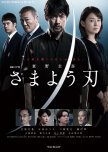
Raw and Heart wrenching as it Should Be
To give an introduction to this, astutely eye-opening six episode drama, Higashino Keigo Samayou Yaiba is adapted from the 2009 Japanese movie, The Hovering Blade (Samayou Yaiba), about a father played by Terao Akira, who, after finding out the identities of his only daughter's murderers, avenges her horrific death, and the police who try to stop him. The 2021 drama version, Takenouchi Yutaka, plays Nagamine Shigeki, an architect who raises his daughter Nagamine Ema (Kawai Yuumi) on his own after his wife's passing. Ema is now a high school student with a part-time job. One day, she is called out to work the late night shift and does not return. The next day, she is found dead.Samayou Yaiba's opening scene of a father and daughter sweetly teasing each other belies the harrowing scenes of three teenage boys parked in front of a metro station, sizing up females as they walked down the street akin to ambush predators laying in wait to trap and capture the perfect prey. One got the feeling that they had definitely done this before, and unfortunately for Nagamine Ema, who was at the wrong place at the right time, to the sudden and overwhelming pouncing attack by Kaiji and Atsuya, while a third boy Mokota (Inoue Mizuki) stood powerlessly watching, paralyzed by his fear of the scene that unfolded in front of him, feeling weak, vulnerable and defeated, while helping subdue Ema. Not to excuse his behavior, but from the little I glimpsed of him, I got the sense that he was being bullied by Atsuya and Kaiji, forced to do all kinds of things he didn't want to, but doing them nonetheless, to survive himself, which he was being bullied.
Words cannot describe how dreadful it was watching the vivid cruelty of humanity as Astuya and Kaiji drugged and carelessly, loudly and brutally rapped Ema, filming their horrific actions to death and discarding her like garbage while her father does everything a parent is supposed to do, helplessly searching, passing out fliers, and even reporting his daughter missing the police to help find her. All the while not knowing the evil, ill fate that had befallen his daughter. My heart ripped for him and the sorrow that awaited him, and especially that moment he had to identify her at the morgue. Shigeki's despair at his daughter's loss was so palatable, and what an amazing job Ichikawa Riku does to have me as the audience feel his loss.
Violent acts are always choices that individuals make. Yet, it is the people who are harmed by violent acts that often receive negative responses from the police, as well as from various social institutions. I know it is the police's job to suspect everyone, even the victim and family members, and Samayou Yaiba does a great job of showcasing the prevalent issue of victim blaming. Even Mokota is prey of it to some extent by his unrelenting abusers. But worse than all that was how the law in Japan viewed juvenile delinquents who committed serious crimes versus how they viewed the victims and their families. Prior to November 2000, the Japanese Juvenile Law affirmed that juveniles under twenty will not have their cases transferred to the Public Prosecutor to impose criminal disposition. Even those who possess criminal capacity must be treated with protective measures in principle, and punished criminally only in some exceptional cases.
Even though the revised Juvenile Law, passed in November 2000, partially modified the system. The revision included three points: partially expanding the range of possible punishments of juveniles; adjusting the fact-finding process in Family Court; and protecting the victims of juvenile crimes. So it is with this in mind that I understood the police's apprehension of discussing the crime, or even eluding to the fact that a minor or minors may have committed the crime without clear cut evidence. But I also empathized with Shigeki completely, for rightfully thinking only those who've experienced loss, the way he did, could fully understand him. The scenes where he explodes at the police station, and later when he discovered his daughters' last moments, had me in goosebumps. Everything Shigeki does after that moment, the rage he unleashes, didn't only seem justifiable, but righteous. What parent confronted with what Shigeki was wouldn't take the same course of action he did, I would imagine none.
A lot unfolds in the first episode of this drama, alone, but the real story doesn't begin until Mokota, riddled with guilt, disguises his voice, calls Shigeki, and names Atsuya and Kaiji as the killers, gives him the address to the apartment where the murder took place, and tells him where to find the key. There, Shigeki discovers his daughter's clothing and pictures, as well as the video detailing Ema's brutal rape and her final moments as she lay dying while Atsuya and Kaiji laughed their heads off. And at that moment, Atsuya returns home to Shigeki's attacks. Unable to contain his anger, he mercilessly stabs Atsuya, who doesn't show any remorse, but only after he tells him where to find Kaiji, and the rest is history as they say.
Same as the movie Higashino Keigo Samayou Yaiba, the drama depicts a father's journey to avenge his daughter's brutal murder by two careless thrill seeking teenage boys, Atsuya (Namura Shin) and Kaiji (Ichikawa Riku), and the varying opinions of the public and media about the validity of his quest for revenge, including the Tokyo policemen investigating his case, and an inn-keeper and his daughter where he takes refuge as he tracks down the main culprit who instigated and actively participated in the murder of his daughter. I personally think that no one can genuinely say or even think what they would do if placed in Shigeki shoes and that is what makes this drama so raw, so real, and so gut-wrenching.
Was this review helpful to you?

And we saw time and time again Nam stay persistent and determined not only to make the Dreams into a winning team but one that valued the person standing next to them as there is no “I” in “team”. I struggled to understand PF's analogy in not taking Nam on as the general manager (if you haven't watched this drama you will understand what I mean once you do) but took it for what it was – a negotiating compromise to a winning situation – a happy home for the Dreams. It was good to see the CEO despite their (his and Nam's) differences finally have the courage to stand up to his uncle and realize he is nothing without his ideals and in the process gained a friend. Love that the episode was light and fun mingled with a bit of sadness but goodbyes are always sad.
I loved this show, the writer, director, cast, Kang Du Ki (my hero) and Nam, always Nam for showing us week in and week out that patience and insistence have a magical effect before which difficulties disappear and obstacles vanish. That’s what dreams are made of, persistence and determination. With that in mind, I resolve to keep my dream of a season 2 alive, the ending surely left it open to interpretation.
Was this review helpful to you?
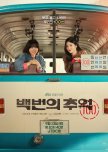
A Hundred Memories
This review covers the pivotal first six episodes of 'A Hundred Memories,' examining its unique setting, the intricate plot progression, character dynamics, and the controversial mid-series twist.Setting the Scene: Nostalgia and Working-Class Youth
'A Hundred Memories' immediately captivates by immersing viewers in 1980s South Korea, specifically focusing on the strenuous, yet close-knit, lives of bus conductresses at Cheonga Transportation. The initial episodes are visually stunning, masterfully capturing a genuine sense of nostalgia through period-accurate fashion and cinematography. The tone is a compelling blend of slice-of-life youth drama and commentary on social issues, highlighting the hardships and camaraderie of working-class life, particularly in terms of labor conditions and the restrictive gender roles of the era. This unique backdrop makes the drama a distinct and pleasant early watch.
Plot Dynamics: Love, Loyalty, and Loss
The first half of the series diligently establishes the core emotional conflict: the tension between deep friendship and emerging first loves. The story centers on the intense bond between the two leads: Go Young-rye and Seo Jong-hee. The introduction of Han Jae-pil, a wealthy amateur boxer with a painful family past and a dynamic character who disrupts their world. While Young-rye harbors an unrequited crush, Jae-pil is initially drawn to Jong-hee and Jong-hee to him. Young-rye suppresses her feelings, a choice that underscores her profound loyalty to her friend.
The Catalyst for Chaos, the narrative turns sharply with a series of escalating crises:
Trauma Resurfaces: Jong-hee's traumatic past is exposed when her violent, abusive brother attacks her publicly. Jae-pil intervenes, resulting in a physical altercation where the brother is stabbed (a non-fatal but serious crime).
The Confession and Breakup: Jong-hee discovers Young-rye’s hidden feelings for Jae-pil. In a moment of complex emotion, Jong-hee breaks up with Jae-pil to protect her friendship with Young-rye, just as Young-rye had done.
The Work Incident: Amidst this personal chaos, Young-rye experiences backlash after successfully organizing a strike that wins better work conditions and work compensation for a colleague who was hurt on the job. Because of this, her boss harbours ill feelings towards her and accuses her of stealing. When he attacks her, Jong-hee steps in and stabs the boss with a pen to protect Young-rye. Fearing severe consequences, a panicked Young-rye urges Jong-hee to run away and disappear, promising to take responsibility. Jong-hee reluctantly flees, leaving everything behind. This devastating event triggers a seven-year skip. This narrative device has been the drama's most contentious point, as it feels so forced, highly dramatic, and life-altering, solely to justify separating the central characters and resetting the romantic chessboard.
The sudden shift felt like a disappointing leap into conventional melodrama, abandoning the initial charm of the youth slice-of-life genre. And perhaps that is intentional, forcing us viewers to wonder how the characters' relationships evolve after the seven-year time jump. I, for one, would love to see Go Young-rye come to realize how precious Jeong Hyeon is and how much more deserving he is of her love. I find him genuine with his love for her and her family.
Detailed Character Analysis
Go Young-rye (Played by Kim Da-mi)
Go Young-rye is the central protagonist and emotional anchor of the story. She is intelligent, responsible, and fiercely loyal, constantly battling her circumstances to be a pillar for her family. She is defined by her immense emotional capacity, which enables her to organize a successful work strike while simultaneously sacrificing her first love for the sake of her friend. Her defining moment is her frantic decision to force Jong-hee to flee, a choice that burdens her with immense guilt. After the seven-year skip, she is shown to be inseparable from her best friend Jae-pil. This closeness suggests her original, suppressed feelings may now be realized, which might set up a complex, guilt-ridden reunion.
Seo Jong-hee (Played by Shin Ye-eun)
Seo Jong-hee is a charismatic, confident, and slightly mysterious friend. She finds a genuine, deep, and healing bond in Young-rye's friendship after fleeing what we come to realize is an abusive family past. She quickly develops a romantic connection with Han Jae-pil after confirming that her friend didn't have feelings for him. Her sudden forced departure after she stabbed her and Young-re’s boss to save her friend's life is the central tragedy of the first half. She is seemingly absent for the subsequent seven years, but her eventual, hinted return is the key plot device for the second half, I believe, which is destined to force a confrontation about broken loyalties, lost time, and the painful consequences of the decisions the two friends make to save each other’s lives.
Han Jae-pil (Played by Heo Nam-jun, just wow)
Han Jae-pil is the wealthy heir and aspiring amateur boxer who carries his own emotional wounds. He is the unintentional object of affection for both friends, forming the love triangle. He shows genuine interest in and sincere feelings for Jong-hee, actively protecting her from her abusive brother. After seven years, he now seems to be best friends with Young-rye. His post-jump development would seem to revolve around the ambiguity of his current feelings: is his connection to Young-rye purely platonic loyalty and shared history, or has his feelings evolved in the vacuum left by Jong-hee? His emotional state is the time bomb set to explode upon Jong-hee's unexpected reappearance.
Ko Yeong Sik (Played by Jeon Sung Woo)
Ko Yeong Sik is the older brother of the female protagonist. He is a highly capable student attending a prestigious university to study law. He embodies the complex archetype of the "hope of the family" brother. On the surface, he can be blunt and grumpy, but this shell conceals a deep sense of responsibility. He is carrying the weight of his family's collective hopes, financially supported by Young-rye's sacrifices. He provides the emotional justification for Young-rye's dedication and appears to be developing a soft, complicating affection for Jong-hee before the time jump. I'm just not sure how this translates after the jump, if at all.
Jeong Hyeon (Played by Kim Jung Hyun, I adore him)
Jeong Hyeon is Ko Yeong Sik's best friend and fellow law student from a wealthy chaebol family. He harbors a quiet, unrequited love for his friend's sister. A deceptive nonchalance characterizes his personality; he is always watching and ready to step in to support Young-rye when needed, which makes him a hero in my eyes. His steady, hidden affection positions him as a reliable contender, a character whose feelings for Young-rye are unclouded by the guilt and complex history that ties her to Jae-pil and Jong-hee. My hope is that Young-rye wakes up to his genuine love for her and her family. He is far more deserving of it. At least this is what I hope the second half and seven-year jump bring to this story.
Was this review helpful to you?
Even those who commit the most despicable acts are worthy of love.
When I first started watching, I was really confused. I couldn't understand why a wife would force her husband to enter into a contract marriage with someone else just so they could get back together. It seemed convoluted and almost diabolical. As the story unfolded, I realized that it truly was twisted and diabolical. The wife wasn't the only one with issues; many of the characters were emotionally damaged or traumatized, suffering lasting negative effects. And I think this is what humanized them and drew me in to the story.One key takeaway from this drama is that a broken person can easily break you. However, it also highlighted the importance of genuine human connection and empathy—like a kind word, a comforting hug, or simply being present for someone; these can help heal a broken spirit if not completely change a person's life. But I think the most important message was that even those who commit the most despicable acts are still worthy of love.
Behind every great drama is a talented writer and director, and that is so true in Seo Hyun Jin (my favorite actress of all time), Gong Yoo, Jung Yun H and all the other cast member's great performances. Well done!
Was this review helpful to you?
This review may contain spoilers
A drama Worthy of the Watch
Cross has been on my watch list since I officially started watching South Korean dramas in 2018. When I started the drama as is typical, I wasn't sure what to expect but loved that it's a medical drama, one of my favorite genres in Korean dramas. Hence, it was only natural that I was interested and intrigued by it, but more it's the concept. A dark, suspense medical drama-thriller tells the story of a gifted young man, Kang In-Kyu (Go Kyung Pyo), who becomes a doctor out of a desire to avenge his father's murder -- a victim of an organ trafficking syndicate in South Korea fifteen years ago. Finding out Go Kyung Pyo, Jeon So Min, and Heo Sung Tae was part of the cast was the icing on the cake, so to speak. I had previously seen Go Kyung Pyo in Jealousy Incarnate, a delightful drama; Jeon So Min in Something About 1 Percent, a drama worthy of the watch; and Heo Sung Tae in various dramas none as impactful as WATCHER. At its, onset Cross seems like any other revenge drama, but as the story unfolds, one realizes it’s about more than just revenge. It's guilt, love, hate, blame, responsibility, illegal donor trafficking, and much, much more.Right after Kang In-Kyu's father is murdered, a renowned surgeon Dr. Go Jung Hoon (Jo Jae Hyun), adopts him and his sister, who suffered from long-term heart disease. At a very young age, Dr. Jung Hoon's kindness and skill as a doctor inspires In-Kyun to become a doctor, but eventually, his sister succumbs to her illness; after her death, Kang In-Kyu discovers Dr. Jung Hoon donated her organs without his knowledge, which causes a strain in their relationship, rifting them completely apart. His sister's passing and the circumstances of his father's death start to sow the seed of revenge in Kang In-Kyu, and he grows determined to uncover the truth at all costs, even if it meant him becoming a doctor that takes lives rather than saves it.
The are many reasons why I loved this drama and why it worked so well, but the main one is its predictable characters in a most unpredictable plot. Most times than not, it's pretty easy to figure out who the hidden villain(s) are in a Korean drama. The transparent body language such as movement of the eyes and brows, side glances, hand clasps, sudden lean on the chair provided apparent hints of a person's real character. I commend the writer, director, editor, and actors for transforming the intensely suspenseful elements in the story to uncover the many hidden intentions.
Secondly, the suspense was more than worth it. The story's build-up from episodes 1 to 4 and the escalation thereafter made the drama an excellent watch. Thirdly, the outstanding cast: the actors and actresses in this drama performed brilliantly with the utmost care and talent. Fourthly I liked that Cross, despite alluding to a romance between Go Ji In (Jeon So Min), In-Kyu, Lee Joo Hyuk (Kim Ji Han), and Son Yeon Hee (Yang Jin Sung) it doesn't force it. I think it's probably what made it even more potent, the undercurrent in those relationships and the flow of the story.
Last but not least, Go Kyung Pyo. Cross was not the first time I had seen Go Kyung Pyo in action before, but his acting and the way he delivered his dialogues are what made me continue watching the drama. Still, episode four is when I realized, above anything else, that I made the right decision when added and decided to watch Cross. I would be remiss in not mentioning Heo Sung Tae for his brilliant depiction of Kim Hyung Beom as a man totally devoid of human empathy, morality, and understanding or even reasoning of right and wrong.
What makes Cross unique is that despite it being about a young boy who devotes himself to becoming a top medical officer and finding a way to slowly and painfully kill rather than save those who were responsible for his father's death, it quickly morphs into a dilemma that ranges from the ethical to the moral of treating all patients regardless of their status or background to the best of sworn medical officers’ ability, and to the preservation of life. The revenge part of the drama and the events that unfold because of it and its effect on the lives of all involved throughout the dark and, at times, the lonely journey is what makes this drama and those in it so special. It is a drama with an unequivocal message that it's not how the journey starts that matters but how it ends. As they say, sometimes it's the journey that teaches one a lot about their destination, the crossroad of choices, and the consequences thereafter.
Was this review helpful to you?


