

 3
3 2
2


This review may contain spoilers
Daily Dose of Sunshine Indeed --- This is why I am drawn to K-dramas
Wow, just wow, I am overwhelmed by this drama. What a gem! The story, the acting, the cinematography, the imagery, the colors, the brilliant and creative visuals inside the minds of those who have mental illness and those working so hard to help them reach that healthy spectrum and how it affects them mentally but most importantly emotionally. Where to start: I will begin with the story and the message and then talk about the different actors who touched me throughout the journey. I loved how it loudly and clearly called to attention how thin the line is between mental health and mental illness and how important it is to understand that mental health is a scale, and there is no clear-cut line between what is considered normal and abnormal. We all experience various emotions and struggles in life, and seeking help is not a sign of weakness but rather a courageous act of self-care. I read somewhere that has stayed with me where the writer said that mental health is a continuum, and we all fall somewhere along the spectrum. Another thing that this drama did very well is bring much-needed awareness to the importance of quality health caregiving, spending time with patients, listening to them, interacting with them, and not just giving out prescriptions to maximize time.I was particularly drawn and impressed by this message -- asking for help is not a weakness, no matter how much a taboo it may be, and debunking the idea that mental health is only relevant when one is struggling with a mental illness. I loved the message, I loved the delivery, and I loved the importance of clarity of the message. I also loved how it raised the question of who cares for mental health carers, from doctors to nurses. The show did a great deal of showing snippets of this with trainee Nurse Ji Seung Jae and others. But the best was how it gradually showed the bond caregivers create with patients while helping ease their mental illness and the constant exposure to human suffering, and sometimes death can lead to mental illness. Jung Da Eun's loss and how she tethered the mental health scale was, to me, the core of this drama. And how her mind naturally decided to lean into Kim Seo Wan's world for her grief was a touch of brilliance. Just because someone (doctor, nurse, layman) may seem perfectly normal on the outside, it doesn't mean they aren't suffering from a hidden mental illness, and it doesn't mean they are crazy; it just means that life has become so difficult to handle that they lose touch with reality for some time and need help finding their way back. How long that takes doesn't matter; what matters is that they make it back all the way.
Now, actors Park Bo Young, Yeon Woo Jin, and Jang Dong Yoon were brilliant together; their friendship with each other separately and eventually together was uplifting to watch, as was Chang Ryul as Doctor Hwang Yeo Hwan—his struggle with love and acceptance along with Nurse Lee Hye Won. Her mother is an entirely different story. It seems every K-drama must have one of those; I have come to accept it. I wish the message with those types of mothers, fathers, and siblings is to cut ties with the toxicity. Just because they are family doesn't mean they deserve to be in your life. I wish to see this loud and clear in kdramas and pray it translates to life, back to Bo Young, Woo Jin, and Dong Yoon, among others. I loved the bond they had as kids and how they built on that and, in adulthood, worked in the same field more or less and cared for each other's mental health, be it in a professional or personal setting. I don't typically like how kdrama depicts love triangles because it doesn't do it correctly. A love triangle is when one person in a romantic relationship with someone is at the same time pursuing or involved in a romantic relationship with someone else. It is not a love triangle when one person loves a second person, who loves a third person; to me, that's just unrequited love. But that's just how I see it. That said, I loved how neither of them, especially Song Yu Chan, let it come in the way of his friendship with Jung Da Eun but, more importantly, Dong Go Yoon.
All the actors were impressive, but three stood out to me the most: Jeon Bae Soo as Nurse Yoon Man Cheon and, last but not least, Lee Jung Eun as Head Nurse Song Hyo Jin. The care and reserved passion Nurse Yoon showed to the patients and his colleagues, especially Da Eun, won me over each time. What a great actor, indeed. The other was Noh Jae Won as patient Kim Seo Wan, a fantastic actor. How he articulated Kim Seo Wan's struggles, bridging the world in his head with the reality on the ground, was utterly brilliant. Kudos to the writer; ingenious. He had me all twisted up in him and the world he created for his peace of mind. I was also totally impressed by his physical changes as he took us on that journey with him, which is why losing him was such a blow. I understood how and why Da Eun's mind decided to deal with it the way it did. As for Head Nurse Song Hyo Jin, she was a rock throughout everything that happened despite having to deal with hurtful stigma on her sister and, ultimately, her. Nothing is worse than defining one by one's illness rather than who they are as an individual. The same goes for Da Eun; having to deal with discrimination from the families of mentally ill patients, she was trying so hard to help for being on the spectrum herself. That was hard to watch, but I loved her determination more than anything, not letting it trigger or pull her back. I pray this drama is a stepping stone to overcoming the stigma of mental illness, helping many of us speak out against stigma, and instilling courage in others facing similar challenges as outlined in Daily Dose of Sunshine. I highly, highly recommend this drama!
Was this review helpful to you?
Elaborate and Intricate
My favorite characters in this series were Jung Jae Heon (Kim Nam Hee) with his samurai sword, Han Du Sik (Kim Sang-Ho) with his makeshift crutch gun, Cha Hyun Soo (Song Kang) with his electric spear/knife sort of thingy, and Pyeon Sang Wook (Lee Jin Wook) with his sheer anger and power. I love the creativity, innovation, and detail put in the storytelling, the characters, and the monsters alike. The monsters are not only elaborately done but quite intricately. It's almost like they mirrored each character's fear and apprehension. And in that sense, I liked that all the characters were flawed, each fighting not only literal monsters but the monster within, scars of life, scars if left to fester could turn them into the very monsters they fight in all its forms, be it the fear of loneliness, biases, anger, selfishness, grief, loss, injustice, prejudice, and everything else in between.They say, sometimes human places create inhuman monsters. That's so true in that each of the characters starts out trying to survive the best way they know how individually, even if it meant using others for their own benefit or furthering their own survival. Still, along the way and in their fight to survive, they come to realize that they as humans are capable of the worst things possible and that they weren't just trying to survive but fighting for the survival of humanity, to not turn into the very monsters they were trying to survive. As said, it’s not the strongest or the most intelligent who survive but those who can best manage change. I truly enjoyed this show and the accompanying OST; very well done.
Character-wise:
Lee Shi Young was exceptional in her role, but that's nothing new as she’s always great at whatever role she plays, but I have to say I was very impressed by how fit she looked as Seo Yi Kyung, the firefighter fighting her own demons. There were quite a few hard to stomach characters; Lee Eun Yoo (Go Min Shi) and Eun Hyuk (Lee Do Hyun) were among those. The two of them were the most selfish, each for their own struggles but at the same time, were the ones with the most character development, in my opinion. However, I must note Eun Hyuk embodied the leader role very well towards the end; seeing that development in him made me realize he was so selfish but more pragmatic in his bid to protect their only shelter from the dire world outside.
The most inspiring character was Jung Jae Heon both for his grounded belief in what's right but also for his courage and conviction in not once wavering between what was right vs. what was wrong. In a way, Sang Wook was a mirror of Jae Heon in his determination paid or otherwise to brutally dispensing justice. The two characters that brought the most depth to the series other than Sang-Ho were Kim Gab Soo as Ahn Gil Seop and Go Yoon Jung as Park Yu Ri Gil Seop's caregiver. Indeed a great source of inspiration and motivation to the struggle. On the other hand, Sang Ho's character was the most profound, not just for the powers he amassed from being infected but also for breaking the chains and labels society consciously and sometimes unconsciously puts on everything and every one different out of fear or ignorance. He was the doorway to the true examination of human monstrosity and humanity's embodiment from a monsters' perspective.
Was this review helpful to you?
Lustful Demons and Kim Nam Gil what else can a girl want -- nothing!
I was hooked from the moment I started watching. I am a complete sucker for anything Sci-fi and/or fantasy. Those two genres combined in a series featuring Kim Nam Gil in any character, let alone a fantastical dagger-wielding demon slayer hunting soul-seeking lustful demons, is more than a girl can ask for --- Island is almost a cross between a Korean Odyssey and Dark Hole, where humans breed monsters and evil from their own selfishness and hate that ultimately hunts them. It's like they say humans are the real monsters, and to defeat that monster/demon/evil, whatever one chooses to call them, one must become a monster. But let me say; this opener was brilliant. The cinematography hooks me, the lustful demons' makeup, the music score, the flying, jumping, chasing, running --- I mean, edge-of-your-seat attention-grabbing stuff. All the actors are nailing their parts so far and complement each other greatly. Of course, one cannot dismiss Lee Da Hee; she was terrific in Beauty Inside and WWW: Search. Nothing she's done since compares to this role, which she plays perfectly. I commend the Manhwa writer for such compelling work, the script writer for mesmerizing it, and the director and actors for breathtakingly bringing it all to life.Was this review helpful to you?
Compelling Drama
First off, let me say it was good to have Lee Min-Ki back on the small screen; he was missed. Secondly, what a first episode.. boy is this show going to be good... it starts so simply, a random woman falling to her death, seemed like suicide... a detective fed up with city life and looking to move back to the country to be with his mom only to find himself involved in a twisted case where a father and son in law are both dead five days apart ... what looked like a simple accident spiraled quickly into murder with the possible culprit (son in law) very much involved but also dead. As events unfolded, one gets a hint to the fact that not all is well with the JQ Group (son-in-law family), and the assemblyman's death is looked upon as a problem that took care of itself .. like what. I understand trying to eliminate a problem like the assemblyman who seemed to oppose JQ but how about their own son... was he killed because he found out they took out his girlfriend, and why was she killed; was it just for being in a relationship with a JQ son, its these types of questions that the drama raises that made it even more compelling to watch, with so much to reveal and find out. I enjoyed finding out alongside Lee Min-Ki and the rest of the cast -- one twist after another, a drama worthy of the watch indeed.Was this review helpful to you?

Not Meant to be as Good as Season One, but rather as impactful
This second journey of Taxi Driver and our beloved team of Avengers reprised by the ever so enigmatic Lee Je Hoon, Kim Eui Sung, Pyo Ye Jin, the dynamic duo of Jang Hyuk Jin and Bae Yoo Ram, and the addition of Shin Jae Ha as a villain motivated solely by his distaste for humans, in general, is one that I wanted so badly, as I was a massive fan of the first leg of the journey, which touched me deeply. I knew I would like the second season, and I did, but on a different scale than the first. The second is brilliant, and as I continued to watch it week after week, I realized it was as good as the first, and in some cases even better, even if it was not as awestriking as the first. But as the journey neared its end, I understood it wasn't meant to be as good but rather as impactful, and it is indeed.Even as I say this, the first season was dynamic. The differences to me were in the punishments. The first journey was meant to serve as a loud message to society and the law enforcement and justice community. And that was evident in how daring, loud, elaborate, and grandiose the punishments were, befitting of the cruel and, in some cases, unfathomable crimes. The team dynamic was terrific in the first journey. In this second one, I felt, for most of the first half, and much into the second, the team lacked the chemistry that made them so great. Their interactions could have been more fluid and less forced. But still, I loved this journey for the message it was trying to share.
Yes, the punishments this season seemed subdued and sometimes felt incomplete or a walk back, not befitting the level of crimes. At first, I thought maybe it was because the first journey was heavily criticized for how cruel the punishments were, which I disagreed with entirely, as all the penalties befitted the horridly overwhelming crimes it brought to light. It was daring and brilliant, not only in how it showcased but also addressed some overwhelmingly mammoth issues. From labor and mental health abuse to significant workplace harassment, pornography, organ trafficking, and thrill killings, the statute of limitations, and the biggest and most challenging to reconcile the abuse of an almost lawless justice system, seemingly instituted to preserve the rights of the powerless, yet somehow ended up shielding the lawless and the criminals.
Still, I think this leg of the journey was clever in how it incorporated real-life crimes and stories straight from the headlines, like the Burning Sun Sex Scandal, which brokered innocent women to wealthy VIPs, politicians, and chaebols, as well as the crimes of child trafficking, modern slavery, elderly scamming, criminal medical malpractice of the poor, and religious cults as recently portrayed by Netflix in the Korean religious leaders' sex cult expose: In the Name of God: A Holy Betrayal, which uses religion to justify the application of violence for personal gain, power, and control of those who innocently follow and believe in them. The Crimes were indeed atrociously unacceptable. It highlights how some people have become so devoid of humanity, so emotionally detached, that they are okay with brutally taking advantage of vulnerable children, women, and older people.
The last two episodes of the second journey are the best. What this second season does well, as it came to its end even more than the first season, is how beautifully it brings what we, as viewers, thought were crimes each committed by one villain or groups of villains was admirably directed by one masterful villain, Bishop (Park Ho San), disguised as a holy man of the cloth, easily and craftily manipulating the many villains we so vehemently disliked along the way. Even more brilliant was that as much as this master villain and his followers believed himself/themselves to be smarter than our Taxi Avengers, they didn't even come close. As they did the first time, our Avengers proved always to be not one or ten steps but a million steps ahead. I loved that about this team.
Again, Taxi Driver succeeds in its second leg to make us question our humanity. Well, at least it did to me. It made me question: where do we as individuals find meaning in life; is it in communing with nature, or could it be engaging in philosophical or religious contemplation, or is it in attaining societal acceptance, or the pursuit of riches and power, or is it something entirely different; ultimately, what it comes down to for me is we as humans gain much of what shapes us from our social environments. Daily we are impacted by experiences and lessons we learn from our family life or lack thereof, our peers in school or as adults in other group settings, our community leaders, and so forth. These influences drive who and what we become.
I think Taxi Driver's message this time is similar to last time. This leg of the journey emphasized imparting solutions to achieve wide-ranging reforms across the board, not just judicial reforms but, more importantly, human forgiveness. Revenge may be sweet, but it is not an answer, nor is locking up criminals and throwing away the key. Human beings must work on becoming socially inclusive rather than practicing social exclusion based on societal status or class. Because ultimately, we as human beings are meant to find the purpose of life in each other. All the actors were great in their respective roles, and the dynamic between Lee Je Hoon and Shin Jae Ha, the righteous vs. wicked, is well done. Shin Jae Sha deserves praise for how well he has evolved as an actor, especially as a villain, from his role as the creepy CEO of Babel Research Center in Welcome 2 Life, followed by Crash Course in Romance, and now this. Kudos to him and the whole production team.
Was this review helpful to you?
Love it
I already love this drama. It melds the perfect balance of eeriness, mystery, and humor. And, oh, my Lee Dong Wook, he’s breathtakingly good looking in this jarringly well-done drama. Be it real or not, the little girl was impressive; the way she handled those imposters, I doubt I would’ve had her courage. The fight scenes are so well choreographed it’s beautiful to watch. The sword scene reminded me of Pop up Mystic Bar.I like Jo Bo Ah as Ji Ah (I bet she’s the resurrected one); she has grit, and to top it off, she is smart. I’m also glad to see Hwang Hee again after Doctor John. I enjoy him a lot. What can I say about Kim Bum; he'ss so handsome and mischievous. He seems to be holding a grudge of some kind, and I cannot wait to find out everybody's story and what connects them. Everything about this drama is fun; I laughed out loud at the afterlife and undocumented spirit signage. But the best part is that the dialogue and acting are top-notch. I am hooked.
Was this review helpful to you?
Quietly Snuck Up on Me!!!
Dear Hongrang is one of those dramas that quietly sneaks up on you and lingers long after the final scene. It’s a historical genre, one of my favorites, that manages to blend rich storytelling with restrained elegance, never overdone yet deeply affecting.The plot unfolds slowly, but deliberately. Set in the Joseon era, it follows a young nobleman navigating a forbidden love, personal identity, and societal expectations. The pacing may feel deliberate at first, but that’s part of its strength—the story gives each moment space to breathe. Nothing is rushed, and every scene feels purposeful. Instead, what could’ve easily turned into melodrama becomes a layered exploration of longing and restraint.
Acting-wise, the cast delivers some truly standout performances. The lead actor brings a quiet intensity to the role, and so much is conveyed through subtle expressions and silences. It's the kind of performance where you feel the weight of unspoken words. The chemistry between the leads isn’t explosive but simmering—tension, vulnerability, and deep emotional undercurrents all come through in beautifully nuanced ways. Supporting roles are equally well-cast, grounding the world with emotional authenticity.
Cinematography is another strength of this drama. The use of light, shadow, and natural settings is breathtaking. Scenes often feel like moving paintings, with soft colors and elegant composition heightening emotional weight. There's a poetic quality to the visuals that perfectly matches the tone of the story. Costume and set design are subtle yet detailed, immersing you without being showy.
Emotionally, Dear Hongrang hits in a quiet but powerful way. It’s not about dramatic declarations or sweeping moments, but the ache of things unsaid—the kind of love that’s more about presence than action. By the final episode, you're not just watching characters—you feel like you’ve lived their sorrow, tenderness, and hope. It’s haunting in the best way.
This drama isn’t for those looking for high-speed plot twists or flashy romance. But if you appreciate storytelling with emotional depth, strong performances, and visual grace, Dear Hongrang will stay with you.
Was this review helpful to you?
The Erosion of Intimacy
1122: For a Happy Marriage is deeply intriguing. I found myself feeling all sorts of emotions from curiosity to wonderment to surprise, but never anger or disgust, which is strangely weird given the subject matter. Within the first ten minutes of the first episode, I realized that this drama is fundamentally about the erosion of intimacy. Not the dramatic kind, not screaming, not betrayal with fireworks, but the slow, almost imperceptible kind that happens when two people stop looking at each other with curiosity. What this show does so brilliantly is treat marriage not as a static institution but as something that can bruise, heal, and bruise again through the marriages of two couples and a single man, who are so intimately intertwined despite the relationships being anything but that.I was pleasantly surprised to see that the subject matter is mature in the truest sense: it asks what happens when love is present but insufficient, when loyalty exists but desire has faded, when two people want to stay but don’t know how, and also how they accept the unacceptable to stay, which was probably the hardest to reconcile for me. What I like the most, though, is that the drama refuses to give us villains. Instead, it gives us people who are extremely flawed and quietly drowning. It gives us a view of two fragile marriages, but through very different lenses.
Ichiko and Otoya are the emotional center of the story, and their marriage is a study in contradictions. They are gentle with each other, but not honest. They are affectionate, but not intimate. They are committed, but not connected. From the outside in, they have that marriage that looks fine until you touch it, and you realize how painfully broken it is. I must say, Ichiko is one of the most intriguing characters to me. She is written with a kind of fragile realism. She is not dramatic; she’s not loud; she’s not even particularly expressive. But she carries the weight of a woman who has spent years trying to be “accepting,” trying not to disrupt the peace, trying to be grateful instead of needy. Her silence is not passive; it’s protective, yet so curiously loud.
Otoya, on the other hand, is a man who genuinely loves his wife but has no language for emotional discomfort. He avoids conflict with the same instinct as someone avoiding a flame. His kindness becomes a shield, and that shield becomes distance, almost an unknowing weapon.
The crazy part is that their marriage isn't broken; it's just neglected, yet neither of them realizes it. And the show treats that neglect with surgical precision. It's hard to feel anger or betrayal toward Ichiko, or empathy for either of them, because they choose to remain in limbo rather than address their lack of interest in their relationship.
The second parallel marriage is colder, quieter, and more suffocating. Where Ichiko and Otoya still have warmth, this couple has routine. Their scenes feel like walking into a room where the air hasn’t moved in years. The husband’s emotional withdrawal is not cruel; it’s exhaustion. The wife’s loneliness is not dramatic; it’s resigned. Their storyline is a portrait of what happens when two people stop trying long before they admit it. It feels like this couple exists to show us that marriages don’t explode; they fade if left untreated.
And then there is Rei, the disruption, the temptation, and in a strange kind of way, the mirror. He is not written as a seducer or a marriage wrecker; he’s written as a mirror. His presence forces Ichiko to confront the parts of herself she has buried. Her desires, curiosities, and the need to be seen. He is the catalyst, not the cause, and, in an almost unrealistic way, he serves the purpose because his existence shows how easily emotional hunger can turn into emotional infidelity. Not because someone is malicious, but because someone is starving.
The story is a true slow burn, almost too slow at times, but never boring, and as you continue to watch, you come to realize that the pacing is deliberate. The show wants us, or at least that's how it seems to me, to sit in discomfort in the long silences, the awkward pauses, conversations that circle the same wound without touching it. It’s not trying to entertain; it’s trying to reveal.
The story is less about events and more about emotional shifts, as in the glances that last too long, conversations that should have happened years ago, moments of honesty that feel like betrayal, and, at times, moments of betrayal that feel like honesty. So, in a sense, the drama’s restraint is both its strength and its flaw. Some episodes feel like they’re holding their breath for too long. But when the emotional payoff comes, it’s sharp, painful, and earned.
I must admit, I kept wondering what the ending would be like for these imperfectly perfect beings, and I was not at all surprised that we do not get a clean resolution. It’s messy, contradictory, and very human, which fits the drama’s theme, even if some choices felt rushed, especially the events that unfold in the very last episode. Still, the emotional truth the show tries to convey remains true: that marriages don’t resolve neatly. People don’t transform overnight. Healing is not cinematic; it’s clumsy. But the drama totally worked for me, and I will tell you why, because it realistically shows that marriage is not a romance. It is a negotiation between two imperfect people who are constantly changing. The show’s greatest achievement is its empathy. It never condemns its characters, even when they hurt each other. It simply shows how easy it is to lose your partner while living beside them every day. This is one of those very rare adult dramas that handle real relationships with the honesty and maturity they deserve -- no judgment.
Was this review helpful to you?

Human and Thrilling
The story & concept are pretty intriguing. I loved this drama because it is a human procedural story. It doesn't focus on firefighters rushing into buildings or doctors in the ER; instead, it focuses on the Command Center, the invisible first responders who take the calls. And I must say the actors do a fantastic job with their respective characters.The story follows Yuki Kasuhara (Nana Seino), who makes a radical career change from a stable bank job to become an emergency dispatcher. Her motivation is deeply personal. As a child, she was trapped in a house fire and was kept calm and alive by the voice of a dispatcher on the other end of the line. She joins the Yokohama Fire Department’s Command Section 3 to be that voice for others.
The show thrives on the tiki-taka and friction between different philosophies of saving lives. Nana Seino has a "special skill": she never forgets a voice or sound once she hears it. However, she’s a bit of a maverick. She often gets in trouble for going to the actual scenes of the calls she took to check on the people, which is technically a "no-no" in her profession. On the other hand, we have Mutsuo Kaneshita (Koji Seto), her mentor and polar opposite. He’s a former firefighter who is incredibly strict and cynical, and he believes complacency is the biggest killer in their line of work. Their relationship starts off very rocky but turns into a deep, respectful partnership. And then there is Shinichi Dojima (Koichi Sato), the legendary dispatcher whom Nana admired in her past. He provides the gravitas and wisdom for the team when things get truly chaotic.
The reason this drama was a hit was that it chose authenticity over flashy TV tropes. For example, the production team worked with the Yokohama Fire Department to perfectly recreate a state-of-the-art command center. The set was so authentic. There are emotional stakes; the drama isn't just about the big or important calls (like the landslide in Episode 9 or the building explosion in the finale). It also addresses the silent calls, prank calls, and verbal abuse that dispatchers face daily.
Most importantly, it's the message the drama leaves us with: the chain of survival. As Nana realizes by the end, one person is incapable of saving lives on their own; it's about the connection between the caller, the dispatcher, and the rescue team. I highly recommend this drama, and I am excited for the follow-up (second season) 119 Emergency Call: 2026 Yokohama Blackout, which takes place a year later. It will be interesting to see how Nana handles a crisis in which she can't rely on the technology she mastered in the first season, and whether the chain of survival she built can withstand a total citywide collapse.
Was this review helpful to you?
A crime thriller anchored by powerhouse performances
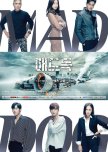
I absolutely love a good, gritty crime thriller, and Mad Dog delivered on that front with a relentless, satisfying bite. This isn't just a procedural drama; it's a deeply emotional story about a makeshift family fighting the most powerful of corporate villains.At its heart, Mad Dog is a tale of retribution and corporate conspiracy centered on a tragic plane crash. Choi Kang-woo (Yoo Ji-tae), a former police and veteran insurance investigator, loses his wife and son in a flight that is quickly and suspiciously ruled a suicide by pilot. This loss transforms him from a respected professional into the vengeful leader of the Mad Dog team, an underground crew that busts insurance fraudsters.
The real conflict of the drama ignites with the arrival of Kim Min-joon (Woo Do-hwan), the brilliant, smooth-talking brother of the accused pilot. Min-joon, a genius former swindler, returns with his own agenda: to prove his dead brother's innocence and collect an enormous insurance payout, which he believes is being unlawfully withheld. The two leads, driven by conflicting initial goals but united by the same central tragedy, are forced into an uneasy alliance. The drama then becomes a relentless, multi-layered "con game to catch a con man," as the team works to unmask the corrupt insurance and airline executives who covered up the truth of the crash. The final goal is not just justice, but total, public humiliation of the powerful elite.
The acting is where Mad Dog shines and absolutely dominates the crime genre. Yoo Ji-tae as Choi Kang-woo is the show's intense anchor. As Kang-woo, he brings a study in controlled rage and paternal grief. He carries the weight of his loss in every glare, yet his fierce protectiveness of his team makes him deeply compelling. He embodies the Mad Dog nickname, a man who, once he has the scent of fraud, never lets go. On the other hand, Woo Do-hwan as Kim Min-joon is the show-stealer, plain and simple. Min-joon is an absolute delight to watch. Woo Do-hwan plays him with a dangerous, sleek duality—one moment he's an adorable puppy, the next he's a cold, cunning genius con artist. The chemistry between him and Yoo Ji-tae—the wary, competitive, and eventually deeply familial bromance—is the show's engine and its greatest emotional payoff.
What makes Mad Dog shine even more is the supporting cast, who are phenomenal, crafting a beloved found family of lovable misfits. Ryu Hwa-young as Jang Ha-ri is the savvy, chameleon-like ex-gymnast and the team's heart, with a simmering, fantastic dynamic with Min-joon. Jo Jae-yoon as Park Soon-jung /Cheetah is the ex-thug with a heart of gold, dreaming of being a nurse. Kim Hye-seong as On Nu-ri /Pentium is the sun-allergic genius hacker. This team's banter, their seamless teamwork, and their genuine affection for each other provide the much-needed warmth that balances the show's dark themes.
The drama successfully turns a boring subject, insurance fraud, into a fast-paced, exciting cat-and-mouse game. The early episodes showcase satisfying, clever cons the team runs to expose petty criminals, before the narrative locks down on the central, high-stakes conspiracy. The main conflict is a constant battle of wits. The Mad Dog team isn't stronger or richer than the villains; they have to rely on intelligence, intricate setups, infiltration, and double-crosses. It gives the show a constant sense of suspense as they try to outmaneuver the powerful elite who are always one step ahead. The most moving part of the drama is the way two lonely, scarred men—Kang-woo, who lost his family, and Min-joon, who was abandoned—find a new home and a deep, unconditional trust in each other and their crew. Their growth from adversaries to brothers is the emotional core that makes the final victory so satisfying.
The villains are intelligent and truly despicable, which makes the Mad Dog team’s work feel incredibly difficult and important. The constant backstabbing and shifting alliances even among the bad guys added a brilliant layer of unpredictability. While the initial run is tight and energetic, the middle section sometimes drags with heavy dialogue and technical insurance jargon as they unravel the complex conspiracy. However, the emotional payoff and character development more than compensate for any brief lulls. Mad Dog is an absolute must-watch for anyone who enjoys crime thrillers anchored by powerhouse performances and a spectacular team dynamic. It's a show that will have you rooting for the underdogs with every fiber of your being, and it confirms Woo Do-hwan's status as a genuine star.
Was this review helpful to you?

Tear Jerker -- Deeply Moving
Lee Seo-jin is the main reason I watched this drama, and I am glad I did. There is just something about his acting that pulls me in regardless of the story or the character. He delivered a compelling performance as Ji-hoon, successfully transitioning the character from a detached, cold individual to a warm, loving partner. His subtle expressions and gradual shift in demeanor effectively showcased Ji-hoon's emotional growth. His dimples, when his character finally starts smiling, became a beloved aspect of his portrayal and, of course, his undeniable chemistry with Uee and mature romance was refreshing to watch. For me the hardest parts to stomach were Ji-hoon’s interactions with his family and I mean all of them. The father, the cunning stepmother, the weak stepbrother, and even his old lover. She was the most infuriating besides his mom, of course.Despite using some familiar tropes, Marriage Contract manages to be deeply moving and engaging because of its strong character development and exceptional acting. It's a drama focusing on the power of love, family, and resilience in facing harsh realities. It is sincere and earnest in its execution. It doesn't rely on overly dramatic twists but rather on the emotional journey of its characters. The development of the lead couple's relationship feels organic and believable, especially for characters who are a bit older and have past experiences. The standouts for me were Uee and the child actress Shin Rin-ah; their chemistry elevated the show with their compelling portrayals, making the characters feel real and relatable. The same goes for Uee, Lee Seo-jin, and Shin Rin-ah. Their believable family dynamic made the characters' emotional journey resonate deeply with me.
Marriage Contract is a story about finding happiness and meaning in life, even when facing a difficult prognosis, and the importance of cherishing every moment with loved ones. I like that beyond central romance, the drama beautifully explores different forms of family relationships, whether by blood or by bond, highlighting their importance and impact. Marriage Contract will make you laugh, cry, and give you warmth and appreciation for life's precious moments. The phenomenal chemistry between the lead couple and the adorable child actress is an undeniable highlight that makes this drama a memorable watch.
Was this review helpful to you?

This review may contain spoilers
Wild and Intriguing!!
A Shop for Killers grabbed me from the word go. It is a wild ride of action and some seriously intense moments. The drama is all about this young woman, Jeong Ji-an – Kim Hye-jun kills it in this role – and her life flips upside down when her uncle, Jeong Jin-man (played by the always awesome Lee Dong-wook), kicks the bucket in a super shady way. This uncle, who raised her after her parents died, seemed like a regular dude running an online shopping mall called "Murthehelp." But surprise! It was actually a front for selling weapons and gear to hitmen. Talk about a family business!So, after her uncle's gone, Ji-an suddenly inherits this crazy world and becomes a target for all sorts of dangerous people – rival assassins, secret organizations – who want what her uncle left behind. The show is slick because it jumps between what's happening to Ji-an now and flashbacks of her growing up with her uncle and the really unique (and kind of scary) training he gave her.
What I really liked:
The Story: The idea of a shopping mall for killers is just so dark and cool. You're constantly wondering what's really going on with the uncle and how Ji-an's going to get out of all the messes she finds herself in.
The Acting: Lee Dong-wook is so good as the uncle, even though you mostly see him in the past. And Kim Hye-jun as Ji-an? She nails it, showing how tough she's becoming while still being vulnerable. The bad guys in the show, played by Seo Hyun-woo and Jo Han-sun, are also seriously creepy and well-acted.
The Action Scenes: Seriously, the fight choreography is top-notch. The action is exciting and totally fits into the story.
How the Story Unfolds: The way they switch between the present and the past works really well. You slowly piece together the puzzle of who her uncle was and why all this is happening.
The Feels: It's not just about the action. There's a real emotional core to the story, especially the relationship between Ji-an and her uncle. It makes you actually care about what happens to her.
Just a heads-up:
• It might take a little bit to get your bearings with the timeline jumps at the beginning, but stick with it – it all comes together.
• Some of the villains can feel a little bit like classic bad guys, but they're still effective.
Overall, a Shop for Killers is a super engaging and stylish action-packed drama with a really interesting and dark premise. The acting is great, the action is awesome, and the story keeps you hooked. Plus, the relationship between Ji-an and her uncle gives it some real heart. If you're into Korean dramas, action thrillers, or just something a little different, you should definitely check this out. The best part is that they are actually making a second season, which is supposed to come out next year in 2026! Lee Dong-wook and Kim Hye-jun are coming back, and they're adding some new actors too. Sounds like things are about to get even crazier!
Was this review helpful to you?
Creative - I am in love
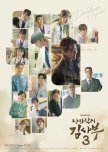
Yes, we have another nonbeliever. They say an arrogant person considers himself perfect; this is the chief harm of arrogance. It interferes with a person's main task in life - becoming a better person—the difference between Kim Sabu and Cha Jin Man (I'm already tired of him, and we are just getting started) and anyone else that goes up against him. I missed everyone, and it's good to see them all back, but Im Won Hee is the best—I love him. It's so good to see him here again. I loved how Cha Eun Jae grew into herself in the second season despite all her challenges, especially regarding Seo Woo Jin. And this season doesn't look any different except that they would have to face them together. I hope their love is strong enough to withstand it all.I love that there is always something new to learn from this drama. Acknowledgment, appreciation, recognition, and acceptance that's all anyone wants in what they do, how they do it, and where they do it, whether they are a doctor, a lawyer, a prosecutor, a plumber, or a janitor. It's the one thing we all have in common. Appreciation has the amazing habit of bringing more reasons to be grateful, do better, and be better. It's what Eun Jae wanted from her father and what Jang Dong Hwa needed to hear from Seo Woo Jin as his mentor to be confident in his choices.
I so appreciate this drama for how it tackles the social, medical, personal, and professional issues that arise as doctors work hard to save patients in a world where the main concern is who takes responsibility for a doctor's oath to do whatever it takes to save a patient's life -- that a Kim Sabu is an anomaly to squash rather than the benchmark to strive for and emulate. I can only imagine how hard it must be to become a doctor; the schooling, training, residence, sacrifices, yelling, humiliation, and hurtful words residents and fellows are subjected to, and it's why I understand the many Jang Dong Hwa's out there.
Was this review helpful to you?
They say the Love of Money is the Root of all of Evil
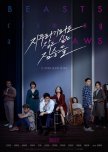
An arch, multi-strand, multi-character three-ring circus movie revolving around a Louis Vuitton overnight bag full of cash that long-suffering sauna worker Joong-man (Bae Sung Woo finds in an abandoned locker at work. While Joong-man sees in the bag a chance to escape his drudgery-filled life, dealing with his overbearing mother and pissed-off wife, other sets of characters are no less invested in acquiring this untraceable fortune.Everyone from sleazy customs official Tae Young (Jung Woo-Sung), who is on the hook to gangsters for a debt incurred by his missing wife to Yun Hee (Shin Hyun-bin), an escort who is fed-up-and-ready to take revenge on her husband who beats her regularly by trying to pull off a con job on a well-off besotted client of hers. And then there’s the Yun Hee’s imperious boss (Jeon Do Yeon), a goddess in lipstick who knows what it’s like to be hurt by men.
Some of the plot’s maneuvers are quite intricate and interestingly portrayed in chapters akin to one reading a book, with each chapter cleverly tying into the book's main premise, so to speak. At times the story is hard to follow, but that doesn’t in any way take away from the performances, which are all perfectly pitched, from the leads right down to the comic-relief minor characters, such as Park Ji-Hwan’s lowlife sidekick and Youn Yuh-Jung as Joon Man’s overbearing mother. The intense color palette blends neon signs and green-lit interiors with the vast amounts of scarlet blood that flows due to the frequent violence. There is no denying there is much violence but isn’t that expected when money is involved in the mix.
Was this review helpful to you?
Not Perfect but Better than Most
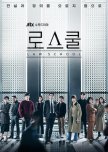
Professor Yang's ending narration of the law is an imperfect justice. Still, it must be perfect for those who teach and learn it alike, for there's nothing more violent than an unjust law is the ideal ending to an imperfect drama that was better than most. I am sad to see it come to an end. I enjoyed it. I was more than grateful to have Kim Myung Min grace my small screen; he is one of those actors I genuinely appreciate, from his voice to his facial expression and mannerisms. I will miss him and the unique way he approached the role of Professor Yang, who gave his all to his students while demanding the best, wanting his students to know they have it in them to be the best. As Maya Angelou said, if you are always trying to be normal, you will never know how amazing you can be. And how fitting that in the end, he had Han Joon Hwi and Kang Sol A by his side.I liked all the actors, each for their very individual approach to their roles, from Lee Jung Eun as Professor Kim to Lee Soo Kyung as Kang Sol [B], and Lee David as Seo Ji Ho. Go Yoon Jung as Jeon Ye Seul, Hyun Woo as Yoo Seung Jae, and the rest of the wonderfully talented cast who clearly articulated that as much as the choices they each made changed them. It didn't define them except for Sol B, but she is a work in progress. I will, of course, be remiss in not giving a special mention to the fabulous Kim Bum in how he portrayed Han Joon Hwi, who never once let the circumstances around him sway him away from his principles. And much-gained respect to Ryu Hye Young in the role of Kang Sol [A], who, despite all odds, perceivers if not shines in an environment that wasn't set up to help someone with her background succeed.
In its unique way, the drama touched and addressed some aspects of the many dilemmas it brought up very nicely, especially the issues it presented in date rape, sexual assault, physical abuse, corruption, political manipulation, and crime and murder. But at the same time, it was vague in addressing the consequences of the more prevalent issues that plague everyday life, such as bribery, hacking and cheating, plagiarism, eroding principles, and the fragile lines between good and bad -- evil done in the name of good, or evil done in the name of evil, which is worse, isn't it the same in the end. I am not entirely sure the show lived up to its motto of truth and justice only by the law. As someone once said, law and justice are not always the same; justice is an ideal, and law is the tool. I enjoyed it highly recommend it.
Was this review helpful to you?


