

 137
137 273
273 25
25 3
3 5
5 6
6 12
12 5
5 7
7 8
8 4
4 11
11 5
5 2
2 8
8 47
47 4
4 5
5 4
4 2
2 1
1 4
4 5
5 5
5 2
2 8
8 30
30 42
42 13
13 27
27


This review may contain spoilers
When Bullets Fly, Logic Dies
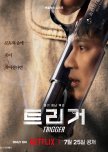
Trigger struts in like it owns the place. It promises dystopian thrills, a deep dive into the psychology of rage, and maybe even some searing social commentary. For a moment, you believe it. Then it trips over its own shoelaces, spills coffee on the manifesto, and starts showing stylish gunfights instead.
Our hero, Lee Do, is a former military sniper turned police officer who treats his taser like a baby blanket. He’s calm, empathetic, and apparently the only person in Korea with competency. When massacres break out across the country, he’s reluctantly dragged back into gunplay.
Moon Baek, the man who lights the match, who hands everyone guns not for money, but for ideology. He’s all contradictions: flashy yet tragic, smiling while your moral compass quietly vomits in the corner. His presence crackles. Every scene with him is electric.
At its best, Trigger gives you an unsettling mirror: ordinary people realizing that a gun turns them from background extras into the main characters of their own revenge films. It’s chilling, human, and horribly plausible.
Then… the plot walks into traffic.
A teenager and a middle-aged woman find a gun through a casual Naver search, but the entire police force of South Korea can’t figure it out. “Internet? Never heard of it.” It’s the kind of plot hole you could drive a tank through, slowly, so nobody gets hurt.
The script also has a strange habit of making every character around Lee Do incompetent just so he can shine brighter. It’s not clever. It’s like stacking the chessboard so your opponent only has pawns, then bragging about your strategic genius.
In the end, the show’s grand answer to systemic rage is… well… a little Hallmark. Sweet, maybe, but so emotionally oversimplified it makes you wonder if someone swapped it for a public service announcement.
So Trigger starts like a sleek bullet that is fast, dangerous, aimed with precision, and ends like a firecracker in the rain: a lot of smoke, a little noise, and the lingering smell of something that could’ve been spectacular if only it hadn’t soaked itself in style instead of substance.
Our hero, Lee Do, is a former military sniper turned police officer who treats his taser like a baby blanket. He’s calm, empathetic, and apparently the only person in Korea with competency. When massacres break out across the country, he’s reluctantly dragged back into gunplay.
Moon Baek, the man who lights the match, who hands everyone guns not for money, but for ideology. He’s all contradictions: flashy yet tragic, smiling while your moral compass quietly vomits in the corner. His presence crackles. Every scene with him is electric.
At its best, Trigger gives you an unsettling mirror: ordinary people realizing that a gun turns them from background extras into the main characters of their own revenge films. It’s chilling, human, and horribly plausible.
Then… the plot walks into traffic.
A teenager and a middle-aged woman find a gun through a casual Naver search, but the entire police force of South Korea can’t figure it out. “Internet? Never heard of it.” It’s the kind of plot hole you could drive a tank through, slowly, so nobody gets hurt.
The script also has a strange habit of making every character around Lee Do incompetent just so he can shine brighter. It’s not clever. It’s like stacking the chessboard so your opponent only has pawns, then bragging about your strategic genius.
In the end, the show’s grand answer to systemic rage is… well… a little Hallmark. Sweet, maybe, but so emotionally oversimplified it makes you wonder if someone swapped it for a public service announcement.
So Trigger starts like a sleek bullet that is fast, dangerous, aimed with precision, and ends like a firecracker in the rain: a lot of smoke, a little noise, and the lingering smell of something that could’ve been spectacular if only it hadn’t soaked itself in style instead of substance.
Was this review helpful to you?


