

 137
137 273
273 25
25 3
3 5
5 6
6 12
12 5
5 7
7 8
8 4
4 11
11 5
5 2
2 8
8 47
47 4
4 5
5 4
4 2
2 1
1 4
4 5
5 5
5 2
2 8
8 30
30 42
42 13
13 27
27


This review may contain spoilers
GLAMOUR ON THE OUTSIDE, ROT ON THE INSIDE
OVERVIEW:
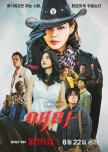
Aema is set in early 1980s South Korea and follows veteran superstar Hee-ran (Honey Lee), an elegant, ice-cold actress trapped in a bad contract with her ex-fiance and producer, Ku Jung-ho. When Jung-ho tries to push her into starring in an erotica called Madame Aema, she refuses and is demoted to the bitter supporting role of Erika, while the lead goes to Ju-ae (Bang Hyo-rin), a poor, scrappy dance club performer desperate to escape poverty by any means necessary. What starts as a bitter rivalry between a fading veteran and a hungry rookie slowly unravels into something much bigger: an exposé of just how rotten the entertainment industry (and the government propping it up) really is. Inspired by the real 1982 film of the same name, the show wears its 80s setting proudly, disco music, retro color grading, oversized sunglasses and all, while never losing sight of the grim realities lurking underneath the glamour.
COMMENTARY:
I have to give this show credit for how unflinching it is. From episode 1, Hee-ran is established as someone who plays a sweet, demure persona for the press while being a ruthless schemer behind closed doors, and Ju-ae is introduced stripping at her own audition just to prove she'll do whatever it takes to get the part. Honestly, that contrast set the tone for the entire watch. Nobody in this show gets to stay clean.
The "rivals to reluctant allies" arc between Hee-ran and Ju-ae is easily the backbone of the series, and it's done well. Hee-ran starts out actively sabotaging Ju-ae, accusing her of sleeping her way into the role and throwing her belongings at her over a dress, but the cracks show early. We learn Hee-ran has only ever done projects for the money, never for the art, and that desperation to work with the prestigious Director Kwon on his passion project Predation Night is what humanizes her. Meanwhile, Ju-ae keeps a poster of Hee-ran in her shanty home and admits to her friend Geun-ha that she's conflicted about idolizing a woman who treats her so badly. That tension pays off beautifully by episode 4, with the horseback riding scene in the flower field where their characters, Erika and Aema, get a tender, almost romantic moment that's clearly meant to mirror what's brewing between the actresses themselves.
And I do appreciate that the queer subtext isn't subtext at all, it's right there. The show is self-aware about the irony of censoring Kwak's actual queer storyline within the in-universe film while building real romantic tension between Hee-ran and Ju-ae outside of it. It's a clever bit of meta commentary that elevates the show past just being "industry expose with a side of cat fight."
But make no mistake, this isn't a fun, frothy watch once the plot kicks into gear. The government officials' parties are where the show really shows its teeth. Ju-ae being sent to entertain officials stressed about the Olympics, only to be nearly forced into sleeping with the President himself, is genuinely hard to watch, and Hee-ran stepping in to offer herself instead just so Ju-ae doesn't have to go through it is one of the more quietly devastating scenes in the show. It's an ugly demonstration of how little power either woman actually has, no matter how famous they become.
Then there's Mi-na, Jung-ho's girlfriend and an aspiring actress in her own right, whose storyline ends in tragedy when she's drugged and assaulted at a wilder, younger VIP party and dies of an overdose. Her death is the turning point that pushes Hee-ran from quietly scheming to actively planning to take Jung-ho and the corrupt officials down, and the funeral scene where Hee-ran and Ju-ae realize they were the only people who showed up, because Mi-na, like them, had once idolized Hee-ran too, hit harder than I expected from a show I went into thinking would be mostly camp.
The finale goes for broke. Hee-ran teams up with Director Kwon and an activist reporter to publicly expose Jung-ho's history of pimping out his actresses, using the live broadcast of the award show as the moment to drop the bomb. The chaos that follows, Hee-ran getting chased, Ju-ae literally riding in on horseback to rescue her, the Minister of Culture being blackmailed with the torn ledger page, is unapologetically over the top, but I was here for it. It's the kind of righteous, dramatic comeuppance the first five episodes earned.
MIXED EMOTIONS:
Where the show stumbles for me is in just how much it tries to cram into only six episodes. We've got industry satire, government corruption, a slow-burn queer romance, a tragic death, censorship commentary, and a revenge plot, and there just isn't enough room to give all of it a satisfying conclusion.
The finale especially feels rushed once the big exposé happens. Gi's entire arc resolves with him essentially drinking away his guilt, Jae-geon, the reporter who spread vicious rumors that Ju-ae was a "hooker" and nearly tried to assault her, gets let off without any real consequence, and it's never actually clarified whether Hee-ran can return to acting after everything. For a show that spent so much time building up her arc, that felt like an odd thing to leave hanging.
The tonal shifts are also a lot. The first couple of episodes have a darkly comedic, almost satirical energy, the flower-and-leaf-fight energy of "industry mean girls," but by episode 5 it's an emotional gut-punch with very little humor left, and that whiplash, while intentional, can be jarring if you came in expecting something lighter.
DISLIKES:
I wish Mi-na's death had been given more room to breathe. It's clearly meant to be the catalyst for Hee-ran's full transformation into someone willing to risk everything, but because the show only has six episodes to work with, her arc feels more like a plot device than a fully realized character we got to know. The same goes for Geun-ha, whose disillusionment with the industry and eventual decision to leave deserved more space than it got.
I also think the show oversells its own social commentary at times. It wants to say something about exploitation, censorship, and the powerlessness of women in the industry, and it does land plenty of those points, but the sheer number of themes it's juggling (queer subtext, government corruption, censorship politics, class commentary, all of it) means some threads get a surface-level treatment rather than the depth they deserve.
LIKES:
Honey Lee and Bang Hyo-rin are the reason this show works as well as it does. Honey Lee gets to play at least three different versions of Hee-ran, the demure public persona, the venomous industry veteran, and eventually the vulnerable woman underneath all of it, and she sells every layer. Bang Hyo-rin matches her energy as Ju-ae, giving her this stubborn, hopeful core even as the industry chews her up. Their chemistry, both as rivals and as something more tender by the end, carries the whole show.
I also have to commend the aesthetic work here. The contrast between the glittering, disco-soaked world of Korean cinema in the 80s and the grey, cramped factory-worker reality that Ju-ae and Geun-ha come from is established so clearly and consistently that it does half the show's social commentary work without a word of dialogue. And the award show finale, as messy and over-the-top as it is, is genuinely thrilling to watch unfold.
FINAL THOUGHTS:
Aema is an ambitious, hard-hitting little show that bites off more than six episodes can really chew, but it's never boring, and the central relationship between Hee-ran and Ju-ae is compelling enough to carry you through the parts that feel rushed or underexplored.
It's not a fun, easy watch, there's real darkness here around exploitation, sexual coercion, and corruption, so go in knowing that.
But if you want a sharp, satirical look at the Korean film industry's history dressed up in great 80s style, with two strong central performances and just enough romantic tension to keep things interesting, this delivers more than it doesn't.
Would I rewatch it? Probably not in full, it's heavy, but I'd happily revisit the award show finale and the horseback scene in episode 4 on their own.
With all that said, I give Aema a 7.5/10.
SIDENOTE: This one deals with sexual coercion, assault, and overdose pretty directly, so please go in with that context if those are difficult subjects for you.
Thanks for reading ! ♡
Aema is set in early 1980s South Korea and follows veteran superstar Hee-ran (Honey Lee), an elegant, ice-cold actress trapped in a bad contract with her ex-fiance and producer, Ku Jung-ho. When Jung-ho tries to push her into starring in an erotica called Madame Aema, she refuses and is demoted to the bitter supporting role of Erika, while the lead goes to Ju-ae (Bang Hyo-rin), a poor, scrappy dance club performer desperate to escape poverty by any means necessary. What starts as a bitter rivalry between a fading veteran and a hungry rookie slowly unravels into something much bigger: an exposé of just how rotten the entertainment industry (and the government propping it up) really is. Inspired by the real 1982 film of the same name, the show wears its 80s setting proudly, disco music, retro color grading, oversized sunglasses and all, while never losing sight of the grim realities lurking underneath the glamour.
COMMENTARY:
I have to give this show credit for how unflinching it is. From episode 1, Hee-ran is established as someone who plays a sweet, demure persona for the press while being a ruthless schemer behind closed doors, and Ju-ae is introduced stripping at her own audition just to prove she'll do whatever it takes to get the part. Honestly, that contrast set the tone for the entire watch. Nobody in this show gets to stay clean.
The "rivals to reluctant allies" arc between Hee-ran and Ju-ae is easily the backbone of the series, and it's done well. Hee-ran starts out actively sabotaging Ju-ae, accusing her of sleeping her way into the role and throwing her belongings at her over a dress, but the cracks show early. We learn Hee-ran has only ever done projects for the money, never for the art, and that desperation to work with the prestigious Director Kwon on his passion project Predation Night is what humanizes her. Meanwhile, Ju-ae keeps a poster of Hee-ran in her shanty home and admits to her friend Geun-ha that she's conflicted about idolizing a woman who treats her so badly. That tension pays off beautifully by episode 4, with the horseback riding scene in the flower field where their characters, Erika and Aema, get a tender, almost romantic moment that's clearly meant to mirror what's brewing between the actresses themselves.
And I do appreciate that the queer subtext isn't subtext at all, it's right there. The show is self-aware about the irony of censoring Kwak's actual queer storyline within the in-universe film while building real romantic tension between Hee-ran and Ju-ae outside of it. It's a clever bit of meta commentary that elevates the show past just being "industry expose with a side of cat fight."
But make no mistake, this isn't a fun, frothy watch once the plot kicks into gear. The government officials' parties are where the show really shows its teeth. Ju-ae being sent to entertain officials stressed about the Olympics, only to be nearly forced into sleeping with the President himself, is genuinely hard to watch, and Hee-ran stepping in to offer herself instead just so Ju-ae doesn't have to go through it is one of the more quietly devastating scenes in the show. It's an ugly demonstration of how little power either woman actually has, no matter how famous they become.
Then there's Mi-na, Jung-ho's girlfriend and an aspiring actress in her own right, whose storyline ends in tragedy when she's drugged and assaulted at a wilder, younger VIP party and dies of an overdose. Her death is the turning point that pushes Hee-ran from quietly scheming to actively planning to take Jung-ho and the corrupt officials down, and the funeral scene where Hee-ran and Ju-ae realize they were the only people who showed up, because Mi-na, like them, had once idolized Hee-ran too, hit harder than I expected from a show I went into thinking would be mostly camp.
The finale goes for broke. Hee-ran teams up with Director Kwon and an activist reporter to publicly expose Jung-ho's history of pimping out his actresses, using the live broadcast of the award show as the moment to drop the bomb. The chaos that follows, Hee-ran getting chased, Ju-ae literally riding in on horseback to rescue her, the Minister of Culture being blackmailed with the torn ledger page, is unapologetically over the top, but I was here for it. It's the kind of righteous, dramatic comeuppance the first five episodes earned.
MIXED EMOTIONS:
Where the show stumbles for me is in just how much it tries to cram into only six episodes. We've got industry satire, government corruption, a slow-burn queer romance, a tragic death, censorship commentary, and a revenge plot, and there just isn't enough room to give all of it a satisfying conclusion.
The finale especially feels rushed once the big exposé happens. Gi's entire arc resolves with him essentially drinking away his guilt, Jae-geon, the reporter who spread vicious rumors that Ju-ae was a "hooker" and nearly tried to assault her, gets let off without any real consequence, and it's never actually clarified whether Hee-ran can return to acting after everything. For a show that spent so much time building up her arc, that felt like an odd thing to leave hanging.
The tonal shifts are also a lot. The first couple of episodes have a darkly comedic, almost satirical energy, the flower-and-leaf-fight energy of "industry mean girls," but by episode 5 it's an emotional gut-punch with very little humor left, and that whiplash, while intentional, can be jarring if you came in expecting something lighter.
DISLIKES:
I wish Mi-na's death had been given more room to breathe. It's clearly meant to be the catalyst for Hee-ran's full transformation into someone willing to risk everything, but because the show only has six episodes to work with, her arc feels more like a plot device than a fully realized character we got to know. The same goes for Geun-ha, whose disillusionment with the industry and eventual decision to leave deserved more space than it got.
I also think the show oversells its own social commentary at times. It wants to say something about exploitation, censorship, and the powerlessness of women in the industry, and it does land plenty of those points, but the sheer number of themes it's juggling (queer subtext, government corruption, censorship politics, class commentary, all of it) means some threads get a surface-level treatment rather than the depth they deserve.
LIKES:
Honey Lee and Bang Hyo-rin are the reason this show works as well as it does. Honey Lee gets to play at least three different versions of Hee-ran, the demure public persona, the venomous industry veteran, and eventually the vulnerable woman underneath all of it, and she sells every layer. Bang Hyo-rin matches her energy as Ju-ae, giving her this stubborn, hopeful core even as the industry chews her up. Their chemistry, both as rivals and as something more tender by the end, carries the whole show.
I also have to commend the aesthetic work here. The contrast between the glittering, disco-soaked world of Korean cinema in the 80s and the grey, cramped factory-worker reality that Ju-ae and Geun-ha come from is established so clearly and consistently that it does half the show's social commentary work without a word of dialogue. And the award show finale, as messy and over-the-top as it is, is genuinely thrilling to watch unfold.
FINAL THOUGHTS:
Aema is an ambitious, hard-hitting little show that bites off more than six episodes can really chew, but it's never boring, and the central relationship between Hee-ran and Ju-ae is compelling enough to carry you through the parts that feel rushed or underexplored.
It's not a fun, easy watch, there's real darkness here around exploitation, sexual coercion, and corruption, so go in knowing that.
But if you want a sharp, satirical look at the Korean film industry's history dressed up in great 80s style, with two strong central performances and just enough romantic tension to keep things interesting, this delivers more than it doesn't.
Would I rewatch it? Probably not in full, it's heavy, but I'd happily revisit the award show finale and the horseback scene in episode 4 on their own.
With all that said, I give Aema a 7.5/10.
SIDENOTE: This one deals with sexual coercion, assault, and overdose pretty directly, so please go in with that context if those are difficult subjects for you.
Thanks for reading ! ♡
Was this review helpful to you?


