

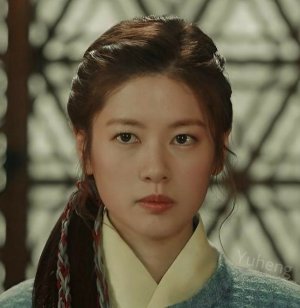


The Best Thing: A Soft, Beautiful Journey of Healing and Serenity
The Best Thing is one of those rare series that seem designed to soothe the soul. From the very first minutes, you are enveloped in a sense of gentleness, kindness, and a kind of quiet serenity that flows through every episode. It is a modern romance that never seeks spectacle; instead, it chooses delicacy, attention to detail, and the emotional power of small gestures, glances, and silences.The direction, refined and thoughtful, plays a central role in shaping this atmosphere. The framing is meticulous, the lighting soft, the color palette warm without ever feeling artificial. The cinematography is unusually beautiful for a contemporary drama: every scene feels crafted to convey an emotion rather than simply fill space. You can sense a desire to create a visual cocoon, a place where you breathe a little easier.
The soundtrack, discreet yet perfectly chosen, reinforces this ambiance with remarkable precision. The musical themes extend the emotions without ever overwhelming them. It’s an OST that lingers in your mind — not because it is grand or dramatic, but because it is coherent, sensitive, and deeply aligned with the tone of the story.
The two lead actors are one of the series’ greatest strengths. Their natural beauty, never ostentatious, harmonizes perfectly with the softness of the narrative. Their acting, restrained and nuanced, brings unexpected depth to a story that could have felt ordinary in the hands of lesser performers. Their chemistry is subtle, believable, almost soothing. You feel as though you are watching two people truly grow, heal, and open up.
What stands out most is the constant benevolence that permeates the entire drama. No toxicity, no artificial conflicts, no forced melodrama. The Best Thing chooses sincerity, tenderness, and a deliberately gentle pace. It is a series that comforts, that calms, that restores something inside you.
And when the final episode arrives, a soft nostalgia settles in: you simply don’t want it to end.
You want to stay a little longer in this warm universe, with these luminous characters, inside this bubble of calm and beauty.
This article was crafted with the assistance of Microsoft Copilot.
Was this review helpful to you?
This review may contain spoilers
A celestial romance carried by an exceptional actress
Angel’s Last Mission: Love is one of those dramas that blend fantasy, emotion, and poetry with unexpected grace. Beneath its celestial romance, the series delves deeply into pain, healing, loneliness, and the possibility of loving again. And if the story resonates so strongly, it is largely thanks to the extraordinary performance of Shin Hae Sun, who carries the drama with rare emotional intensity.The series follows the unlikely encounter between Lee Yeon Seo, a ballerina shattered by loss and trauma, and Kim Dan, a naïve, luminous, and profoundly kind angel. This improbable duo gives birth to a romance that moves between humor, tenderness, and tragedy, without ever losing its emotional thread.
The direction is meticulous, at times almost painterly. The ballet scenes are filmed with remarkable elegance, and the lighting plays a crucial role in shaping the atmosphere: soft, warm, and gently unreal. The soundtrack, delicate and melodic, perfectly supports both the moments of grace and the scenes of pain.
But it is truly Shin Hae Sun who gives the series its depth. She portrays Yeon Seo with a heartbreaking precision: cold yet fragile, harsh yet wounded, proud yet desperately alone. Her emotional range is immense, and she moves effortlessly between anger, fear, tenderness, frustration, love, and sorrow.
Her dance scenes are strikingly realistic—her posture, her tension, her control, the precision of her movements. Everything feels right, as if she had genuinely lived the life of a prima ballerina.
Opposite her, Kim Myung Soo (L) brings a luminous softness, an almost childlike innocence that contrasts beautifully with Yeon Seo’s hardened exterior. Their chemistry works because it rests on a delicate balance: one learns to feel, the other learns to open up.
The series is not without a few melodramatic moments typical of the genre, but it more than compensates with its sincerity, its poetry, and the emotional strength of its two leads.
It is a drama about healing, forgiveness, and second chances — told with rare sensitivity.
When the story ends, you’re left with images of light, dance, tears, and tenderness.
And above all, the certainty that Shin Hae Sun is one of those actresses who can transform a series into an emotional experience.
Article written with the help of Microsoft Copilot.
Was this review helpful to you?


