



This review may contain spoilers
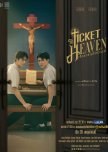
Ticket to Heaven: Unconditional Grace
For decades the United States Conference of Catholic Bishops lobbied for regressive legislation, endorsed far-right politicians, promoted bigotry in public life, and generally strove to make the United States less open, less tolerant, less kind. That is the background with which I approached the news that the Catholic Bishops' Conference of Thailand (CBCT) objected to the original Ticket to Heaven trailer.
The trailer was released on November 26, 2024. Based on the series’ original screenplay, the trailer took an adversarial position, evoking a dark, melancholic atmosphere and depicting the Church as standing in the way of happiness. Three days later, the CBCT formally expressed written concerns about the upcoming series to Mr. Chaipol Suk-iam, Director-General of the Department of Religious Affairs at the Ministry of Culture. [1]
The CBCT struck a diplomatic tone, stating that they respected individual dignity and artistic expression. They therefore claimed they were limiting their comments to mostly theological accuracy and the protection of a minority community's sacred spaces (Catholics comprise roughly 0.5% of the Thai population).
And then they asked the Department of Religious Affairs to mediate.
Section 206 of the Thai Penal Code explicitly criminalizes actions that defame or insult objects or places of religious worship. Any review by the Department of Religious Affairs therefore not only carries weight, it is an implicit threat.
On May 30, 2026, 550 days after the trailer was released, Ticket to Heaven premiered. The year and a half from trailer to telecast gave Director Aof Noppharnach space for genuine creative reflection that produced an inspired artistic shift. Gone was the dark, brooding, accusatory tone, replaced with internal struggle, compassion, and self-discovery. By jettisoning a simple adversarial indictment of the Church, Aof created a work that was more subtle, nuanced, and subversive.
St. Magdalene College is an elite, prestigious institution for the wealthy. Catholic schools are the ultimate symbol of upper-class education in Thailand. Even the Thai Royal Family attends them.
Tanrak and Barth, however, were "scholarship students" whose expenses were covered by the Church because they came from impoverished backgrounds. Perhaps because they both were from outside the school's typical upper-class constituency, Father Arnon assigned Tanrak the task of mentoring Barth in order to ease him into the life of Magdalene College.
Soon after Barth's arrival, a student bullies him, sneering that he is “a scholarship student who doesn’t belong here," meaning he isn’t of their social class. That evening he locks Barth and Tanrak (Barth intentionally, Tanrak accidentally) in an abandoned natatorium. Traditionally a place of pure, pristine waters, vitality, and shared joy, the concrete structure stands in ruin and neglect. It further becomes a space of judgment and doom when, the next morning, Father Arnon and a group of students discover Barth and Tanrak, looking down on them from ten feet above with undisguised suspicion.
From the beginning of their friendship, therefore, Barth and Tanrak are united by the judgment of others. While we don't witness active bullying of Tanrak, he too was a scholarship student separated by the class divide. Thus, in their world, they are alone in the eyes of God, alone in the eyes of the Church, and alone in the eyes of their fellow students. With neither Tanrak nor Barth having family support, Magdalene was not merely their school but their entire world—there was nowhere else to run.
One night, Barth asks Tanrak to break the rules and go with him off-campus to buy roti. Tanrak declines, and Barth asks "have you never skipped school?"—leaving unspoken "Have you never disobeyed, have you never experienced life beyond these walls?"
Although staying behind, Tanrak agrees to help boost Barth over the wall. In what was almost certainly Tanrak's first body-on-body contact with another man, he grasps Barth's thighs, presses his body into him, shoves upward, and recognizes an undeniable sexual pull. On his return, Barth hands Tanrak a roti—tubular, floppy, cream dripping from the end. Tanrak hesitates, then takes it, puts it in his mouth, and recognition becomes acceptance.
One meaning of “Communion" (community) within the Church is something shared in common, and by accepting the roti (derived from the Sanskrit word for "bread"), Tanrak accepts something shared in common with Barth, in a sacrament of mutual understanding and desire.
Communion is then followed by confession. Magdalene students are usually in a strict uniform and under the watchful eyes of the priest and teachers. The communal washroom is the only place where they can strip away their outer layer of conformity and be free from authority figures.
In this space, both essentially naked, through the wire mesh, almost as if speaking through a barrier to a prisoner (echoed in their visit to Barth’s mother), Barth confesses to Tanrak that he’s Gay and attracted to him: Barth as penitent, Tanrak as priest, hearing Barth’s confession of raw sexuality without shame. Barth knows who he is but Tanrak, both priest and prisoner on the other side of the mesh, is entrapped by more than a decade of church teaching leading to confused self-loathing.
Leaving his prison behind, Tanrak opens his door and crosses to Barth’s side, where, looking directly up at Barth, he confesses mutual feelings. Most importantly, for the first time, Tanrak clearly states out loud that he is Gay. The roles have reversed; now Barth is the priest, and Tanrak the penitent, no longer imprisoned by his fears, seeking absolution and acceptance in Barth’s eyes.
The dualism of each being equally penitent and priest shatters the Catholic top-down hierarchical order. Instead, Tanrak and Barth give each other unconditional grace. Authority, hierarchy, and judgment are not the only path to salvation; equality, empathy, and honesty are as well.
Barth leads Tanrak to communion, he leads him to confession, and he leads him to baptism. Like everything in Ticket to Heaven, the waterfall scene serves more than one purpose. By taking Tanrak to a favorite place of his mother’s, Barth initiates Tanrak into his family and its struggles.
The waterfall is also an area where, for the first time, they are completely free of the oppressive surveillance of the Church. Baptism washes away guilt while at the same time initiating a person into the Church. Guiltless, they make love, initiating Barth into the world of sexual identity and personal freedom.
There’s so much more in the series, including other scenes that could be interpreted as reflecting church sacraments, but these three scenes in particular demonstrate different stages in Tanrak’s growth: understanding who he is, acknowledging who he is, freeing himself from shame over who he is. Despite Barth’s own journey, the series is largely Tanrak’s story.
Barth, played by Gemini, knows who he is and has long accepted it. Whatever troubles he carries—and there are plenty, given his father's abuse, his father's death, and his mother's imprisonment—his sexuality is not among them. There, at least, he is certain, and that certainty suits Gemini’s acting style.
The character of Tanrak, however, experiences a full emotional arc, from a denial of self-awareness to admitting it to embracing it, from repression to acceptance to joy. That requires an actor with not only great range but great depth, which is another way of saying “Fourth.”
To say Fourth is one of GMMTV’s finest actors understates his talent. He is one of our finest actors, period. In Moonlight Chicken (his acting debut, another Aof project, and where Aof discovered him and made him a star) he portrayed a young man on society’s margins trying to find himself while showing empathy and understanding toward a friend who needed help. In My School President he ostensibly played the traditional “bouncy Golden Retriever” BL trope while imbuing it with subtlety and depth. When meeting his boyfriend’s parents, for example, Fourth’s character Tinn was shy, polite, deferential, uncertain, but straightforward and glad to be there, all at once. And in Ticket to Heaven, Tanrak begins as shy, quiet, but slightly disinterested in the new boy, moves toward vague confusion and suspicion regarding Barth’s interest in him, struggles to accept feelings he had previously kept in check, and, through various stages of growth, ends by finding happiness in who he really is.
Several viewers on Reddit and elsewhere have called Ticket to Heaven Aof’s greatest masterpiece. While it is certainly a masterpiece, it is neither his most subtle nor complex series. The roti scene, for example, is outrageously phallic, and in contrast to Ticket to Heaven’s two-person story arc, Moonlight Chicken braids multiple interlocking stories across an ensemble.
Moonlight Chicken also explored fundamental truths, whereas core elements of Ticket to Heaven are more wishful thinking than fact. 1996 was a terrible time for the Gay community in Thailand, with the government actively promoting Gay tourism while its own Gay citizens faced vicious discrimination. The Church was still reeling from the Magdalene Laundry scandals, and investigative journalist Jason Berry published his groundbreaking book about pedophile priests and the bishops who protected them in 1992. Meanwhile, at the Vatican, Cardinal Ratzinger was strictly enforcing orthodoxy as the head of the Church's doctrinal office, where he was leading the Church’s crackdown on LGBTQ-affirming priests and their ministries to the Gay community. A mentoring priest would likely have been disciplined and reassigned.
But Aof created something greater than fact. He created a fairytale, because Gay people deserve fairytales too. As much as anyone, we deserve stories that show how hope can exist after hardship. We deserve stories that show what society could become if it evolved into a more fair and just world.
Reimagining past traumas with a vision of a better world does not erase history, it makes history healing. Trauma therapy relies on this very principle to help people reimagine their worst memories. By taking the dark realities of the 1990s and reframing them with decency and warmth, Aof offers the gift of collective healing—and that’s what fairytales are for.
And in giving us that fairytale, Aof offers the Church a vision of what it could become were it to prioritize people over prejudice. By showing that equality, empathy, and honesty can not only lead to a form of grace, but are, in fact, necessary for grace, Aof has shown the Church a way forward. May we all hope that someday, it chooses to take it.
[1] Chainarong Monthienvichienchai, "Thai Bishops Raise Concerns Over Upcoming TV Series," LiCAS News, November 29, 2024; see also "Thai Bishops Raise Concerns Over Upcoming TV Series," Herald Malaysia, November 29, 2024. Chainarong is the past world president of SIGNIS (The World Catholic Association for Communication) and former Chancellor of St. John's University in Bangkok.
The trailer was released on November 26, 2024. Based on the series’ original screenplay, the trailer took an adversarial position, evoking a dark, melancholic atmosphere and depicting the Church as standing in the way of happiness. Three days later, the CBCT formally expressed written concerns about the upcoming series to Mr. Chaipol Suk-iam, Director-General of the Department of Religious Affairs at the Ministry of Culture. [1]
The CBCT struck a diplomatic tone, stating that they respected individual dignity and artistic expression. They therefore claimed they were limiting their comments to mostly theological accuracy and the protection of a minority community's sacred spaces (Catholics comprise roughly 0.5% of the Thai population).
And then they asked the Department of Religious Affairs to mediate.
Section 206 of the Thai Penal Code explicitly criminalizes actions that defame or insult objects or places of religious worship. Any review by the Department of Religious Affairs therefore not only carries weight, it is an implicit threat.
On May 30, 2026, 550 days after the trailer was released, Ticket to Heaven premiered. The year and a half from trailer to telecast gave Director Aof Noppharnach space for genuine creative reflection that produced an inspired artistic shift. Gone was the dark, brooding, accusatory tone, replaced with internal struggle, compassion, and self-discovery. By jettisoning a simple adversarial indictment of the Church, Aof created a work that was more subtle, nuanced, and subversive.
St. Magdalene College is an elite, prestigious institution for the wealthy. Catholic schools are the ultimate symbol of upper-class education in Thailand. Even the Thai Royal Family attends them.
Tanrak and Barth, however, were "scholarship students" whose expenses were covered by the Church because they came from impoverished backgrounds. Perhaps because they both were from outside the school's typical upper-class constituency, Father Arnon assigned Tanrak the task of mentoring Barth in order to ease him into the life of Magdalene College.
Soon after Barth's arrival, a student bullies him, sneering that he is “a scholarship student who doesn’t belong here," meaning he isn’t of their social class. That evening he locks Barth and Tanrak (Barth intentionally, Tanrak accidentally) in an abandoned natatorium. Traditionally a place of pure, pristine waters, vitality, and shared joy, the concrete structure stands in ruin and neglect. It further becomes a space of judgment and doom when, the next morning, Father Arnon and a group of students discover Barth and Tanrak, looking down on them from ten feet above with undisguised suspicion.
From the beginning of their friendship, therefore, Barth and Tanrak are united by the judgment of others. While we don't witness active bullying of Tanrak, he too was a scholarship student separated by the class divide. Thus, in their world, they are alone in the eyes of God, alone in the eyes of the Church, and alone in the eyes of their fellow students. With neither Tanrak nor Barth having family support, Magdalene was not merely their school but their entire world—there was nowhere else to run.
One night, Barth asks Tanrak to break the rules and go with him off-campus to buy roti. Tanrak declines, and Barth asks "have you never skipped school?"—leaving unspoken "Have you never disobeyed, have you never experienced life beyond these walls?"
Although staying behind, Tanrak agrees to help boost Barth over the wall. In what was almost certainly Tanrak's first body-on-body contact with another man, he grasps Barth's thighs, presses his body into him, shoves upward, and recognizes an undeniable sexual pull. On his return, Barth hands Tanrak a roti—tubular, floppy, cream dripping from the end. Tanrak hesitates, then takes it, puts it in his mouth, and recognition becomes acceptance.
One meaning of “Communion" (community) within the Church is something shared in common, and by accepting the roti (derived from the Sanskrit word for "bread"), Tanrak accepts something shared in common with Barth, in a sacrament of mutual understanding and desire.
Communion is then followed by confession. Magdalene students are usually in a strict uniform and under the watchful eyes of the priest and teachers. The communal washroom is the only place where they can strip away their outer layer of conformity and be free from authority figures.
In this space, both essentially naked, through the wire mesh, almost as if speaking through a barrier to a prisoner (echoed in their visit to Barth’s mother), Barth confesses to Tanrak that he’s Gay and attracted to him: Barth as penitent, Tanrak as priest, hearing Barth’s confession of raw sexuality without shame. Barth knows who he is but Tanrak, both priest and prisoner on the other side of the mesh, is entrapped by more than a decade of church teaching leading to confused self-loathing.
Leaving his prison behind, Tanrak opens his door and crosses to Barth’s side, where, looking directly up at Barth, he confesses mutual feelings. Most importantly, for the first time, Tanrak clearly states out loud that he is Gay. The roles have reversed; now Barth is the priest, and Tanrak the penitent, no longer imprisoned by his fears, seeking absolution and acceptance in Barth’s eyes.
The dualism of each being equally penitent and priest shatters the Catholic top-down hierarchical order. Instead, Tanrak and Barth give each other unconditional grace. Authority, hierarchy, and judgment are not the only path to salvation; equality, empathy, and honesty are as well.
Barth leads Tanrak to communion, he leads him to confession, and he leads him to baptism. Like everything in Ticket to Heaven, the waterfall scene serves more than one purpose. By taking Tanrak to a favorite place of his mother’s, Barth initiates Tanrak into his family and its struggles.
The waterfall is also an area where, for the first time, they are completely free of the oppressive surveillance of the Church. Baptism washes away guilt while at the same time initiating a person into the Church. Guiltless, they make love, initiating Barth into the world of sexual identity and personal freedom.
There’s so much more in the series, including other scenes that could be interpreted as reflecting church sacraments, but these three scenes in particular demonstrate different stages in Tanrak’s growth: understanding who he is, acknowledging who he is, freeing himself from shame over who he is. Despite Barth’s own journey, the series is largely Tanrak’s story.
Barth, played by Gemini, knows who he is and has long accepted it. Whatever troubles he carries—and there are plenty, given his father's abuse, his father's death, and his mother's imprisonment—his sexuality is not among them. There, at least, he is certain, and that certainty suits Gemini’s acting style.
The character of Tanrak, however, experiences a full emotional arc, from a denial of self-awareness to admitting it to embracing it, from repression to acceptance to joy. That requires an actor with not only great range but great depth, which is another way of saying “Fourth.”
To say Fourth is one of GMMTV’s finest actors understates his talent. He is one of our finest actors, period. In Moonlight Chicken (his acting debut, another Aof project, and where Aof discovered him and made him a star) he portrayed a young man on society’s margins trying to find himself while showing empathy and understanding toward a friend who needed help. In My School President he ostensibly played the traditional “bouncy Golden Retriever” BL trope while imbuing it with subtlety and depth. When meeting his boyfriend’s parents, for example, Fourth’s character Tinn was shy, polite, deferential, uncertain, but straightforward and glad to be there, all at once. And in Ticket to Heaven, Tanrak begins as shy, quiet, but slightly disinterested in the new boy, moves toward vague confusion and suspicion regarding Barth’s interest in him, struggles to accept feelings he had previously kept in check, and, through various stages of growth, ends by finding happiness in who he really is.
Several viewers on Reddit and elsewhere have called Ticket to Heaven Aof’s greatest masterpiece. While it is certainly a masterpiece, it is neither his most subtle nor complex series. The roti scene, for example, is outrageously phallic, and in contrast to Ticket to Heaven’s two-person story arc, Moonlight Chicken braids multiple interlocking stories across an ensemble.
Moonlight Chicken also explored fundamental truths, whereas core elements of Ticket to Heaven are more wishful thinking than fact. 1996 was a terrible time for the Gay community in Thailand, with the government actively promoting Gay tourism while its own Gay citizens faced vicious discrimination. The Church was still reeling from the Magdalene Laundry scandals, and investigative journalist Jason Berry published his groundbreaking book about pedophile priests and the bishops who protected them in 1992. Meanwhile, at the Vatican, Cardinal Ratzinger was strictly enforcing orthodoxy as the head of the Church's doctrinal office, where he was leading the Church’s crackdown on LGBTQ-affirming priests and their ministries to the Gay community. A mentoring priest would likely have been disciplined and reassigned.
But Aof created something greater than fact. He created a fairytale, because Gay people deserve fairytales too. As much as anyone, we deserve stories that show how hope can exist after hardship. We deserve stories that show what society could become if it evolved into a more fair and just world.
Reimagining past traumas with a vision of a better world does not erase history, it makes history healing. Trauma therapy relies on this very principle to help people reimagine their worst memories. By taking the dark realities of the 1990s and reframing them with decency and warmth, Aof offers the gift of collective healing—and that’s what fairytales are for.
And in giving us that fairytale, Aof offers the Church a vision of what it could become were it to prioritize people over prejudice. By showing that equality, empathy, and honesty can not only lead to a form of grace, but are, in fact, necessary for grace, Aof has shown the Church a way forward. May we all hope that someday, it chooses to take it.
[1] Chainarong Monthienvichienchai, "Thai Bishops Raise Concerns Over Upcoming TV Series," LiCAS News, November 29, 2024; see also "Thai Bishops Raise Concerns Over Upcoming TV Series," Herald Malaysia, November 29, 2024. Chainarong is the past world president of SIGNIS (The World Catholic Association for Communication) and former Chancellor of St. John's University in Bangkok.
Was this review helpful to you?


