
 Editorials


The Drama That Fooled Me in the Best Way
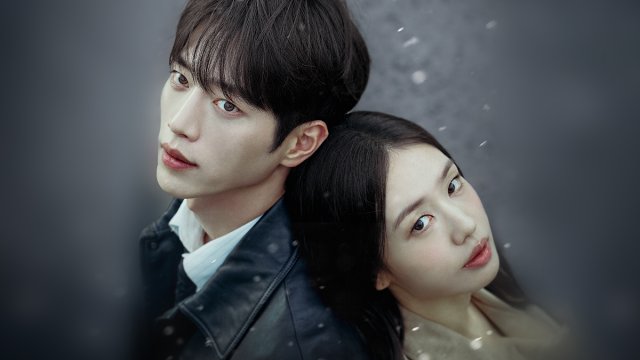
I almost dropped this drama in the beginning.The first half felt painfully familiar—two actors cast in a BL drama, forced interactions, misunderstandings, jealous moments, and all the usual romance tropes. It wasn't bad, but it didn't feel like it had anything new to offer. I kept thinking, I've seen this exact story a dozen times before. The pacing was slow, and for a while it felt like another typical industry romance trying to ride on clichés instead of creating its own identity.
Then came the twist.
Around the later episodes, I realized this wasn't just a drama about actors filming a BL series. It was a story within a story... inside another story, and suddenly everything I'd been watching started making sense. The narrative became far more ambitious than I expected, and I genuinely didn't see it coming. That reveal completely changed how I looked at the drama.
The biggest strength of Deep In is its concept. It takes a fairly ordinary setup and turns it into something much more layered. Once the mystery starts unfolding, the emotional moments hit harder because they aren't just about romance anymore—they're about identity, memory, and the blurred line between fiction and reality.
The chemistry between the leads also deserves praise. Their relationship develops naturally, and they sell both the awkward early moments and the emotional scenes later on. Even when the script stumbled, the performances kept me invested.
That said, the drama isn't flawless.
The first half asks for a lot of patience. It spends too much time on scenes that feel repetitive, making it difficult to see why this story is worth sticking with. Some supporting characters never get enough development, and a few emotional moments could have had a much bigger impact if they had been explored instead of rushed. There are also times when the storytelling becomes so focused on being clever that it risks confusing the audience.
Despite those flaws, Deep In ended up surprising me. What started as a cliché, predictable BL slowly transformed into something much more creative. It isn't perfect, and I still think the beginning is its weakest part, but I'm glad I didn't give up on it.
Was this review helpful to you?

A Journey I Was Invested in From Start to Finish
Honestly, I really enjoyed this drama. Not a single episode felt boring to me. I was invested from the beginning all the way to the ending, and I always wanted to know what was going to happen next. It’s been a while since I watched a drama where I didn't feel like skipping through certain parts.What I loved the most was the rags-to-riches storyline. Watching Zhao Ling slowly build his way up from nothing was so satisfying. I really liked seeing his journey, especially because it didn't feel like he suddenly became successful overnight. You actually get to see him struggle, make choices, and slowly get to where he wants to be.
And I have to talk about the leads. I've already watched some of the Ding Yu Xi's previous works, so I already knew he was good, but I really enjoyed him in this one too. Zhao Ling was such an interesting character to watch, and I loved seeing his growth throughout the story.
Also, Ancy Deng was such a pleasant surprise for me. I've never watched any of her dramas before, so this was my first one, and I genuinely think she's really good. I loved watching her character grow throughout the story, and she made the emotional scenes feel very natural.
Obviously, Zhao Ling and Xie Tingyun are some of my favorites. I really liked their relationship and the way they supported each other. Their chemistry worked for me, and I enjoyed watching them become closer while dealing with everything happening around them.
And I have to mention the Emperor because honestly, I really liked him. It's actually rare for me to like an emperor character this much. Usually they're either frustrating, completely unreasonable, or just there to create problems, but I genuinely enjoyed his character here.
There are also quite a few supporting characters I ended up loving. Fan Yake is probably the funniest one for me because I really disliked her at first. I was fully prepared to hate her, but by the end I didn't actually hate her that much. Her character grew on me more than I expected.
I also really liked the different relationships between the characters. It wasn't only about the main couple, and that made the whole story more enjoyable for me.
Overall, I genuinely had a great time watching this. The story kept me interested, the characters grew on me, and I really loved the whole journey from nothing to something. And after watching Ancy Deng for the first time here, I definitely want to check out more of her dramas.
And honestly, I wasn't ready to say goodbye to this drama when it ended. I genuinely wanted a few more episodes. I was having such a good time with these characters and their story that the ending came way too quickly for me. I would've happily watched a few more episodes just to spend more time with everyone.
Was this review helpful to you?

I Didn't Expect to Get This Attached
I genuinely enjoyed Genius Girlfriend. I'm not going to pretend it was some perfect drama because it wasn't, but I got really attached to these characters and their relationships.I'll be blunt though, I didn't really feel that much chemistry between Lin Zhixia and Jiang Yubai. I still like them together, and I was happy to see them end up together, but their romance just didn't give me the same feelings as some of the other couples. Maybe it's just me, but I found myself much more invested in the people around them.
But I also really liked Zhixia's character growth. She doesn't suddenly understand love or relationships overnight. She slowly starts figuring out what love actually means, not just romantically but in general. I loved watching her gradually become closer to the people around her, make friends, and actually learn to understand their feelings instead of only seeing things from her own perspective. That growth made her feel much more human to me, and honestly, I think it was one of the most satisfying parts of her character.
And I really liked Yubai's role in Zhixia's journey too. He was one of the first people to genuinely accept her as she was instead of trying to change her, and I loved that about him. He wanted to stand beside her and support her, even when understanding her wasn't always easy. Their relationship wasn't my favorite in terms of chemistry, but I really appreciated what Yubai represented for Zhixia—someone who saw her potential, respected her differences, and chose to stay by her side while she slowly learned how to understand love and other people.
Lin Zeqiu and Jin Baihui were easily my favorite couple. They gave me SO many emotions. Their relationship felt warm and genuine, and I loved how Zeqiu treated Baihui. And honestly, Zeqiu is such a huge green forest. He was genuinely one of my favorite characters, and I kept thinking how nice it was to see a male character like him.
I also really liked Duan Qiyan and Tian Tingting. Their playful bickering was so much fun to watch. They had that kind of dynamic where you can tell they genuinely enjoy annoying each other, and honestly, I lived for their little interactions.
Another thing I really loved was the friendship between everyone. It didn't feel like every relationship had to revolve around romance, and I really liked seeing them support each other and just be friends. My favorite friendship was probably Jiang Yubai and Shen Fuxuan. The fact that Fuxuan was honest with Yubai about liking Zhixia, but still genuinely supported Zhixia and Yubai being together, meant a lot to me. He obviously had his own feelings, but he didn't let that ruin their friendship or make him resent them, and I really respected that.
I also loved the sibling moments between Lin Zeqiu and Lin Zhixia. Their relationship felt so natural and believable, especially in the way they looked out for each other while still teasing and annoying each other like actual siblings. Those little moments weren't always about some huge emotional scene, but they added so much warmth to the drama. Honestly, I could've watched more of their sibling interactions because their bond was just really sweet.
And honestly, I'd be lying if I said I didn't feel sad for Shen Fuxuan and his patient.
Overall, Genius Girlfriend gave me a lot of emotions. I laughed, felt sad, got attached, and had plenty of moments where I was just genuinely happy watching everyone together. The main romance wasn't necessarily what sold the drama for me, but the friendships, side couples, and character relationships absolutely did.
Was this review helpful to you?

Better Than Its Ranking Makes It Look
Honestly, I don't understand why Overdo is ranked so low. I almost got discouraged because of the ranking and nearly skipped it, but I'm actually glad I didn't. It's definitely not perfect, but it's nowhere near as bad as the ranking makes it seem.I'll be blunt though the first few episodes can feel pretty boring. I wasn't completely invested at the beginning and I can understand why some people might drop it there. But once the story starts picking up, especially around Episode 15 for me, I became genuinely invested and wanted to know what was going to happen next.
One thing I'd seriously recommend is understanding the Republican-era setting before starting this drama. The drama doesn't explain everything clearly, so if you go in without knowing much about the historical/political context, some parts can feel confusing and painfully boring because you won't understand why certain things are happening. Once you understand the background, the story makes much more sense.
The acting was actually pretty good overall, but the drama can be really frustrating sometimes. There were moments where I genuinely wanted to yell at the screen because of the characters' decisions or the way certain things played out. Some of the writing choices made me question what the drama was trying to do, and there were definitely scenes where I felt the frustration more than the emotion.
And honestly, Murong Qingyi is definitely not Zhang Linghe's best role. I don't think the character suited him that well at all. Compared to his previous roles, Murong Qingyi lacked the impact, charm, intelligence, and depth that usually make Zhang Linghe's characters stand out. It's not that he acted badly I actually think he did a good job with what he was given but the character itself just wasn't strong enough. Zhang Linghe is much better when he's given a character with more emotional complexity, dignity, intelligence, and presence. Murong Qingyi simply didn't give him enough to work with.
Now let's talk about the part that absolutely destroyed me: my favorite characters literally ALL died. And I'm still bitter about it.
Some of those deaths were genuinely painful to watch, and there were episodes where I was just sitting there thinking, why are you doing this to me? But at the same time, I don't think their deaths were meaningless. Since the drama has such a strong patriotic element, these characters were willing to sacrifice themselves for the people they wanted to protect and for their country. Their choices were basically suicidal missions, and while it was incredibly painful to watch, I understood what the drama was trying to convey.
That doesn't make watching it any easier, though. If you can't handle watching characters you care about suffer and die, seriously prepare yourself before starting this. Some episodes were emotionally exhausting.
The production is probably my biggest complaint. The story had potential to be much more powerful with better execution, stronger camera work, and a more polished overall production. There were moments where I could see how good the drama could have been if it had been given a higher production quality.
But despite all that, I don't regret watching it.
So honestly, don't let the ranking decide for you. Give it a chance if the premise interests you and for your own emotional wellbeing, don't get too attached to your favorite characters. Because apparently Overdo has absolutely no mercy.
Overall, it was a good one-time watch for me.
Was this review helpful to you?

Sometimes Love Is Learning to Wait
Love in Sync is one of those dramas that doesn't try to impress you with constant twists or over-the-top melodrama. Instead, it quietly tells a story about two emotionally broken people learning to understand each other, and surprisingly, that approach works.The fantasy element of sharing emotions could have easily turned into a gimmick, but the drama uses it to explore vulnerability instead of just creating romantic situations. It gives the leads a reason to truly see each other beyond first impressions, and that's what makes their relationship believable.
One thing I genuinely appreciated is that the writers didn't rush the romance. So many dramas spend half the episodes building tension only to throw the couple together the moment they confess. *Love in Sync* doesn't do that. It allows the characters to sit with their feelings, deal with their personal baggage, and make sure they're choosing each other for the right reasons. That patience made the ending far more satisfying and beautiful because their love actually felt earned, not written out of convenience.
The chemistry between the leads carries the entire show. They don't need exaggerated skinship or endless romantic speeches to convince you they're falling in love. Sometimes the quiet moments, awkward silences, and simple conversations say more than any grand confession ever could.
That said, the drama isn't without flaws. Eight episodes leave very little room to fully develop the supporting cast, and you can feel it. A few side characters exist more to move the plot forward than to feel like real people. The pacing also drags in places, especially in the middle, where the story repeats the same emotional beats instead of pushing the characters forward. There were moments where I wanted the drama to trust the audience and move on instead of lingering for too long.
Still, I'd rather watch a drama that's a little slow than one that forces unnecessary misunderstandings just to create conflict. Love in Sync respects its characters enough not to do that, and I appreciated it.
By the end, I realized this drama isn't trying to tell you that love magically fixes people. It's telling you that healing sometimes happens because someone chooses to stay, to understand, and, most importantly, to wait. In a genre that's often obsessed with instant gratification, Love in Sync reminds us that the strongest relationships aren't always the fastest ones—and that's what made this drama feel so genuine.
Was this review helpful to you?

A Story That Quietly Found Its Way Into My Heart
I honestly didn't expect **Road to Success** to mean this much to me. I started it thinking it would just be another youth sports drama, but somewhere along the way, it became something I genuinely look forward to every week.It's not just about winning matches or chasing dreams. It's about people who are scared, lost, and unsure of themselves, yet still choose to keep going. That's what made me connect with it so deeply. Every character feels like they're fighting their own battle, and seeing them slowly heal and grow together is so rewarding.
What makes this drama special for me is how comforting it feels. It doesn't try too hard to be emotional, but somehow the quiet moments hit the hardest. A simple conversation, a smile after a difficult day, or teammates standing by each other says more than dramatic speeches ever could.
Esther Yu brings so much warmth to her character, and her chemistry with Chen Jingke feels effortless. Their relationship is built on understanding and support, and that's what makes it so beautiful to watch.
Since the drama is still ongoing, I don't know how the story will end. But I do know that it has already given me characters I'll miss, moments I'll remember, and a feeling that's hard to describe. It's one of those rare dramas that reminds you that success isn't always about reaching the top—sometimes it's simply about finding the strength to keep moving forward.
I can't wait to see where this journey takes everyone, but no matter how it ends, **Road to Success** has already earned a special place in my heart.
Was this review helpful to you?

A Drama That Finds Its Heart in the End
Love For You was a really nice watch. I wouldn't say I loved it, but I definitely liked it and enjoyed my time with it. The biggest strength of the drama is the cast—they all fit their roles so well, and the chemistry between the leads made their relationship feel natural and easy to root for. It had a lot of sweet and heartwarming moments that kept me invested.I also really liked the message at the end. Seeing them finally work through everything and find a home in each other was such a comforting way to wrap up the story. It wasn't an over-the-top ending, just a simple and satisfying one that fit the drama well.
My only real issue was that the story could've been a little stronger. At times it felt like some important conversations were missing, and a few conflicts dragged on longer than they needed to. I wasn't a fan of the male lead hiding things from the female lead because he thought it was the best way to protect her. I know his heart was in the right place, but I would've rather seen him trust her and let them face things together.
Still, those moments didn't ruin the drama for me. It may not be one of my favorites, but it's a warm, feel-good watch with a lovely cast, good chemistry, and an ending that leaves you smiling. Sometimes that's all you really need.
Was this review helpful to you?

The Drama That Made My Days Better
I genuinely loved Our Sticky Love. Like, actually loved it.There are some dramas you enjoy, and then there are dramas that genuinely put you in a good mood just by watching them. Our Sticky Love was definitely the latter for me. I found myself looking forward to every episode because there was always something happening that kept me interested.
And some episodes? Way too much fun. I was literally grinning from ear to ear watching certain scenes. There were moments where I didn't even realize how much I was smiling until the episode ended. It's such a good feeling when a drama can make you genuinely happy instead of just giving you something to pass the time.
I especially loved the chemistry between the leads. Their interactions were so enjoyable to watch, and there was this natural warmth between them that made even the smaller moments feel special. I wasn't just watching their relationship develop—I was genuinely rooting for them.
What I loved most is how easily the drama switches between funny, sweet, emotional, and chaotic moments without losing its charm. Some scenes had me laughing, some had me feeling ridiculously soft, and others just made me sit there with the biggest smile on my face.
And honestly, that's what makes this drama so special to me. It was fun. It was comforting. It made me happy.
I didn't need to overthink every storyline or look for some deeper meaning in every scene. Sometimes I could just sit back, watch these characters interact, and have a genuinely great time. And those are honestly some of my favorite dramas—the ones that make you forget you're watching a show and just let you enjoy yourself.
This drama gave me exactly that feeling. I finished episodes with a smile, looked forward to the next one, and by the end I was just really happy that I decided to watch it.
Sometimes that's all I want from a drama: to have fun, get attached to the characters, and come away feeling happier than when I started. And this one absolutely did that for me.
Was this review helpful to you?

The Ceasefire Was Just the Beginning
I genuinely had a great time with this season. A Shop for Killers 2 came back with the same energy that made the first season so addictive, but somehow made everything feel bigger. The action, the tension, the mystery, the characters—it all felt like the show knew exactly what people loved about Season 1 and decided to lean into it.What I especially liked was that the season didn't feel like it existed just because the first one was successful. There was actually more story to tell. We get more of Jin Man's past and more answers about what was happening behind the scenes, while Ji An continues becoming more capable and confident.
And honestly, the action was CRAZY. There were so many moments where I was just sitting there thinking, "How are they going to get out of this?" The tension was ridiculously good, and the season rarely felt boring. Even when the story slowed down to give us more information, I still wanted to know what was coming next.
Ji An was also one of my favorite parts of this season. I loved seeing how much she's changed. She's not just the girl trying to survive anymore—she actually feels like someone who belongs in this world. Kim Hye-jun did such a good job carrying that transformation.
And then there's Lee Dong-wook as Jin Man. Honestly, this role fits him ridiculously well. The calm attitude, the mysterious personality, the whole "I already have a plan while everyone else is panicking" energy... I could watch him do this forever.
The biggest strength of the series is probably how it balances action with mystery. It doesn't just throw fights at you for the sake of having fights. There's always some question in the back of your mind about who is behind everything, what Jin Man has been hiding, and where the story is actually going.
That said, I did have a few moments where I thought the story was trying a little too hard to surprise me. Some reveals worked brilliantly, while others felt like they were there mainly to keep the audience guessing. A couple of characters also deserved more development because there was clearly more potential there.
But honestly? I don't care. I had FUN.
And the ceasefire at the end?? Honestly, after everything that happened, seeing all that chaos finally come to a temporary stop felt so satisfying. But at the same time, it didn't exactly feel like a peaceful ending—it felt more like the calm before something much bigger. The fact that everyone agreed to a ceasefire makes me even more curious about what comes next, because there is absolutely no way I'm believing this is the end of the story.
I hope we get a season 3 someday.
Was this review helpful to you?
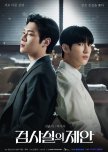
Not Perfect, But Definitely Enjoyable
I honestly didn't expect much from Prosecutor's Proposal, especially since it's a low-budget BL K-drama, but it was actually pretty good. Sure, the plot was kind of predictable, and I could see most of the twists coming, but that didn't stop me from enjoying it. There were quite a few scenes that were genuinely interesting and kept me invested, and the chemistry between the leads was nice to watch.One thing that really stood out to me was the acting. I thought the cast did a really good job and made the characters feel believable, which definitely made the drama more enjoyable. My only complaint is that I wish the episodes had been a bit longer because I wanted more time with the characters and their story.
It's not a groundbreaking drama, but for what it is, it delivers a fun and enjoyable experience. If you go into it without expecting anything too complex, it's definitely worth watching. Overall, it was a good watch, and I don't regret giving it a chance.
Was this review helpful to you?

A Rom-Com With Just the Right Amount of Spooky
I genuinely had such a good time watching Spooky in Love. It’s a really fun rom-com with a little hint of spooky mixed in, and honestly, that combination worked really well for me.The chemistry between the main leads was really good. Even without the drama constantly pushing romance in your face, their interactions felt natural and enjoyable to watch. I liked the way their relationship developed, and they had a really comfortable dynamic that made their scenes fun.
What I especially loved was how easy and stress-free this drama felt to watch. There wasn't that constant feeling of waiting for some huge misunderstanding or unnecessary drama to ruin everything. I could just sit back, enjoy the story, laugh at the characters, and actually have fun watching an episode.
And some scenes were SO funny omg. There were moments where I was genuinely laughing at how ridiculous things got. The fact that even the ghosts were getting scared made it even funnier. The spooky elements didn't make the drama feel heavy—they actually added another layer of comedy to it.
Overall, Spooky in Love was just a really enjoyable rom-com with a fun supernatural twist. It made me laugh, the leads had good chemistry, and most importantly, it was never exhausting to watch. Sometimes you just want a drama that lets you relax and have a good time, and this one definitely gave me that.
Was this review helpful to you?
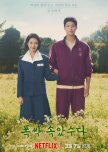
It Broke My Heart in the Softest Way
I honestly don't even know how to review this properly because When Life Gives You Tangerines is just a masterpiece. I finished it and just sat there for a while because I didn't know what to do with all the emotions it left me with.This drama feels so real. It isn't just about romance or some big dramatic storyline. It's about life. Growing up, family, love, dreams, sacrifices, losing people, getting older, and all those little moments that you don't realize are important until they're already gone.
I got so attached to the characters. It genuinely felt like I was watching actual people live their lives rather than watching fictional characters in a drama. I laughed with them, cried with them, got frustrated with them, and somehow ended up caring about every little thing that happened to them.
And the acting??? Insane. There were so many scenes where I didn't even need dialogue to understand what someone was feeling. Just their expressions were enough. Some scenes hurt so much because everything felt so natural and real.
I also loved how the drama showed love. Not just romantic love, but the love between parents and children, friends, family, and the kind of love where you quietly sacrifice things for someone without expecting anything back. There were so many moments that made me think about my own life and the people around me.
And honestly, this drama reminded me that life isn't always some huge beautiful story. Sometimes it's just ordinary days, small happiness, disappointments, people coming and going, and somehow continuing anyway. And maybe that's what makes life beautiful in the first place.
I cried SO much. Like genuinely. Some episodes emotionally destroyed me and then somehow the next scene would make me smile again.
The cinematography, music, writing, acting, characters — everything just works so well together. Nothing felt unnecessary. It was slow in places, yes, but I never felt like I was watching something meaningless. It felt like watching a whole lifetime unfold.
There are dramas you watch and move on from.
There are dramas you really like.
And then there are dramas that stay somewhere in your heart.
When Life Gives You Tangerines is definitely the third one.
A true masterpiece. 🤍
Was this review helpful to you?

Actually SO Good
Honestly, this drama was actually SO good. I really, really liked it. I went into it expecting to enjoy it, but I ended up getting attached to so many of the characters and genuinely had a great time watching it.Most of the characters were amazing, and I really liked the acting from the cast too. There were so many characters that I ended up liking that it's honestly hard to pick just a few favorites.
I especially really like Hou Minghao and Ai Mi. I enjoyed watching them a lot, although I'll be honest—their age difference was pretty noticeable to me, and romantically, I didn't feel a huge amount of chemistry between them. But putting the romance aside, I really liked their individual characters and their overall dynamic.
And Hou Minghao's action scenes??? WOWWW. He absolutely killed those scenes. Whenever the action started, I was immediately hooked. His screen presence during the fight scenes was seriously so good.
I also really liked Li Mao's character. His character development was one of the things I enjoyed the most. Watching him change and grow throughout the story made me appreciate his character so much more.
Honestly, I have so many characters I like from this drama. That's probably one of the biggest reasons I enjoyed it so much—the cast of characters made the whole story more entertaining, and I found myself getting attached to them as the drama went on.
Also, the OSTs??? SO GOOD OMGGG. Every time one of the songs came on, I was just enjoying the whole atmosphere even more. The music really suited the drama and made some scenes hit even better.
And honestly, I wanted more episodes. I was having such a good time that I wasn't really ready for it to end. I would've happily watched a few more episodes, but it's fine. I'm still really happy with what we got.
Overall, I really, really enjoyed this drama. The acting was good, the characters were memorable, the story kept me entertained, and the action was seriously impressive. I obviously had my preferences when it came to certain relationships, but that didn't stop me from enjoying the drama as a whole.
I'd definitely recommend giving it a try. Go into it without overthinking it and explore the characters yourself, because there are genuinely so many good ones to discover.
Was this review helpful to you?

A Rare Adaptation That Doesn't Lose Its Soul
Going into Payback, my biggest concern was whether it would do justice to the manhwa. Thankfully, it stays surprisingly faithful. While a few minor scenes and details were left out—which is pretty much expected in any adaptation—the core story, the characters, and the overall atmosphere remain intact. As someone who read the manhwa, I never felt like the drama betrayed the source material.What impressed me the most was how well the casting worked. The leads fit their characters, and their chemistry felt natural instead of forced. They handled both the quieter emotional moments and the more intense confrontations convincingly, making it easy to invest in their relationship.
The production quality also deserves credit. The cinematography is polished, the pacing is mostly consistent, and the soundtrack complements the scenes without becoming distracting. It feels like the team genuinely cared about bringing the story to life rather than simply capitalizing on the popularity of the original work.
That said, the drama isn't perfect. Some emotional beats don't hit quite as hard as they did in the manhwa because a few smaller scenes that helped build the characters were removed. They're not major omissions, but if you've read the source material, you'll probably notice them. There are also moments where the adaptation plays things a little safer, which slightly tones down the emotional intensity.
Even so, these are relatively minor complaints. The adaptation understands what made *Payback* enjoyable in the first place and focuses on preserving that. It never tries to reinvent the story unnecessarily, and I appreciate that.
Overall, *Payback* is one of those adaptations that respects its source material while still working well as a drama on its own. Whether you're already a fan of the manhwa or going in completely blind, it's an easy recommendation. Faithful adaptations are harder to come by than people think, and *Payback* is proof that staying true to the original can absolutely pay off.
Was this review helpful to you?


