



This review may contain spoilers
The First Jasmine Review: Two Broken Souls Who Quietly Became Each Other's Home
As a Bai Lu fan, The First Jasmine was an absolute must-watch, especially with Cheng Lei as her co-star. I had only recently become familiar with Cheng Lei through two of his dramas, and this series convinced me that he is one of the finest actors of his generation.
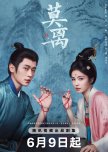
At first glance, It looks like another historical romance built around revenge and court politics. What makes it exceptional, however, is that both protagonists are deeply flawed. Ye Li is the brilliant granddaughter of the Headmaster of Lishan Academy, gifted in medicine, strategy, martial arts, mathematics, chess, and astrology, yet she quietly carries the survivor's guilt and trauma left by the devastating epidemic that claimed the people she loved most. Prince Ding, Mo Xiuyao, is a legendary general admired throughout the empire, but beneath his calm exterior is a disabled prince burdened by the destruction of his family and years of emotional restraint.
Because both characters spend most of the drama hiding rather than expressing their pain, Bai Lu and Cheng Lei rely on subtle expressions, silence, and body language instead of dramatic outbursts. That restraint is exactly what makes their performances so powerful.
One irony I particularly appreciated is Ye Li's family. Her father is weak, foolish, and easily manipulated, while her mother—the beautiful and intelligent daughter of the Headmaster of Lishan Academy—made the tragic mistake of falling in love with the wrong man. Ye Li inherited her mother's brilliance but possessed the strength, wisdom, and resilience that neither of her parents fully demonstrated.
What I loved most was that Ye Li was never written as someone who simply needed saving. Her intelligence became her greatest weapon. More importantly, she became Prince Yao's greatest ally—initially an unknown one—quietly dismantling enemies through strategy while he fought on the battlefield. Their partnership felt equal, built on mutual respect rather than dependence.
PERFORMANCES
Bai Lu once again proves why she is one of my favourite actresses. Her portrayal reminded me of One & Only—restrained, understated, and emotionally layered. There are no traces of Bai Lu herself, only Ye Li. Sometimes a slight pause, lowered eyes, or a trembling smile conveyed more than pages of dialogue ever could.
The Lishan storyline became the emotional backbone of the drama and the strongest showcase of her acting. The epidemic was not simply a tragedy from Ye Li's past; it continued to haunt her throughout the story. Every return to Lishan, every vision of her grandfather and fellow disciples, and every reminder of what she had lost carried enormous emotional weight. Yet Ye Li never allowed her grief to define her. She continued protecting others, especially Prince Yao, while quietly carrying the pain herself.
Cheng Lei was equally impressive. Playing a disabled, short-tempered prince required remarkable restraint. Unlike his role in How Dare You?!, where he displayed an incredible range of comedy, fierceness, vulnerability, timidity, and even an adorably clingy side, Prince Yao demanded quiet control. His finest scenes weren't loud or dramatic but deeply internal. The sequence on Lishan Mountain, where Ye Li's condition worsened while he forced himself to remain composed despite being consumed by guilt, was heartbreaking. His expressive eyes alone communicated fear, helplessness, and unconditional love.
A ROMANCE BUILT ON TRUST
What truly made Bai Lu and Cheng Lei exceptional wasn't the romance itself but how they acted opposite one another. Great chemistry isn't measured by passionate kisses or intimate scenes; it's revealed in how actors listen, react, and elevate each other's performances.
Even during ordinary conversations or emotionally heavy scenes, they remained completely present with one another. The Lishan sequences, in particular, showed how responsive their acting was. They didn't simply deliver dialogue—they responded naturally to each other's emotions.
I also loved that Ye Li fell in love first. She admired Prince Yao's since her teens, his integrity and kindness long before he recognised his own feelings. Even after they married, it felt as though she fell in love with him all over again, travelling a great distance simply because she missed him. Prince Yao, meanwhile, fell even deeper. Whenever he couldn't find her, he became visibly restless. Every time he returned home, one of the first things he asked was where Ye Li was. Watching the once-feared Ding Prince become quietly devoted to his wife—gently touching her face, hurrying home to see her, or simply wanting her beside him—was sweeter than any grand romantic gesture.
The kissing scenes were relatively restrained, but I never felt the romance lacked intimacy. Their love was expressed through lingering glances, gentle gestures, and unwavering trust. Like One and Only, this drama proves that genuine chemistry isn't built on physical intimacy but on two actors who know how to communicate love through their eyes and silence.
SYMBOLISM
One of the drama's greatest strengths is its use of symbolism.
My favourite is the wind chimes. They first represent Ye Li's true home at Lishan and become one of the few memories she carries after the epidemic. They later appear in her mother's shop, symbolising her enduring connection to her family. When she finally hangs them at Prince Ding's residence, it quietly marks the moment she accepts it as her new home. By the end, the wind chimes no longer represent a place—they represent belonging. Ye Li doesn't abandon her past; she carries it with her until she finally finds someone who makes her feel safe enough to call another place home.
The straw dolls she prepares before leaving Lishan beautifully symbolise the burden of revenge she carries, promising to release them to the wind once her mission is complete. The recurring libation before drinking adds cultural authenticity, while the wild monkeys become a powerful metaphor for Ye Li's trauma. When Prince Yao leads her back to the mountain and shows her there are no monkeys waiting for her, he is really helping her confront the fears she has carried since Lishan.
The final return to Lishan remains my favourite scene. Seeing her grandfather and fellow disciples one last time before hearing Prince Yao call her back to reality felt like receiving permission to let go of the past without forgetting it.
SUPPORTING CAST, PRODUCTION & FINAL THOUGHTS
While a few key supporting performances, particularly the Emperor, Prince Li, and Zuide, lacked the emotional depth their roles required, others were excellent. Lin Muran (Han Ming Xi), Feng Xue Ya (Qing Shuang), Shawn Zhang (Li Fei Bai), and Liu Xing Chen (A Jin) all brought warmth, sincerity, humour, and emotional balance to the story.
The cinematography, costumes, dual-POV storytelling, musical score, and OST beautifully enhanced the emotional atmosphere. Bai Lu also looked stunning throughout the series, even in scenes where Ye Li appeared gravely ill with little or no makeup.
The drama isn't perfect. Some scenes could have been executed better, and stronger performances in a few supporting roles could have elevated it even further. Yet whenever Bai Lu and Cheng Lei shared the screen, I was completely captivated. They never competed for attention—they elevated each other's performances.
In the end, I realised TFJ was never really about revenge. It was about finding home again. The wind chimes that followed Ye Li from Lishan, to her mother's shop, and finally to Prince Ding's residence beautifully capture that journey. Prince Yao didn't erase her grief; he simply became the reason she could finally live with it.
I sincerely hope Bai Lu and Cheng Lei reunite in another historical drama. With another powerful script and a stronger supporting cast, I have no doubt they could create another masterpiece.
At first glance, It looks like another historical romance built around revenge and court politics. What makes it exceptional, however, is that both protagonists are deeply flawed. Ye Li is the brilliant granddaughter of the Headmaster of Lishan Academy, gifted in medicine, strategy, martial arts, mathematics, chess, and astrology, yet she quietly carries the survivor's guilt and trauma left by the devastating epidemic that claimed the people she loved most. Prince Ding, Mo Xiuyao, is a legendary general admired throughout the empire, but beneath his calm exterior is a disabled prince burdened by the destruction of his family and years of emotional restraint.
Because both characters spend most of the drama hiding rather than expressing their pain, Bai Lu and Cheng Lei rely on subtle expressions, silence, and body language instead of dramatic outbursts. That restraint is exactly what makes their performances so powerful.
One irony I particularly appreciated is Ye Li's family. Her father is weak, foolish, and easily manipulated, while her mother—the beautiful and intelligent daughter of the Headmaster of Lishan Academy—made the tragic mistake of falling in love with the wrong man. Ye Li inherited her mother's brilliance but possessed the strength, wisdom, and resilience that neither of her parents fully demonstrated.
What I loved most was that Ye Li was never written as someone who simply needed saving. Her intelligence became her greatest weapon. More importantly, she became Prince Yao's greatest ally—initially an unknown one—quietly dismantling enemies through strategy while he fought on the battlefield. Their partnership felt equal, built on mutual respect rather than dependence.
PERFORMANCES
Bai Lu once again proves why she is one of my favourite actresses. Her portrayal reminded me of One & Only—restrained, understated, and emotionally layered. There are no traces of Bai Lu herself, only Ye Li. Sometimes a slight pause, lowered eyes, or a trembling smile conveyed more than pages of dialogue ever could.
The Lishan storyline became the emotional backbone of the drama and the strongest showcase of her acting. The epidemic was not simply a tragedy from Ye Li's past; it continued to haunt her throughout the story. Every return to Lishan, every vision of her grandfather and fellow disciples, and every reminder of what she had lost carried enormous emotional weight. Yet Ye Li never allowed her grief to define her. She continued protecting others, especially Prince Yao, while quietly carrying the pain herself.
Cheng Lei was equally impressive. Playing a disabled, short-tempered prince required remarkable restraint. Unlike his role in How Dare You?!, where he displayed an incredible range of comedy, fierceness, vulnerability, timidity, and even an adorably clingy side, Prince Yao demanded quiet control. His finest scenes weren't loud or dramatic but deeply internal. The sequence on Lishan Mountain, where Ye Li's condition worsened while he forced himself to remain composed despite being consumed by guilt, was heartbreaking. His expressive eyes alone communicated fear, helplessness, and unconditional love.
A ROMANCE BUILT ON TRUST
What truly made Bai Lu and Cheng Lei exceptional wasn't the romance itself but how they acted opposite one another. Great chemistry isn't measured by passionate kisses or intimate scenes; it's revealed in how actors listen, react, and elevate each other's performances.
Even during ordinary conversations or emotionally heavy scenes, they remained completely present with one another. The Lishan sequences, in particular, showed how responsive their acting was. They didn't simply deliver dialogue—they responded naturally to each other's emotions.
I also loved that Ye Li fell in love first. She admired Prince Yao's since her teens, his integrity and kindness long before he recognised his own feelings. Even after they married, it felt as though she fell in love with him all over again, travelling a great distance simply because she missed him. Prince Yao, meanwhile, fell even deeper. Whenever he couldn't find her, he became visibly restless. Every time he returned home, one of the first things he asked was where Ye Li was. Watching the once-feared Ding Prince become quietly devoted to his wife—gently touching her face, hurrying home to see her, or simply wanting her beside him—was sweeter than any grand romantic gesture.
The kissing scenes were relatively restrained, but I never felt the romance lacked intimacy. Their love was expressed through lingering glances, gentle gestures, and unwavering trust. Like One and Only, this drama proves that genuine chemistry isn't built on physical intimacy but on two actors who know how to communicate love through their eyes and silence.
SYMBOLISM
One of the drama's greatest strengths is its use of symbolism.
My favourite is the wind chimes. They first represent Ye Li's true home at Lishan and become one of the few memories she carries after the epidemic. They later appear in her mother's shop, symbolising her enduring connection to her family. When she finally hangs them at Prince Ding's residence, it quietly marks the moment she accepts it as her new home. By the end, the wind chimes no longer represent a place—they represent belonging. Ye Li doesn't abandon her past; she carries it with her until she finally finds someone who makes her feel safe enough to call another place home.
The straw dolls she prepares before leaving Lishan beautifully symbolise the burden of revenge she carries, promising to release them to the wind once her mission is complete. The recurring libation before drinking adds cultural authenticity, while the wild monkeys become a powerful metaphor for Ye Li's trauma. When Prince Yao leads her back to the mountain and shows her there are no monkeys waiting for her, he is really helping her confront the fears she has carried since Lishan.
The final return to Lishan remains my favourite scene. Seeing her grandfather and fellow disciples one last time before hearing Prince Yao call her back to reality felt like receiving permission to let go of the past without forgetting it.
SUPPORTING CAST, PRODUCTION & FINAL THOUGHTS
While a few key supporting performances, particularly the Emperor, Prince Li, and Zuide, lacked the emotional depth their roles required, others were excellent. Lin Muran (Han Ming Xi), Feng Xue Ya (Qing Shuang), Shawn Zhang (Li Fei Bai), and Liu Xing Chen (A Jin) all brought warmth, sincerity, humour, and emotional balance to the story.
The cinematography, costumes, dual-POV storytelling, musical score, and OST beautifully enhanced the emotional atmosphere. Bai Lu also looked stunning throughout the series, even in scenes where Ye Li appeared gravely ill with little or no makeup.
The drama isn't perfect. Some scenes could have been executed better, and stronger performances in a few supporting roles could have elevated it even further. Yet whenever Bai Lu and Cheng Lei shared the screen, I was completely captivated. They never competed for attention—they elevated each other's performances.
In the end, I realised TFJ was never really about revenge. It was about finding home again. The wind chimes that followed Ye Li from Lishan, to her mother's shop, and finally to Prince Ding's residence beautifully capture that journey. Prince Yao didn't erase her grief; he simply became the reason she could finally live with it.
I sincerely hope Bai Lu and Cheng Lei reunite in another historical drama. With another powerful script and a stronger supporting cast, I have no doubt they could create another masterpiece.
Was this review helpful to you?


