

 2
2 30
30


This review may contain spoilers
The trilogy of a tragedy about humanity
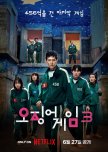
I watched all 22 episodes of Squid Game in a few days, and it probably helped that I experienced all three seasons back to back. In my opinion, the ending is perfect—there is no other "right" way.The first most memorable character for me was Sang Woo. His last scene, especially his final exchange with Gi Hun, really moved me. But my favorite became Myung Gi. His story with Jun Hee was touching, and he's a tragic villain who shows how an environment like the Games can push someone who's already far from perfect to a point of no return. And contrary to what others say, he was a genuine but shy character who couldn't make up for his mistakes. Especially when he killed Thanos, something seemed to have snapped inside him. The crypto investment was also an important way to reflect more modern issues. Sang Woo was an anti-villain, and Gi Hun wasn't that morally bright either, even before he killed Dae Ho—he literally sacrificed the Xs for the rebellion, which was understandable in a life-or-death situation. I loved Gi Hun's own fall because he's the one who said, "You don't know what this place does to people. It changes them."
I loved all the dark psychology, tragedy, and contradictions between the characters. To me, Squid Game is a beautiful ode to humanity and history: the votes, the rebellion, the diversity of the cast, the setting that gives Korean and universal childhood games a completely different meaning, the nightmarish atmosphere, and a story that stays grounded in reality, combining fear, greed stemming from a strong desire to live a better life in a world that's also hell, and survival.
Season 2 was almost too joyful to be true. Of course it wasn't "necessary," but it's a real shame without it and the director obviously had plans. Season 1 literally ends with Gi Hun turning back at the airport and confronting them on the phone. Personally, I would've never watched the show if it had stopped there and the new seasons were clearly my favorites. While Season 1 was sufficient on its own, it did not give me characters to like as much as I did with Season 2. I also think many people misinterpret the ending of Season 3. A VIP in Season 1 already says, "This year, the games from Korea were the best!", so Squid Game USA wasn't some last-minute addition. I also wondered if Gi Hun's red hair foreshadowed In Ho's "red pill" speech in Season 2, especially since Gi Hun later wears the red player shirt.
As for Jun Ho, people forget the island isn't supposed to be easy to find, his final search only lasted a few days, and he was deliberately misled by the captain. The real horror is that the Games keep continuing. Since the main setting can become suffocating, the scenes at sea also helped the pacing. He wasn't useless either: his character is crucial to the plot, he saved Gyeong Seok, and he had an internal conflict towards his brother. His betrayal storyline also worked as a parallel to Gi Hun and In Ho's story.
Was this review helpful to you?
This review may contain spoilers
Crushology 101 reminds you of the preciousness of love, even through its complications
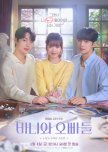
It's a cute college rom-com, but it's also a genuinely strong story, something the drama keeps proving right up until the final episode. It's beautifully directed too, with a fresh soundtrack (that French song at the start — awesome) and really creative visual choices: shifting from simple shots to dynamic collages, full cinematic frames, warmer color palettes, and even black-and-white flashbacks in reduced framing. All of these choices are used deliberately to serve each scene.The original webtoon, Bunny and Her Oppas, is a reverse harem. However, there is no endgame. Here, you have a love story with a clear ML, but each of them had a purpose and intervened at some point.
Bunny's struggle with self-esteem, Yeol's vulnerability and trauma from his family, his heightened abandonment issues from his ex (contrasting Bunny's ex and her other experience), and the physical distance between him and Bunny compared to Won, who worked in the same department as Bunny and started his relationship with her more naturally — these are the kinds of things that draw me in.
The cast was a great ensemble where everyone felt necessary to the plot: Bunny's parents (it's so rare to see a loving couple like this and get to see their own story), Yeol's friends and especially his best friend Dong Ha (a reunion with his brother from Hierarchy), Bunny's friends with the funny names, Ji Won and Yeol's growing and funny friendship, Won's sister, Yeol's mother and his ex, the male leads, and Bunny's ex.
Honestly, I was a little scared when I saw which webtoon they were adapting, because I thought it would be a waste of potential for their romance to become some reverse-harem rom-com, and I'm not into that. Turns out, their romance more than satisfied me, and I loved how the concept was handled.
(Spoilers up to Episode 7)
However, I've read comments about Yeol that make me wonder if they really watched the drama. In Episode 4, he confesses his feelings. In Episodes 5 and 6, he goes after her several times and makes it very clear that he likes her, reinforcing the confession from Episode 4. In Episode 7, he is trying to deal not only with his own feelings, but also with his ex, who won't let him go even though he makes it clear that he doesn't want her.
Bunny, even though she is hurt by the whole situation, doesn't choose to give up. And she has Ji Won, but she doesn't see him romantically and makes that clear. After knowing the truth, Yeol felt bad about his ex because all this time he had hated her without knowing the truth.
(End of spoilers)
The drama felt nostalgic, and it made me appreciate old-school tropes again. The fantasy scenes were great too, like in True Beauty.
The ending was also beautiful, on top of the great cliffhangers the drama had. I wish it had gotten a better release; it should have been on Netflix and not a region-restricted platform like Viu. Even I couldn't watch it on Viki in France. It's a "small" drama, but it deserves way more. I can only say that the impact the drama had on me was incredible.
For details that you might notice, there were parallels to Hierarchy (the end of Episode 1, the bike, the shirt), and I felt like it was inspired by Nevertheless — the art setting, the beginning of Episode 4, the opening, one particular scene especially.
P.S. I'll post one of my favorite shots and edit under the review.
Was this review helpful to you?
I'm writing this because of a spoiler review (so it won't appear)
Request it here:https://help.kocowa.com/hc/en-us/requests/new
https://help.netflix.com/fr/titlerequest (doubt nf will take it but it's on netflix kr)
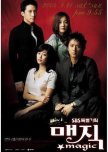
I'm currently watching it thanks to a torrent site and it's pretty interesting, I'm hoping to like it even more when the tension and melodrama rise. It's also unique to have a drama about father-son relationships.
Was this review helpful to you?


