

 2
2 30
30


"and if you gaze long into the abyss, the abyss also gazes into you."
Aku no Hana is a story about teenage angst and their solitude or defiance towards the world around them. It’s definitely not a film for everyone, but it expressed something I deeply relate to and that was cathartic for me. Anyone who dismisses it as merely weird or perverted is missing how profound it truly is. It touches on everything — from the struggles of adolescence and mental health to a subtle critique of a rigid, monotone society with the lack of mental health support, stigma, detached overworking parents, etc. It’s raw, powerful, and honest. The opening line even states it’s meant for those who have suffered through puberty, which sets the tone perfectly. Of course, Baudelaire's Les Fleurs du Mal is part of the film.The symbolism is brilliant — I especially loved the “other side” theme. It’s probably this impactful because it condenses a massive, masterful manga into just two hours, making the experience intense and overwhelming in the best way. Honestly, this movie found me rather than the other way around.
Both actors were exceptional. Their chemistry was unforgettable, and I loved their bond because it was both destructive and liberating. It’s also straight-up Linkin Park-coded, especially with how much it reminded me of The Emptiness Machine. The fact that manga fans have embraced the movie speaks for itself. The creators knew it was too niche to realistically get a second part, so they put everything into adapting the entire story and worked incredibly hard to make it happen.
~ Link to watch and more under the review
Romantic thriller about privileged teenagers — an intense work beyond appearances
Review with images and spoiler marks: https://www.reddit.com/user/_sunoh/comments/1ljwqtb/hierarchy_review_an_intense_work_beyond/---
Hierarchy is a drama that, behind an apparent classic structure — elite school, bullying, revenge — stands out precisely through its ability to go further, delivering a human, emotional, and above all, resolved story. And that is its strength.
The story doesn’t need a sequel because it is complete. Kang Ha gets the truth he seeks, and justice is served. No blind revenge, no spectacular payback, but a quest for meaning, understanding, and repair. The drama doesn't dwell on the brutality of bullying as often seen elsewhere, it chooses a more subtle, mature, realistic tone. And that makes all the difference.
Kang Ha, as a central figure, disrupts the established order through his academic excellence, courage and emotional intelligence. The way he prevents the sharing of the video, or his heartbreaking line to Ri An — “Learn to live with your guilt because I will never accept your apology” — gives the whole story its meaning: a life lesson, not a revenge tale.
Every line of dialogue matters, every word carries weight, and it’s in these exchanges that Hierarchy finds its full scope. The final episode is especially striking: intense, accomplished, and deeply moving.
Jae I herself embodies the ambivalence that makes the characters so human. Both victim and witness, stoic yet wounded, she perfectly illustrates the emotional complexity the drama aims to convey. Her performance, subtle and restrained, makes her a memorable character, just like Kang Ha, whose portrayal literally carries the drama. Moreover, all the main characters—and many others—add depth and nuance to the story.
Far from being a simple “aesthetic” drama, Hierarchy knows exactly where it’s going. It doesn’t seek consensus perfection — it seeks resonance. And it succeeds, because every episode is rich and layered, every emotion measured, every transformation believable. Even Ri An benefits from a complex and realistic character arc. And that’s precisely what makes this work memorable: nothing is black or white, and above all, everything is said.
The settings themselves play an equally interesting role. They depict a school of unreal beauty, which makes the contrast with the darkness of the drama all the more striking. It evokes certain dystopian films: a seemingly perfect world where the worst seeps into every crack. This visual dissonance is no accident — it reinforces the drama’s atmosphere and underlines its tensions.
It's easy to criticize the drama for a lack of originality, but that's a misreading. Hierarchy doesn’t overplay elitism or corruption — it deconstructs them with finesse. And above all, it highlights a powerful message: the importance of change, awareness, and education — even in the most closed environments.
All in all, Hierarchy is a short but impactful drama. Not because of its spectacular aspect, but because of its sensitivity, accuracy, and its ability to evoke emotion without relying on gimmicks. The drama doesn't aim to shock — it aims to heal, to bring growth, and it does it well.
The post-credits depict a symbolic scene of Kang Ha and the school hinting at a Season 2, but either way, the leads got reunited in Crushology 101 along with Kim Min Chul.
P.S. There is also a cute post-credit scene in Episode 5, between He Ra and Woo Jin.
~ More of my thoughts in the comment section
Attack on Titan Live-Action: A Misunderstood Adaptation
1. This looks amazing for the budget and time this was made in, it's not an Hollywood blockbuster and they put in a lot of work (hybrid filming, meaning tokusatsu mixed with CGI). The titans are portrayed as they should, creepy and horrifying. That in itself works better in live action, imo, as it does overall if you like the more grounded feel. I understand why people could make fun of them in the trailer but while watching the movie I was not laughing, and if that's how you see it then it's literally the same in the anime, in fact they're even worse.2. The author himself asked for the differences, he literally worked with them.
3. This is closer to Chapter 0, the author's trial before the actual manga.
4. Brilliant details such as the movies being adapted as a novel inspired by Dante's Inferno, the implied bisexuality of Kirishima's character in the white room scene (Matrix reference) with Eren being a parallel to Satan tempting Adam and Eve. Yes Levi will be the cooler guy but Kirishima is meaningful in the story.
5. The music itself was amazing and the whole movie was artistic with beautiful landscapes and sets. And of course that final shot. Speaking of, the setting of the movie also allowed for classism in its world of walls, with the tower of Babel even being mentioned at the very center as the government. (25:50 on the video mentioned below)
6. The characters themselves are actually the same, that was said by the director. While Levi isn't there, you might be shocked because he was considered as the main character until Isayama decided to make them write a different story (20:00 on the video mentioned below). Since at that time the anime was already telling the manga's story, it would not have been a creative choice.
7. Lastly, I want to thank Miura for his brilliant portrayal as Eren. Rest in peace... It was really disheartening to find out after I looked up his name when I finished Part 1.
TitanGoji's latest videos on the movie if you're interested: (https://www.youtube.com/playlist?list=PLsiDKUgsnosJqpQbtq452u0WjNTt-Tlaq) Please at least look up the "Attack on Titan Live-Action: What Happened?" video if you have time and if you're interested in the Attack on Titan franchise. I can already see people throwing shade at this live action when the Hollywood adaptation comes out, lol.
// Details of my earlier points
The official novelizations published by Kodansha are based on the film screenplays by Tomohiro Machiyama and Yusuke Watanabe—they are not adaptations of the manga.
What's particularly interesting is the chapter structure.
The first novel (Attack on Titan) contains chapter titles such as:
辺獄 (Limbo)
地獄の門 (The Gate of Hell)
ディーテの市 (City of Dis)
遅悔者 (Late Repentant)
コキュートス (Cocytus)
ジュデッカ (Judecca)
These are all locations or concepts directly associated with Dante's Inferno.
The second novel (End of the World) continues the pattern with chapters including:
ミーノスの審判 (The Judgment of Minos)
エデンの真実 (The Truth of Eden)
アケローン川の畔 (On the Banks of the Acheron)
悪魔と聖女 (The Devil and the Saint)
Again, Minos and the River Acheron are unmistakable references to Inferno.
A nostalgic and fun fiction
Edit: After all, it seems it didn't do so bad on Disney. According to an official source, the production and broadcast of Season 2 are planned for 2026. But I'm not getting my hopes too high, especially this soon.Twelve is a tribute to a vintage, nostalgic style reminiscent of traditional series, fighting games, and especially Power Rangers, which originated from tokusatsu. The first season was meant to lay the groundwork for three more, which gives a lot of meaning to its structure.
The angels were meant to look like ordinary humans while still remaining unique. Their activites, the loss of the other angels (explaining why it's not as "colorful" as some expected), the tired father figure—Taesan, who has lost faith in humanity—the contrast between the Crow Ogwi (my favorite) and the Tiger Taesan, as well as the presence of the main villain, the priest. And most importantly, the Korean "Romeo & Juliet" between Ogwi and Mireu, or Zeref and Mavis (Fairy Tail).
Regarding the twelve zodiac signs, the characters are well thought-out (the symbolic of the healer Snake, the quiet geeky Rat, the solitary Dragon who is key to the story, the slightly goofy Monkey, the loyalty and sense of duty of the Dog and the Horse, the grumpy, hedonistic and protective Pig) and the human chosen for the angels highlights the more vicious aspects of humanity. From their first look, I found them perfect. I'll add a comment about their names in the comments.
To me, the acting, the music and the visuals were all strong points. However, the reception was disastrous, so I’ve almost lost hope. And to be honest, Disney didn't help at all because of the poor release (not available in many countries as usual, if it wasn't enough that it's too expensive). As for the TV ratings, Bon Appétit Your Majesty aired at the exact same time, and it's not surprising it quickly took the spot.
It’s a shame, because it would only have improved, and the drama deserved recognition. Critics may say it was slow and weak despite its touching subtext (like the old shopkeeper who acts as Taesan’s emotional support) but this drama isn’t meant to be watched superficially—the style simply didn’t find its audience. We all know KBS isn’t known for massive budgets, yet I personally find this drama beautiful.
In the end, I enjoyed the action and the story. It was a fun time and I got attached to these characters, so if you think this drama might resonate with you, give it a chance.
Quote from Ma Dong Seok:
“In Twelve, besides myself, the angels who appear in the form of the twelve zodiac signs each display actions that reflect their own characteristics. They all have distinct traits. Rather than carrying the burden of the action alone, I tried to harmonize everything and find balance with them, so I ask for your generous support.”
The actor also revealed the effort invested in creating this K-drama:
“Even a simple story is difficult in its own way, but building the universe of a more complex narrative is even harder. I spent months staying up late working on it, to the point that my hair was falling out in clumps. The diverse and interesting character stories, along with the action, are the drama’s strengths.”
A small detail: The drama even had merchandise, you can find the drama's account on Twitter if you type Twelve Drama.

Colorful spin-off
I loved it — the couple, particularly Ong Seong Wu (I love his jackets!), and just about everything else. The scenes in Mongolia, the secretive and wealthy environment (along with the Penthouse-like OSTs), the way it plays with capitalism, the female empowerment through the mother, the grandma (who both had their own backstories), and Nam Soon herself, the great comedy, like the lazy brother (he was so funny and reminded me of the sloth in Zootopia), and the way it makes fun of misogyny.This drama feels much closer to a superhero comic than a typical K-drama like Strong Girl Bong Soon. It wasn't trying to simply repeat Bong Soon; it took the concept somewhere else.
There were so many little moments I loved, like Nam Soon looking at Hee Sik dancing from afar thanks to her super vision (iconic scene), or the rain falling above him with the rainbow, and when he disguised himself as a woman. Nam Soon keeping a picture of Eun Woo in her journal in Mongolia and saying she wants to date a good-hearted Korean guy, and then fate happening in such a fun way, was great too.
I also liked the open-minded take on old couples, contemporary issues, vulnerable people, family relationships (some more complicated than others), adoptive parents and finding your biological family again, teamwork, and all the side characters: the homeless couple (which had a fate of irony), Mr. Bread and his OST, the semi-villain Hwa Ja who impersonated the real daughter, detective Yeong Tak.
I liked how it was a big fight revolving around drugs and the Russian mafia, while Nam Soon had even bigger superpowers, as well as the "link" they had within their family. The production quality was high, the ending was great (a satisfying conclusion, then surprise), and Season 2 might even come out according to news.
I didn't think it was poorly written, and there wasn't too much content either. It was all tied together, and there were 16 episodes of about an hour each, which is more than enough.
People hated it because "the villain was hot." No, his backstory does not allow him to cause mass murder, exploiting people's vulnerabilities, threatening Nam Soon and her biological family to death, and killing someone for self-satisfaction 🙄 I know Pavel is the big villain behind the drug operation, but he had escaped Pavel in the past. This is a complex issue, and until the end he still took his own decisions. The leads themselves empathized with him, his last moment was tragic, but that's also what makes the show good, and why in the end, Geum Ju is still pursuing Pavel after what she discovered. People implying that the leads/police should let that happen makes absolutely no sense, even literally shipping Nam Soon with Shi Oh.
I'll never forgive the haters for insulting the leads, saying the male lead is ugly and hating on them, even the whole cast and the fans of the drama. The k-drama community went downhill SO bad, especially on MDL. I was watching the drama with other people on Discord and we were disgusted at these behaviors to say the least. I had myself posted a review and it did well but I quit MDL afterwards anyway. The few fans who dared to speak up would get bullied in the comment section, literal psychos lmao and most of them were obviously teenagers. Some even said, "Who cares about an old couple? I skip their scenes, only watching for the villain" — which is exactly the kind of superficiality the drama was calling out.
While the villain was good and a fitting casting choice, it's absolutely untrue that he carried the drama. Everyone did. It's an ensemble cast, unlike the prequel.
I've also seen people say, "There are too many characters/storylines, so we can't get attached to them except for the villain." Shi Oh barely had any screen time in the first episodes and not that much afterwards either as there were many characters, clear evidence they weren't paying attention. Even the music and acting would be rated a 1 by some because "everything was annoying and cringe except Ryu Shi Oh."
About the music: it had K-pop songs because that was exactly what the drama needed.
The prequel focused more on the rom-com/CEO romance. Hee Sik and Nam Soon had great chemistry too; it was just different. There was the typical love triangle, a popular male lead who acted all cutesy, and a more conventional K-drama structure.
And while the girl was childlike there too, people complain about Nam Soon even though you actually see how she grew up and understand her personality. Then they complain about Hee Sik because he's "boring" ??? Which he's not, but with that I would never be their friends for sure.
The romance here was more mature, if anything. I loved his acting throughout the drama. He always improves, and I think he showed his range especially well here. I was glad he got a role in a big drama like this. It was popular in Korea too — JTBC is a paid channel, and it got high ratings.
One last thing: the romance isn't bad simply because Hee Sik got attached to her quickly. He was just a kind-hearted policeman, and I loved how they got entangled. Their relationship was so cute, especially how she found her dream thanks to him.
By the way, you can watch it without having seen the prequel, although Bong Soon and Min Hyuk do have a cameo, and Nam Soon is Bong Soon's distant cousin.
P.S. There was a Parasite and Nevertheless reference too, which was awesome.
On edit: Two things I've learned: there is a spin-off manhwa, Strong Girl Geum Ju (about Nam Soon's mother), and the drama actually surpassed Strong Girl Bong Soon in the TV ratings. Imagine calling it a flop when it was thriving on Netflix and on TV.
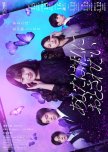
Falling in love, falling apart
I really liked this. It portrays reality well—how a relationship can fade over time. The story captures the growing distance between them, along with her struggles at work, in a subtle and believable way. That one confrontation between them is particularly well written, with sharp dialogue, strong performances, and a palpable sense of tension.The female lead comes across as almost sociopathic—not in a purely villainous sense, but in her detached curiosity about human nature, which makes her fascinating to watch. The second male lead is genuinely endearing, and the drama weaves in understated societal themes, as you’d expect from a J-drama.
In the end, the characters reflect on their mistakes, revisit how they met, and remember why they fell in love in the first place. The climax, underscored by classical music, is especially striking. The final scene then settles into a quieter note, as they exchange a simple “good morning” and look at each other with a mixture of regret and affection. It all comes together for a deeply satisfying conclusion.
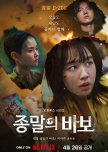
A poignant and philosophical take on the end of the world
"Together today, tomorrow, till the end."The Fool of the End was such a powerful title, but I'm not surprised they changed it in English. The screentime of Yoo Ah In that was removed did not appear significant to me. The protagonist was also Ahn Eun Jin, not him.
It’s definitely not a drama for everyone, but it reminded me of recent real-world events like the covid lockdown, Korea’s sudden martial law, and, on a more personal level, the sense of community my grandma shares at the church. The timelines were handled well (so I was quite confused about the criticism, because the drama was giving you clear hints like showing the date and changing the color, also context clues), and it was satisfying to learn about each character and connect everything together. I loved the unsettling but also calm atmosphere despite the chaos, how it kept my mind engaged, and how it moved me. It can sometimes feel ambiguous and require thinking or patience, but in a very good way. What Goodbye Earth offers is a deeply human story with a portrayal of hope and despair.
The drama focused on the perspective of ordinary people whose lives suddenly became extraordinary, and on what the catastrophe meant to the protagonist. The script wasn’t bad—the worldbuilding and storytelling were fascinating, and the introduction was great. Hae Chan, one of the kids, narrating the story to the audience as if you just opened a book? Perfect. I've read that the first episode was bad, but I couldn't disagree more. I got chills right away and was more hooked than with most dramas. This is far beyond a simple slice-of-life as suggested by others, and yes it is a thriller, people only say otherwise because of genre stereotypes. Anyone looking for raw intensity and complexity should definitely give it a chance. Despite the vast cast of characters, that was handled well as I felt closer to them along the way. Besides, I also loved the female villain when she appeared, she had a great presence.
The directing was amazing, and in terms of cinematography, it was the best (the color grading!). From the start, I loved how the lyrics matched the ending scene of episode one, and how the flashbacks used black and white frames along with other cool effects. The soundtrack was also a masterpiece, including the final track, and the performances were incredibly raw and compelling. By the way, Revolution by Hwang Sang Jun and Pre-holiday is not just an OST, it's an hymn.
On top of all this, the drama was also progressive in more than one way, and I salute the screenwriter for that.
One flaw for me was the fact that I didn't understand In Ha's military storyline. Maybe it was just me and hopefully I understand it better upon a rewatch.
Side note: As stated in the opening, Goodbye Earth is the adaptation of a Japanese mini-bus novel, which is a first.
I'll comment about the ending below.
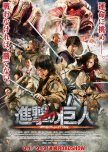
Attack on Titan Live-Action: A Misunderstood Adaptation
1. This looks amazing for the budget and time this was made in, it's not an Hollywood blockbuster and they put in a lot of work (hybrid filming, meaning tokusatsu mixed with CGI). The titans are portrayed as they should, creepy and horrifying. That in itself works better in live action, imo, as it does overall if you like the more grounded feel. I understand why people could make fun of them in the trailer but while watching the movie I was not laughing, and if that's how you see it then it's literally the same in the anime, in fact they're even worse.2. The author himself asked for the differences, he literally worked with them.
3. This is closer to Chapter 0, the author's trial before the actual manga.
4. Brilliant details such as the movies being adapted as a novel inspired by Dante's Inferno, the implied bisexuality of Kirishima's character in the white room scene (Matrix reference) with Eren being a parallel to Satan tempting Adam and Eve. Yes Levi will be the cooler guy but Kirishima is meaningful in the story.
5. The music itself was amazing and the whole movie was artistic with beautiful landscapes and sets. And of course that final shot. Speaking of, the setting of the movie also allowed for classism in its world of walls, with the tower of Babel even being mentioned at the very center as the government. (25:50 on the video mentioned below)
6. The characters themselves are actually the same, that was said by the director. While Levi isn't there, you might be shocked because he was considered as the main character until Isayama decided to make them write a different story (20:00 on the video mentioned below). Since at that time the anime was already telling the manga's story, it would not have been a creative choice.
7. Lastly, I want to thank Miura for his brilliant portrayal as Eren. Rest in peace... It was really disheartening to find out after I looked up his name when I finished Part 1.
TitanGoji's latest videos on the movie if you're interested: (https://www.youtube.com/playlist?list=PLsiDKUgsnosJqpQbtq452u0WjNTt-Tlaq) Please at least look up the "Attack on Titan Live-Action: What Happened?" video if you have time and if you're interested in the Attack on Titan franchise. I can already see people throwing shade at this live action when the Hollywood adaptation comes out, lol.
// Details of my earlier points
The official novelizations published by Kodansha are based on the film screenplays by Tomohiro Machiyama and Yusuke Watanabe—they are not adaptations of the manga.
What's particularly interesting is the chapter structure.
The first novel (Attack on Titan) contains chapter titles such as:
辺獄 (Limbo)
地獄の門 (The Gate of Hell)
ディーテの市 (City of Dis)
遅悔者 (Late Repentant)
コキュートス (Cocytus)
ジュデッカ (Judecca)
These are all locations or concepts directly associated with Dante's Inferno.
The second novel (End of the World) continues the pattern with chapters including:
ミーノスの審判 (The Judgment of Minos)
エデンの真実 (The Truth of Eden)
アケローン川の畔 (On the Banks of the Acheron)
悪魔と聖女 (The Devil and the Saint)
Again, Minos and the River Acheron are unmistakable references to Inferno.
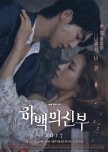
If something gets bathed in the moonlight, it becomes a myth. I guess our story will become a myth.
~ Why do you think you're the water god?~ What sort of question is that? Then you, why do you think you are human?
The Bride of Habaek has a lot of meaningful subtext that many viewers seem to overlook. Beneath the surface, it’s actually a beautiful fantasy — a bit unconventional, quietly layered, and laced with humor that gives it its own charm. Not everything has to be about high-budget showcases of flashy superpowers.
The icing on the cake: Shin Sae Kyeong has a fear of water and Nam Joo Hyuk is afraid of heights, so they really had to push themselves and supported each other.
The Bride of Habaek starts with a little girl talking to an old man, introducing its universe as a balance between both realms, the Gods serving to maintain the nature, a symbolic scene of So Ah's story, an unfinished painting of Habaek. The Gods simply appeared many years ago, with no such thing as growing up. Ironically, they aren't much different from us. With their own complicated stories, sometimes immature, sometimes selfish, sometimes clueless. The story is the journey of a psychiatrist who sees Habaek as another of her patients, and they grow to be more human together. Why Habaek lost his powers? Why did he get them back only to save her? Remember his conversation with the old man when he asked why he had to go the human world to deserve his future title.
A fun detail: Habaek is actually part of Korean mythology, and there is a sequence where So Ah tells him what she read on the Internet, which was false.
About the ending: (in the comments)
"coming like a storm into your town, you can't catch me now"
I love the character of Tang as an outcast of society, and the thematic of the characters in general. Their names, their stories, how they relate to each other. The dynamic between Tang and Nam Gam made me think of the line "coming like a storm into your town, you can't catch me now" of Olivia Rodrigo's Hunger Games OST.The directing was very creative, and I’m not surprised to see it’s the same person who was behind Strangers from Hell.
A Killer Paradox isn’t your typical thriller. It’s a dark comedy, and it’s good at that. I was fully captivated from how the first episode ended, with the shot of Tang walking in the street, depressed, standing out from the others, almost looking like it could end there, until the quiet finish of the last scene with the beautiful Korean ballad ‘Ordinary Person’ by Lucid Fall.
About the ending, in the comments to avoid spoilers:
A melancholic rom-com
To begin with, Lee Soo is one of the best male leads ever written. Fairy-tale metaphors, landscapes, discovering Seoul through teamwork and different jobs (photography and calligraphy), stages of life and love, quotes, missed opportunities, family relationships — there are lots of things to appreciate. In the end, Soo stayed patient and worked on himself, but that never means he has to change his whole personality, and I hate when people think that way. He's not bad, and people also tend to ignore the lonely cocoon he created for himself. What he lacked was self-love, and his vision of relationships was shaped by his divorced parents. His biggest mistake and regret was to not understand his own heart. So yes, his behavior could be a little childish, immature. I like such characters, because this is not what real toxicity is, this is simply being human. And I liked the romance, because they are both difficult yet adorable. I remember being on the ML's side even when he was in the wrong and feeling frustrated, which made the drama even better.There is also a complex SFL, a great contrast with the SML (a simple, kind CEO character whose job has to do with literature), his own backstory, and his relationship with the FL being a sort of contract. The drama is also about creating new opportunities despite being too late, with both halves divided by a turn of tables. It offers a fresh take on familiar tropes, while also giving us a third couple and an overall "group of friends" story.
The best part was the ML’s story because of how real it is. I got attached to him sonner than I thought, and I liked the way he cared about Woo Yeon (her name literally means "destiny") and supported her dreams. I also loved how The Little Mermaid was referenced through him. Ong Seong Wu has been one of my favorites ever since this drama, and I love the OST titles here. He even did a song for his character, and it is so emotional. The OSTs were always perfectly placed throughout the drama.
"I don't take photos of people."
This was the beginning of his story. He actually inspired me to take photos on my trip at the time I started watching the drama. Overall, this is a slow-burn character study, so it is important to be patient with it.
The moment I fell in love with this drama was at the end of Episode 6, when my disappointment turned into fascination, and I silently cried because of Soo. Afterwards, he really became the star of the drama. What I initially thought was a ridiculous cliché was actually just so beautifully done.
P.S. Ong Seong Wu actually likes photography, so of course he took the role.
One interesting thing to note is how the audience sided with the SML, who was the one to convince Woo Yeon to pursue the relationship. And, of course, a simple, green-flag, stereotypical character like this is much easier to digest than the leads.
Quotes :
"But life is a series of exchanges. No one can control them. The only thing that should have been different is not what happened. It's this feeling that I became aware of far too late."
"A missed opportunity turns into regret. If there are no more opportunities to miss, I will make sure to create them myself."
"In a world of misunderstandings, it's dangerous to make assumptions about others. So you should ask the question yourself. You should hear the answer directly."
"Love must touch someone's inner confidence. Then, love will not be dragged away by the other person, but will draw the other person towards you."
— From a book's quote at the end
And then there is Lee Soo's father telling him:
"(When couples break up) A man becomes friends when feelings remain, but a woman becomes friends when they have no feelings left."
And when Lee Soo asked his divorced mother to consider getting back together with his father:
"Son, do you know what is the most important thing in a long-term relationship? The memories. Your dad and I had good memories, but we have more painful ones. I have no confidence in overcoming those bad memories."
A romantic story about life beautifully told in a slow-breathed and melodic narrative
Now, We Are Breaking Up is a melodrama with a makjang intrigue, both mature and modern, which creates an interesting contrast to the more traditional storyline. The focus on the women is really good, and the friendships along with the work scenes add dynamism to the drama.While the drama may not be conventionally entertaining, it captivates in an impressive way. Why? Because it's poetic and relatable, because of its mature and philosophical dialogue, because of its title meaning so much more, because of its cast/OST/cinematography, because of its setting, the opening, and the leads being the first to speak French so well in dramas.
It's not a drama focused on cheesy lines, butterflies, or surface-level moments. The chemistry here reflects how professional adults with such personalities genuinely connect with each other.
Even though it's slow-paced, if you want to watch something adult, melancholic and classy, you can have a great time with this drama. And some of the tracks were so good that I still listen to them, like Tangle Destiny, Tempest and 10 Years Ago.
To end on a good note, I'll share my opinion on the ending in the comments. What I can say is that even though it's a melodrama, it leaves you with a warm feeling.
Favorite scene: https://www.reddit.com/user/_sunoh/comments/1ph4gcy/now_we_are_breaking_up_episode_12/
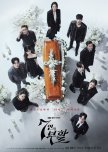
Dark human truth, deepfakes, dystopian interconnectedness, fake news.
Warning: Heavy spoilers."Maybe if we had a better childhood, things would have turned out differently. Others have happy memories to remember, but we don't."
The true meaning of the title is beautiful: Can you escape your sins?
I love stories that aren't truly about revenge, so this one spoke to me. Season 1 was agressive from the start, and yet so fun and refreshing. Season 2 was the real deal. I came for the villain protagonists and I was not disappointed. This was a story of broken people who went through hell and redeemed themselves.
How Ra Hee's plan failed but she prayed to God for the Five to redeem themselves and said she knew her fate was already written, like when she prayed to give her a second chance when she fell down on the snow. The tree scene where she reunites everyone means everything (the metaphor of planting a seed). Plus the fireflies making this moment even more magical. They started to question Ra Hee and themselves until they all found each other at the same place. But of course it wasn't that easy and they were still doing mistakes, until Myeong Ji's death and her last words happened.
My favorite scene was perhaps Ra Hee and Do Hyeok exchanging a look when she saved him before dying.
And Ra Hee's story... After they made a pact with the devil, she became what she hated, a subordinate, to the man who betrayed her at that. And that's why she looked empty compared to Season 1. It lasted for a while until the only thing that could break her happened, aka seeing the moment of Da Mi's death. My favorite scene was perhaps Ra Hee and Do Hyeok exchanging a look when she saved him before dying.
Hwang Jung Eum did one hell of a job. The scene where she repeatedly slaps herself, saying she doesn't deserve to punish, she's not human, she doesn't deserve to cry. And the first episode was the first time I genuinely cried and felt anxious. Just brilliant.
Of course, Season 2 had a different vibe from Season 1, but I loved both. Naturally, Season 1 was pure adrenaline, Season 2 more emotions.
The fake news theme: It's a critic of provocative Korean media, headlines, youtubers and k-netizens (going along and writing malicious comments). I wish reality could be like the end of Season 2 where a law was created against them.
About the deepfakes, that was also close to reality by now, with AI getting stronger than ever.
Even K's story was very tied to the theme of "being fake." I loved the plot twist, his story and his character in Season 1. I liked the bromance with Do Hyeok, and the betrayal made it even better. It was cool how K didn't know that Lee Hwi So was scared of water because of trauma in prison. I loved Do Hyeok as the actual protagonist and how focused the drama was on the Seven. K's mask, his laugh and his inimaginable schemes were fun, but he wasn't a completely cartoonish villain either, his story showed his frustration and you could see his pained expression when he ordered to kill his real father as he called him "Son." Uhm Ki Joon was able to show a great range here both as the protagonist and as the bigger evil. Kim Do Hoon's acting when he killed his mother (with a biblical painting at that, his mother's favorite) and his tearful eyes behind the window was awesome.
The plot twist having me shocked is part of why I liked it. K was really fun to watch when he kicked them down the stairs after torturing them in the amusement park. The ending of episode 12 with the Six teaming up against Matthew and Ki Tak jumping off the cliff with him and into the water before verifying his identity was especially great.
The switched at birth twist was also peak makjang (Do Hyeok being the biological son). There was a flashback in high school where K saw Do Hyeok with his mother as he learned about Do Hyeok's true identity, Do Hyeok had a genius mind and was good in everything while he was pushing himself until his nose bled. After K killed his mother, his father was going to send him to some island so he was forced to replace Lee Hwi So with him, but while he wasn't really happy with his new face he did like being respected and his true goal was Seongchan Group.
As for the new villain's twist, I personally found him scary. He had no sad backstory like K, just cold. Honestly, with K's new hair (he just wanted to be more like himself than Matthew) he looked a little pitiful in front of Chan Sung who was taller than him. I hated him when he was keeping Mo Ne's mom captive. (Btw, it was really important to not end the episodes too quickly because there were scenes like Ra Hee saving Mo Ne's mom and also the scene where she listens to Da Mi's video and chooses the name Medusa.) Again, Mo Ne was seriously unlucky. And to say this is pretty close to reality for women getting with abusive men... I was relieved and anxious when she stabbed him until Do Hyeok and Ki Tak came.
Do Hyeok and Mo Ne's romance was everything to me tbh. I was sad and scared for her when she left Do Hyeok after the campfire with the others. It was beautiful when Do Hyeok was saving Mo Ne's mother as the fire brought back his trauma, and she hugged him.
I liked everything from Ra Hee and Ki Tak's relationship and backstory, Jin Mo and Paeng Hee's story, the kids, Jin Mo and Myeong Ji's romance (the bonding between them in Season 2, the hatred, revenge and tragedy), even Cheol Woo and Ju Ran's romance, Ju Ran's mistake due to Ra Hee's revenge, Cheol Woo hating her and then reconciling. Considering how serious Myeong Ji's character got, the only "comic relief" characters left in the main cast were Cheol Woo and Ju Ran. But because of that, it made sense that Cheol Woo would meet a tragic end. As a cop, he also redeemed himself by trying to protect the others. Well, I think that was implied because all we saw was K shooting aimlessly as he lost his mind.
The ending: Symbolic and well thought-out for everyone. Also poetic and spiritual. K's parallel to Ra Hee with the shot in the leg and burned down to the ground by Do Hyeok was amazing as well.
I also loved the start of Season 1 with Da Mi's appearance as a ghost (white dress and long hair) which makes you wonder if she's going to return from the dead. Then my favorite arc of Season 1: the divine punishment on the deserted island. The paradise illusion with the food and drinks on the ship, the fruits on the island, the unicorn, and then the disillusion that reveals it's a trap from hell. The illusion of water, brutally killing a monster only to realize those were real people after waking up (and the centipede), thinking it's Da Mi's curse, getting hit by a wave, fighting and leaving on the boat as the Seven's reunion.
And how could I not mention the Mission Impossible reference with the BGM during the mirror scene at the end of Season 1? Well, it wasn't even the only reference to fictional stories since there was also the Skull Island (possibly), or The Ring when Da Mi came out of Mo Ne's TV, and Marvel was also mentioned. Which I find funny because The Escape of the Seven is basically the end of a makjang trilogy (The Last Empress and The Penthouse). The Seven Deadly Sins are an obvious connection, and Salem’s Seven is a funny one, as they’re a group of super-villains from Marvel.
The Island arc, Season 1's finale, Season 2's underground prison arc, those were all unforgettable. Even if logic took a backseat to spectacle, it didn’t break my immersion, quite the opposite.
Season 2 even had video game vibes with Medusa's hacking abilities and that one Watch Dogs-coded scene (incredible directing) or K literally playing with Do Hyeok in the car (Ra Hee having to risk everything to save them and rightly getting mad for being so naive).
Lastly, the opening is very symbolic as you get to watch it and analyze it every episode but it's a shame that just like with Penthouse, Viki only showed one version of the opening, without the one where young K appears. It is SO underrated and deserves a Netflix release, but alas, it's not for everyone (much less than Penthouse) and since it was taken by Viu my hopes aren't too high.
Overall, The Escape of the Seven offers an immersive makjang experience with a futuristic, surreal vibe and at the same time a story ingrained in reality.
Season 1's opening:
The first statues: Anonymous commenters.
The nail holding Da Mi's bobble: K's hand. (see the tattoo on his nail)
Ra Hee: Greed, spikes growing, but also a foreshadowing of her amputation.
Mo Ne's dress: Childbirth.
Do Hyeok's fire: His family's tragedy.
Jin Mo looking at Do Hyeok with a knife behind his back: He was behind the fire.
The snake on Jin Mo's arm: K.
The others are simple.
Season 2's opening is more biblical. The snake biting the apple (the original sin). Ra Hee being the last one to break, becoming the shield of Medusa that Do Hyeok is holding and turning K into stone.
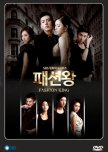
Underdogs, antihero protagonist, messy romance.
Despite its reputation, Fashion King clearly has its audience (including among Koreans under recent SBS compilations (it had 10% ratings) and I've seen many people like it), and as I loved the drama I'll do my best to explain why.The first episode is a very good introduction to the characters, and the story starts surprisingly fast-paced, unfolding through chaotic events. The scenes in America are also incredibly entertaining and funny, and the beginning made me truly excited about the drama. Ga-young's initial situation also gave huge Cinderella vibes, which I loved.
At the center of the story is Young-gul. Basically, he's a loser at the beginning, and then he meets Ga-young, who inspires him. But his ambition is ultimately much more morbid than a straightforward underdog story: it leads him towards his demise. His development was one of the main things that interested me, particularly the psychology behind it. Yoo Ah-in is also an exceptional actor here, and this is probably my favorite role of his.
Ga-young is a far better character than you could expect based on the hearsay surrounding her. She's bold, passionate and talented, but she's also someone who can stay quiet and become defensive. I don't think her quietness makes her poorly written; it's part of her personality.
Her relationship with Young-gul is particularly important to understanding her. She started everything with him and was alone before, and when you see their story in the first episodes, you realize how deep their relationship is—especially from her side. Young-gul is somewhat full of himself and takes a long time to realize that he has feelings for her, while he's attracted to another girl and slowly losing Ga-young to Jae-hyuk. So I can't blame Ga-young for falling in love with someone who doesn't return her feelings in the way she wants.
Another good part of the criticism summed up for you: by all means, never hold the men accountable, blame the woman, and also trash on the actress playing an introverted character, all the while praising the (male) actors. At least Koreans know Shin Sae-kyeong is a good actress who delivers her lines well. Plus, she has a genuinely impressive ability to cry silently.
I also liked that not only she can make the first step herself, she does eventually leave him and is capable of confronting him. Her feelings aren't always expressed through dialogue; you can understand a lot of what she's feeling from her eyes and subtle expressions. That's part of why I found her more compelling than the reputation of the drama might lead you to expect.
The love triangle was actually one of my favorite parts. It makes sense that Ga-young would start looking towards Jae-hyuk, especially as he genuinely falls in love with her. He also helps her at the beginning when she's trying her best to regain a place she unfairly lost. In fact, at some point I started shipping Ga-young with Jae-hyuk myself.
Jae-hyuk has his own storyline as well. He's the second male lead and struggles with his position in the fashion company, as well as with his father's expectations. He has a somewhat jerkish and childish personality, and his feelings for Ga-young put him through an internal conflict. Meanwhile, the second female lead is Jae-hyuk's girlfriend. She struggles because she lacks talent, while Young-gul is attracted to her. I ended up liking both of them too, which made the interactions between the four characters especially enjoyable.
That said, I can absolutely understand why the drama isn't for everyone, especially after the beginning. Someone who appreciates old melodramas might be more receptive to it than someone looking for a more modern or straightforward romance.
But I happen to enjoy old melodramas, and Fashion King kept me invested. Three of my friends ended up watching it and mostly liked it, and it was fun to talk about. On that note, yet another detail is how the drama subverts some expectations and tropes, even if it doesn't always do things in a way that will work for everyone.
The production side was another reason I enjoyed it. The OST is amazing, and I really liked the cinematography, some good shots. In particular, I noticed the contrasting colors at the beginning and how they gradually softened with time. Combined with the New York setting and the atmosphere of the early episodes, it gave the drama a visual identity that I found very appealing.
As for comic relief, the drama had its fair share thanks to the side characters, specifically the factory's ahjummas who liked to gossip about our main characters.
And then there's the ending. I know it's a major reason many people disliked the drama, but I personally didn't regret watching it because of the ending. It's open to interpretation, so you can choose how you understand it, but I liked the meaning (as there were two symbolic meanings which were related). I also appreciated the foreshadowing surrounding it. For me, the ending didn't erase the enjoyment I got from the rest of the drama. Instead, it was a powerful and fitting ending, even if it's a dark tale. Definitely the most shocking and artistic ending I've seen in a K-drama.
One thing that came to mind was the impact capitalism can have on people. Class conflict is an obvious theme throughout the drama, reflected in the disgust between the two men and their constant clashes. There’s also the blind obsession with revenge and greed, even extending to the psychology of wanting to live one floor above someone else despite coming from a poor and chaotic background.
In the end, you have to be willing to enjoy its old-fashioned melodrama, love triangle, character interactions and the increasingly troubled psychology of its main character. But personally, I found it genuinely fun. I liked the characters, I was invested in the romance, I thought the psychology of Young-gul was particularly interesting, and I loved the beginning in America, the OST and the cinematography. The female lead was likeable, the second lead became someone I actually wanted to see with her, and Yoo Ah-in's performance was excellent.


