
 Editorials


 2
2


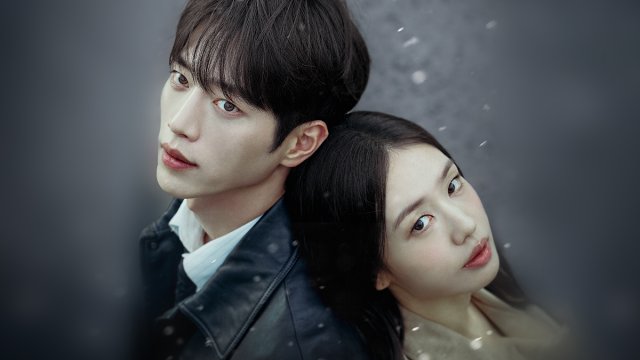
Lee Sung Kyung shows some of her best acting prowess in this drama; the way she unleashes her pent-up frustrations at how life dealt her hand, how the father she loved betrayed their family, how she has to hold back some of her emotions for the sake of her sister and brother, how she defends her actions as justifiable, and how she grapples with her growing feelings towards her sworn enemy.
The rest of the cast also pull their own weight in this mostly character-based drama, with the plot being secondary as a background. The events that unfold showcase how humanity or lack there-of can play in the decisions of some, like how some people are repentant while others are not, despite numerous chances given. We learn in this drama, that while some people are just plain horrible, it does not necessarily mean that their off-spring will be the same. Some just lack the basic human decency of treating others with respect and continue to become trash, but we should not be painting their relatives in the same brush because they can turn out to be really decent human beings with an unfortunate excuse of a mother.
If you are expecting a light-hearted, fluffy romance drama, this is not it as Call It Love meanders its way along the excruciatingly long road of life.
Was this review helpful to you?
This review may contain spoilers
This is basically a poor man's version of "A Business Proposal." Though the premise is more or less the same, one thing I did not like here was how Gal Hui took advantage of her boss' illness to dupe him into believing she was somebody else. Overlooking this fact, the rest of the drama is cute and funny, and sometimes heartbreaking. I can't believe I enjoyed this drama more than I should, despite it's many loopholes. To name a few: 1) The Fall. I am surprised that Do Min Ik did not split his head open while he fell from a good height (on his head!). The chances of surviving this fall is slim to none without major injuries. I get it that he dislodged the pin that made facial recognition possible, but that is all. No bandage wrapping around his head, no broken bones, how is it possible??
2) The Box Cutter. How lame it is that the person who tried to hurt Do Min Ik and others uses the same weapon multiple times??? There was blood on it, dude! How can you use the same damn thing?? Might as well put a sticker on it, "Property of this Idiot."
3) The USB File. I guess everybody has the same USB that could be mistaken easily, that it is a wonder how confidential documents are kept. You can have cat videos and accounts of extortion in the same damn device and people can just take it or leave it or throw it as they please
4) Dubious Company policies. It must be some poor HR screening policy that allows people who were once fired, to be employed again. Do they not keep some records? Won't there be more questions why you are coming back to work?
5) The Police. Clearly they have nothing else to do but to solve this one case of non-murder. They are so easily swayed by statements made by their suspects that it will be surprising if they caught anybody. Hint: they did not. The idiot in #2 turned himself in.
And the best of all:
6) The Cast. I mean the cast on fake Veronica's arm. I mean Do Min Ik may not be able to see faces, but a glaringly obvious green cast with a heart he drew on Gal Hui's cast. In what world would she be able to explain that away??? Even if her cover was not blown earlier in the night, she would be caught green-handed.
There are too many coincidences in this drama to make me believe in logical thinking, but if I switch my brain off, and overlook these inconsistencies, the drama teaches you to open your heart to possibilities and be more human.
Was this review helpful to you?

Also prominent in this drama is the topic of found family, how blood may not be always thicker than water, and there is no prerequisite when it comes to loving someone.
There's a few things that irked me about this drama, manely (pun intended) the bad hairstyles sported by many characters.
If they were meant to be endearing, they were not. Also, everybody seems to be up in each other's business and coincidentally run or know someone who knows someone. I guess this is typically true of small seaside towns. There are loopholes in how people show up suddenly without any logical reason, because "they just happen to be there."
The saving grace for me is Kitamura Takumi's portrayal of a deaf/mute man who doesn't let his lack of hearing/speaking deter him from enjoying life to the fullest. Hiragi Issei is the anchor that holds everyone together; his big heart injects everybody else with warmth. Issei believes that even broken people are only mean, because they are hurting and deserve love too.
Was this review helpful to you?

This review may contain spoilers
Easily becoming my favorite contemporary Chinese drama, "Falling Into You" does the Noona-romance trope right. Coming on the heels of "Why Women Love", Gina Jin again plays as the "older" woman being courted by a much younger man, it's no wonder that she has this role down pat. It's my first time watching Wang An Yu and he's pretty convincing as a love-sick puppy who's chasing around his master/mentor. Bonus points that he also acts the part of an all-around "jack-of-all-sports" who has to overcome the prejudices of being short-statured to compete in an event that usually favors taller profiles. This drama maybe about the romance between an unlikely couple, but it focuses on the hard work and determination of athletes to turn their dreams into reality despite obstacles. I also liked the fact that they included a secondary pairing that's based more in realism, where Jiang Tian and Yu Xia gave up their dreams of competing nationally to open a noodle shop.
Was this review helpful to you?
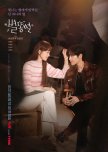
Having known each other for a decade, Nation's boyfriend Tae Sung and Hot Shot PR Manager Han Byeol are constantly at each other's throats through a series of misunderstandings. Their rivalry is widely-known and some figured it was mostly due to unrealized sexual tension and rumours about "are they/aren't they dating" are circling throughout the company.
I didn't realize that Han Byeol is being portrayed by the same woman in Weightlifting Fairy and she is so much better here (maybe because of the bad hair in the latter) and Kim Young Dae is adorable as the love-sick Tae Sung who belatedly realized his feelings for his nemesis. It was so fun and a hoot to watch this show and it certainly is a must-watch.
Was this review helpful to you?
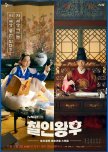
Supporting characters are multi-dimensional, and portrayed by a talented cast. You can tell that this is a big budget production, from the set & scenery, to the costumes, to the attention to detail, and everything in between. The comedic timing was spot on, and even the over-the-top brewing love story between the Head chef and the Queen's consort provided additional comedic relief. The array of food in the show is also quite impressive so if you are into mukbang shows, political intrigue sprinkled with a dash of rom-com, this drama is for you.
Was this review helpful to you?

Was this review helpful to you?

Was this review helpful to you?

This review may contain spoilers
A drama that argues with reality and wins by sheer confidence.
This is one of those dramas where emotional logic keeps tripping over narrative convenience, but somehow the momentum carries you anyway. Jeong Jian is written like a walking contradiction—terrified kid in one scene, suddenly operating with adult-level tactical clarity in the next. It’s not her acting; it’s the script flipping her intelligence switch whenever the plot needs her to survive. And the whole “everyone wants to kill the clueless niece” setup? That’s where the frustration kicks in. If Jinman truly wanted to protect his family, maybe don’t acknowledge them so openly in a world where anonymity is survival. He practically painted a target on them, and the show knows it because it has him spiraling in guilt after their deaths. Fiction can bend reality, but this one bends it until it squeaks.The character dynamics don’t help either. Jeongmin sets off alarm bells the moment he appears with his soft smile and suspicious eagerness to help a grieving girl he barely knows. The instant he volunteered to clean the room where her uncle died, the ulterior motive practically announced itself. And then there’s Babylon—the underground mercenary organization contracted for dangerous missions—protecting Bale, a psychopath who kills for sport, while treating Jinman like a liability for having a conscience. It’s maddening, not because it’s unrealistic, but because the show frames it as normal organizational logic.
What is undeniably tight is the production. The cinematography is sharp, the action sequences are clean, and yes, the dead bodies pile up like set decorations, but the visual execution never falters. And Lee Dong Wook’s face card plus his performance do a lot of heavy lifting—he grounds the chaos, gives Jinman emotional weight, and makes the entire premise feel less absurd than it actually is. Even with an untrained girl surviving multiple assassination attempts and logic occasionally stepping out for fresh air, the drama stays entertaining. Messy, chaotic, sometimes ridiculous, but entertaining. Good enough that a season two feels not just welcome, but inevitable.
Was this review helpful to you?
This review may contain spoilers
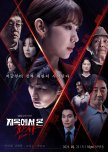
Park Shin Hye finally unleashed her inner menace—and I loved it.
This drama turned out to be a lot funnier than I expected, mostly because it leans into its own absurdity with such confidence. The premise alone is already unhinged: Bit Na, a demon judge from hell, sent to kill ten murderers in a year as punishment, only to discover that Korea is apparently experiencing a murderer shortage. Her “how hard can it be?” optimism followed immediately by a dry spell is the kind of comedic timing that shouldn’t work, yet somehow does. It’s chaos, but it’s intentional chaos, and the show knows exactly what tone it’s playing with.A huge part of why it works is Park Shin Hye. I’ve watched plenty of her dramas and usually sit in that respectful-but-lukewarm zone, but this role finally lets her be unhinged in the best way. She’s sharp, sassy, and fully committed to Bit Na’s brand of supernatural menace. It’s the first time I’ve seen her drop the polite veneer and just play, and it proves why she’s one of the most bankable actresses in Korea. She carries the comedy with a kind of chaotic bravado that makes even the morally questionable moments feel entertaining rather than jarring.
And the moral gray zone is where the show gets unexpectedly interesting. When Bit Na realizes she can’t find murderers, she pivots to identifying people with murderous intent, releasing them, and waiting for them to commit the crime so she can claim them. It’s clever narratively, but ethically? She’s absolutely abetting murder. I spent half the show laughing and the other half wondering if anyone—demon or not—should be deciding who deserves to die. That tension sits under the humor like a quiet alarm, giving the comedy a sharper bite.
By the time the drama wrapped up, the ending was predictable even with the twist, but honestly, it was as realistic as a demon‑judge story can get. What did make me laugh was how everyone just collectively… let go of the unsolved murders Bit Na indirectly contributed to. She definitely nudged the body count upward, but because she’s the protagonist, we all shrug and move on. It’s the same logic people use for Batman: technically, he leaves a trail of broken bodies and questionable decisions, but we forgive him because he’s “our” vigilante. Bit Na gets that same narrative immunity—ethically messy, narratively convenient, and somehow still charming enough that I didn’t mind.
As a whole, it’s fun, chaotic, morally slippery, and anchored by a lead who finally gets to unleash her full range. A wild ride, but a satisfying one.
Was this review helpful to you?

This review may contain spoilers
Where Police interrogations optional and Shen Yi’s house visits mandatory
Season II comes in with more emotional heft, but somewhere along the way the investigative team got demoted to atmospheric background noise. They’re still around, still doing the job, but the narrative clearly decided Shen Yi is the sun and everyone else is ornamental furniture. The cases hit harder, yes, but the balance is off — the show leans so heavily on Shen Yi’s abilities that the police unit feels like they’re waiting for him to finish solving everything so they can file the paperwork.And Shen Yi’s abilities… have multiplied. He’s no longer just a sketch artist; he’s now a behavioral analyst, a crime predictor, and apparently someone who can reconstruct death scenes with uncanny precision. At this point, the easiest way to identify the culprit is to watch who Shen Yi chooses to visit alone. Police interrogations are just noise — the real confession happens the moment he steps into someone’s living room and starts quietly observing their bookshelf.
The lone‑wolf behavior is also getting ridiculous. Du Cheng is right to be annoyed: Shen Yi keeps throwing himself into danger like he’s allergic to backup. No gun, no partner, no plan — just intuition and a stubborn belief that he can handle a crazed killer by himself. It’s heroic until it’s not, and the show keeps pretending this is normal police work.
Acting-wise, I unexpectedly found myself shipping Shen Yi and Fang Kai because their scenes have more BL-coded tension than anything happening with Du Cheng. Fang Kai has that slightly unhinged, possibly‑evil energy that somehow works. It’s chaotic, but it’s also the most alive some scenes feel.
Production quirks still deliver small joys — Shen Yi using Du Cheng’s voice as his alarm is peak “we’re not calling it romantic, but we’re also not hiding it.” Those little touches say more about their dynamic than half the dialogue.
Overall, Season II has heart, but it also has Shen Yi doing everything short of sprouting a cape. If he starts solving crimes telepathically in Season III, I won’t even be surprised.
Was this review helpful to you?

This review may contain spoilers
A rom‑com that knows its lane and revels in it.
This is the kind of drama where I found myself smiling the entire time, fully aware of how predictable it was — and I’m not even bothered. It’s comfort food, plain and simple. The show knows exactly what it is, and instead of pretending to be deep or groundbreaking, it leans into the warmth. It’s meant to soothe, not challenge.But let’s be honest: the chocolate shop’s hiring standards are… generous. They basically hire the first person who walks in, and somehow keep Hana on staff despite her breaking equipment, panicking at customers, and being physically incapable of eye contact. I fully buy her condition — the show treats her anxiety with sincerity — but I don’t buy her being thrust into a front‑facing role when she’s actively avoiding human contact. Background work? Absolutely. Serving customers? That’s a stretch even for a rom‑com.
The coincidences pile up so aggressively they stop being coincidences, and the drama is self‑aware enough to poke fun at itself. Of course the FL’s crush is best buddies with the ML. Of course the one person who triggers her panic is the same person she can suddenly tolerate. And yes, the romance flips on a misunderstanding that turns their feelings on like a switch — she redirects affection with suspicious efficiency almost towards the end of the show. But the show shrugs and says, “Yes, this is happening,” and somehow that confidence makes it entertaining.
The chocolate shop remains my favorite brand of chaos. They mobilize like a crisis response team to recreate a nostalgic treat for a regular customer — not a VIP, not royalty, just a random person who really likes chocolates. They drag a retired pastry chef out of hiding, call suppliers in the middle of the night, and treat sugar like contraband. And the customer doesn’t even like it. Peak comedy.
Now, the supporting cast… does not add charm, except for their pretty visuals. And it's no fault of the actors, but how their characters were written. Their dynamic is borderline toxic — one chases, the other retreats, and the psychologist is somehow the least emotionally mature person in the building. She’s incapable of loving, yet she’s a therapist. It’s not funny; it’s frustrating.
But the main couple? They carry the entire show. Oguri Shun as Fujiwara Sosuke is effortlessly adorable, and Han Hyo Joo is so convincing in her role I genuinely thought she was Japanese pretending to be Korean. Their chemistry is soft, awkward, and incredibly endearing.
What grounds the whole thing is the ending. No magical cure, no unrealistic transformation — just two awkward people trying their best to be “normal,” while accepting they’re their own brand of “crazy.” Predictable, yes. But heartwarming, sincere, and exactly the kind of sweetness it promises.
Was this review helpful to you?
This review may contain spoilers
Tell Me What You Saw, because I’m still processing whatever that finale was.
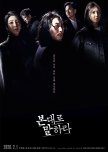
“Tell Me What You Saw” is one of those dramas that had me conflicted from the first frame to the final credits — and honestly, that’s probably why it lingered. On the surface, it’s your classic OCN stew: gloomy visuals, messed-up villains, and a profiler whose trauma is practically a supporting character. But underneath the genre packaging sits a surprisingly messy meditation on ego, trust, and betrayal.First off, the poster already had me side-eyeing. Why is everyone standing like they’re shooting a Vogue crime spread? The man spends half the series in a wheelchair, yet the promo pretends he’s training for a triathlon. A simple face-only poster would've worked. The disconnect is wild.
To its credit, the show came armed with a blur tool — thank you to whoever was responsible for sparing my retinas in the first half. You deserved a raise. But why did they suddenly stop blurring things in the second? Budget cuts? Lost the blur filter? And don’t get me started on that constant wind-turbine sound humming loudly and incessantly through every episode. I paused my TV multiple times thinking something was wrong with my house. Apparently not. Just the sound design gaslighting me.
Now on to the characters. Hyun‑jae was cool as hell in the beginning. He is the perfect encapsulation of this drama’s contradictions. Early on, he’s magnetic: the haunted genius weighed down by grief. But peel back the layers and his brilliance is welded to ego. Choosing to chase the killer instead of saving his wife was his defining moment. It was a damned‑if‑you‑do, damned‑if‑you‑don’t dilemma, but it revealed his priorities: justice over intimacy. And then he suddenly starts fighting like a ninja, climbing walls, roof-hopping like Spider-Man — only to completely choke in the finale when the guy who can karate-chop a dozen men can't take down someone tied up and half-dead. Make. It. Make. Sense.
Soo‑young, on the other hand, surprised me. I thought she’d be a goody two shoes, stuck in the shadow of her mother’s death, but she grew into someone resilient and sharp. Her disbelief at the killer’s true nature mirrored mine — he was written so charismatic that even I caught myself shipping them for a hot minute. That betrayal hit hard, because it wasn’t just her trust that was manipulated, it was ours too. Watching her evolve from rookie to survivor gave the drama its emotional backbone, and by the end, she felt stronger than Hyun‑jae himself.
As for Leader Hwang—why is she alive while Detective Yang isn’t? Universe, we need to talk. She’s not corrupt, no, not like Director Choi or the Deputy Commissioner, sure, but her motives are questionable enough that I was grinding my teeth. That said, even if she didn’t say Han Isu’s name, that woman was doomed; the killer was forcing her hand from the start.
Speaking of the killer, he is the drama’s worst and most fascinating creation: a natural born psychopath who started young, gathered like-minded monsters, and perfected the art of guilt-weaponizing. He forced everyone to shoulder responsibility for choices that were never theirs. Even in the end, tied up like a discount Hannibal Lecter, he was still manipulating. Still blaming the world for what he chose to be. The show made him too charismatic for his own good. Charismatic enough that corrupt officers protected him, colleagues overlooked red flags, and even people who wanted him dead kept fumbling like they’d lost the plot. But here’s the problem: after all that buildup, the ending felt anticlimactic. Like, that’s it? After all that tension, they wrapped it up with a shrug and a fade-out?
So yes, the drama frustrated me. But it also entertained me, challenged me, and occasionally made me laugh in disbelief — especially when Hyun-jae launched out of his wheelchair like he was starring in an action movie no one else was watching. It wasn’t perfect, but it was layered, and it left me thinking long after the credits rolled. And apparently loud enough to haunt my living room.
Was this review helpful to you?
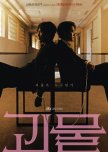
Who’s the monster? Everyone, apparently. Even the furniture looks guilty.
I picked up this drama because someone told me it had “strong bromantic vibes” like The Devil Judge, and apparently my taste now revolves around morally ambiguous men glaring at each other until they become besties. While it wasn’t quite as “bromantic” as that one, the dynamic between Ju Won and Dong Shik carried its own weight. They began from a place of deep mistrust, circling each other with suspicion, and yet by the end their bond had hardened into unbreakable loyalty. The vibes weren’t the same, but that’s fine by me— because the real draw here was the journey of unraveling the mystery behind the killings, and the narrative tension of whether Ju Won would still make the same choices despite knowing what he knows. Would he still choose justice over comfort, and that question alone kept me hooked.The brilliance of this show lies in its framing. Even when dismembered fingers appear, they’re treated like crime scene evidence—CSI‑adjacent rather than horror spectacle. That distinction keeps the focus on consequences and suspicions rather than cheap scares. The domino effect is clear: the killer’s crimes set everything in motion, and from there, cover‑ups and trauma ripple outward until the entire village itself feels guilty. It’s not just a whodunit—it’s a study in how suspicion corrodes trust and how collective silence sustains evil.
And none of this works without the acting. This is only my second time seeing Yeo Jin Goo, and he’s absurdly good at embodying righteous restraint. He brings Ju Won’s inner conflict to life with precision, but he’s not outdone by Shin Ha Kyun, who plays Dong Shik with quirky brilliance—an unpredictable cop doing questionable things, yet always grounded in emotional realism. Their performances elevate the drama, making every confrontation and reconciliation feel earned.
Beyond Evil isn’t just a mystery. It’s an uncomfortable mirror, asking what we protect, who we sacrifice, and how monsters survive when entire systems hold the door open for them.
Was this review helpful to you?
This review may contain spoilers
The Double: because one resurrection just wasn’t dramatic enough.
One of my favorite actors, Wang Xing Yue— paired with a sharp, calculating female lead out for revenge? I was sold before the first episode even ended. This drama had everything I wanted on paper: intricate politics, smart writing, and a heroine who actually uses her brain instead of crying into the void. Halfway through, I was ready to throw this straight into my top 10 list with a perfect score. The plotting was tight, the characters layered, and the female lead’s cleverness was borderline addictive. Sure, I had to suspend disbelief that no one realized she wasn’t Jiang Li (apparently, face recognition didn’t exist in ancient times), but fine — I was willing to roll with it.Visually, this drama was a feast. The fight scenes were crisp, the costumes regal, and the attention to detail was stunning. I practically swooned at the elegance of it all — until the infamous Qin competition scene between Jiang Li and Ruo Yao happened — and suddenly we’re summoning divine birds, celestial fields, and heaven’s gates mid-performance. What was that? A spiritual concert? A god-tier jam session? I nearly choked on my admiration and checked to see if I was still watching the same drama. And while the cinematography was often breathtaking; occasionally it felt like someone taped a GoPro to a spinning top—especially those endless circular shots that made me think I had vertigo.
Then the second half hit, and things started to fray. Not because Princess Wanning stopped being formidable — she was still the untouchable mastermind we were promised — but because she went from strategic to straight-up unhinged. Every move was precise, yet dripping with vindictive rage. I gave it grace — “let’s see where this goes” — but the narrative started ghosting its own side characters. Jiang Li’s loyal crew from the first half? Vanished like they’d never existed, only to make their reappearance in the final episodes, like suddenly the crew remembered they had been waiting in the sidelines for the obligatory reunion. And Tong’er’s death? Painful but narratively sound. But instead of metabolizing that loss, the show turned resurrection into a pastime, like the drama had a character quota to maintain. Kill one, revive another—what is this, drama whack-a-mole?
And don’t get me started on Shen Yu Rong. The same person who spent 30 episodes in strategic paralysis suddenly grows a spine in the final act? If he could kill Wanning all along, why wait until the final episode? Strategic genius, my foot. Some of the the villains’ endings were also disappointingly flat — like Ji Shuran just gets to... live? What if she Pretends madness forever? Sure, that’s justice. And the final battle? The math wasn’t mathing. Two of the most skilled fighters die while Duke Xu magically survives surrounded by enemies? Be for real. I would’ve preferred a vague, bittersweet ending instead of this chaotic mess.
Still, if I mentally snip off the last fifteen minutes, The Double remains a wildly entertaining, emotionally charged drama — stunningly crafted, beautifully acted, and almost perfect... until it tripped over its own brilliance right before the finish line.
Was this review helpful to you?


