
Recent Discussions
Hospital Playlist centers on five doctor friends who have known each other since medical school, while Resident Playbook focuses on young residents who slowly build friendships while surviving their first year in the hospital.
In Kill Me, Heal Me, the romance between Cha Do-hyun and Oh Ri-jin develops as she helps him navigate his multiple personalities and childhood trauma, emphasizing understanding, empathy, and emotional healing.
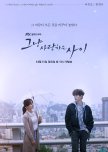
In Can This Love Be Translated?, the relationship between a translator and a celebrity focuses on understanding emotions and unspoken feelings through communication, highlighting how love grows when characters truly connect beyond surface-level attraction.
Both series show the realistic experiences of medical professionals—long shifts, difficult patients, ethical decisions, and emotional moments in the hospital. Instead of focusing only on intense surgeries, they highlight the human side of being a doctor.
Both dramas explore romantic relationships intertwined with deep psychological and emotional challenges. Showcase love that requires emotional intelligence, patience, and empathy, with the romance strengthened by psychological depth and personal growth, rather than just romantic gestures.
both dramas focus on romantic relationships that develop through unconventional or challenging circumstances, with an emphasis on communication and emotional connection.
Both shows explore how love grows when characters truly understand and support each other psychologically, emphasizing healing, empathy, and the inner workings of the heart rather than just romantic gestures.
Same medical universe. Both dramas take place within the Yulje Medical Center system. In Hospital Playlist, the main characters work at the main Yulje hospital, while Resident Playbook follows doctors at the Jongno branch of Yulje.
Alchemy of Souls and Alchemy of Souls: Light and Shadow are similar because Season 2 continues the story from Part 1, keeping the same magical-fantasy world, core characters, and themes of power, identity, and destiny. Both seasons revolve around characters who deal with soul-shifting magic, political intrigue, and personal growth, making the narrative feel continuous rather than standalone.
Resident Playbook is a spin-off set in the same universe as Hospital Playlist. Both dramas explore the daily lives, friendships, and emotional struggles of doctors working at Yulje Medical Center and its branches.
It's Okay to Not Be Okay and Can This Love Be Translated? are similar because both dramas focus on psychological and emotional understanding in relationships. In It’s Okay to Not Be Okay, Moon Gang-tae and Ko Moon-young develop a relationship while confronting deep emotional wounds, trauma, and mental health struggles. The story emphasizes healing through empathy, communication, and understanding another person’s inner world.
Both dramas highlight psychological healing, communication, and personal growth. While It's Okay to Not Be Okay directly tackles trauma and mental health struggles, Can This Love Be Translated? approaches the psychological aspect through language and emotional expression. In both stories, love becomes a path toward understanding oneself and others.
*It's Okay to Not Be Okay* and *Can This Love Be Translated?* both portray romances that grow through deep emotional understanding. The first follows two characters healing from past trauma, while the latter is expected to explore a relationship between a translator and a celebrity where language and emotions play a key role.
Both dramas highlight communication, personal growth, and healing. While *It's Okay to Not Be Okay* focuses on mental health and emotional scars, *Can This Love Be Translated?* centers on language and understanding—showing how love can help people connect and grow.
*It's Okay to Not Be Okay* and *Can This Love Be Translated?* both explore emotionally complex romances where love grows through deep understanding. In *It's Okay to Not Be Okay*, Moon Gang-tae and Ko Moon-young develop a relationship while confronting their emotional wounds and past trauma. Meanwhile, *Can This Love Be Translated?* is expected to center on the romance between a translator or interpreter and a top celebrity, where understanding both emotions and language becomes essential to their connection. In both dramas, love is not just about attraction but about truly understanding another person.
Both stories also highlight themes of communication, healing, and personal growth. *It's Okay to Not Be Okay* focuses on mental health, trauma, and the difficulty of expressing feelings, while *Can This Love Be Translated?* uses language and translation as a metaphor for emotional understanding. As the characters learn to communicate and connect with each other, their relationships help them grow and heal. With strong character-driven storytelling and distinctive style, both dramas emphasize that love can be a powerful part of the healing process. ?
Alchemy of Souls Part 2 is a direct continuation of Part 1, taking place three years after the events of the first season. While Part 1 focuses on introducing the world of Daeho, the magic system, and the relationship between the main characters, Part 2 explores the consequences of the tragic ending. It follows Jang Uk as he becomes stronger and darker after the events of Part 1, while the story also centers on the mysterious return of Naksu in the body of Jin Bu-yeon. Essentially, Part 2 resolves the conflicts and unfinished stories that began in Part 1.
Part 2 is a direct continuation of Part 1, but it happens three years later and focuses on the consequences of what happened at the end of Part 1.
1. Same story and world (Daeho)
Both parts take place in the fictional kingdom Daeho, where mages can use magic and forbidden spells like the alchemy of souls (a technique that lets people switch bodies).
Part 1 introduces the magic system, politics, and main characters.
Part 2 continues the story after the tragic ending.
?? Think of Part 2 as the second half of the same drama, not a separate series.
2. Continuation of Jang Uk’s story
In Part 1, Jang Uk grows from a weak nobleman into a powerful mage.
At the end of Part 1, he experiences betrayal, tragedy, and death-like events.
In Part 2, he returns as a much darker and more powerful character, hunting soul shifters.
?? His personality changes because of what happened in Part 1.
3. The mystery of Naksu / Bu-yeon
The biggest connection is the female lead.
In Part 1, assassin Naksu accidentally ends up in the body of Mu-deok.
The finale reveals her tragic fate.
In Part 2:
She returns in the body of Jin Bu-yeon, but with lost memories.
?? Much of Part 2 is about Jang Uk slowly realizing who she really is.
4. Unresolved conflicts from Part 1
Part 2 resolves the major conflicts introduced earlier:
the danger of soul shifters
the secret behind the Ice Stone
the political struggles between mage families
1. Same story and world (Daeho)
Both parts take place in the fictional kingdom Daeho, where mages can use magic and forbidden spells like the alchemy of souls (a technique that lets people switch bodies).
Part 1 introduces the magic system, politics, and main characters.
Part 2 continues the story after the tragic ending.
?? Think of Part 2 as the second half of the same drama, not a separate series.
2. Continuation of Jang Uk’s story
In Part 1, Jang Uk grows from a weak nobleman into a powerful mage.
At the end of Part 1, he experiences betrayal, tragedy, and death-like events.
In Part 2, he returns as a much darker and more powerful character, hunting soul shifters.
?? His personality changes because of what happened in Part 1.
3. The mystery of Naksu / Bu-yeon
The biggest connection is the female lead.
In Part 1, assassin Naksu accidentally ends up in the body of Mu-deok.
The finale reveals her tragic fate.
In Part 2:
She returns in the body of Jin Bu-yeon, but with lost memories.
?? Much of Part 2 is about Jang Uk slowly realizing who she really is.
4. Unresolved conflicts from Part 1
Part 2 resolves the major conflicts introduced earlier:
the danger of soul shifters
the secret behind the Ice Stone
the political struggles between mage families