










 30 Most Popular Chinese Actors on MDL: See You in 2022! (Part 1)
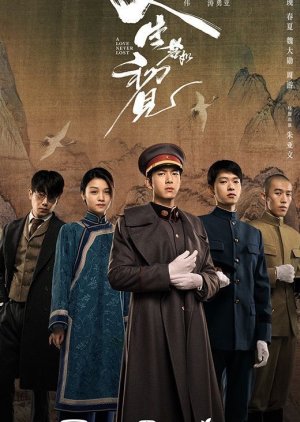
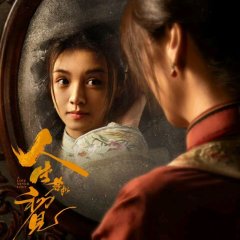
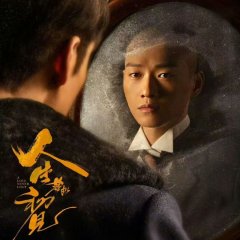
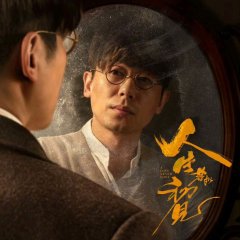
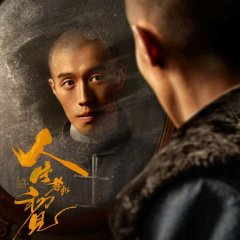
 Following the Boxer Rebellion, the Qing Dynasty sought to rejuvenate themselves by sending promising young men to military school in Japan. Among them were Qing aristocrat Liang Xiang, revolutionary Yang Kai Zhi, and Beiyang Army soldier Li Ren Jun. On the voyage to Japan, they met revolutionary Wu Tian Bai and merchant daughter Xie Qiu Hong. Representing different political factions, each with different answer on how to revitalize China, the fates of these five people would be intertwined on the road to revolution. (Source: MyDramaList) Edit Translation
- English
- Русский
- Français
- Español
- Native Title: 人生若如初见
- Also Known As: Ren Sheng Ruo Ru Chu Jian , 人生若如初見
- Director: Wang Wei
- Screenwriter: Jiang Qi Tao, Zhang Yong, Hu Ya
- Genres: Action, Historical, Drama, War
Cast & Credits
-
") Li Xian Main Role
Li Xian Main Role -
")
-
") Wei Da Xun Main Role
Wei Da Xun Main Role -
") Zhou You Main Role
Zhou You Main Role -
") Zhu Ya Wen Main Role
Zhu Ya Wen Main Role -
") Wang ZhenDuo MeiSupport Role
Wang ZhenDuo MeiSupport Role
Reviews
Compelling historical drama with some strong performances
This probably won't appeal to some people since it's a serious drama, becomes increasingly depressing and doesn't have a strong romance. However I'm still thinking about the characters after finishing it and despite some of the flaws, it's probably one of the better historical dramas I've seen in a while.As most viewers probably know, this show was supposed to air in 2022 but was pulled at the last minute so it's not clear how much of this final version has changed or been edited.
Set during the death throes of the Qing dynasty it explores the various factions - royalist and revolutionist - trying to change China for the better. The five leads have diverse personalities, flawed characters and are not obvious heroes. Alot of the early action takes place in Japan, which is unusual for a C-drama (usually the Japanese are portrayed as obvious villains but here they are more nuanced), and everything looks big-budget with loads of extras, carriages, costumes and lots of period detail.
All five leads are interesting. It's strange to see Li Xian play the rather grey character of nobleman Liang Xiang instead of his usual hero roles. Then we have the rabid bomb-making anarchist, the idealist revolutionary, the pragmatic opportunistic soldier and the woman who inadvertantly becomes a revolutionist and is involved with three of the male leads. The FL's character is very different to what we usually see in C-dramas, both passive and active, and surely non-conformist for the times. There were some scenes when I did want to slap her and say " wake up woman!" but generally you root for her.
There are important real historical figures as well as the fictional ones, which made me read up on my Chinese history. Apparently, even Liang Xiang is based on a real person.
The acting is of a good standard and this is clearly a quality production. However, it does suffer from editing and sometimes I just wanted to see more of Shuhong rather than the endless military politicking but I did not fast forward once which says alot.
Recommended if you enjoy historical dramas based on fact and don't expect to see a big romance.
Was this review helpful to you?

A Love Never Lost: An Underrated Historical Drama.
The story begins right after the Boxer Rebellion and introduces the political landscape of China and the decline of the Qing Dynasty, with a constant sense of dissatisfaction and an impending rebellion. In an effort to modernize, the Qing government sends a group of promising young men to study at a military school in Japan.Among them are the aristocrat Liang Xiang, the revolutionary Yang Kaizhi, and the soldier Li Renjun. During the journey, they meet the revolutionary Wu Tianbai and the merchant's daughter Shuhong. Throughout this period, they build relationships, develop their skills, and prepare themselves without knowing exactly when the revolution will erupt. These five characters ultimately represent different ideas and approaches to saving China.
One of the series' greatest strengths is its ability to subvert expectations. The character who seems destined to become the hero often is not, while seemingly secondary characters grow into much more important roles. The story takes its time, with nothing changing overnight, allowing us to gradually witness the rise of revolutionary sentiment as historical events continuously reshape the characters' lives. Everyone feels genuinely human, with both strengths and flaws. There are no completely right or completely wrong characters.
Another aspect that stands out is the exceptionally high production value. The costumes, sets, and overall atmosphere, especially during the early episodes set in Japan, are beautiful and highly convincing. You can almost feel the texture of the world around the characters, as if you've been transported back to that era.
The series does an excellent job portraying the experience of Chinese students living in Japan and facing discrimination, the gap between China and the foreign powers of the time, and the development of a revolutionary spirit aimed at protecting the country, even if each character pursues that goal in a different way.
Shuhong's life is particularly difficult. Despite being highly capable and charismatic, she finds herself caught between two deeply flawed men. One is a lazy womanizer, while the other initially appears kind but ultimately embodies the elitist mindset that the revolution seeks to dismantle. Through her story, the series effectively highlights the challenges women faced and the limited role society assigned to them, regardless of the political beliefs or ideals men claimed to support.
Around the middle of the series, the students return to China and begin rising through the ranks, gradually becoming key players in the revolutionary movement and/or the new army. The show portrays rampant corruption within both the military and the imperial court, to the point where it has become normalized. This creates significant conflicts, especially for Liang Xiang, who cannot be bribed yet continues to support the existing system. Kaizhi advances through the military thanks to his talent and charisma, but his true role in the revolution remains uncertain for much of the story. Meanwhile, Tianbai begins manufacturing bombs and organizing attacks, greatly increasing the tension. The deaths of Empress Dowager Cixi and the emperor push the country even closer to civil war and bring the main characters toward an inevitable confrontation.
The gradual transformation of the main characters, as well as several supporting characters, is handled with remarkable subtlety and consistency throughout the series. These changes can be seen not only in their personalities and decisions, but also in the way they speak, dress, and even in their physical appearance, including their hairstyles and facial hair.
In the final part of the story, the revolution finally begins. All the bureaucracy, imperial nepotism, and widespread incompetence that the series has been building toward are fully exposed. It is exciting to watch cities fall to the rebels and the empire slowly crumble while every character is forced to choose a side.
Even when events seem to be moving in a positive direction, the series makes it clear that this does not necessarily guarantee a happy ending for everyone.
A Love Never Lost is a powerful historical drama filled with complex characters, political intrigue, and personal conflicts, making it well worth watching.
Was this review helpful to you?