Bai Ge Gen, the team leader in charge of the Qinghai-Tibet Highway project, and his wife Zhang Qin Qin adopted a lost little girl and treated her as their own daughter, naming her Bai Ju. Bai Ju, who grew up in the Gobi Desert, was moved by the selfless dedication of the Bai family and was nurtured by this simple land. When she grew up, she became a police officer and joined the mountain patrol team. The story focuses on Bai Ju's journey and the relationships she made as she fought to protect her homeland, the beautiful Tibetan Plateau in Western China. (Source: Chinese = Weibo || Translation = MyDramaList) Edit Translation
- English
- Русский
- Português (Brasil)
- magyar / magyar nyelv
- Native Title: 生命树
- Also Known As: Life Tree , Sheng Ming Shu
- Director: Li Xue
- Screenwriter: Gao Man Tang
- Genres: Life, Drama


Cast & Credits
-
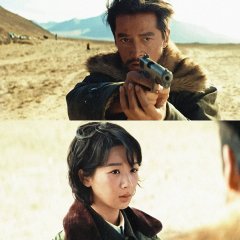
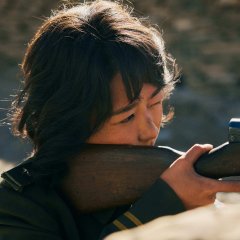
 Yang ZiBai JuMain Role
 -
 Hu GeDuo JieMain Role
 -
 Li Guang JieLin Pei ShengSupport Role
 -
 Zhang Zhe HuaShao Yun FeiSupport Role
 -
 Feng BingHan Xue ChaoSupport Role
 -
 Su XinHe Qing YuanSupport Role









Reviews

 1
1A powerful Ode to Nature and Its Defenders (Inspired by True Events)
Context & Real InspirationThis environmental drama set in the Qinghai-Tibetan Plateau - the largest and highest plateau in the world, over 4,500 metres above sea level - presents the province of Qinghai’s nearly 30-year journey from "ecological vulnerability to green revitalization," with key moments such as the anti-poaching struggle in the Hoh Xil area and the pilot program of Sanjiangyuan National Park, spanning nearly 30 years since the mid-1990s.
This is an excellent, high-quality production inspired by real events. Today, the area referred to in the drama is the Hoh Xil UNESCO World Heritage site, and later others were added: the Qinghai Lake National Nature Reserve and the Three-River Source National Park, also known as Sanjiangyuan National Park, the source of the Yellow, Yangtze, and Lancang (Mekong) Rivers.
Before writing the script (an excellent one, by the way), the creative team interviewed over two hundred mountain patrol staff members and collected 137 true stories. The character of Captain Duojie, played by Hu Ge, is based on two real environmental heroes: the ranger Sonam Dorje – murdered by poachers – who, together with his team, fought to protect the at-the-brink-of-extinction antelope and the landscape of the Tibetan-Qinghai Plateau; and Zhaxi Duojie, who was found dead from a gunshot wound in his home the day after returning from giving an environmental lecture in Beijing.
Execution: From Production to Storytelling
One of the features that makes this drama so powerful is the fact that it was filmed in real locations. The Tibetan Plateau of Qinghai rises over 4,000 metres above sea level. Headaches. Lack of oxygen. Extreme weather. High solar radiation. Drastic temperature swings between day and night. Even simple conversations while walking can become exhausting. I don’t think people who haven’t been above 2,500 metres can truly imagine what it takes to film under those conditions. Kudos to the entire crew, both in front of and behind the camera.
The landscape is not only the setting but also a character, and we’re fully immersed in it together with the Mountain Patrol team, in the overwhelming feeling of roughness, untamed and wild beauty. The cinematography and soundtrack are simply stunning.
The drama avoids the simple approach of becoming a preachy, unrealistic piece or the dry tone of a documentary. Instead, it highlights the complexity of humankind, the clash between environmental protection and development, and our place in the bigger picture of things from the perspective of those ordinary yet also extraordinary people who form the Mountain Patrol Team, as well as their families and friends.
This is an ensemble cast full of characters to remember. Even when their screen time is short, they manage to make an impact. Just as Buddhist beliefs and Tibetan customs are naturally woven into the story, the cast itself reflects that blend, with a mix of Tibetan and Han actors.
Yang Zi as the female lead is overall good, but sometimes a bit lacking in the portrayal of the youngest version of Bai Ju – she always delivers in the emotional scenes, though. This isn’t a big issue, since as the character matures, her performance improves until reaching a solid, even grounded one from the mid-half of the drama onward. If you’ve seen Hu Ge before, you probably won’t recognize him here as the captain of the Mountain Patrol; if this is your first time, you’ll believe he’s been living on the Plateau all his life.
The story and pace remain impeccable from start to finish, with some exceptions around episodes 26 and 29, where the end and the beginning of the two main arcs collide.
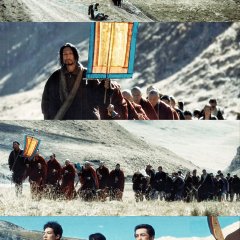
The first arc, action-packed, is set in the mid-90s, with the Mountain Patrol fighting against poaching and illegal mining in an impoverished county, while the first controversies between development and environmental protection arise. The simple, stoic, rough, and poetic soul of the mountains flows through every scene and dialogue. This arc, ending at episode 25, is a powerful and unforgettable masterpiece on its own.
The second arc, set 17 years later, remains excellent and solid, leaning more toward an anti-corruption crime thriller that organically grows out of the central theme and events of the first arc, as well as the natural course of development that followed. The sudden change of vibe and setting strikes the viewer with the force and unpredictability of lightning, and it takes a few episodes to adjust to it. Keep watching, because the last ten episodes are gripping in suspense, and the climax and ending are another powerful display of very good writing and directing.
I think this is one of the great achievements of the drama. They took a very high risk with this decision, but the payoff is worth it for two reasons. First, they create another immersive experience where we, the viewers, share the same turmoil and feelings as the characters — it’s more than just understanding what’s happening. Second, the drama avoids depicting a simple, idealistic fight to protect nature and instead shows a more complex and realistic conflict around environmental and development issues.
Final Thoughts
Born to Be Alive, or Tree of Life as the original title in Chinese, is a high-quality show full of meaning and humanity that manages to move the viewer and provoke reflection while also paying a respectful tribute to our nature, the communities deeply rooted in it, and those who dedicate their lives to protecting both. A powerful drama that captures your soul while watching and lingers with you long after it finishes.
I really, like it drama born to be Alive, yang Zi acting askill is really good a yang Zi,&Hu ge
Continuing from the previous analysis, the depth of "Born to Be Alive" extends far beyond its surface-level plot. By Episode 28, the drama has successfully established a world that is both gritty and hopeful, demanding the viewer's full attention and empathy.Chemistry and Character Dynamics
One of the strongest pillars of this drama is the authentic chemistry between the lead characters. Yang Zi does not just lead the show; she elevates her co-stars through shared emotional energy. The evolution of their relationship from strangers to pillars of support is written with incredible maturity. There are no forced romances or unnecessary misunderstandings. Instead, we see two souls healing each other. This realistic approach to human connection is a breath of fresh air in the current television landscape. Every conversation and every shared silence between them feels earned and significant.
The Power of Resilience
The core message of the series—survival and thriving against all odds—is beautifully encapsulated in the journey from Episode 1 to 28. The protagonist’s struggles reflect the real-world challenges faced by many, making her triumphs feel like our own. Yang Zi captures the essence of "resilience" perfectly. She portrays a woman who is broken but refuses to stay down. This inspiring narrative is exactly why the show has touched so many hearts globally. It encourages the audience to find their own strength, making it a socially significant piece of art rather than just entertainment.
Technical Excellence and Direction
The director’s vision for the show is evident in the pacing of the later episodes. As the stakes get higher approaching Episode 28, the tension is palpable. The use of lighting to signify hope versus despair is a masterclass in visual storytelling. Furthermore, the supporting cast provides a solid foundation, ensuring that every subplot contributes to the overarching theme of life and rebirth. The drama maintains a consistent quality that many long-running series struggle to achieve.
Standing Against Bias
The wave of negative reviews is clearly an attempt to overshadow the artistic achievements of this project. However, true art cannot be suppressed. The high engagement and the massive number of genuine viewers who tune in daily are the real indicators of success. The 1-star ratings are a stark contrast to the sophisticated writing and stellar performances displayed on screen. We urge neutral viewers to watch the first few episodes and judge for themselves. The talent of Yang Zi and the brilliance of the script speak for themselves.
Final Thoughts on the First Half
As we look forward to the next chapters, "Born to Be Alive" has already secured its place as one of the best dramas of the year. It is a heartfelt tribute to the strength of the human spirit. For anyone seeking a story with soul, depth, and world-class acting, look no further. This is a 5-star production through and through.