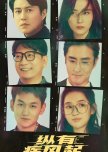
The winds of change.
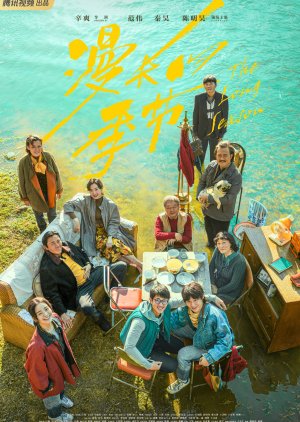
This slow paced suspense thriller by the director of The Bad Kids is told with such dry humor and irony that it initially conceals the story's intense, almost unbearable pathos. It is about how the irresistible force of the winds of change profoundly affects the lives of two generations of Hualin. Hualin is a fictional Northeastern town where the entire economy was built around a state owned enterprise, Huagang Steel, which is said to be modelled on either Angang Steel or Benxi Steel. The mill employs most of the town in some capacity and runs everything from its schools to its hospitals. This economic model collapsed in the late 1990s, displacing hundreds of thousands of workers across China. Towns like Hualin, where one enterprise comprised practically the entire economy were particularly hard hit.The drama opens in 2016, where the main protagonist Wang Xiang, an irascible old taxi driver helps his brother-in-law Gong Biao hunt down scammers who tried to knock off his taxi medallion. They rope in Ma Desheng, a retired disillusioned cop turned ballroom dancer to aid them. Their determined, bungling poking around results in a murder that Wang Xiang insists must be linked to a cold dismemberment case at the mill that they had investigated almost two decades ago. This takes them back to 1997/1998, which was a turning point in all three lives that they survived but never quite recovered from.
Fan Wei's portrayal of the older Wang Xiang's grief frozen expression and his glittering angry sad gaze is brilliant and evocative. I almost couldn't see Qin Hao in middle-aged Gong Biao, who still somehow manages to hang on to that optimism and naivete of youth. And Chen Minghao never fails to impress with his ability to combine comedy with tragedy - his ballroom dancing left me speechless! I enjoyed the chemistry and rapport of the older cast immensely. Only veteran actors of this caliber are able to stay in character and wear the passage of time and hardship through multi-decade transformations so effortlessly. In the present, they are shadows of their former selves, displaced by the reform and changes that swept across China as it opened up to change. I am surprised by how candid this drama is about how these economic reforms did not benefit everybody.
Back in 1997, the three friends are in their prime. Wang Xiang is the important train driver that transports raw materials to the mill; Gong Biao is a rare young college graduate groomed to advance in the mill's senior management; and Ma Desheng is a hot shot detective in charge of shocking murders that shook the town. The young Wang Yang sees the writing on the wall with respect to the mill's future and resists his father's efforts to help him secure a position there, seeking employment in the nascent and seedier private sector instead. There he becomes fast friends with Shen Mo and Fu Weijun. Unlike the older generation who are still in denial, this youthful trio are quicker to accept and adapt to the rapidly changing environment. The bond of their friendship is just as strong and as real as that of their elders. The younger cast impressively hold their own well up against the veterans. This has to be Li Gengxi's best, least petulant portrayal but I still find her to be the weakest link in the cast overall. While her performance was quite good, I did not like or empathise with her Shen Mo the way I felt compelled by and rooted for both Wang Yang (lLiu Yitei) and Fu Weijun (Jiang Qiming).
In terms of the mystery plot, it is very well designed with a few good twists but is overall straightforward and easy to understand. The clues are intriguing and well planted early on and an outline of what happened emerges at a slow but riveting pace. When all is revealed, everything fits together and makes sense. It is true that this drama is a much bigger story than the mystery itself but the unravelling of the case is the centrepiece that pulls the sub-plots and narrative that spans two decades together. It is a very dark story that unfolds during a time of inescapable change that everyone is helpless up against. At the same time, they go through some utterly devastating events. The passage of time doesn't dull anything; in fact to them decades later it is still as if it all happened just yesterday. Poor Wang Xiang and to a lesser extent, his buddies are in limbo, suspended in this dreadful, long autumn. The drama tries to end with closure followed by a positive epiphany; to move forward and not look back 往前走/wǎng qián zǒu. Yet I can't shake the overwhelming sense of how beautiful but quietly helpless and tragic this story is. Not everyone will be able to understand or relate to the late 1990s backdrop or enjoy the slow pace but for me this is the best drama I have watched this year (as of May 2023). I rate it 9.5/10:0.
Was this review helpful to you?
Suspense
The multiple timelines really brings everything together, and this is the first CDrama I watched that wasn't some happy and chill romantic comedy related to divorce or high school. Very dark, thrilling story, with everything coming together at the end, making it pretty hard to rewatch but amazing the first time around. The suspense is real, with amazing music and cinematography and actors that make the characters feel so realistic. I don't usually write reviews, but this piece of art really stuck to me and I rank it among the same tier as TV Shows such as Game of Thrones (earlier seasons), and it truly felt like an adventure watching it with my native chinese parents who understood it better than me most likely. Of course, there were some tiny plot points not explained in the end but they were not too important, and everything truly tied together and made the story bittersweet, as it truly was dark and sad with some hidden and obvious messages towards the end. WATCH IT 10/10Was this review helpful to you?

Look Ahead, Don’t Look Back!
The Long Season was a quiet surprise because it was eventually much bigger than a murder mystery. Set across 1997, 1998, and 2016, the story begins with a dismemberment case involving a bag of unidentified body parts found in Hualin. From there, the mystery gradually connects Wang Yang, Shen Mo, the old factory, and the lives of people who have spent nearly two decades carrying different versions of the same past. But as the story unfolds, the murder itself becomes almost secondary. It is the hook, the doorway, the excuse to look deeper. The real subject is time.The narrative centers around Wang Xiang, Gong Biao, and Ma De Sheng, three men who find themselves investigating a case that refuses to stay buried. Yet they are not simply trying to solve a crime. In their own ways, they are trying to understand what happened to their lives. Wang Xiang especially feels like a man who got stuck in one autumn for eighteen years. The factory that once gave people identity and security is disappearing, friendships have faded, families have become complicated, careers have vanished, and everyone has grown older while pretending they are still moving forward. That is where the title, The Long Season, becomes especially meaningful. Autumn is everywhere, both visually and emotionally. It is beautiful, warm, nostalgic, and quietly approaching its end.
I loved how the drama makes time feel like a character of its own. Years pass, people change, and the world they once knew disappears almost without ceremony. Watching that world disappear makes the story feel much bigger than the crime at its center. The murder happened in the past, but the consequences keep moving forward.
Interestingly, The Long Season is also much warmer and funnier than its premise suggests. You have murder, trauma, broken families, and some genuinely grim material, yet Wang Xiang, Gong Biao, and Ma De Sheng spend plenty of time bickering, joking, eating, drinking, flirting, and making questionable decisions. They could have been three miserable old men wandering through a bleak crime drama, but instead they feel like three ordinary guys who somehow wandered into a detective story. Their humor never felt like random comic relief to me. It feels more like a survival mechanism. Their world is changing, they are getting older, and many of the things they once understood are disappearing. So they laugh anyway. That warmth makes the tragedy hurt more, not less. There is something very human about people finding reasons to joke even when life has given them very little to laugh about.
The performances are another major reason this works so well. Fan Wei is fantastic as Wang Xiang. He does not play him like some tortured Sherlock Holmes who exists solely to solve the case. He feels like an ordinary working man who happens to be stubborn, observant, and completely incapable of letting go. That makes him much more affecting. His grief is not theatrical. It feels lived in. Qin Hao also surprised me with his portrayal of Gong Biao. Seeing him transform into the older version of Gong Biao was genuinely impressive. There were moments when I could barely recognize him, yet the transformation remained convincing enough that I kept looking for familiar facial traits and mannerisms. Chen Ming Hao was equally memorable as Ma De Sheng, especially when he suddenly pulled out those glamorous Latin dance moves. I was not prepared for that. The dynamic between these three men became one of my favorite parts of the drama.
I also really loved the visual language. The Long Season almost feels like sunshine noir. The story contains murder and melancholy, but the frames are often warm, golden, funny, and strangely alive. Huge cornfields, railway tracks, sunlight, ordinary streets, people joking around. It is a murder mystery that sometimes looks like a memory you would want to step into. And that contrast makes the sadness hit harder. The darkness does not replace ordinary life. It sits right beside it. People still eat, joke, fall in love, dance, argue, work, and ride trains while carrying enormous amounts of pain underneath. There is something quietly devastating about that.
The main challenge is the pacing. The opening is deliberately slow, and the episodes are not exactly short. If you come in expecting a conventional thriller with rapid twists and constant revelations, the first few episodes may leave you wondering what all the fuss is about. I started out wanting to know who did what, but gradually found myself much more interested in why these people became who they were, what they lost along the way, and whether it is possible to move forward when the past still has such a strong grip on them. The alternating timelines can also be confusing at first. Thankfully, I adjusted pretty quickly, and the drama eventually provides a clear chronological summary that helps put everything into perspective.
Without getting into spoilers, the final imagery brings the entire theme together beautifully. The younger Wang Xiang drives his train through the golden fields while the older Wang Xiang sees him and runs after him, telling his younger self to look forward rather than back. After everything we have watched, the simplicity of that moment is devastating. He is not really speaking to his younger self. He is speaking to himself. He cannot change what happened or become the person he was before his life fell apart. But perhaps he can finally stop living inside that moment.
"Look ahead. Don't look back."
That is why I ultimately do not see The Long Season as a dark drama, despite how dark some of its subject matter becomes. I see it as a story about learning to live after the worst thing has already happened. The past still matters. It shapes people, leaves scars, and explains why they become who they are. The drama is not asking us to forget it. It is asking how long we can keep living inside it before we finally have to turn around and move forward. The crime is the plot, but time is the real antagonist. Autumn is where these characters get stuck. If I had to sum it up in one line, The Long Season is a murder mystery wearing the clothes of a nostalgic, darkly funny story about people who survived their era but never quite escaped it.
Overall, this was a quiet surprise for me. I enjoyed it so much that I ended up finishing the entire drama in a day. The slow pace initially took some adjustment, but I was already locked in by the second episode. The story is tight, the characters feel real, the humor lands, and the emotional moments hit. More than anything, its exploration of time, change, grief, and memory stayed with me long after the mystery was solved.
Was this review helpful to you?

The season is long, but the wait is worth it.
The Long Season is a thriller drama that aired from the end of April to the 1st of May, establishing itself as the highest rated drama (9.4) in Douban this year. But what makes this drama so special? Many answers can arise to this question. The first is that The Long Season is not a conventional suspense/thriller drama, but a drama that also deals with family, human and even social issues. The second is that the drama is composed of a narrative that, although slow, provides layers that add richness to the drama.We are introduced to a father who, together with his brother-in-law and a retired investigator, are looking for the truth about his son's death and it is in this common thread that we find the third answer to the question that starts this review, which is the ability to move between different timelines that seek to show the before/during and after the key event that guides the narrative, and also the unexpected developments that follow.
Returning to the central plot, the search for the culprit / the truth behind one or more murders is not a new theme, but, as previously mentioned, the way the plot develops in The Long Season is different, as it is similar to the plays lined up dominoes that when one is pushed overthrows the others, the plot of The Long Season develops from the investigation of a case of "hit and run" by a taxi with a false license plate, from this point on the viewer is invited to immerse yourself in the father's search for who he believes is his son's murderer going back to events in the late 90's in which the protagonist Wang Xiang was just a train driver trying to keep his job until a murder case of a young girl changes everything.
Was this review helpful to you?
Riveting and redeeming
I loved this drama. The storytelling is top notch and the cast was well chosen. The veterans stood shone brightly, well supporter by a younger cast eager to prove their mettle. I enjoyed how the cast were honest and believable in their portrayals, without overacting or overbrooding. The direction was good and while some may feel the pace is slow, I would say it allows us to savour the plot and appreciate the witty and beautiful script. No wonder this drama is one of the highest ranking drama on Douban.Was this review helpful to you?

Look ahead!
Talking about this series is really complicated. How to define it? At first, it seems like a crime drama—at least that's how the series "sells itself," but as the episodes progress, it demonstrates its true power: the story of three men frozen in time by a series of traumatic and unresolved events.The Long Season is a story about looking forward, about leaving behind the unresolved issues of the past and living life with what you have and what you can build from there.
The characters are amazing: a taxi driver obsessed with uncovering every detail of a crime that happened 20 years ago; another in a failed marriage whose life hasn't lived up to expectations; and a third who tries to follow the popular saying "he who dances away his troubles" but is still waiting for his "last dance."
Wait, wasn't it a thriller? And the mystery to be solved, so tightly tied together by two timelines, several interesting characters, and a world-building and atmosphere that leaves us wondering "what the hell happened in 1998" that leaves all these people, in a sense, broken 20 years later?
In the end, this is the message; it doesn't really matter. There won't be an answer or revelation that will transport you back to that time and allow you to make new decisions and act differently.
Just look ahead, not backward; the season shouldn't be so long.
Was this review helpful to you?

 1
1This review may contain spoilers
You just need closure
The Long Season tt’s a simple drama with layered commentary—contradictory as it sounds—masterfully told by the director Bob Xin and crew, where everything slowly falls into place as the episodes progress. Also, do your appreciation of the beauty it carries, like a musical piece that builds in crescendo until it reaches its climax and then ends on a quiet but resonant note (The music analogy isn’t out of place here, as the soundtrack is an essential part of the storytelling and the final outcome).The drama may seem slow at first, but you can’t stop watching as each episode passes: every frame has weight, every detail matters, even when it feels like “nothing” is happening. One of those rare cases where I stayed for the complete intro and ending credits till the very end: you don’t want to rush into it, and you don’t want to rush out either. You could say the director managed to immerse you in the same limbo that seems to envelop the characters.
It’s hard to classify The Long Season: it’s a murder mystery, a human study, a social commentary, a tragedy. In that sense, the three-minute sequence at the end of episode 10 is fantastic: the inexorable events tied together by fate and unleashed by a finger’s snap somewhere unknown—as in the poem—like the running waters of the great river of life that we can’t escape.
The murder aftermath and the conflict in the fabric feel like a small-scale life approach mixed with social commentary: while the Reform in China was necessary for a brighter future of the nation and its people, it didn’t come without cost or collateral damage. The old productive model, the old social structure, collapsed and hit harder in some areas—especially in two generations: the middle-aged, who saw their once secure future crumble and were left with nothing but broken dreams, and the young, who simply didn’t have or see a clear future at all.
Among the latter, the most painful case is Wang Yang, as he was the only one who had figured out what he really wanted in life during those complex and chaotic times. He had talent, the means, and the courage to make their dreams real. He was a bright soul, unmatched by the hardships of life, unlike the rest. That’s the greatest tragedy.
It makes you question: is your fate decided? And by whom? Do your choices and beliefs really matter and have impact? And if so, to what extent? On one hand, the answer might seem yes; on the other, no. In the end, perhaps a mix of both? It’s about the tragedy of the characters, but also their role within those times of change, all intertwined and shown with the utmost artistic sensitivity.
Perhaps just live your life and do what you can with what is given? Life is like a melody, with its own story, logic, and parts, and we are just another element—important to the whole, but not so important as to stand as a single note no matter what we wish for. And here we are again questioning whether life is a dream and, if so, what’s the point... a recurrent theme in Chinese filmography that I personally love.
The three old men are, in this sense, three losers at different levels. Not only because they couldn’t keep up with society but mostly because they couldn’t keep up with their own expectations, for different reasons: a personal tragedy, a bad decision, no tools for adaptation. The sense of being outcasts and the weight of lost opportunities float throughout the whole drama. This middle-aged generation in the 90s was struck by the economic Reform and had the second half of the life they thought already secured taken away. They were left in limbo while the rest of the country, society, and the next generations thrived. They were the collateral damage for the brighter future.
But then, Wang Xiang isn’t a loser. He just needed closure for the tragedy that hit his life at the same moment the country shook off the old economic model. Despite enduring the harshest hardships, he rose wiser and stronger. He embraced another life and new opportunities in Yang Bei, the youngest generation with future). His Long Season ended with the revelation of the truth.
For me, what makes The Long Season so powerful is how it blends the personal (Wang Xiang’s tragedy and search for closure) with the generational (a middle-aged group left in limbo after the economic reforms) issues. All together with a superb script, direction, soundtrack, storytelling, and acting from the whole cast.
It just life, the circle of life.
And in this regard, the final message reminds me of how One Hundred Years of Solitude, by Gabriel García Márquez, closes, and what the author said many years later about that final paragraph:
“Before reaching the final line, however, he had already understood that he would never leave that room, for it was foreseen that the city of mirrors (or mirages) would be wiped out by the wind and exiled from the memory of men at the precise moment when Aureliano Babilonia would finish deciphering the parchments, and that everything written on them was unrepeatable since time immemorial and forever more, because races condemned to one hundred years of solitude did not have a second opportunity on earth.”
The older García Márquez changed his mind: he realized—and believed—that people do deserve and have a second chance on earth. So it seems with the director of The Long Season.
Was this review helpful to you?

One of the best cdramas I've ever watched
The Long Season is an incredibly underrated Chinese drama, and I would honestly argue that this is one of the best cdramas ever created. The plot was unique and absolutely touching. This was not just a suspense, thriller, and mystery drama - this was also a heartfelt, touching, emotional drama that tugged on my heartstrings. Sure, I stayed for the mystery, but the family aspect of it and how much a father's love can go was one of the most important messages in the drama. The extent Wang Xiang will go for his son was so beautiful. The ending truly broke me and was incredibly bittersweet but nonetheless, was an amazing way to wrap up the whole series.I highly recommend this drama. It's only 12 episodes and around 1 hour each episode. This drama changed me. This drama, I genuinely believe, is incredibly amazing and deserves more recognition. 10/10 for me. The acting, characters, and the whole vibe of the drama. This is one of the best non-romance Chinese dramas I've ever watched. It doesn't deserve the average rating it has right now (at 8.1).
Was this review helpful to you?

Putting the storyline together
This is my first review. I felt this was a solid good watch from beginning to end. The intricate and layered storytelling, unfolding in a non-sequential timeline, is what hooked me in to see how things got from point a to point b and vice versa. The story starts out slow, building the foundation for the settings in both the past and future. There are several serious themes - socio-economic collapse, exploitation, vigilante justice, and grief to name a few - introduced and interwoven in the story that provides context and depth to the characters’ charm and plight. The screenwriting/directing and superb cast did an incredible job of marrying comedy and thrilling suspense. Despite the comedic naturalness between the main characters, which tends to soften and truncate the sadness (my only gripe, including the cgi of car mid-flight), this is still a tragic story with a hopeful message. I recommend this for those who like investigative and suspense elements, as well as thought provoking acclaimed works.Was this review helpful to you?

Tragedies are born out of accidents and mistakes.
I wasn't expecting I'd be wallowing in despair that much at the end of this drama. Of course, it was going to be sad : it's about a murder case. But it's not just about an investigation. It's about lives and dreams, broken and stepped-on in different ways. Deep traumas that life forced upon you. Missed chances that were just right there, at arm's length. It can do nothing but leave a bitter hole in your heart.Actually, I don't have much to say about it. And I can't say anyway, because spoiling it would be too bad. This will probably be my shortest review.
The acting is spectacular. The writing is excellent. The OST is fitting. Every character is deeply flawed, human. With good and bad sides, right and wrong deeds. The story is... what it is. It's pathetic and tragic. The occasional gentle comedy is just there to make you remember even more how heartbreaking reality truly is. It's slow and it really does feel like "The Long Season". When it's over, you can't do much but accept and look ahead.
It's a difficult experience. Not perfect. Nonetheless, extremely high quality. Whether you can gather positive lessons from this story, is up to you.
Was this review helpful to you?

What a Thrill!
When I found out this drama is made by the same director as The Bad Kids, I immediately move it up the top of my to watch list. I like suspense, thriller drama and there's not a lot of them in cdrama. This has the same style as The Bad Kids, although i think the story telling in here is slower, but every bit of the drama is important in the story. The director unveils the story bit by bit and a lot of the episodes kept you at the edge of your seat. I thought this is another excellent drama with an excellent acting from the cast.Was this review helpful to you?
One of the best Chinese dramas ever made. Rich characters, mystery, setting, and social commentary.
Phenomenal 东北 noir that is worth pairing with "Why Try to Change Me Now?" released in the same year for watching. Both are shows illustrating the long-term effects of trauma and manufacturing recession in Northern China and fractured familial dynamics. 漫长的季节 has a lot more humor and slice of life elements than "Why Try to Change Me Now?" along with a more dynamic mystery and engaging characters in exchange for "Why Try to Change Me Now" having a more immersive, alien, and nihilistic atmosphere. Both are tragic shows, but 漫长的季节 is a little more humanist, hopeful, and warm, whereas "Why Try to Change Me Now" is bleaker and more hopeless, which is why IMO this pairing is so complementary.Xin Shuang and his creative team showed much creative growth going from "The Bad Kids," already a great series, to this. I look forward to seeing what he does next and hope he is able to find an avenue to unleash his creativity amidst the unfortunate market drive for Douyin/TikTok-suited shorts to be cranked out.
PS, fantastic soundtrack, sound supervision, and sound design. You can tell Xin Shuang was formerly a rock musician by career. My one sound complaint is that they should have used boom poles more, because the mics embedded in actors' clothing (admittedly better for natural acting) recorded quite muffled dialog at times.
Awful awful English subtitle translation on Prime and Youtube (same subs) full of mistranslation and even misassignment of pronouns, you are warned.
Was this review helpful to you?