






 Top 10 Most Anticipated Chinese Dramas
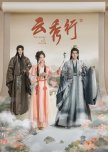
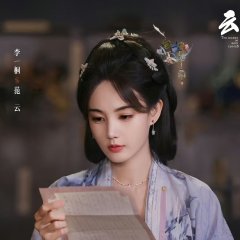
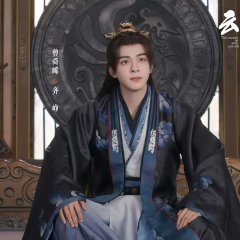
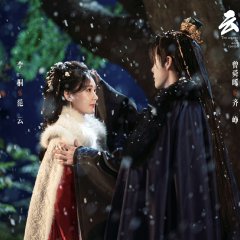
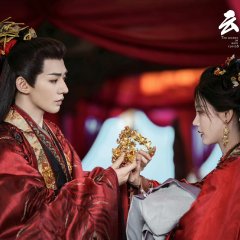
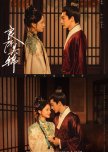
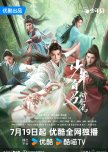
 In the legendary Nine Cities, Fan Yun, a fallen noblewoman, crosses paths with Qi Zheng, the cunning and ambitious city lord. What begins as suspicion soon turns into an alliance as they navigate power struggles, hidden schemes, and shifting loyalties. Together, they must face challenges that test their convictions and discover trust, friendship, and love along the way. (Source: MyDramaList) ~~ Adapted from the novel series ”Saiunkoku Monogatari” (彩雲国物語) by Yukino Sai (雪乃紗衣). Edit Translation
- English
- Русский
- Italiano
- हिन्दी
- Native Title: 云秀行
- Also Known As: Cai Yun Guo , Cai Yun Guo Wu Yu , Take Me Where the Clouds Rise , The Story of Saiunkoku , Yun Qi Shi , Yun Xiu Xing , 云起时 , 彩云国 , 彩云国物语
- Director: Zhu Shao Jie
- Screenwriter: Yu Xiao Qian
- Genres: Historical, Comedy, Romance, Fantasy
Where to Watch The Legend of Rosy Clouds

Subscription (sub)

Subscription (sub)
Cast & Credits
-
 Li Yi TongFan YunMain Role
 -
 Joseph ZengQi ZhengMain Role
 -
 Deng WeiZheng Shi | Lou Qi YanMain Role
 -
 Dai Lu WaWei Shi San / Wei YingSupport Role
 -
 Riley WangGao Ran / Qi Qing YuanSupport Role
 -
 Cheng Hong XinWei YingSupport Role
Reviews

This review may contain spoilers
When a Stellar Cast Can't Save a Sinking Script
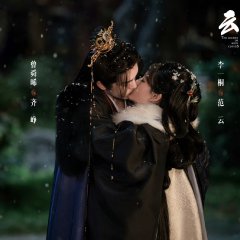
There’s a particular kind of grief reserved for a drama that had absolutely everything going for it and still managed to crumble into something nearly unwatchable. That’s the bitter taste "The Legend of Rosy Clouds" left behind, a lingering frustration that has nothing to do with a lack of talent or resources and everything to do with a story that seemed determined to sabotage itself at every turn. After years of waiting and a cast that promised sparkle and depth, I sat through all thirty-six episodes hoping for a turnaround that never came. The rating I’d give it now is a reluctant foive out of ten, and even that feels generous once you’ve catalogued all the ways it went wrong.Let’s start with the tragedy of the casting, because that’s where the disappointment cuts deepest. These actors were visually arresting, charismatic, and fully capable of greatness, but they were handed material that kept yanking the rug out from under them. Yi Tong’s Fan Yun was introduced as a noblewoman thrust into a political marriage who would supposedly blossom into a sharp, capable official. Instead, the writing made her a contradiction in human form. One moment she was clever enough to see straight through her husband’s disguise and manipulate cunning merchants; the next she was stumbling into traps so obvious you wanted to reach through the screen and shake her. Her growth into a gate commander felt like a checkbox the plot ticked rather than a journey she actually undertook, and the romance at the center of it all was built on a shaky foundation of lies and manipulation that never evolved into the genuine partnership the story kept insisting it was.
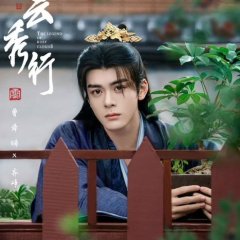
Zeng Shunxi fared no better as Qi Zheng, the supposedly brilliant governor pretending to be a frivolous playboy. I’ve seen what he can do with the right script, and that knowledge made watching him here a mournful experience. His intelligence was told to us far more often than it was shown; the political manoeuvring came off less as strategic genius and more as the writers conveniently opening doors for him. The flatness wasn’t his failing; it was a failure of direction and a script that asked him to play the same few notes on a loop. When you compare this performance to his recent work, it’s like watching a gifted musician handed an instrument that’s out of tune.
And then there’s Deng Wei’s Zheng Shi, the second male lead whose arc I will carry with me as a cautionary tale about how to destroy a promising character. In a proper love triangle, you should feel torn, aching over two equally compelling choices. What we got instead was a slow-motion transformation into an obsessive, emotionally unhinged figure who progressed from charming suitor to manipulative “nice guy” to someone who literally tried to force marriage at swordpoint. He became the shadow master of a terrorist group, deceived his own family for power, and still the drama wanted us to find his final sacrifice tragic. By the time he refused the antidote and slipped away, I felt only relief. Not because the performance was bad—Deng Wei did what he could—but because the character had become a psychological horror subplot wearing the mask of a romantic rival.
The production itself seemed to be fighting its own battle behind the scenes. For a drama that spent three years in limbo between filming and release, the post-production cracks were glaring. Scenes were snipped mid-breath, transitions jarred, and the visual quality lurched from episode to episode as if different teams had worked on them without speaking. There were moments of genuine beauty, of course: the phoenix flowers blazing against a twilight sky, snow dusting the rooftops, costumes that deserved their own applause. But they were islands in a sea of inconsistency. The action choreography often felt weightless, lighting could change within a single conversation, and far too many sequences carried the cramped, hurried energy of a low-budget web drama rather than a full-length historical production. The comedy bits, especially the governor’s antics, belonged in a sketch show and clashed violently with the serious political undertones, creating a tonal whiplash that made it impossible to settle into either mood.
And the plot. The plot deserves its own elegy, because I have rarely seen a story so committed to shooting itself in the foot. The early episodes had a spark—Fan Yun seeing through Qi Zheng’s disguise right away, a poisoning attempt that seemed to promise intrigue—but soon the narrative started piling absurdity upon absurdity. There was the baffling subplot where the couple faked a divorce by pretending Qi Zheng suffered from erectile dysfunction, a creative choice so bewildering it felt like a dare. A simple piece of cloth somehow became an infallible disguise that fooled entire armies, the drama’s own version of Superman’s glasses. And then, gloriously, infamously, the dreaded Crow Army that had been built up as an unstoppable force was defeated with fireworks. Birds. Fireworks. All that tension dissolved into a puff of colored smoke.
Character motivations shifted like sand. Problems were solved through coincidence or a single miraculous discovery, the plague in Tong City being the prime example—a devastating pandemic that evaporated with one herbal remedy. The central relationship cycled through “we trust each other” and “we don’t trust each other” so many times that I lost count, and the political reform storyline, which had genuine conceptual merit, crawled along only to be wrapped up in a rush that made the entire arc feel weightless. The symbolism of the sweet dew tea was hauled out for love declarations, poison antidotes, and marriage rituals alike until it meant nothing at all. The show tried so desperately to make us cry over deaths and sacrifices, but you cannot mourn a character whose soul the script already hollowed out.
In all this wreckage, there was exactly one thing that kept me watching, and it was the second lead couple. Gao Ran and Wei Shisan had a quiet, unforced chemistry that made every shared glance feel like a secret. Their dynamic was built on earned intimacy, a slow-burn understanding that the main romance never managed to replicate. When they worked together, the air shifted, and I found myself resenting every cut back to the central pair. Their subplot wasn’t just a consolation prize; it was the proof that this drama knew how to write a compelling connection and simply chose not to give that gift to the leads. Giving them more screen time or a spin-off wouldn’t just be a treat—it would be a quiet act of justice.
What makes the whole experience so haunting is how clearly you can see the shape of the masterpiece that might have been. The cast, the visual ambition, the kernel of a story about class mobility and women stepping into governance—all the ingredients were measured and waiting. But the execution was a cascade of wrong turns. A love triangle with real stakes, where the second lead was genuinely good and the choice genuinely painful, would have anchored the emotional core. Smarter political manoeuvring that let the characters earn their victories would have given the reform plotline the gravity it aimed for. Consistent characterisation and a steady hand on the tonal rudder would have turned chaos into purpose.
As it stands, the recommendation is narrow. If you are a diehard fan of the cast, you might find enough flickers of their talent to keep you going, though frustration will be your constant companion. If you are someone who finds grim pleasure in watching a beautiful disaster unfold, there is material here in abundance. And if you care only about a side couple and can fast-forward through the rest, you will find a diamond in the rubble. But for anyone seeking a satisfying romance, a coherent political drama, or simply a story that follows its own internal logic, this is a warning, not an invitation.
The final image I’ll hold isn’t of the Phoenix Tree or the snow-dusted farewell, but of a production that had the wind at its back and still steered straight into the rocks. Fan Yun and Qi Zheng should have been a couple to root for; instead, they exhausted me. Zheng Shi started as someone I might have loved and ended as a cautionary tale about what happens when writers mistake obsession for passion. And Gao Ran and Wei Shisan, the true emotional centre, were sidelined in their own show. Five out of ten feels right, a score for the ghost of something wonderful that never quite materialised. What a waste, truly.
Was this review helpful to you?
This review may contain spoilers
Great actors just a bad storyline
Obviously they were some issues with how the story was told behind the scenes. I wish they would kept the leads married once they divorced went downhill i do like strong female cast. The love triangle was not needed. The ending made no sense i honestly only gave this drama a chance cause of deng wei. I give actors props they all did great with a horrible storyline the actors deserved better. both couples had chemistry in the drama . I would not recommend this drama the storyline is too all over the place just make you annoyed dont waste your time.Was this review helpful to you?
Recent Discussions
| Title | Replies | Views | Latest Post | |
|---|---|---|---|---|
| Legend of the Rosy Clouds English Novel by Yukino Sai (雪乃紗衣) by silverangel | 2 | 0 |  Snowlit Jul 14, 2026 | |
 | Question for the Saiunoku Monogatari ani fans by LenRoz | -1 | 0 | LenRoz Jul 13, 2026 |
 | Here just for!!!!! Deng Wei ❄️ by SanaJeinab | 16 | 0 |  Sunbath12 Jul 9, 2026 |
 | Calendar Schedule by XiaoMeiren | 2 | 0 | XiaoMeiren Jul 6, 2026 |
| Trailer/Preview of The Legend of the Rosy Clouds by XiaoMeiren | -1 | 0 | XiaoMeiren Jun 26, 2026 |
 | Saiunkoku Monogatari novel + manga + anime link by Purple | 13 | 0 |  rainypuddle Sep 29, 2025 |