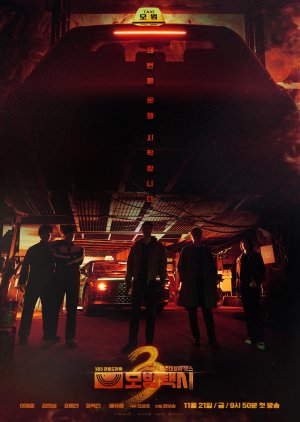
The Fate of a Cash Grab
Don't get me wrong. I liked this season, but my biggest issue is the lack of continuity in the writing between season 2 and season 3. By the end of the season 2, they hyped up an upcoming plotline that ended up having almost no importance this season. Overall, writing was over the place. Instead of going with one long storyline and multiple side arcs, we got what I liked to call chopped short stories. Also, I'm one of these people who didn't tune in for the romance. Every time writers focused on it, I was reminded that LJH and PYJ have zero chemistry.Honestly, I'm kind of glad it seems like TD is done. The writers were struggling with this season. That said, you never know with SBS. They tend to milk their original series until there’s nothing left (example Penthouse).
Was this review helpful to you?

This review may contain spoilers
Taxi Driver 3 – A Moral Breakdown with No Discussion
I loved Taxi Driver Seasons 1 & 2. Vigilante justice with a code. Batman-style revenge: brutal, clever, cathartic — but they didn’t kill people. That was the point.Season 3? Apparently that memo got lost.
Somewhere along the way Rainbow Taxi stopped exposing villains and started… burying people alive, leaving others to drown, and very much letting characters die without a blink or a single line of self-reflection. No debate. No guilt. No acknowledgement that they’ve crossed a line they spent two seasons carefully avoiding.
And that’s the problem.
If you’re going to abandon the show’s moral backbone, you need to say something about it. Instead, Season 3 just shrugs and moves on. The writing seems to assume “they’re evil enough, so it’s fine,” which is lazy and honestly a bit disappointing.
The plots were darker, sure. Some cases were still compelling. Lee Je-hoon remains excellent. But the emotional and ethical coherence that made this show satisfying is gone.
I didn’t hate it. I just finished it feeling confused, unsatisfied, and slightly betrayed — like watching Batman suddenly become The Punisher and no one mentioning it.
Season 1–2: sharp, righteous revenge.
Season 3: vibes, violence, and a raised eyebrow.
Underwhelming. And a bit shit.
Was this review helpful to you?
Weak story
Not fond of this season.Where do I start without spoilers...
Well to watch this season go watch season 1 at least so you understand the motives behind the vigilante group. What season 3 has become is just the opposite.
The problems this season faces is
- Lacking character development
- Case by case stories without a overarching or main plot that drives the entire season
- Principles are contradicted from season 1
- No prosecutor or police to challenge them which season 1 and 2 had
- Rushed cases and too far fetched at times
- The main lead actor starts making weird faces which I don't think he did in season 1 and 2
Watch if you have nothing better to do.
I really liked season 1 and unlike most people I felt Kang Ha-na made the entire season 1 pleasurable and would have loved to see her return in season 3 as a taxi driver member and be challenged by her mentor or another prosecutor.
It would have made a great season 3 seeing Kang Ha-na as a female lead and ultimately I would have ended that with her leaving the team and establishing a franchise and a spin-off into her own Taxi Driver: Prosecutor Kang like imagine prosecutor by day and she drives people around at night then gets cases...
Now that would hit.
Was this review helpful to you?

Taxi Driver: When revenge becomes repetition
A franchise struggling with its own successTaxi Driver (모범택시) had everything going for it: a compelling premise, strong source material from an acclaimed webtoon, and a first season that captured lightning in a bottle. But as the series progressed through three seasons, it revealed a fundamental problem that plagues many episodic thrillers — the inability to balance case-of-the-week storytelling with meaningful overarching narrative. What started as a masterclass in tension and character development devolved into a frustrating cycle of repetitive revenge plots, only to partially recover in its third season.
SEASON ONE: WHEN EVERYTHING CLICKED
The first season remains the undisputed highlight of the franchise, and for good reason. It understood that revenge stories need emotional stakes to resonate. Jin-hyuk, Hae-young, Pil-gyu, and the mysterious Moon Dong-eok weren’t just a vigilante squad — they were damaged souls bound by trauma, each with clear motivations for joining the “Model Taxi” operation.
What made Season 1 exceptional was its narrative cohesion. While each episode featured a distinct case (sexual harassment, school bullying, police corruption), these stories were carefully woven into a larger tapestry. The cases built upon each other, revealing more about our protagonists while exploring urgent social issues that resonated with audiences across Asia. The pacing was deliberate but never dragged, with each revelation earning its emotional weight.
The technical execution matched the writing. Cold cinematography and saturated colors created an oppressive atmosphere that mirrored the characters’ psychological states. The editing maintained tension without feeling rushed, and the performances conveyed genuine pain and rage beneath the surface of calculated revenge.
SEASON TWO: THE FATAL FLAW OF EPISODIC STRUCTURE
And then everything fell apart.
Season 2’s biggest mistake wasn’t just being worse than Season 1 — it was fundamentally misunderstanding what made the series work. The shift to a purely episodic structure, with standalone cases that rarely connected to a larger narrative, transformed Taxi Driver from a character-driven thriller into a procedural revenge-of-the-week show.
The pacing problem: Without an overarching storyline to maintain momentum, the season felt interminably slow. Each episode followed the same formula: victim appears, team investigates, elaborate revenge scheme unfolds, justice is served. Rinse and repeat.
The character regression: The episodic format didn’t just hurt the plot — it eviscerated character development. Our protagonists became mere functionaries, executing missions without personal stakes or emotional growth. The replacement of the female lead only exacerbated this problem, destroying the group chemistry that had been so carefully cultivated. These were no longer people; they were plot devices in expensive suits.
The disconnect: Perhaps most damning were reports suggesting the season was split between different writing teams, with the first half noticeably superior to the second. This wasn’t just visible in quality — it created a structural incoherence that left viewers confused about what the season was even trying to accomplish. Without cases connecting to a bigger picture, each episode existed in isolation, making the entire season feel pointless.
The fan reaction was brutal and justified. Comments across forums consistently noted the “monotonous” nature of the season, the “predictable twists,” and an overall sense that the show was “riding on the coattails” of Season 1’s success without understanding why it succeeded. The sentiment that dominated discussions was simple: this felt like work to watch.
The silver lining: While the main arc became generic and unfocused, this structural shift had an unexpected benefit. Freed from the constraints of a tightly interconnected overarching narrative, the writers could craft more elaborate and self-contained mission subplots. Some individual cases emerged as genuinely iconic, with deeper character work for the victims and more creative revenge schemes than the main storyline would have allowed. These standout episodes demonstrated that when the show leaned into its episodic nature with ambition rather than falling into formula, it could still deliver compelling television. For some viewers, these memorable standalone stories partially compensated for the loss of narrative cohesion.
SEASON THREE: AMBITIOUS EXPANSION, STRUCTURAL REGRESSION
Season 3 attempts redemption through scope expansion — cross-border human trafficking provides thematic weight and international settings. But the fundamental structural problems from Season 2 not only persist, they worsen in critical ways.
The overarching narrative problem: Despite the trafficking theme supposedly connecting cases, the season lacks a central antagonist or escalating conflict. Season 1's strength was its villain whose presence permeated every episode, creating cumulative tension. Season 3 returns to isolated, self-contained cases that resolve within 1-2 episodes. There's no narrative throughline, no building stakes, no climactic confrontation to anticipate. It's episodic storytelling masquerading as serialized drama.
Ensemble utilization collapses entirely. The protagonist becomes a solo operative while supporting characters are relegated to expository dialogue and reaction shots. The team dynamics that defined Season 1 — the sense of damaged individuals finding purpose together — evaporate. Scenes that should showcase collaborative problem-solving instead feature one character doing everything while others watch. For an ensemble show, it's a betrayal of the format.
Character development flatlines. Across 16 episodes, no character experiences meaningful growth, faces internal conflict, or evolves beyond their Season 2 endpoints. They execute missions with mechanical efficiency but zero emotional arc. For a show built on trauma and justice, the refusal to explore how repeated exposure to violence affects these vigilantes is a missed opportunity that borders on negligence.
Pacing remains wildly inconsistent. The season lurches between tonal extremes — gritty crime thriller one moment, lighthearted banter the next — without the narrative confidence to commit to either. Certain arcs drag interminably while others feel rushed. The finale, in particular, lacks the cathartic weight a 48-episode series deserves, resolving with a whimper rather than a statement.
The "international scope" is largely cosmetic. Location shooting adds production value but not narrative complexity. The show gestures at the systemic nature of human trafficking but treats it as set dressing for the same revenge formula. Complex geopolitical issues become backdrops for individual vengeance rather than catalysts for deeper exploration.
Technical execution remains solid: Cinematography maintains atmospheric quality, Lee Je-hoon delivers committed performances across multiple personas, and guest antagonists bring intensity to their limited screen time. Production design convincingly creates varied international settings.
But craft cannot compensate for structural failure. Season 3 had the opportunity to learn from Season 2's mistakes — the monotony of disconnected cases, the loss of ensemble chemistry, the absence of narrative momentum. Instead, it doubles down on episodic structure while abandoning the character work that could have justified it.
The season isn't without individual strong moments, but they exist in isolation, disconnected from any larger purpose. It's competent television that forgot why the series mattered in the first place.
THE FUNDAMENTAL PROBLEM: CAN REVENGE BE SERIALIZED?
Here’s the uncomfortable truth: Taxi Driver reveals the inherent limitation of revenge-based episodic television. Revenge stories are most powerful when they’re personal, specific, and build to catharsis. Once you turn revenge into a business model — a service provided week after week — it loses emotional weight. The more cases you resolve, the more the vigilante justice becomes routine rather than cathartic.
Season 1 worked because it felt like the origin story, with each case revealing something new about our broken heroes. Season 2 failed because it treated revenge as content production. Season 3 improves by raising the stakes and scope, but can’t fully escape the episodic trap.
THE CREATIVE TEAM SHIFT EXPLAINS MUCH
Season 1 thrived under director Park Joon-Woo's vision, with writer Oh Sang-Ho crafting the first ten episodes before Lee Ji-Hyun took over for the finale arc. Season 2 brought in director Lee Dan while retaining Oh Sang-Ho, and Season 3 promoted assistant director Kang Bo-Seung to the helm — someone who was present from the beginning but lacked the senior directorial experience to course-correct structural problems. While maintaining the same writer (Oh Sang-Ho) across all three seasons should theoretically provide continuity, the reality is that Korean drama production operates under punishing schedules where writers often juggle multiple projects simultaneously. The consistency of vision that made Season 1's first half exceptional fragmented across subsequent seasons, with directorial changes compounding the loss of narrative cohesion. When your director is learning on the job and your writer is stretched thin, even competent execution can't compensate for the absence of the creative leadership that defined the series' strongest moments.
WHAT THE SERIES GETS RIGHT
- Social relevance: Tackles harassment, human trafficking, and corruption with genuine seriousness
- Technical excellence: Strong cinematography, convincing production design, and solid editing throughout
- Performances: Lead actors bring intensity to potentially repetitive roles. Guest stars add surprising depth.
- Ambition: Season 3's international expansion shows creative drive despite flawed execution
WHAT HOLDS IT BACK
- Structural repetition: Case-of-the-week format grows stale quickly. Formula becomes transparent.
- Pacing problems: Season 2 lacks overarching momentum. Season 3 lurches between draggy and rushed.
- Predictability: Once you recognize the pattern, emotional stakes disappear
- Character stagnation: Episodic resets prevent meaningful growth. Ensemble becomes static archetypes.
- Compounding issues: Problems aren't isolated—they worsen across seasons. Series can't escape format limitations.
THE VERDICT: A PROMISING START, A FRUSTRATING MIDDLE, A PARTIAL RECOVERY
Taxi Driver is a cautionary tale about the challenges of extending a successful concept. Season 1 is genuinely excellent — a must-watch for fans of Korean thrillers. Season 2 is optional at best, skippable at worst, losing the dark edge and emotional stakes in favor of lighter tone and formulaic storytelling. Season 3 earns back some goodwill by returning to grittier territory with stronger villains and higher stakes, but it trades Season 2's problems for new ones — sacrificing team dynamics and character growth in the process. It never quite recaptures the magic that made Season 1 work.
For new viewers: Watch Season 1. If you love it and crave more, Season 3 offers improvement over Season 2 but remains flawed. You won't miss much skipping Season 2.
For returning fans: Season 3 is worth your time if you're invested in the characters, but temper your expectations. This is a recovery in tone and intensity, not in storytelling cohesion or character development.
---
Recommended for: Fans of Korean thrillers willing to accept uneven quality; viewers interested in socially conscious revenge narratives; anyone who can tolerate repetitive structure for strong individual moments.
Not recommended for: Those seeking tightly plotted serialized narratives; viewers with low tolerance for episodic repetition; anyone expecting every season to match the first.
Where to watch: Available on international streaming platforms with subtitles.
Warning: Contains graphic violence, sensitive themes (harassment, human trafficking, trauma), and strong language. Also contains repetitive plot structures that may test your patience.
EDIT: Updated analysis after watching the latest episodes.
Was this review helpful to you?

 1
1This review may contain spoilers
The Revenge of Repetition
Before season 3 of Taxi Driver began airing, I remember reading an article, I think a feature piece, on Lee Je Hoon and his thoughts returning to the series. Now, I may be mis-quoting him, but I think he talked about the general pitfalls of creating multi-season dramas - like Taxi Driver.~~
According to me, these can range from anywhere between tiny changes or big overhauls like
1. Changes in storytelling format
2. Changes to the cast and/or crew
3. Réduction/increase in episodes
4. Lack of story to tell
5. A complete loss of identity and essence
And the funny thing is, Taxi Driver did not commit any of these faux-pas, it's been the exact same from the beginning, so what happened?
Maybe it's that - maybe it's because they've been executing the same thing for 48 episodes now. But that's not what let me down about this season. The formula was a little different from it's direct predecessor, and a lot different from the very first season (atleast for me), without losing track of what the show was initially and will always be about.
The heart and soul of the show is obviously and outwardly, revenge - but it's also about retribution, growth and second chances. The Rainbow Taxi team is the core of the story, and all three emotions and the elements I would associate with them are completely intact in this storytelling operandi.
So what was missing? I'd say.. a little bit of magic.
The thing that made Taxi Driver, Taxi Driver, was what was missing. The formulaic narration apparently made the writers think extra hard about what they wanted to do, and in all the effort they put, I think they forgot to ask themselves if they enjoyed writing the story, and if we would enjoy watching it. It's a very solid effort, you can tell there was a lot of blood, sweat and tears put into this by everyone who worked on it, but whether those were happy tears, I cannot confirm.
The excitement, the rage, the sadness and the relief - all emotions I felt prior - felt tamped down. But the worst part was, it's like they tried so hard to invoke them in spades, but fell extremely short.
Each individual case was new, the indication that this form of storytelling was popular was obvious through the immense scale of filming locations and the sheer amount of celebrity cameos, from popular Hallyu stars, Dorama regulars, and even guest roles by actors whose works I'm incredibly familiar with, and that got the blood rushing.
The cinematography was vivid and fast paced, the acting was on point and all the individual components, adjudicated as individuals, left nothing to crave.
But as a whole, a sequel and in retrospect - they left much to the imagination.
I still enjoyed watching it but it was hard not to be bogged down by the same things that bogged down the drama. Lee Je Hoon was amazing as always, and so were the rest of the cast, all the leads and guest actors.
But unfortunately, I'm a little disappointed.
Was this review helpful to you?
K-Drama Sequels usually disappoint
This will be a short review since i wont write much about the plot for spoilers, but I was a huge fan of the first season and was left feeling like season 2 was lackluster and found season 3 disappointing.I'm not sure about this, but what i read online is that the first season was based on the manhwa, and it was a short manhwa which ended at the end of season 1. Season 2 and 3 should be originals regarding the plot and it shifted towards a more comedic genre. this is especially true for season 2.
Season 3 tried to pull it back to a more serious tone but still keeps tries to keep comedy. what we have is basically similar to what happened with Thor 4....which isn't great...
The action scenes also disappoint greatly . Season 1 Action scenes were superb, 2 introduced motion sickness with the camera flying around like a drone stuck in a whirlwind and season 3..if you blink you'd miss the action...
also Season 1 and 2 still stuck to punishing the bad guys. Either thru an eye for an eye or a proper imprisonment. Here, they're just executed...and finally, the connection between season 2 and 3...doesn't exist..it just wasn't addressed, and we're left with a cliffhanger for season 4 that would never be made...
Disappointing
Was this review helpful to you?

Another fun installment to the series
I'm really glad we got to see this friend group together again — seeing all the characters and how they fit together to round out the team is still the highlight of this show.Plot-wise, though, I do think this one is the weakest of the three. The weekly cases, Do-Gi's different personas, and how the team infiltrates each situation are just overall not as memorable or creative. The pacing feels slower overall.
Part of this is that there's no overarching plot. The first episode made me think they were going international and having another "who's going to get to it first" arms race with Interpol, but those characters, who I thought were going to be secondary characters, never showed up again. And then the last case made me wish that there had been an overarching plot related to the military and Do-Gi's background; it makes for a really intimidating antagonist, and the personal tie would've added a lot of stakes. We didn't get either of those though, which means there's just no recurring antagonist and no ongoing tension throughout the show.
Nevertheless, I think this was a decent send-off for our Rainbow Taxi team — and it does leave room for another season if they end up making another one.
Was this review helpful to you?
Edit: spelling
Was this review helpful to you?

This review may contain spoilers
mixed feelings
I don't really write reviews and I rarely watch kdramas but taxi driver is that one show I always looked forward to watching. this season had a lot of great moments and ones that left me feeling so underwhelmed.I really like how this show balances the comedy and the unserious with the harsh reality of the world and the injustice people have to suffer. they really do a good job of focusing on the victims and their sufferings and show how you shouldn't blame them for what they got into and focus on the perpetrator instead.
that said, there were plenty of times in this season I felt they ruined the tension by adding comedic moments or not adding any stakes to the scene.
[spolier] Kim Do-gi almost gets killed 3 times(?) this season and the reactions felt so underwhelming. I was surprised by the lukewarm reaction of the team when he got out of the car in the Samheung case. I expected one of them to check on him worryingly... same goes for the bomb scene. It made me feel stupid for thinking there would be some serious stakes.
next is dogigoeun... now I don't really mind either way if they get romantic or not, but don't try to do both!? their fake romantic moments felt so disconnected to what kind of relationship they showed in this season so far. at least in s2 they all communicated before the newlyweds thing. this time it just happened bc... fans ask for it... I enjoyed them, don't get me wrong, but it was also SO disconnected that it pissed me off. just add very subtle hints that they like each other then. it's not that difficult. and the final episode where they show [spoiler] dogigoeun having a meetcute as office workers in another timeline was (very funny ngl) so?? idk what to get from it? are you trying to tell me they're romantically involved in this season and would've been in any other timeline??? doesn't make any sense bc I found them having zero romantic interest in each other this season... it's so annoying. just stick to one: romance or no romance.
thanks for the hard work though. the cast seem to really have the same family dynamic irl, so hope to see them again someday. despite having mixed feelings, I really love the rainbow taxi family and that's why I want them to not cheapen their story anyhow. if there's a season 4, I'll be there ☺️
tldr; good showcase of victims trauma and psa, but wished it had real stakes at serious scenes. the rainbow taxi team's reaction to them getting hurt (other than goeun in the final episode) was very underwhelming. and wish they'd commit to either making dogigoeun romantic or none at all. they tried to do both in this season and it felt so unnecessary and disconnected.
Was this review helpful to you?

Taxi driver s3 LET'S GOO
The first episode is intense and action packed from start to finish!! There was not one second where I felt bored, it immediately starts strong and dark. This season is definitely more similar to s1 in the best way possible it's genuinely amazing. I have waited so long for s3 and now it's finally here and it's just better than ever, the whole team is so good! I also love how they still keep their small humor in some scenes. Friday and Saturday will be much better thanks to taxi driver!!Was this review helpful to you?

This review may contain spoilers
is it still the taxi driver we know?
unfortunately to me this season felt underwhelming in both revenge and emotional intensity which was caused by a few factors:————> structure:
three episodes for a case felt dragged comparing to the previous format of two episodes per case (seasons 1-2); what’s even more ridiculous is that all cases got two episodes EXCEPT the final one (supposedly the darkest) only got two and as a result felt incomplete
———> lack of emotional impact from main characters
doki became almost like a superhuman with massive plot armor (even more than in seasons 1-2); still somehow writers managed to put him in three near death situations and i do have a huge problem with this for one particular reason- they just brushed it off each time, we have a dramatic action then a fast forward to doki being fine again, no concerned looks, no team boning; in my opinion dramatic scenes like these only work when emotions are involved, otherwise they look almost ridiculous and stir nothing in the viewer; sadly it happened in the finale as well which honestly disappointed me the most- why did doki basically let himself get shot and then jumped off the cliff when he could’ve easily just pushed the other guy off? it just doesn’t make sense, the entire season he fights people without a single scratch and then walks right in front of the gun? was that supposed to indicate that he feels guilty and wants to punish himself because of that female military officer who died? if so then why didn’t we get a deeper dive into earlier than 10 minutes before the end of the season?
the other thing i feel extremely disappointed about is the complete abandonment of doki’s trauma and ptsd, i might’ve missed how and if it was resolved in season two but i’m not gonna lie i expected it to come back to the surface once he rejoined military; that storyline was important because it was reminding us that even tho he has enormous power he’s still human with weaknesses just like the rest of us;
——> lack of one main storyline
another surprise was the fact season three doesn’t have that one main storyline that connects all episodes together (unlike in seasons 1-2);
overall it feels like with each season taxi driver losses more and more of that heavy atmosphere (not sure why it feels this way since the cases itself are still intense but it does to me); the fact this series wasn’t afraid of discussing difficult matters and would offer consolation without too much unnecessarily light moments (which changed for the worse later on) was exactly what pulled me in and made me watch it in the first place;
——-> sudden shift in morals
season three paints a new picture of the rainbow taxi team- not they are not afraid to kill during the revenge, this is probably the most important thing about this season and something that just doesn’t sit right with me; in seasons 1-2 kim doki was doing what he was doing to help people who were wronged and failed by the system, he was always in that morally gray area but he’d never kill his target, this season not only does it happen a few times where he and his team are ready to do so but also it’s never discussed or showed in any way whether or not they have any issues with that; to me personally kim doki was a well written character precisely because he still had his moral code, getting rid of it feels untrue to what we knew about his values from previous seasons;
i did like the first case the most i enjoyed the dynamic between doki and the detective plus ofc between him and the villain; this case kind of reminds me of my beloved the worst of evil; the kpop case is also a noticeable one so this season is still definitely worth checking out
even after pointing all of these out and admitting i am disappointed a bit i still think the entirety of taxi driver is worth watching and its one of best dramas i’ve ever seen :)))
i’d gladly watch season 4!!!
Was this review helpful to you?

This review may contain spoilers
IS MESSING UP THE FINAL EPISODE A TREND?
This is the third sequel, and it's still has the same quality with the previous one. Each individual cases are so good, some of them are impressive. This show doesn't have the big case that connects each individual cases and I think it's good since that type of case usually draggy.We don't need to talk about the cast anymore. The chemistry between the Rainbow Taxi team is just getting better and better. Jang Sung Chul has more involvement to the story this season. They don't potray An Go Eun as a nerd with supercomputer skill anymore which is good and more realistic. Kim Do Gi is more brutal this season, which also good because as a fighter I think he was too soft in the previous season. The writer also decided to remove the romance at all this season. In overall it's a journey between ups and downs, UNTIL YOU WATCH THE FINAL EPISODE.
While the individual cases are good, there are several flaws in this show. They're even more noticeable compared to the previous one. The beginning of this show is quite shocking. It has no introduction. It starts with a case, not even from the introduction of a case but from the middle that it looks like this show is S2E17 instead of S3E1. They didn't even try to build a connection between season 2 and 3, although they set each season in a different timeframe (the deluxe taxi and other taxis changed). This causes a bit unconfortability and confusion during watching. Also I don't like the fact that the cases come to the team out of nowhere consecutively, not from the call. It's not like they want a revenge, but the Rainbow Taxi is making them to take a revenge. Several things which disturbing me for each case: On Ro Mi case, they suddenly forget about her manager which Do Gi crashes out with taxi; it doesn't like he gets what he deserves. On the Samheung Island case, they're firing a shotgun too much consecutively without reloading. This case also has too much plot armor, they don't have a good preparation before going to the island but they survived. As for the final episode, I lost words. What possibly hit the writer's head, or is he joining the trend of messing up the final episode? That final case resolution is underwhelming and quite... makjang? Why does he take a bullet? He has never done it and always has another way around!
This season is a combination of upgrade and downgrade. Several cases has better storyline, but I think they put too much plot armors this time. Still it's a good show, they even have a soundtrack this time. It's also good for rewatch as it doesn't have a big connecting case, so you can do "small watch-ing" case by case.
PS: They should sell that Elements lightstick as merchandise!
Was this review helpful to you?