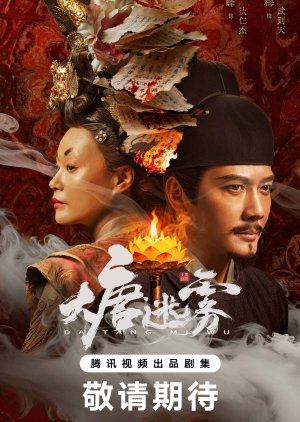
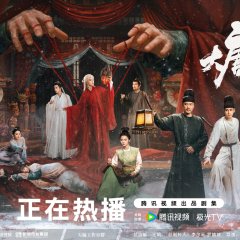
Disillusioned by Empress Wu’s actions, detective Di Renjie leaves the capital to investigate strange occurrences in Jiangnan. Beneath the empire’s prosperity, he uncovers dark forces and dangerous conspiracies. Using his sharp intellect, Di Ren Jie must solve mysterious cases where the supernatural and human corruption intertwine. (Source: TMDb) Edit Translation
- English
- Русский
- Français
- Español
- Native Title: 大唐迷雾
- Also Known As: Da Tang Mi Wu , Da Tang Mi Wu Season 1 , 大唐迷雾 第一季 , 大唐迷霧 , 大唐迷霧 第一季
- Director: Xiang Qiu Liang, Xiang He Sheng
- Genres: Thriller, Historical, Mystery
Where to Watch The Tang Mist



Cast & Credits





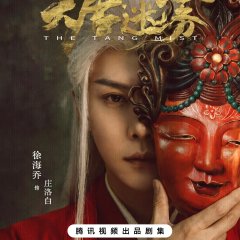
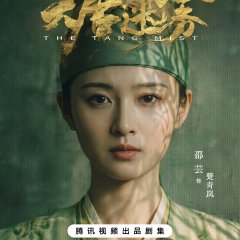
Reviews

Eerie, Horror, with Di Renjie Guesses his Password
If there is a museum dedicated to atmospheric Chinese mysteries, The Tang Mist belongs in the exhibit titled "The Illusion of Deduction." It serves as a fascinating case study in how far striking cinematography and gothic horror aesthetics can carry a narrative before the audience realizes the legendary detective is essentially just guessing.And to be fair, the illusion holds. At first.
On the surface, the show delivers a potent dose of eerie, horror-adjacent dread. The opening sequence—featuring 42 young women dying with unsettling smiles—is a masterclass in Chinese-style gothic horror, backed by striking cinematography and a genuinely superb opening animation. The pacing is brisk, resolving each mystery in about two episodes, with roughly ten minutes of actual new plot content per installment. Feng Shaofeng’s portrayal of a middle-aged Di Renjie is dignified, his voice anchoring the character. And, to my relief, no forced romantic subplots are derailing the crime-solving.
There is a distinct line between being charmed by a spooky facade and being actively drained by a hollow core. The Tang Mist manages the rare and impressive feat of being both visually arresting and intellectually vacant.
The issue is that the writing eventually stops functioning on even basic detective logic.
Di Renjie is supposed to be the Chinese Sherlock Holmes. Yet, instead of rigorous, methodical deduction, he solves cases through sudden, convenient "flashes of inspiration" or dramatic exclamations of "I know!" The script bends over backward to validate his genius without actually making him earn it.
Almost the entire cast is one-dimensional, offering no depth nor emotional resonance. I get it. Given the short 10-minute core episodes, there's no time to develop the characters. Wu Zetian, despite her minimal screen time, is reduced to a caricature, literally, saddled with ugly makeup and styling that serve no narrative purpose other than to distract.
And then there is the historical world-building.
The show throws around supernatural dread, bloody deaths, and eerie Jiangnan folklore with absolute confidence, while possessing zero percent of the historical discipline required to ground it. It is bizarre to watch women casually strolling alone outdoors in bright red clothing in the middle of the night, and they were eventually murdered. This isn't just a minor oversight; it directly contradicts the strict, well-documented curfew systems of the Tang Dynasty.
At times, it feels like the writers vaguely remembered "ancient China" but forgot the actual rules of the era.
Condensing mysteries into ten-minute chunks of actual plot per episode makes the show feel less like a cohesive narrative and more like a beautifully edited highlight reel. The gothic aesthetic is fantastic, but it becomes a veneer. Great historical storytelling feels tactile and grounded. It has grit, uneven shadows, and lived-in textures. Instead, the atmosphere here feels like a haunted house ride: thrilling for a minute, but entirely artificial once you step off.
Eventually, the facade cracked for me.
I realized I was no longer watching a brilliant detective unravel a complex conspiracy. I was watching well-lit actors wander through a gothic-themed escape room where the detective just guesses the password, and the script aggressively applauds him for it.
The production team bets that if the gothic aesthetics are eerie enough and the opening animation is gorgeous enough, audiences will happily forgive almost anything—they are so wrong.
Was this review helpful to you?

Strong Story, Light Character Development
Not bad. It's a straightforward drama with minimal character development.The fast-paced structure makes it easy to binge, as each episode introduces a new case while steadily moving the main story forward. However, this also means some cases feel underdeveloped, with clues often presented too directly and twists that are fairly easy to predict.
My overall impression was likely influenced by how refined and character-driven STOTD was. Compared to that, this drama puts less emphasis on character arcs and instead focuses more on its central mystery. Even so, it remains engaging throughout, and that choice works well within its shorter format.
Was this review helpful to you?
Recent Discussions
| Title | Replies | Views | Latest Post | |
|---|---|---|---|---|
 | Drama Color Palette by BanxiTheCommentaryGrrl | -1 | 0 | BanxiTheCommentaryGrrl Jun 14, 2026 |