
 Editorials
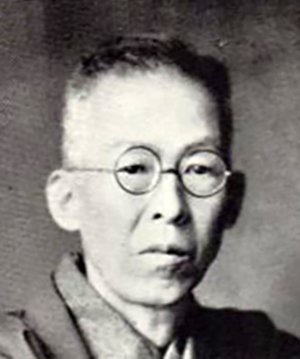
Okamoto Kido
- Name: Okamoto Kido
- Native name: 岡本綺堂
- Also Known as: Okamoto Kidou, おかもと きどう, おかもと けいじ, 岡本啓二
- Nationality: Japanese
- Gender: Male
- Born: November 15, 1872
- Died: March 1, 1939
At the age of three, he began studying classical Chinese texts under his father's guidance, and at nine, he began learning Chinese poetry. He also learned English from his uncle and foreign exchange students at the embassy. After graduating from Hirakawa Elementary School, he entered Tokyo Prefectural Middle School, where he aspired to become a playwright. Instead of entering the First Higher School after graduation, he joined the Tokyo Nichinichi Shimbun newspaper in 1890. He worked as a journalist for 24 years, including at Chuo Shimbunsha and Eiri Nichinichi Shimbun, until 1913. During the Russo-Japanese War, he also worked as a war correspondent in Manchuria. He married Kojima Ei, the daughter of a geisha from the Uwajima domain.
While working as a journalist, he began writing theater reviews and social exploration articles. In 1891, he published the novel "Takamatsu Castle" in the Tokyo Nichinichi Shimbun. In 1896, he published his first play, "Shishinden," in the Kabuki Shinpo newspaper.
From 1913 onwards, he focused on his career as a writer. He left behind 196 plays in his lifetime. In 1916, he serialized novels simultaneously in the Kokumin Shimbun and Jiji Shimpo newspapers.
He visited Europe and the United States in 1918, which some say influenced a change in his writing style. He lost his home and collection of books (including diaries) in Kojimachi during the Great Kanto Earthquake on September 1, 1923, and took refuge in the home of Rokufuku Nozaki, a disciple, before moving to Azabu and then Hyakunincho the following year. In 1930, he founded the monthly magazine "Butai" to nurture young talent. In 1937, he became the first artist to be appointed as a member of the Art Academy from the theatrical world.
His adopted son, Okamoto Keiichi, was the founder of the publishing company "Seiunsha," named after Kido's work "Seiundo Kidan."
He passed away from bronchitis and lung infiltration at his home in Kamimeguro in 1939.
(Source: Japanese = Wikipedia || Translation = MyDramaList) Edit Biography
Original Creator
| Title | Rating |
|---|---|
| 9.0 | |
| 3.0 | |
| 0.0 | |
| 0.0 | |
| 0.0 | |
| 0.0 | |
| 0.0 | |
| 0.0 |
Original Creator
| Title | Rating |
|---|---|
| 0.0 | |
| 0.0 | |
| 0.0 | |
| 0.0 | |
| 0.0 | |
| 0.0 | |
| 0.0 | |
| 0.0 | |
| 0.0 | |
| 0.0 | |
| 0.0 | |
| 0.0 |
Trending Articles
Top 12 upcoming dramas on every fan's watchlist
Editorials - Sep 19, 2026
From highly anticipated adaptations to gripping thrillers, the upcoming drama lineup has something for every fan. With teasers already dropping, these 12 dramas are generating plenty of buzz even before their premieres. Here are the titles to keep on your

Xiao Zhan ranks 27th in China brand figures Top 500
News - Sep 21, 2026
Xiao Zhan has ranked 27th overall in the annual Brand Figures ranking released by Topbrand Union

'A Love Other Than Yours' is the K-Drama That Will Make You Question Everything You Know About Long-Term Love!
Editorials - Sep 23, 2026
After ten years together, is it still love ... or just habit? This Amazon Prime Video K-drama, A Love Other Than Yours, will make you question everything!

'Love O2O' relaunched on YOUKU with AI face-swapped female lead
News - Sep 24, 2026
The 2016 Chinese drama 'Love O2O' has been re-released as 'A Smile Is All It Takes', with Wang Zhu Yue replacing Zheng Shuang through AI face-swapping technology.
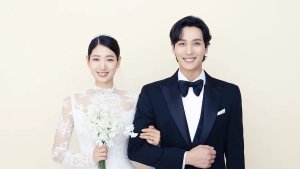
Park Shin Hye and Choi Tae Joon become parents of two
News - Sep 22, 2026
Park Shin Hye (36) and Choi Tae Joon (35) have welcomed their second child
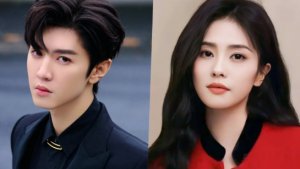
Chen Zhe Yuan and Bai Lu confirmed for new Chinese historical drama
News - Sep 23, 2026
New Chinese drama 'Echoes' has announced Chen Zhe Yuan and Bai Lu as its leading cast
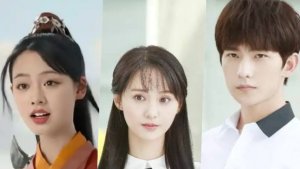
'Love O2O': Chinese actress Wang Zhu Yue responds to AI face-swap controversy
News - Sep 25, 2026
Wang Zhu Yue speaks out after the AI face swap in the re-released version of 'Love O2O' sparks controversy
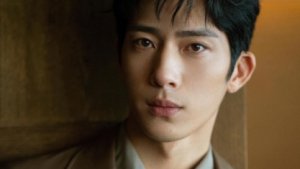
Jing Bo Ran says 'The Early Spring' is his first true 'idol drama', shares insights into character styling
Celebrity - Sep 18, 2026
Jing Bo Ran opens up about his acting journey, styling Luan Nian in 'The Early Spring', and the roles that have shaped him as an actor



