

This review may contain spoilers
A Cinematic Masterpiece Misunderstood
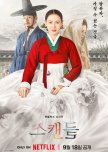
The drama ( in my opinion) is a Cinematic Masterpiece Misunderstood by the Masses While many casual viewers fast-forward through the slow-burn pacing or get distracted by the explicit rating, The drama (Again in my opinion) is a brilliant, layered masterpiece of psychological tension. Director Jung Ji-woo did not create a commercial, fast-paced K-drama; he crafted a meticulous, character-driven tragedy that explores the dark, messy corners of human desire, jealousy, and social constraints within the rigid Joseon era. The plot execution is precise, treating physical distance, fleeting glances, and subtle touches as an entirely separate language. For those on MyDramaList who complain about a "lack of plot," confusion should not be mistaken for a lack of direction. The narrative web is tightly spun, and every single scene serves a structural purpose
A Masterclass in Acting: The Main Trio at Their PeakThe true pulse of the drama lies in its phenomenal cast. Ji Chang-wook, Son Ye-jin, and Nana deliver absolute acting masterclasses, providing subtle, understated performances that require the viewer’s full attention to appreciate:
Ji Chang-wook (Cho Won): His transformation into the ultimate Joseon libertine is spectacular. He balances the playful charm of a notorious playboy with an intense, vulnerable undercurrent. The shifting layers of his performance—especially as he begins to realize he is drowning in genuine, dangerous emotions—are breathtaking.
Son Ye-jin (Lady Cho): She portrays her character's internal contradiction beautifully. There is a chilling calculation in her gaze, yet a profound, aching loneliness beneath it. She manipulates an entire room without ever raising her voice, breaking away from conventional, loud drama villains to give us a multi-dimensional, brilliant noblewoman stifled by her era.
Nana (Hui-yeon): Nana infuses the virtuous young widow with a quiet vulnerability that completely elevates the character. She is not just an innocent, helpless pawn in a game; Nana plays her with her own distinct desires and emotional agency. Her gradual emotional awakening and the complex "push-and-pull" chemistry she shares with Ji Chang-wook are among the most gripping elements of the show.
An Example of Brilliant Symbolism: The Widow's Room (Confucianism vs. Christianity)To truly understand how deep and complex these characters are, one only needs to look at the powerful, symbolic set design in Hui-yeon's room. Pay close attention to her wall: it is covered in wallpapers of Confucian texts, representing the suffocating conservatism, rigid social expectations, and moral duties forced upon her from the outside as a widow in that era.Yet, hidden beneath that layer is Catholic Christianity. In Joseon at that time, Christianity symbolized the underground, the yearning for freedom, and a faith born from the heart rather than establishment dictates. This wall is a perfect reflection of her psyche: outwardly, she is completely imprisoned by the public expectations demanded of her, but deep down, her heart is somewhere else entirely, longing to break free and experience genuine emotion. This is visual storytelling at its finest.
The Pansori Soundtrack: Cho Won’s Hidden Monologue (Episode 4)Another brilliant creative choice in this adaptation is how Director Jung Ji-woo anchored the show's entire sonic palette in Pansori—the classic Korean musical storytelling medium.A prime example of this genius is found in Episode 4. Instead of using conventional, lazy voiceovers or forced dialogue to explain Cho Won’s inner world, the director uses the rhythmic, aching cadence of the Pansori singer as a direct proxy for Cho Won's internal monologue. As Cho Won pursues Hui-yeon, his playboy facade begins to crack, revealing a hollow void and a desperate longing. The Pansori doesn't just play in the background; it acts as the raw, unfiltered voice of his subconscious—vocalizing the intense emotional conflict and hidden desires that he cannot speak aloud. It is pure cinematic poetry that demands a patient, attentive audience.Bottom Line: If you watch this drama at 2x speed or look only for conventional, comforting K-drama tropes, you will miss the brilliant nuances in speech delivery, musical metaphors, and micro-expressions. The Scandal is an artistic triumph meant for audiences who appreciate high production values, complex grey characters, and raw human emotions.
I've already seen it twice to get to the bottom of the little nuances. I recommend not rushing to dismiss it or criticize it because of the comments. 10/10
A Masterclass in Acting: The Main Trio at Their PeakThe true pulse of the drama lies in its phenomenal cast. Ji Chang-wook, Son Ye-jin, and Nana deliver absolute acting masterclasses, providing subtle, understated performances that require the viewer’s full attention to appreciate:
Ji Chang-wook (Cho Won): His transformation into the ultimate Joseon libertine is spectacular. He balances the playful charm of a notorious playboy with an intense, vulnerable undercurrent. The shifting layers of his performance—especially as he begins to realize he is drowning in genuine, dangerous emotions—are breathtaking.
Son Ye-jin (Lady Cho): She portrays her character's internal contradiction beautifully. There is a chilling calculation in her gaze, yet a profound, aching loneliness beneath it. She manipulates an entire room without ever raising her voice, breaking away from conventional, loud drama villains to give us a multi-dimensional, brilliant noblewoman stifled by her era.
Nana (Hui-yeon): Nana infuses the virtuous young widow with a quiet vulnerability that completely elevates the character. She is not just an innocent, helpless pawn in a game; Nana plays her with her own distinct desires and emotional agency. Her gradual emotional awakening and the complex "push-and-pull" chemistry she shares with Ji Chang-wook are among the most gripping elements of the show.
An Example of Brilliant Symbolism: The Widow's Room (Confucianism vs. Christianity)To truly understand how deep and complex these characters are, one only needs to look at the powerful, symbolic set design in Hui-yeon's room. Pay close attention to her wall: it is covered in wallpapers of Confucian texts, representing the suffocating conservatism, rigid social expectations, and moral duties forced upon her from the outside as a widow in that era.Yet, hidden beneath that layer is Catholic Christianity. In Joseon at that time, Christianity symbolized the underground, the yearning for freedom, and a faith born from the heart rather than establishment dictates. This wall is a perfect reflection of her psyche: outwardly, she is completely imprisoned by the public expectations demanded of her, but deep down, her heart is somewhere else entirely, longing to break free and experience genuine emotion. This is visual storytelling at its finest.
The Pansori Soundtrack: Cho Won’s Hidden Monologue (Episode 4)Another brilliant creative choice in this adaptation is how Director Jung Ji-woo anchored the show's entire sonic palette in Pansori—the classic Korean musical storytelling medium.A prime example of this genius is found in Episode 4. Instead of using conventional, lazy voiceovers or forced dialogue to explain Cho Won’s inner world, the director uses the rhythmic, aching cadence of the Pansori singer as a direct proxy for Cho Won's internal monologue. As Cho Won pursues Hui-yeon, his playboy facade begins to crack, revealing a hollow void and a desperate longing. The Pansori doesn't just play in the background; it acts as the raw, unfiltered voice of his subconscious—vocalizing the intense emotional conflict and hidden desires that he cannot speak aloud. It is pure cinematic poetry that demands a patient, attentive audience.Bottom Line: If you watch this drama at 2x speed or look only for conventional, comforting K-drama tropes, you will miss the brilliant nuances in speech delivery, musical metaphors, and micro-expressions. The Scandal is an artistic triumph meant for audiences who appreciate high production values, complex grey characters, and raw human emotions.
I've already seen it twice to get to the bottom of the little nuances. I recommend not rushing to dismiss it or criticize it because of the comments. 10/10
Was this review helpful to you?


