

 1
1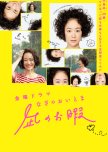
This review may contain spoilers
Speaks Straight to my Soul!
Update: The rewatch value on this one is insane- I’ve now watched this probably 10 times and will watch it another 10. I know a lot of the dialog by heart at this point.This series is about letting go of the performance of the false self and living with integrity in one’s true Self: When one is performing for the mother character, the job environment, playing the "good daughter" script, true Self is obscured by a false mask. The trauma of self betrayal that originated in childhood and the family, unconsciously dictates one’s behavior and so called personality throughout life. How does one become a people pleaser who seems unable to change? It’s a trauma response and the story is a realistic story about how the eventual breakdown and healing can begin, along with the setbacks along the way. How to not live a fake life smiling in front of the parents while clutching your stomach in pain as your true Self screams? In the beginning, living a lie for survival seems easier, but the compromise and self betrayal on one’s soul makes it intolerable for one’s inner integrity. It takes great courage to live a life of honesty and integrity according to your own truth and values.
Nagi collapses in her old fake life and leaves it all behind. She finds a cheap apartment with quirky new neighbors and makes a new life there- a long vacation, free of employment, family, and her pain in the a$$ boyfriend.
Even if her ex Shinji at first seems like the typical ego narcissist who’s simply grieving the girlfriend that got away, there seems to be something tugging at his heartstrings deep inside. Nagi chan’s authentic true Self that is unconditionally lovable and loving and does not need to be or look any particular way to be lovable. There was this way that he looks at Gon San when he speaks about his love that is very endearing like they both share something in common with each other and that is their love for Nagi Chan.
Gon San starts off as a F-boy who’s dead inside (like a Tin man) and basically infects all the women he “hangs out with” with his zombie virus of sleeping with them, ghosting, and getting them addicted to him in a kind of anxiety attachment style. He’s nice on the surface, but he truly lacks life force and like a parasite he feeds off the attention of women yearning and longing after him. He’s oblivious to his nature and lacks self awareness, but when the next door grandma calls him a sinful man, it was refreshing to hear that kind of honesty. He starts off merely a zombie who infects others with his zombie virus of sleeping with random women. The without understanding his own transformation by Nagi, he asks Shinji one day: “do you have any wishes? You know, I don’t think I’ve ever had one. The desire of the girl in front of me was my only wish. Because I knew what they wanted me to do, I wanted to do it for them. But right now, even if she doesn’t have any desire, I want to do something for her (Nagi).” In that sense he is a mirror of Nagi who does the same with men. Eventually he clutches his heart and says he wants to do something for Nagi Chan. He says it’s the first time he’s had this feeling. He says something beautiful later to Nagi, as he takes her hand, “You know, when I think about how I ended up hugging you and kissing you, I can’t remember those. Right now, I can’t do such things. Because I’m embarrassed. This is the limit. My past and present self… look completely different. So I think people can change if they really want to.”
It’s as if the heart of the dreamer, even if she doesn’t fit in with the shallow socializing conversations of the people around her and isn’t a “people person,” she touches them deeply with her vulnerability and her very presence, which affects them with love. I think the theme of this show is getting in touch with your own heart. You can read the atmosphere around you and try to live to please others, doing what other people want or trying to fit into some social template but what is the heart saying deep within? Past all the pretenses, these characters show that there is a love beneath all the ego’s defenses against emotional intimacy. Reading the air and living with a mask on and constantly regulating oneself and personality is death of the true self. It is suffocating, and both Nagi and Shinji experience a collapse based on this suffocating mask. An outside person can make you happy no matter what they do.
It’s no wonder the at Nagi turned out to be an incessant people pleaser because her mother is highly narcissistic and manipulative, and her father is nonexistent, so she constantly had to read the air to survive as a trauma response from childhood. It led to her not knowing what she really wanted in life and simply drifted to whoever paid attention to her and seemed interested. She didn’t know what she was truly interested in for herself because she was never given the emotional freedom to explore such things. She doesn’t listen to music, doesn’t have any hobbies, and doesn’t really know what to write for her wish list. Gon San is a mirror of this because he too reflects the desires of the women who are in front of him and doesn’t know what he wants for himself. Until Nagi lit a spark in him. All the people who are simply going through the motions of reading the air and surviving these stock social interactions are living hollow lives and dead inside. Even when Nagi goes to visit her mother, despite living with her natural hair for so long in her vacation, she transforms back into her straight haired corporate doll version, which is disappointing to Shinji as well who knows all too well how the family creates expectations to wear such masks and perform for survival. He tells her she’s already lost the battle if she goes and visits the mother looking like that. Nagi’s mother plays the perfect narcissist when she tries to manipulate Nagi into visiting her and covering the costs for the renovation of her house using her amazing nonexistent Tokyo job salary.. and when Nagi expresses that there’s something she wants to spend her money on (starting the laundromat business), and will support with whatever funds are leftover, the mother defaults to the manipulative line “it’s ok I will just beg around and try to borrow some money from others.” Ah typical narcissistic mother! This, the mother, the family mask and its conditional love based on Nagi’s performance was the origin story of her suffocation and drowning feeling. Upon visiting her mother and the mother using the line “I’ll just beg around for money and pay them back penny by penny,” Nagi immediately picked up the corn (which she hates) and ate it, and then immediately transferred 700,000 yen to the mother. This is how the narcissist always got what she wanted. Even after her long vacation and liberation, it felt like she fell back into the old traps of childhood trauma and motherly gaslighting. The mother is a parasite and robbed her daughter of her savings money even though she has no job. That was very sad to see. All of a sudden, her new friends like Sakamoto and her new laundromat dream don’t feel real anymore.
It seems that all three - Nagi, Shinji, and Gon are struggling with the same thing- trying to gauge the moods and atmosphere of others and then adjust themselves to that as a trauma response- no wonder they’re in this triangle together. But they’re in a healing phase and it takes time. It’s better not to go back to those old family systems while the soul is healing. Sometimes it feels like 2 steps forward, 1 step back, but progress is inevitable.
When a traumatized mind is healing from the effects of narcissistic abuse, it can be hard to understand why this person seems to regress and go back to old ways of people pleasing and money transferring. It was frustrating to see Nagi give all that money to her evil mother. But if seen through the eyes of compassion, I can see a wounded child that needs love and is trying to bargain and earn it still and needs to learn that this kind of family love is conditional and not real. It was interesting to see Shinji immediately revert back to his family performance role when he sees Nagi’s narcissistic mother, and he starts shucking and jiving by making up lies about Nagi’s situation to please her in attempt to save Nagi. Again a trauma response. Seeing the two of them together in front of the narcissist mother was very telling that these are two children who have grown up reading their parents’ reactions and trying to survive. Shinji’s description of Nagi’s mom and her smile as “scary” was exactly it. It’s all about lying and keeping up with appearances. This is the life that the family teaches them to live. Sad sad and pitiful. But I know it all too well.
One of my most favorite scenes was the family breakdown- where the truth is revealed about both sides- that Nagi quit her job and works in a bar, and Shinji’s brother doesn’t work in America but in Japan and has written a tell all autobiography- he comes to crash the party and drop a few truth bombs like how Shinji’s dad has another family and how their mom got more plastic surgery. Seeing Shinji working so hard to keep the lid on, Nagi in that moment realizes that they are both the same, suffocating underwater, trapped in the family hell of lies. Ultimately Nagi’s narcissistic mother has this to say after the family lies fall apart like a house of cards: “I knew it, this is the kind of person you chose, Nagi. It’s always been like this. Even if I let you do anything your way, you would never do it properly. You’ve never met your mother’s expectations! Not even once. And the last one, it’s this.” And for the first time Nagi opens up while the truth has taken the stage: “I hate you. I’ve always hated you. For forcing me to listen to you and making me feel guilty for pretending to be a good person outside, for expecting me to do things you cannot do yourself. I hate you… I’m sorry, I cannot live for you, mom. Just life by yourself. I will also live for myself, by myself… although I can’t meet your expectations, and look this terrible.. I feel really happy to live this way.”
There is an interesting discrepancy in how the characters validated Shinji’s "loud" heartbreak versus Gon’s "quiet" suffering. The neighbors, Mama, and the bar crowd rooted for Shinji because his suffering was Public and Dramatic. Crying at the bar, crying while walking with the “White Lover” snack bag, crying while walking on whale street, this is the "Top Salesman" performance that the "horizontal" world recognizes. The characters were rooting for a "Grand Reunion" between Nagi and Shinji because it fits the theatrical narrative of the dream. They were pressuring Nagi to "render" the happy ending they wanted to see. Gon's awakening, however, was Vertical. Because it was a quiet, internal shift from a hollow "player" to a sentient man, it was almost invisible and unvalidated by the characters anyone he shared these feelings with- Shinji, Mama, the grandma upstairs, Sakamoto- they all essentially ignored Gon’s love, even though I would say Gon’s heart opening appeared to be more genuine because it was quiet, compared to that of Shinji who still had remnants of pride, selfishness, and arrogance. Shinji’s love still has the "loud" drama of the ego seeking validation and that performative element makes Shinji more publicly “loved” or validated rather. When the upstairs grandmother tells Gon, "Now it's your turn to experience the pain," she is acting as the Voice of the Spirit. She is telling him that his previous "niceness" was a debt he now has to pay in the currency of genuine feeling. He had to experience being a "sardine" himself, longing for someone who is already swimming away. The reason nobody was there to root for Gon is that his love was becoming transparent. It wasn't about "winning" Nagi like a trophy (though he felt that competitive urge); it was about his own soul coming online. Shinji’s "love" was still heavily tied to his Pride. Even his crying was a form of performance, a way to get the bar crowd to notice him. This is why everyone "rooted" for him in Nagi’s apartment. He was still playing a role they understood: the "Tragic Hero."
The fact that Gon let Shinji stay in his apartment after his collapse is a beautiful moment. It shows that as the heart opens, the Social Hierarchy (Competition) starts to dissolve. Even though they both "wanted" Nagi, their shared suffering created a temporary bridge of Spirit-Led Kindness. They were becoming "transparent" to each other because they were both being "derendered" by Nagi's decision to swim alone. They weren't "competitors" anymore; they were just two men witnessing the departure of the Dreamer.
Even though both men ended up being very sweet in the end, I was really hoping that Nagi wouldn’t end up with either of them, and would just go off into the sunset alone in her True Self. Her transformation and power at the end is undeniable and it’s perfect that she ends up living in this new found power instead of partnering herself with some dude as the “happy ending.” The ultimate happy ending is this. She is happy with herself and being in her own skin. And I loved how her apartment building was demolished as a symbol of its purpose being finished. It was truly the perfect and healing series.
Was this review helpful to you?
This review may contain spoilers
Nonstop Plot Twists But very Addicting!
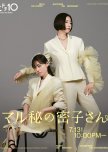
Secret Makeover is engaging and addicting from beginning to end, but they sure take the “Who Done it?” Concept to a whole different level. I kind of reminds me of Burn the House Down, another J drama about a fire and a young woman who turns up to investigate, and literally everyone and their cat becomes a suspect and starts acting fishy. So many red herrings I don’t even know which way is up or down and who to trust anymore! The show stars Haruka Fukuhara who was the bright eyed bushy tailed junior realtor from Shōjiki Fudōsan/The Honest Realtor and the female lead from that show plays Mitsuko’s sister Mariko.Secret Makeover had me crying at many points, and drooling at both of the male leads, but alas Mitsuko doesn’t care for either of them even though they are both in love with her… sigh, I don’t know why that makes it feel bittersweet to me, but Mitsuko is surely a headstrong woman who doesn’t actually need a male romantic figure at all. She stands on her own. She brings Natsu from the depths to the highest of heights through a total makeover inside and out- she transforms this single mother and both of her grown kids into self assured, confident characters. The show makes you feel the bond that develops between all of them- the Natsu family and the Kujo family.. Haruto is adorable from beginning to end, and so is Tomo. I love show- it shows that the total makeover goes right down to the soul. Heartwarming, shocking, suspenseful.. and gorgeous scenes and settings that look like they’re out of a storybook.
“If you change yourself, you change the world.”
Was this review helpful to you?
Cherry Magic! Thirty Years of Virginity Can Make You a Wizard?!
0 people found this review helpful
This review may contain spoilers
Two Handsome Men falling in Bubble Love!
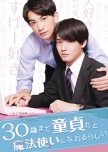
I don’t know how I stumbled upon this show but apparently I needed it, so my heart must have been searching for it. Adachi (the main character and played by the incredibly handsome Eiji Akaso) is basically a shy office worker, inexperienced in relationships, a 30 year old virgin who can read minds, and is pretty much uninterested in anything. He’s just floating through life disinterested as if he’s in a constant existential crisis. I can relate to him a lot. He also has low self worth because he keeps admiring and comparing himself to Kurosawa- the “perfect, handsome, competitive high achieving colleague.” In other words he sees the world’s hierarchy and sees himself at the bottom and Kurosawa at the top. And through his mind reading power he figures out that Kurosawa is secretly in love with Adachi. It feels like the Spirit’s divine love with Adachi despite not knowing his own worth. Another way to look at it is that they are both opposites. Kurosawa was always judged by his looks- people would gravitate towards him because he was so handsome and he would get unfair advantages but it was as if they didn’t see him on the inside, only the outer shell. So he felt he had to live up to their projections and expectations of him, and works hard to do that- and becomes like a mirror of the world’s expectations.. to the point where even though he’s glowing and shining on the outside and getting all the awards, he doesn’t know who he is anymore and feels disconnected to his true self because he keeps trying to live up to others’ expectations. Then while on a company dinner with Adachi joining, a president hits on Kurosawa and he recoils, which bursts the bubble of expectation that person has of him. Then he leaves the dinner and Adachi takes care of him because Kurosawa is half drunk, but he starts to see Adachi’s nature that is kind and caring but doesn’t fit into any of the conditionally loved checkboxes that Kurosawa ticks off. Adachi’s simply floating in the wind and has no clue about the world- he’s almost just existing and only half in it, and meanwhile Kurosawa is deep in the world and all its hierarchical competitive games because he’s good at it and he’s winning and he does so well with it. But Kurosawa falls for Adachi first because he sees a refuge in him, and Adachi looks up to Kurosawa because he is the world’s hero.. and together they’re entering this relationship where basically Adachi has no experience and feels unworthy, and meanwhile Kurosawa has all these plans for the relationship and is basically taking the reigns and is doing things a bit like the “template” and there are all these expectations. I think it feels suffocating for Adachi- knowing that I am like him myself, this idea of doing candlelight dinners and dates and the expectation of sex.. it’s all just too much and half of the time Adachi looks constipated in the relationship. Meanwhile he reads Kurosawa’s thoughts and he’s constantly thinking about Adachi and how to please him and make him happy. But Adachi’s happiness is not really dependent on those things I feel. Then during one candlelight dinner, Kurosawa is talking about their “first Christmas plans to see fireworks etc” and Adachi has already read his mind so he knows all the plans and surprises. Then he feels insecure and says to Kurosawa “teach me”.. and Kurosawa leans in with a kiss but Adachi can hear all of his thoughts so he pushes him away. Then Adachi confesses his mind reading power to Kurosawa and feels really bad that if he loses his power, the relationship m ight not work out. Kurosawa is not bothered by his power but he says Adachi must decide if he wants to continue or not. And they end the relationship.. so the elaborate candlelight dinner- it’s like it ended as fast as it started.. I guess that’s the special ego relationship full of expectations and following the formula. And then the next days at work, it’s like they became strangers again. It doesn’t sit right with me- it’s because the relationship needs a label? Why not just spend time with each other and not call it anything? Why have any expectations at all? Just let the relationship be what it is instead of putting so much pressure on it and labeling it and doing the whole fantasy and the 1st date and 1st Christmas etc. It just killed the relationship as fast as it started. But the last episode is still not over and I have yet to see what happens. I think they will get back together. I wish adachi could just say- I want to spend time with you- I want to be close to you but let’s not call it anything. I also don’t want to have sex because I want to keep my power for a while. Are you ok with that? We don’t have to either be cohabiting spouses or strangers. Why the two extremes? No I want to be close but without any expectations or templates or labels. I feel it has something to do with the conditional love and expectations and the template.Adachi’s whole arc is the same engine he’s dismantling:
“I am unworthy. I don’t fit the world’s template. I must become lovable.”
He’s a virgin at 30. Awkward. Introverted. Floating through life. Unable to perform desire in the way the world expects.
The moment Kurosawa, the symbol of “ideal man,” “ideal colleague,” “ideal beloved” turns toward him, Adachi immediately feels: pressure, anxiety, responsibility, the weight of someone’s expectations, claustrophobia from the template
Not because Kurosawa is wrong. But because Adachi was never taught unconditional love. He was taught conditional worth:
• be impressive to be loved
• be beautiful to be loved
• be accomplished to be loved
• be desired to be loved
• be “normal” to be loved
It’s not the kiss that frightened Adachi, it’s the script.
The “first date,” the “first Christmas,” the “fireworks,” the “expectations,”
the “labels,” the “now we must become THIS.”
All of that suffocates a soul that has survived by being small, invisible, neutral, low-maintenance, non-demanding. Love died the instant the template entered. The second it became a “proper relationship,” the magic evaporated. Because the template always kills freedom, intimacy, and truth.
The world has certain slots that it assigns for conditional love- these are the ones who will be loved the most. So often times wanting so badly to be seen or loved by those conditions, one fools themselves into believing they’re something they’re not. All because they’re very aware of the conditions for love in the world and want to be that even though they’re not that. So they betray themselves. I think Adachi is supposed to go in a different direction instead of trying to mold himself into something lovable by the world. That is not the direction of unconditional love. Unconditional love would be listening and honoring what your true self wants and needs. I think the deeper message of this show is to accept the reality of who you are as it is, not as you would like it to be, as the world would condition to you want. Because the world taught that only these certain things are lovable and you must be that- in many ways Adachi deviated from that and feels diminished by that because in his mind he thinks “I am less lovable.” So he thinks he needs his mind reading power to survive and compensation for “being behind.” But unconditional love says it doesn’t matter where you stand, you’re still lovable. You are loved no matter what. But only if one listens to and honors themselves, they can love unconditionally and receive it.
Was this review helpful to you?

This review may contain spoilers
Low Budget Foreign Actors are Ruining this Show
I really like how the episodes weave in the specific illness of the main patient into the overall theme of the episode going through several characters lives, as if the issue being treated is not confined to just one character in that world, but actually the larger whole- the collective. For example, in the dominos episode- the beginning scene starts with Michiko knocking over dominos in the hospital made by kids. Then later a patient comes along who is a domino teacher and the surgery being performed is a liver transplant with a kind of domino effect- liver was taken from one donor to give to another and that second patient’s liver was given to a third like a domino effect. Then at the end after the beautiful display of dominos created by Michiko and the children, another scene as a playful tribute to the domino effect shows the surgeons who are in the bureaucracy- one falls and knocks over each surgeon in succession like dominos. It was pretty funny. So by treating that core illness, Michiko who represents the divine or Spirit is healing the whole One Mind or “collective.”Same thing happened with the Alzheimer’s episode where the opening scene starts with Akira San forgetting that he already fed Ben Casey the cat. Then Michiko had one or two moments of absent mindedness herself, as she treats the mother of Ushio (a hopeless surgeon) for some rare disease that the AI misdiagnosed as Alzheimer’s. Then I think the politician/minister guy who keeps making gaffes also comes in this episode and it shows how different people are being absent minded, not just any one specific patient- it actually alludes to One Mind- the one mind is suffering from these various ailments and how the Spirit in the form of Daimon Michiko treats and heals these cases is the story and miracle. The true mystic is performing surgery on this One mind everyday to weed out the false and implant only what is true.
The worst part of the series are the low budget foreign (Caucasian) actors. Their acting is so bad and unnatural as if they’re imitating humans instead of just being a human being. The worst is Seven, CEO of Goldberg bank- I guess he’s supposed to be an American but his accent sounds Eastern European while his wife sounds American and speaks Japanese. The guy couldn’t act to save his life and I wonder why they picked such an awful actor to exist in this series. The foreign actors really bring the quality down. Even when Michiko speaks in English, she behaves weird and unnatural. Why is it that even the white purple can’t speak English without sounding like weirdos? This happens in all East Asian and south Asian entertainment - hiring low budget white actors who speak and act extremely weird. It ruins such a quality series.
Was this review helpful to you?

This review may contain spoilers
Daimon Michiko is back, this time in a new way!
Yes she is back this time, doing all the highest profile surgeries. My favorite episode of this season was of the surgery with the shogi player who was competing in a game against AI, and at the same time in Totei University hospital they were trying to use Hippocrates AI to diagnose and treat a case. But Daimon sensei uses real life experience and goes beyond the AI to diagnose the real problem. What is misdiagnosed by the Hippocrates AI as a brain access is revealed to be worms that came from eating raw pork. Then Michiko has the best conversation with the shogi player: about how to beat AI. The shogi player anticipates moves ahead but the AI is much better at doing that. So when he clears his mind, the next move becomes clear- this is intuition or spirit giving inner guidance. Michiko can relate to that and she says it happens to her during surgery too- it was a beautiful bonding moment with the patient and allows trust to be formed. The shogi player entrusts his surgery to her and it is successful. Finally he himself beats the AI post surgery and Michiko watches that match saying “Yes! He cleared his mind.” Naturally in Japan, they have uncovered the zen wisdom of how to surpass AI- AI does not have that capability of intuition though it can be a useful tool when used for the service of spirit, but when used in a competitive way, it can be crushing. Use AI collaboratively. But Michiko proves that she didn’t need even AI because she is a personification of Spirit itself, and Spirit never fails. And naturally of course, the ego system of bureaucracy and hierarchy covers up the surgery saying that AI snd another surgery succeeded in doing the surgery - ego always covering up and taking the credit of the work of Spirit.Another action packed episode was the finale when Michiko herself is revealed to have cancer stage 3 (seriously how does everyone in this series have stage 3-4 cancer and ready to die in 3 months and drop like flies?). So as Michiko collapses after acing the chairman Uchikanda’s surgery and proving that her Spirit function never falters or wavers even if the patient is a scumbag, she collapses and needs surgery herself. Her resolve and determination is absolute. She is always the author and holds the power in eve try scene. She says, “Even as a patient, I never fails!” So she writes down notes for her own procedure and names Nishiyama as her surgeon- Uchikanda’s son who is philosophically aligned with her as someone who supports the freelance system. The surgery is successful and Akira san and Michiko escape back to Cuba (where Michiko’s career started) as chairman Uchikanda and director Hiruma are arrested. Now how Hiruma comes back in season 6 as if nothing ever happened is beyond me….!
Was this review helpful to you?

This review may contain spoilers
The “Diamond” Michiko is back!
Daimon Michiko, the greatest surgeon of all time is back and working at Totei University Hospital- it sounds all fancy with bloated titles and rankings, but there is so much corruption and dirt under the surface. Leading the corrupted organization at this time is none other than Director Hiruma who remember had surgery done by Michiko in the last season and she saved his life, but his memory is short and his corrupted heart is stronger than his gratitude towards her so he continues to treat her like a pest that needs to be exterminated or exiled rather than the top surgeon that saves their entire reputation and does all the actual work. Everyone else is practically useless except for her. It’s like she’s the main character and all the others are NPCs with no real skills of their own, just self centered scripts to blow up their reputation.This time the season starts with Michiko in NYC as she waltzes into a random hospital and starts doing surgery on some patient that falls down in the middle of a restaurant- I don’t get how there are all these stage 4 cancer patients just writhing in pain randomly like that, but hey it makes for good drama when they collapse and “need to have emergency surgery right now or they will die!” So Michiko saves this lady and catches the attention of this lady who stole her Gyoza dumplings- like seriously who steals food from Michiko when she’s hungry? Good food is one of the only real rewards she gets for all her genius work! Anyway this lady is the head of that hospital or something and she ends up going to Japan to Totei Hospital and bringing along with her this “Americanized” Japanese doctor Kitano who speaks both English and Japanese with a weird show off kind of accent, and hiring Michiko into her team. Turns out she’s the sister of the previous director of the hospital who has now conceded the position to Hiruma. So Akira San calls Michiko and tells her to come back home or “she’ll be fired,” so she starts/resumes her position at this hospital under Hiruma.
Michiko deals with new scandals and patients- famous patients, celebrities that are so famous that the whole country is dying to know about his surgery, etc. and of course most of them collapse in pain of course and need emergency surgery or else they will die lol. The most touching story was of the anesthesiologist Jonouchi who has life threatening cancer like everyone else and Michiko for the first time seems like she might fail and she even thinks that she has failed in the first round of surgery. But turns out it was a necessary failure to shrink the tumor and turn it back a stage to be able to be removed completely with another surgery. The scenes where her surgery was finished and her daughter Mai and Akira San go to the church to pray for her life was very touching and beautiful. It made me cry.
So another great season, and I’m here for Michiko. When I saw her tearing up at her bond and determination to save her friend and anesthesiologist colleague Jonouchi, it was very sweet. She has come a lot way since the first season - back then she didn’t give a crap about anyone and only handled the patient. But now it’s like her heart is softening and her colleagues Kaji, Haru, and even Kitano are there to help, all on Christmas Day. It’s very touching to see the collaboration and energy she brings around her. Even though at first she might seem hard to get along with, any genuine person knows that Daimon Michiko is full of compassion and love for those around her that she has dedicated her life to serving people all the time.
Was this review helpful to you?

This review may contain spoilers
Michiko deserves better!
After being fired from the first hospital in season 1 (for saving people’s lives) by Busujima and his panel of hi-fi steak eating aficionados, Michiko starts a new job as surgeon at Teito university hospital first hired under the internal medicine chief (the woman horse race lady whose name I forgot), and then hired under Hiruma, the surgery director. It’s astounding how corrupt these organizations and power structures are, which Michiko’s honesty and integrity cutting through the whole system like a knife (no pun intended). She literally saves everyone’s life, like the internal medicine chief lady for example, and they have zero gratitude and just turn around and stab her in the back. The young handsome dude who was being groomed to be the next director by Hiruma (forgot the guy’s name) ends up publishing a case study for a surgery that Michiko proposes and carries out all on her own which involves a simultaneous transplant from two patients - wives of internal medicine and surgery doctors. It becomes a hit and the said handsome dude takes the credit and fame from what should belong to Michiko. Oftentimes Michiko is performing 2 surgeries simultaneously or back to back because of the incompetent surgical staff, but others take credit for her divine work- it’s infuriating! Reminds me of a corporation where the boss or CEO takes credit for all your hard work just to make their image look good. Then there’s the Locum agency director who is in charge of Michiko- he bills the hospital for Michiko’s work, gives them a melon, takes the money, and leaves Michiko with nothing but maybe a sushi dinner and a crappy place to stay. Where is all that money going I wonder? Michiko doesn’t seem to get a single penny of it. He keeps saying that she’s paying off her father’s debt which I suspect is a lie. I think that the guy is simply pocketing the money and exploiting Michiko’s genius but she is too naive to notice what’s going on. She simply wants to do surgery and save lives- that in itself is her purpose and reward. She doesn’t even desire money, fame, or status. Outside of surgery and the hospital, she becomes like a little child- dependent on the Locum agency director Mahjong guy, Akira San like he’s a father figure to her. But she needs more agency with the gifts she has. She deserves better with her divine gift! The whole world just exploits and takes from her and gives nothing but criticism and attacks to her. One guy Dr. Kaji..? Actually calls her a demon! What on earth. Because she isn’t fake polite for manipulative reasons and speaks her mind openly and honestly they call her a demon? When she’s the one saving lives and the other doctors are just cashing in on her accomplishments- taking the credit or money.. it’s so unfair. Michiko is being exploited! Please protect or save Michiko! She deserves better! But this series also shows how fickle all the authority and status and power is, as people get fired and dismissed left and right and even those who seem to profit off of Michiko’s surgical accomplishments eventually topple. The medical Pharisees strike again… and Akira San swindles all her money… But the Christ figure resurrects and strikes back! With that said, this series is seriously addicting.Was this review helpful to you?

Dr. X is the Sailor Moon of doctors!
There I said it- a typical day in the life of Michiko Damion goes like this: she gets hired as a freelance surgeon in some fancy hospital, run by stuffy bureaucracy and hierarchy, with some old shriveled dude with a swollen ego doing his “rounds” with his doctors while getting favors and gratuities from patients. The surgery case often starts with a conference or meeting among the surgeons and the chief where they discuss some patient with a crazy cancer that’s spreading like wildfire. Then they ask “Who can take on this case?” Michiko’s hand shoots straight up and she says she can do it, plus she never fails- her signature line: “Watashi.. shippai shinai no de.” Her confidence is through the roof. Daimon’s confidence doesn’t come from titles, status, or hierarchical power handed down by humans. She carries divine authority straight from God, and works like a thousand handed Goddess, as cited by the chiefs themselves. Unfortunately because of her straight shooting and honest manner, Daimon is not welcome at these conferences and is often thrown out. They pick another incompetent surgeon to do the job. Someone who will inevitably fail so that our heroine Michiko can save the day. Somewhere between then and operating day, Michiko bumps into the patient- she always meets the patient beforehand and talks with them. Then on surgery day, the incompetent surgeon chosen for the job starts sweating and Michiko says “Move!” And then asks for the scalpel and monopolar and all her cool gadgets. She is “like a pit bull” in the operating room, as told by her own Locum agency coordinator, who essentially charged insane prices for her surgeries, but never really shows her the money (more on that later). So Michiko does some serious magic in the operating room, puts her hand over the patient’s heart or arm after completing, to transmit her healing powers to the patient, and the patient’s life is saved! The administration and powers that be are so threatened by Michiko’s surgery genius that they try to suppress her existence, and cover up her work with someone else’s name, or sometimes straight up fire her. These worldly authorities are jealous of her divine surgical and healing powers.Reminds me of the Pharisees in the Jesus story- they carry the worldly power and authority but are hypocrites and only concerned with image, status, and reputation. So when a true healer comes along with Christlike powers, they seek to squash it and diminish her. I see so many similarities between Michiko and the biblical story. In fact Michiko is an archetypal Christ figure- the one who heals with divine authority, who never fails in healing and saving lives, who is ostracized, with no real friends in the world, who is constantly scapegoated and smeared and gaslit by the system. But in her compassion and will to serve, she continues to do surgery after surgery and she can’t help but save lives and heal. It’s what she’s built for.
Though her hobbies say surgery, she loves playing Mahjong with her Locum agency director who I suspect is basically swindling all the money she is making from surgeries and barely giving her food to eat. She begs him to buy sushi and shrimp tempura when she should be swimming in a sea of money. Where does all that money go? She lives in a dump with that agency director and other doctors in that agency and it looks so ghetto. But when she arrives at the hospital, Michiko looks like she stepped onto the runway in 6 inch high heels and mini skirts. She’s an all star, Doctor X- the Sailor Moon of doctors!
Was this review helpful to you?
This review may contain spoilers
Kuwano San is my role model! But this Show is Fear Propaganda for Marriage
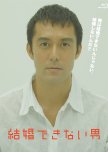
This show was subsidized by METI- Ministry of Economy, Trade and Industry of Japan- for a reason- to encourage population growth and to promote marriage in a society that has a declining birth rate. It says this in the subtitles at the end of each episode. So the agenda is clear, that it is a government sponsored propaganda to promote marriage which informed the entire script.He Who Can’t Marry- reduces human beings down to a marriage status- that’s what their entire identity and worth is based on. The show introduces Kuwano Shinsuke, a successful middle-aged architect in Japan. He’s single, lives alone, and cherishes his independence. He cooks gourmet meals for himself, listens to classical music, drinks his milk, cleans his apartment, builds Titanic replicas, and enjoys meticulously controlling his space. He doesn’t “need” anyone for happiness, and that’s exactly the problem the series sets out to “fix.” Turns out Kuwano San (played amazingly well by Hiroshi Abe) is the most lovable character in the whole show, with the women and others around him only serving to shame and criticize his blissful singledom and mindful lifestyle.
From the first episodes, the show treats his contentment as an eccentric flaw. He is a problem to fix. His solitude isn’t framed as valid. It’s framed as an obstacle the plot must overcome. In Japan’s cultural context, the proverb “The nail that sticks out will be hammered down” is at work here. Kuwano is that nail, and the entire season is a slow attempt to hammer him into a socially acceptable mold: married man.
To make the hammering seem necessary, the writers try to make Kuwano intentionally unlikeable. He’s blunt, sarcastic, and often says the quiet part loud. This is not accidental. it’s propaganda framing. The subliminal message is: “See? If you stay single too long, you’ll become mean and bitter like this.” Actually the opposite is true- people become incredibly bitter and trapped in marriage and families. The guy doesn’t need to get married to learn basic manners. The fact that Kuwano san stays true to himself from beginning to end shows how strong he is to face the collectivist group think, image obsessed culture and to walk alone in the truth.
The character is designed to provoke the audience into rooting for his transformation, not because marriage would improve his life, but because the format demands he be “redeemed” through romance.
Kuwano’s opening stomach-ache subplot is the show’s oldest planted seed of propaganda introduced in the very first episode and trotted out as proof that living alone is a health hazard. Kawano’s diagnosis of “acute gastroenteritis from fatigue and poor nutrition from living alone” is framed like a cautionary tale, as if independence inevitably erodes the body. The guy eats too much meat- fine, eat vegetables alone- big deal! But the script never turns that same scrutiny on the married characters, whose lives are a slow bleed of chronic sleep deprivation, stress, and neglect of their own needs. In the show’s moral math, family-induced burnout is “normal” while a single man’s stomach ache is a red flag: a neat little warning to fall back in line and get married!
Enter the Doctor: Hayasaka Natsumi. The main female lead in Season 1 is Dr. Hayasaka, an unmarried woman who is almost 40. From the moment they meet (after Kuwano collapses and ends up in her care), their interactions are a mix of hostility and reluctant tolerance.
Kuwano regularly insults her life choices:
• Suggesting she should have given up her career years ago for a “better married life.”
• Scoffing at her for being single and often alone, despite being single himself and going everywhere alone.
Here’s the hypocrisy: he’s projecting his own socially shamed status onto her, while doing nothing to “fix” it for himself. Yet the women around him rarely call him out on it, because the script needs him to remain unchallenged until the “big confession.”
The Propaganda Romance Arc:
The core romance between Kuwano and the doctor is built on antagonism. He keeps showing up at her office for some stupid reason, maybe because unconsciously he’s drawn to fighting with her. They spar, they bicker, and the show wants you to interpret this as chemistry. The subtext is: “Even if you’re incompatible and constantly bullying and insulting each other, it’s still better than being alone.” By the finale, Kuwano has a moment of “growth” where he tells Hayasaka he loves her. It is so bizarre and awkward, because that line comes out of the blue from a sea of barbs and insults, and it’s not believable at all. If anything, it is the first time in their relationship, he speaks to her without an insult. This is not love at all, but she is in tears, less from deep love than from the relief of finally not being attacked. The audience is expected to interpret this as a romantic breakthrough, but it’s an utter joke. In reality, it’s not love, it’s projection. It’s two people constantly insulting each other, mistaking a moment of relief or recognition for a lasting bond. Season 1 isn’t about personal transformation, it’s about getting a trophy for the societal scoreboard. Kuwano represents the “hard case,” the man who swears he’ll never marry. The show’s payoff is the fantasy that even he can be softened, conquered, and assimilated into the marriage machine.
There are other side female characters that reinforce the same pattern of mistaking projection or convenience for love. Michiru, the young neighbor, spends most of the series wrapped in romantic daydreams and petty social dramas, often as the target of Kuwano’s rudeness and emotional coldness. Her own preoccupation with finding a man makes her susceptible to misreading events. By the end, when Kuwano helps protect her from a stalker, the relief and gratitude flood her into briefly believing she’s in love with him. It’s not love; it’s a trauma bond born from rescue. Then there’s Sawazaki, the quietly competent assistant who’s worked with Kuwano for eight years. She probably understands him better than anyone else in the show. Her familiarity with his rhythms and quirks is the closest thing the series has to a stable, grounded connection. But it’s one-sided. Kuwano bluntly labels her as “convenient” because she handles client issues and clears his path to focus purely on architecture. In the show’s logic, even this long-standing, functional rapport isn’t framed as “love” because it lacks the romantic script. Instead, it’s treated as disposable, just another support role in service to the male lead’s journey toward the state-approved ending. The only decent bonding moments in the series come from Ken, the neighbor’s dog, which suggests that Kuwano is far better off which a dog for company rather than seeking women and insulting them constantly.
Even in Season 1, the cracks in the marriage ideal are visible if you’re paying attention. Kuwano’s married acquaintances don’t radiate joy (aka his brother in law who tries to buy a hostess an expensive purse instead of using the money for his family) They display boredom, escapism, or thinly veiled resentment. The show doesn’t dwell on these details—but they’re there. This undermines the stated goal while still pushing the script: “Marriage might be flawed, but singlehood is worse.”
By the end of Season 1, Kuwano’s confession of “love” to the doctor doesn’t lead to marriage. They’ve barely ever had a decent loving conversation. In fact, when Season 2 opens, we learn he and Hayasaka didn’t work out. She goes on to marry someone else. This confirms the hollow nature of the Season 1 arc: it was never about a lasting relationship. It was about manufacturing the moment when the nail “bows” to the hammer, even temporarily.
What this show really does:
1. Demonizes singleness by making the single protagonist grumpy and socially abrasive.
2. Equates marriage with redemption even when there’s no evidence it would make him happier.
3. Uses antagonism as romance bait, training viewers to see sparring as love.
4. Skips the results test, never showing a marriage that actually delivers sustained joy.
5. Lays the foundation for Season 2’s propaganda by planting the idea that independence is secretly loneliness.
This show is essentially the recruitment poster for the state-sponsored marriage drive. It introduces the “problem” (content single person), sets up the “solution” (romantic confession), and glosses over the fact that the solution doesn’t work long-term. Most reviewers celebrate the lighthearted comedy and high production values, completely glossing over the shaming undercurrent and the agenda telegraphed in the opening statistics about unmarried adults being a “problem.” This is exactly how the propaganda stays hidden: dress it up as “funny” and “cute” so the audience laughs along while internalizing the message that a single, self-possessed life is defective until it’s merged into the state-sanctioned family unit.
This show lacks any sort of wisdom about true love. It’s not about love at all. It’s about conversion and compliance with the system to keep society going. “Get married and pop out babies so we can keep the society going! We don’t care about your happiness, just do as you’re told. And if you’re happy, free, and single, we will call you lonely and constantly attack you for it.” And the show’s own sequel proves it: even after the “conversion,” marriage doesn’t last, and the marital happiness they’re all chasing is elusive.
In the show’s logic, Kuwano and Hayasaka aren’t just “quirky singles,” They’re glitches in the social program. They’ve slipped the net. They’re not generating children for the system, not tethering themselves into the cycles of marriage, mortgage, and consumption that keep the machine running. That’s why the tone is so condescending. The script treats them like broken gadgets—malfunctioning units in need of repair. The shaming, the subtle digs, the endless setups and matchmaking attempts—all of it is the matrix trying to drag them back into conformity. They’re the ones who unplugged, even if they don’t know the full scope of it. And in the eyes of the system, that’s dangerous. An anomaly living peacefully outside the script makes others question why they’re still trapped inside it. The fools around him see a grumpy grinch, but in truth he is a genuine, enlightened presence that is totally misunderstood.
Was this review helpful to you?
This review may contain spoilers
More seasons! I love it
This show really opened my eyes. On the surface, it’s a funny, comedic series about this real estate agent, formerly known as “Liar Nagase” and how an incident causes him to be blessed (although he says cursed) with the Spirit that blows through him whenever he is tempted to lie, and forces the truth out of him. He starts off as a lying, manipulative realtor that will do or say anything to get a contract, including all of its bells and whistles. Turns out he learned this from a former employee Kamiki, who taught him all the manipulative techniques to become number 1 at any cost. Tosaka Real Estate where Nagase works, along with its rival Minerva use this ranking system that pits salespeople against each other for some competition where the #1 salesperson for the month gets serious perks. Minerva is all around scammy and will go to any level to get money and contracts, but meanwhile Tosaka has a little more ethic- especially since Nagase’s Spirit blessing of honesty started, he starts to inspire others such as Tsukishita who is his younger female coworker who is open hearted, polite, people pleasing, and earnest. The series shows how this spirit of honesty and inner alignment with truth changes Nagase’s perspective on life, where he used to live for money, the flashy high rise life, hooking up with random women, and the number 1 sales spot, but now sees something more important than the number 1 spot, which is bringing joy to others, which makes him happy. He starts to feel for the first time a sense of happiness and meaning in his job, whereas before it was just a cold, hard game. His approach even softens the heart of Kamiki, his number 1 rival when Kamiki starts working for Minerva and becomes a villainous rival of sorts for Nagase. It’s like Nagase is battling his own former self or shadow, and sheds light on Kamiki’s obsession with #1 being an armor of protection and a way coping for immense grief and pain he hides inside. Kamiki was a fascinating character, and when his backstory was explained, I was in tears. All villains are hiding great pain, and if it was only allowed to process instead of the ego taking over and creating a mask where they felt powerless, there could be healing and restoration of the soul. But if it is given to the ego, then it creates this hardened, insensitive, manipulative mask, a false self and a shell in place of the suffering victim which becomes a dangerous force. In fact, all the unprocessed pain in the world creates this callous, harsh world and atmosphere that you see in the series. And Nagase along with Tsukishita become like beacons of light in such a world. Once you get past the grief inside, you find the joy of Spirit deep within, that radiates throughout the world. The title song “So far so good” by Kazumasa Oda that plays at the end of every episode is so touching and heartwarming. It really speaks to the healing and joy of Spirit that is brought to everyone at the end of the day when honesty and genuine intentions are extended to all.As far as performances go, I grew to really love the guy who played Nagase (Tomoshima Yamashita)- at first I wasn’t used to his face, and he just looked like a total a-hole, but then as he went through this honest transformation by the spirit, I found him to be more and more attractive. Then I looked him up and I realized he was the naked dude in Alice in Boderland! Ohhh it makes sense now! In the second season they changed his haircut and he gained weight, so he was definitely not as attractive as the first season. He had more of a dad look in the second season lol. But his character was solid. I loved Tsukishita- she was so sweet and innocent, and when I would go out into the world and encounter mean and horrible people, I would remember her and her smile and it would make me feel better- like there is some light and kindness in this world. Kamiki was my other favorite- his charisma was off the charts, even though his tap dancing was strange and comical- it was very “anime” like for a villain so I thought that was cool too. His backstory was so sad and it gave him more depth as a character especially when seeing his grief and his transformation towards the end, where he questions everything- his philosophy and so even the unbeatable villain has this soft spot where he is humbled and brought to his knees. It was sweet to see the end where it showed that he could change too.
Was this review helpful to you?
Hirugao: Love Affairs in the Afternoon
0 people found this review helpful
This review may contain spoilers
This story is about more than just an affair
Why do people have affairs? Because something in them wants to escape the system of control, ego, manipulation, fake performance, and imprisonment that their current relationship or situation poses. That was the case with all the relationships in this show that involved affairs. Rikako’s husband was a crazy tyrant who looked down on Rikako and only saw her as a pretty face and nothing more than someone who should smile and play a role. Meanwhile, Kato the artist actually SAW her, deeply and loved her. But he didn’t have the status, the looks, the money, the fame- all the things that the world calls security.Then there was Sawa- her husband was a weirdo, avoiding any sort of passion or love in the relationship and acting like they were gay best friends. Meanwhile, Yuichir’s wife was a psycho narcissist and acted more like a prison warden than a wife. The love that blossomed with Kato and Rikako was pure. And the love that grew between Sawa and Yuichiro was even purer (see the Hirugao move 2017). The series explores how the whole world can be against true love, but only rewards performance- marriage is a performance, simply acting and selling a fake image that you’re happy to create the facade of an enviable lifestyle. Meanwhile all the married couples are dying on the inside. Yuichiro looks like a hollowed out shell as Noriko bosses him around and drags him by a short leash. She literally tries to control everyone around her. Marriage is revealed as a system of control and performance to sell a particular image, and not about love. That’s what the affair is about. An affair is an awakening out of the fake curated life from hell. The marriage is the actual fantasy, and the affair that is usually called an escape or fantasy is actually the portal into something real, true love without performing for others. But the system cannot allow such love- it always uses control, manipulation, and domination to keep true love separated. And that was how the series ended. It was disappointing to see how the Rikako-Kato story ended- with him paralyzed and homeless, and Rikako going back to her fake curated life once again. Fortunately the movie had more to show on the story between Sawa and Yuichiro. That ended on a tragic note, but love prevails in the end.
Was this review helpful to you?
This review may contain spoilers
This Isn’t a Story about Divorce
Yes. This isn’t a story about divorce. It’s the parable of the prodigal son disguised as political satire. This wasn’t about Yui, her story or the love story of her marriage with Taishi. When you watch the full first season, it shows that it is actually about redemption. It’s about coming into you own presence, power, and purpose, and not performing for validation, but getting in touch with the true fire of purpose that burns within the heart. At first I thought this story was about Yui and her marital struggles. But at the end, I realized it was more about Taishi’s wake up call- starting as a spoiled politician’s son, having affairs and ruining his own image, not realizing the gravity of the power that was given to him. And only when he lost it for the first time in his life and became truly humbled in every way, including his divorce, was he able to earn it back by getting in touch with the true fire and passion within his own heart and bringing it into being. He could have never survived as just the generational nepotism based politician whose position was handed down by his father. Instead, he had to be humbled by life and take on new roles and responsibilities that awakened his own soul.In the beginning of the series, it was more about Yui’s struggles and Taishi and his story looked cartoonish. But then as the series came to the close of season 1, Taishi and Kyoji (Yui’s lover) both came to life and found the spark within.
Taishi’s reckoning was stunning and it was incredible to see his last speech at the National Diet forum. His presence was totally different. What a series. I was devastated at the loss of the first election, but went through the whole last episode thinking “omg I’ve never seen anything like this..” the journey this series took me on… the lessons taking me through the wheel of karma- rise > hubris > collapse > void > return. Taishi circles back to the Diet wearing the same sash, yet nothing about him is the same. The public sees a comeback, but I see a resurrection.
Was this review helpful to you?
This review may contain spoilers
This romance is SUCH A VIBE!
I just finished watching season 1 of this show (I assume that’s all there is)… it was the perfect romantic drama. There was so much HEART in this series- when I’m watching a J drama, I’m looking for the vibe, and I just want to feel that beautiful ‘Je ne sais quoi’ love that they’re able to capture so well. And this one did it perfectly. Western entertainment simply cannot capture this and I can’t think of any example where they capture the sweetness and spiritual side of love the way J dramas do.I just loved the chemistry between Kurumi and Shun, it was just so tender, cute, humorous, and electric. And they actually communicate openly like normal people! I found that refreshing compared to other J dramas. All I can say is that they were meant for each other. Their love was warm, tender, without the usual glamour and fireworks that soon fizzle out. There was just something about their love that felt warm and fuzzy in me- I could feel it! And Shun was omg, sooo handsome like a real life anime character. It’s like he was drawn and came to life. So back to the romance. Sometimes in J dramas, the chemistry isn’t quite there and it’s the storyline that pushes the two together, like the last one I watched about a yoga teacher falling in love with a single dad which was just bad- they had almost no chemistry, but the plot forced them together at the end which annoyed me. But in this one, the sparks were flying. But they were warm, smooth sparks. It wasn’t a stiff “sumimasen” relationship (overly formal like in Eye love you) - it really felt like the two had a beautiful real bond where they truly cared about each other.
Hayama was also a lovable character- initially I thought he’d be like a villain, but he too ended up being very endearing and had so many strengths in him, but was late to the party. Too bad the woman can’t just choose both.. sheesh. I actually love the two men fighting over one woman thing- though it is rather painful, in a sense it shows that in Japanese entertainment they show value and respect for their women and show them being loved till the end by the male characters (unlike Indian entertainment that devalues Indian women which is why I don’t go near it. Anyways!).
The whole series was a beautiful slow burn and if you enjoy feeling the vibe of romances, you will love this one. The only thing that threw me for a loop was the last 5 minutes of the story- it’s like they decided to move the plot along and finish things up and package it up all nice and neat (Spoiler alert- Shun and Kurumi get together, get married, have a kid.. all happens within like 5 seconds). That was a little fast for me lol. But I was wondering what the resolution would be since the last episode was dragging a bit.
I loved all the cooking and food montages with Shun- he was such a catch- I mean, a guy who is so handsome, loving, and lovable AND can cook amazing meals too? Where can I find me one of those?? I was hoping that he wouldn’t get back with old girlfriend Hana and thank God for that. But I thought there still could have been hope for Hayama and Kurumi- but he was packed off to Turkey even though he admitted his feelings for Kurumi at the end. Ahhh it makes everything that much harder to decide. The two men fighting over one woman trope never gets old for me. I live for it lol. Better that than the other way around.
I love the song “Fushigi” that they keep playing throughout the series- it just adds to their beautiful love story vibe. I just love Shun and Kurumi’s romance. For me, it’s at the top of all the romances I’ve seen in J-dramas. Enough said!
Was this review helpful to you?

A Calm Sea and Beautiful Days with You
0 people found this review helpful
This review may contain spoilers
The FL is derpy, annoying, and ruins the show
My ratings are primarily based on the weakest link which also happens to be the most integral role in the show- the female lead. I can’t say enough how poor the casting here was. Ok I get that the female lead character Nastumi is supposed to be “quirky” or whatever, but there’s a difference between adorably quirky and downright weird. If I could describe her acting in one word, it would be: Ridiculous and idiotic. I guess the actress is trying too hard to be relatable or whatever in the old period drama, but her expressions and acting are totally unnatural. She ends up looking like a total weirdo in most of her scenes, and it’s so offputting. It’s the actress that’s the problem- in her other show Takane No Hana, where she plays the insecure younger sister, she was a little more in the background since she was not the focus, but still looked like an insecure mess in her role. But in this series with her playing the lead role, she’s a downright disaster. My low rating is primarily because of her horrible acting job, that makes the rest of the cast look out of place next to her as well. I get that her character Natsumi is inexperienced in romance etc. but her expressions are so exaggerated and overacted, like she’s having a heart attack multiple times a day, that she leaves nothing, no subtlety in her performance whatsoever. Even in the romantic scenes where you’re supposed to feel the magic of their connection, she ruins the moment with her awful derpy expressions. She acts like Mr. Bean- even his facial expressions and body language are more graceful than hers. When she’s trying to be cute, she wrinkles up her nose and squints her eyes and juts her teeth out, and sometimes does this weird wide eyed blinking thing with sound effects- it’s not cute or natural- it looks forced and scary. From episode 7-8 onwards I stopped looking at her face and focused only on the subtitles. Unfortunately in episode 9 there’s a scene where one lady says how she couldn’t have children and married her husband without the plan to breed. Then Natsumi starts blubbering and crying like an idiot- that was an extremely annoying moment. Somehow this character gets more annoying as the episodes go on.There are scenes around episode 5-6 where Natsumi sticks her head into this other single lady’s business just so she can witness a love matchmaking situation because she’s bored and needs excitement in her own life. Just like many typical housewives tales where they spend so much thought and energy to set up other people so they can land in the same marital bondage as the rest. Even the husband says “You seem to be really enjoying this…” yes because she has nothing else to do in life. And this is how a nosy, toxic housewife is born. It’s really not cute.
Episode 6: there’s a scene when Natsumi and her husband meet a childhood friend, and the friend talks about a man in the past that Natsumi was searching for to thank him, and Natsumi looks flustered trying to stop the friend from talking so that it wouldn’t upset her husband, but she follows her friend around with an expression and body language as if she desperately needs to use the bathroom. Very poorly done. Another star off for poor acting of the female lead.
Actually the male actor is much better- though his character Takimasa is also inexperienced in romance, his expressions and mannerisms are much more natural looking and he is far more likable. But the two together are an odd pairing and come across more like neurotic brother and sister, rather than husband and wife.
The whole focus is on husband and wife’s nightly activities- sexual activity, breeding, having children, etc etc. All the usual boring nonsense that every other drama focuses on too, except this one in a period drama- same old story dressed up in different clothes. There was also a childbirth storyline with Natsumi’s sister (?) which was so boring- how many times have I seen this drama in every other newly wed show? Yawn. There’s a scene where Natsumi starts drinking and again she starts acting like a twitching, glitchy bot with the most idiotic facial expressions and body language. How can a grown woman act like a perpetual 2 year old? It’s not sexy in the least, but taking advantage of a drunk person is the next logical step in this J drama I suppose. She says a classic line: “Blame it on the alcohol!” Lol. What a derp.
They should have gotten a different lead actress. Believability is a big part of acting to create the world of the drama for the viewer, and if the actor does a bad job, it just ends up looking cheap and bad.
What I did enjoy: The second couple. The interactions and romance that develops between Fukami (the good looking Navy playboy) and Fumiko San (the independent single working woman) are a lot more natural, understated, quick witted, and subtle compared to the main couple. I enjoyed watching their scenes, as they slowly learn about each other while holding back their true emotions. For example the scene where they are sent by the derpy Natsumi to buy some forgotten ingredient, and they encounter a poor boy stealing, and how they both handle the situation teaches them about each other. Their stolen glances, the quiet question of sending another letter- while the exterior of the woman seems cold, there’s actually real chemistry that can be felt there. It’s not in your face and loud like Mr. Bean Natsumi. It was quite subtle and beautiful. I also really enjoyed their matchmaking scene- how they were communicating through their eyes and the “air” but giving diplomatic responses to appease the crowd. It was almost like a chess mind game. Fukami has this cheeky Shia LaBeouf vibe, and Fumiko is a headstrong witty lady who still has that romantic side of her. Their chemistry and desire underneath all their nonchalant performance is strong that I could see him sweeping her off her feet in a heartbeat. I wouldn’t necessarily call this love either- more like the dynamic of a playboy and a woman playing hard to get in a larger game of Russian roulette (marrying someone in the Navy who can die any moment). Nevertheless it was interesting to watch. Koseki Yuta was my favorite actor in this series- his expressions were multilayered and he exuded a charisma with ease, while harboring conflicting emotions of yearning towards his fiancée.
In episode 10, Fumiko visits Natsumi as they’re all afraid for their husband/fiancée’s lives. Her fear and regret at parting ways with Fukami with a cold remark can be felt, even though she doesn’t say much. But Natsumi starts squealing/crying and ruining the scene, and it doesn’t make me feel sorry for her at all- it’s just irritating. Less is more- this actress Kyoko doesn’t understand subtlety.
The difference between the reunion between Takimasa and Natsumi and Fumiko and Fukami is like night and day. Natsumi starts wailing and screaming that I had to mute my device and turn away, while the reaction of unexpressed feelings and relief at Fukami’s return between the second couple was truly something I could feel. That was beautiful. Those moments between the second couple made the drama tolerable. I found myself skipping to their scenes.
I had to skip the last half of episode 10 because it was all about exchanging rings between the main couple and I just couldn’t tolerate the bad acting any longer. I get the point. Y’all exchanged rings! Yawn, next.
Why couldn’t they have done a more interesting kind of treatment with the main couple? It could have been something so subtly beautiful and sweet, instead of watching a weird glitching anxiety attack in the form of Natsumi. She has an anxiety attack/heart attack every 5 minutes and can’t act natural even for one scene. She just gives me the ick. Her friend Fumiko is so much more refined and beautiful.
Was this review helpful to you?
This review may contain spoilers
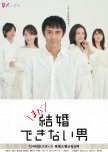
He Who Can’t Marry – State-Sponsored Marriage Propaganda
I’ve never rated a J drama series this low (most of my ratings are 10s). But this series is 80% desperation, fear, and propaganda. The other 20% is Kuwano’s free spirit and how his way of life is actually the highest way to exist in this world- free from desperation and fear around marriage and romance. He’s the only one who lives outside the constraints of his society and is free to love and show real kindness beyond role playing and fake “nice” performances. And perhaps by the end, I have fallen in love with him, as he is a mirror of my own self- the one who exists and thrives outside of the matrix.Here’s the Agenda: From the first frame of Season 2, the series drops its mask. Before the story even begins, a text overlay appears on screen:
“Japanese society continues to age. According to the Labor Ministry, there is an increase in the lifetime unmarried rates. This means the percentage of people who remain unmarried after 50 is 23.4% for men and 14.1% for women. This is an issue that our entire society must face.”
The moment you see this, the show’s real function becomes clear—it’s not just a quirky romantic comedy. It’s a piece of state-subsidized cultural programming. The subtitles even mention that it’s sponsored by a government ministry, meaning the agenda isn’t subtle: this is a recruitment ad for marriage, disguised as entertainment.
In this show, the man who enjoys solitude is rebranded as “the man who can’t marry.” That’s not a personality descriptor; it’s a cultural diagnosis. The title says it outright: the problem is not the institution of marriage—it’s you, the individual, for refusing it.
Kuwano-san: The Nail That Sticks Out:
Japan has a proverb: “The nail that sticks out will be hammered down.”
Kuwano is that nail. He’s a middle-aged architect with a quiet, orderly life. He eats alone, travels alone, listens to classical music alone, and thrives in his own company. The plot’s entire throughline is an attempt to hammer him into “normalcy” by shoving him into romance and marriage.
But here’s the propaganda tactic: they don’t present his life neutrally. They paint him as so unlikeable, rude, eccentric—so the audience subconsciously associates singleness with being an abrasive oddball. His character is used as a warning: “If you stay single too long, you’ll turn into this weirdo. Do you want to be like him?”
Weaponizing Insults as Courtship:
Kuwano spends much of the show negging (insulting) the women around him—particularly Hayasaka, the doctor from Season 1, and later Yoshiyama, the lawyer in Season 2. He lobs cutting remarks like:
• “You should have given up your job back then and a better married life could have been waiting for you.”
• “Is this your excuse for not putting in any effort to get married?”
The women get visibly angry, but the script eventually reframes his behavior as “banter” and, disturbingly, “romantic tension.” All the female characters, especially the older ones are shown as desperate, or lonely and desperate, with stars in their eyes for some romantic fantasy. They are driven by fear and threat by society’s imaginary voice: “Don’t die alone and be lonely!” It’s almost comical. And when Kuwano finally professes his “love” to Hayasaka at the end of Season 1, she cries—not because there’s any real intimacy, but because it’s the first time he’s spoken to her without an insult. Relief is mistaken for love. Because everyone is “tired of being lonely,” they’ll fill in that gap with any garbage person they come into contact with.
The Hypocrisy:
Here’s the absurdity: Kuwano himself never lifts a finger to get married. He’s single, content in his own life, yet criticizes women in the same position. It’s pure projection. And the show never has anyone call him out for it—because that would puncture the propaganda bubble.
Failed Models of Marriage:
If marriage is the “holy grail” the series claims, where are the success stories? Not in Kuwano’s orbit.
• His brother-in-law openly talks about wanting a mistress, lavishes expensive gifts on a hostess, and seems miserable at home.
• Other married characters show varying degrees of dissatisfaction, boredom, or covert longing for escape.
These examples quietly reveal the truth: the machine isn’t delivering what it promises. Yet the script ignores its own evidence, pushing forward the idea that singleness is the problem to be solved.
One Season 2 dating subplot is especially telling. Kuwano is coaxed into using a dating app. He receives a message from a yoga instructor:
“I’ve led a fulfilling life by myself until now. I’d do barbecue by myself, karaoke by myself, go to Hawaii by myself. I intended to enjoy life alone, but before I knew it I was about 40, and suddenly felt perhaps I was deceiving myself the whole time…”
The first half mirrors the life of a content single person, creating identification for viewers like me. Then the twist: self-doubt. The message pivots to loneliness, the absence of “human touch,” and an invitation to partner yoga. It’s bait—hooking the solitary viewer with relatable independence, then undermining it with the suggestion that your life has been a lie.
Kuwano’s peace—the quiet of his home, the control over his space—is portrayed as a flaw to be “fixed.” The show treats self-possession as a problem rather than a strength, because the propaganda machine cannot allow the sovereign individual to stand as proof that happiness is possible outside the marriage script.
The women chasing Kuwano—Hayasaka, Yoshiyama, others—are not driven by love. They’re driven by fear: fear of aging alone, fear of social judgment, fear of facing themselves without the buffer of a role to play. Marriage here is a life raft in rough seas. Kuwano, the “stubborn bachelor,” is the trophy they want to prove the raft works.
But what the series never addresses is the glaring question:
Where are the results? In reality—and in the show’s own secondary storylines—marriage doesn’t bring sustained happiness or joy. Characters are dealing with divorce, affairs, annoying children, in laws, extended family conflict, all sorts of nonsense. Marriage often breeds discontent, betrayal, and regret. The divorced one is liberated and feels free after being in this prison for a while. Yet the propaganda machine keeps associating marriage with the word “happiness” as if repeating it can make it true.
A scene where Kuwano is having dinner with his family, shows him a little upset, and the family says “share your troubles so we can heal as a family!” Then his niece says “usually troubles are either financial or about personal relationships,” and then Kuwano’s brother in law says “well he has no financial difficulties,” and his sister says “and he has no relationships!” And they all start laughing, and Kuwano says “How is this healing?” This sums it up in a nutshell. Kuwano is the scapegoat of his family and also of society. The society dumps all of its shame onto him.
But I find Kuwano himself to be quite a genuine and compassionate person. His stance against marriage as an outdated institution, paired with the fact that he’s not against love itself, is actually the most dangerous thing to the narrative, because it means he hasn’t abandoned connection, just the contractual cage the system calls connection.
And his good heart is there, in small moments the others overlook: how he shows up in his own way when someone actually needs help, how he’s loyal to the few he respects, how he lets his quirks speak louder than social scripts. The others don’t understand him because to understand him would require them to admit that maybe they’ve been chasing the wrong thing their whole lives.
The dog Ken doesn’t see Kuwano as “weird” or “difficult”; it responds to him without the filter of social role-play. Animals can’t be gaslit by the system’s definitions, and the bond there shows that Kuwano is actually clear, present, and safe to be around when you’re not locked into a script. His advice to his neighbor about loosening the pug’s leash so it can breathe is the perfect metaphor for how he sees people too - stop tightening the restraints, stop choking the life out of yourself, breathe. The neighbor can’t even register the wisdom because she’s busy living in the “nice neighbor” role, not reality.
The coffee shop incident in episode 7 shows his pure quiet integrity. He acts decisively against corruption by his client, protects the coffee shop manager’s dream, and never broadcasts it to get credit
because it’s not about polishing an image. That is the opposite of the society around him, where every “good deed” is part of a résumé for public approval. He restores her future without needing her gratitude or anyone else’s acknowledgment. That’s why the gossip continues- if they recognized his actual worth, they’d have to face how shallow their own lives are.
He even sent her a rebranding gift, the coffee shop sign “Purete” without ceremony, which is another tell. He’s not “against connection”; he simply connects in ways that are stripped of transaction and social performance. The divorced coffee shop manager sees the truth in him because she’s been through her own disillusionment and recognizes a real act when she sees one.
So the gossip isn’t really about “how weird” he is. It’s about covering their own envy. He’s living outside the leash they’ve agreed to wear, and every snide remark is an attempt to pull him back into it. They can’t stand that his freedom is real, so they pathologize it until it sounds like something no one would want. The dog is the one unfiltered witness in the whole series.
While the neighbors are doing the constant polite-smiling, gossip-behind-the-back loop, the dog’s behavior cuts straight through that performance. It isn’t looking at Kuwano out of politeness, obligation, or social currency. It leans under the balcony, risking its own comfort just to catch sight of him, because it recognizes something real there, presence without pretense. Kuwano is “the fool on the hill”- a wise man who is sorely misunderstood by the fools around him.
The dog’s longing look at him is a kind of silent verdict: this is the person I’d rather be with. No human in his circle dares say that out loud because it would expose their own hypocrisy. But the dog doesn’t need to navigate the system’s etiquette; it goes where it feels safe, seen, and understood.
And that’s what makes those moments so telling. The “nice” humans are scripted to ostracize him, yet the only unscripted being in the show gravitates to him over and over. It’s a small but constant leak in the propaganda, a reminder that instinct, not social opinion, is the truer measure of someone’s worth.
I’m still watching Season 2 (currently on Episode 8) and will update this review when I finish. But so far, The Man Who Can’t Marry reads less like a rom-com and more like a government memo disguised as a sitcom. It’s a glossy ad for a product with a 100% defect rate designed to shame the content single into “joining society” no matter the cost to personal well-being.
With all that said, I do love Kuwano san- he is my role model! He’s like a cowboy that lives the kind of life I live and I just adore him. He’s actually a lot nicer in season 2 and says many polite things and smiles and does very kind things for people, and yet the people around him still criticize and mock him- people should let him be- free to be as he is without needing to tie him down into the prison that is marriage. Fly free as a bird Kuwano San! Hiroshi Abe did a great job portraying him. I ended up watching both seasons again and just loved Kuwano san more and more. And so I increased my rating!
Was this review helpful to you?


