
 Editorials

A Love Letter to the Show That Ruined All Other Kdramas For Me
I need to clutch my chest and gather myself before writing this, because how does one even begin to review a masterpiece? Be Melodramatic didn't just win my heart — it moved in, rearranged the furniture, and refused to leave.
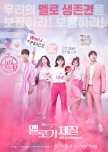
Im Jin Joo, Lee Eun Jung, and Hwang Han Joo, three best friends in their thirties working in the entertainment industry — on paper that sounds simple. In execution, it's devastatingly, achingly alive. Not one of these women is a sidekick to the other's story. Every single character — down to the smallest supporting role — was written with such tenderness that I found myself invested in lives I expected to forget by the next episode. That is not an accident. That is craft.
And can we talk about how female-centered this show is without it ever feeling like a Statement? It just... is. These women stumble, succeed, grieve, heal, fall stupidly in love, and get back up — and I saw myself in every one of them at different points, which is a rare and precious gift a drama can give you.
The comedy deserves its own paragraph of praise, honestly. It's the kind that sneaks up on you mid-sentence and makes you cackle alone in your room like a lunatic — never forced, never performing for laughs, just... organically, chaotically funny, the way real friendships are. And yet, in the very next breath, the show turns around and breaks your heart with grief, loneliness, or the quiet terror of not knowing if you're doing life right. That tonal tightrope walk — comedy to catharsis and back — is something so few dramas pull off, and this one makes it look effortless.
I am not being dramatic (okay, I am, the title demands it) when I say this is one of my favorite kdramas of all time. It didn't rely on cheap twists or over-the-top villains to earn my tears — it just told the truth about being a woman, a friend, and a person trying to figure life out, and that truth hit harder than any plot twist ever could.
Im Jin Joo, Lee Eun Jung, and Hwang Han Joo, three best friends in their thirties working in the entertainment industry — on paper that sounds simple. In execution, it's devastatingly, achingly alive. Not one of these women is a sidekick to the other's story. Every single character — down to the smallest supporting role — was written with such tenderness that I found myself invested in lives I expected to forget by the next episode. That is not an accident. That is craft.
And can we talk about how female-centered this show is without it ever feeling like a Statement? It just... is. These women stumble, succeed, grieve, heal, fall stupidly in love, and get back up — and I saw myself in every one of them at different points, which is a rare and precious gift a drama can give you.
The comedy deserves its own paragraph of praise, honestly. It's the kind that sneaks up on you mid-sentence and makes you cackle alone in your room like a lunatic — never forced, never performing for laughs, just... organically, chaotically funny, the way real friendships are. And yet, in the very next breath, the show turns around and breaks your heart with grief, loneliness, or the quiet terror of not knowing if you're doing life right. That tonal tightrope walk — comedy to catharsis and back — is something so few dramas pull off, and this one makes it look effortless.
I am not being dramatic (okay, I am, the title demands it) when I say this is one of my favorite kdramas of all time. It didn't rely on cheap twists or over-the-top villains to earn my tears — it just told the truth about being a woman, a friend, and a person trying to figure life out, and that truth hit harder than any plot twist ever could.
Was this review helpful to you?


