




Refreshing, Unshakeable Slow-Burn Built on Mutual Respect
Set against rigid class expectations, Lighter & Princess rejects the submissive heroine trope by refusing to let parental control break Zhu Yun’s spirit. There are no exhausting misunderstandings where she acts as a helpless pawn to her mother’s demands. Her journey boldly proves that a woman's path belongs to her alone, as she actively chooses to step out of her sheltered cage to conquer her own destiny.## 👑 Li Xun: The Raw, Authentic Genius
He is a refreshing departure from standard, high-handed male leads. Behind his prickly, defensive armor lies an absolute, secure confidence that never seeks to stifle or change Zhu Yun. Chen Feiyu brilliantly uses micro-expressions—a subtle softening of his eyes, a tight jaw—to convey a lifetime of hidden grief and fierce devotion. He respects her intellect entirely, making her his equal partner in the cutthroat tech industry rather than treating her like a fragile accessory.
## 💻 Zhu Yun: The Awakening of Independence
Her arc marks an incredible psychological evolution. She transforms from a suffocated, obedient daughter into a fearless, unshakeable force. Her emotional growth transitions beautifully from a lost girl looking for a spark into a fierce protector who stands as Li Xun’s ultimate shield. She heals his deep-seated trauma by stubbornly choosing to stay by his side, proving her loyalty is an act of profound strength.
## 🏛️ The Paradox of Controlling Parents & Envious Men
The drama exposes how high-minded principles can mask severe psychological cruelty. Zhu Yun’s mother is an elite educator who acts out of deep-seated prejudice, turning her protective instincts into a toxic, unreasonable obsession. In contrast to Li Xun’s secure masculinity, the antagonists are masterclasses in fragile egos. Gao Jianhong is a bitter, insecure friend who resort to corporate sabotage because he lacks the raw genius to stand on his own merit.
## 💻 The Masterful Slow-Burn & Digital Bond
Their connection deepens from fierce campus rivals to an unbreakable, elite coding duo. Romance here is defined by silent, everyday loyalty rather than dramatic declarations—seen when she instantly returns to rebuild his company from scratch after his release from prison. Li Xun's cool composure entirely shatters whenever her safety is threatened. Their partnership becomes a brilliant, transparent front against corporate backstabbing, anchored by his absolute devotion to her happiness.
------------------------------
⚖️ P.S. On the "Obsessive Lover" MisconceptionCritics who dismiss Zhu Yun as an "obsessive lover" completely miss her true psychological depth. Her relentless devotion to Li Xun is not a toxic, blind infatuation; rather, it stems from a profound sense of personal accountability. Because she inherently blames herself whenever she fails to protect the people she cares about, her protective actions are driven by a fierce desire to heal, safeguard, and stand as an unyielding shield for those who have been deeply wronged by the world.
Was this review helpful to you?
The Tragic Vacuum of a Demon Lord: A Millennium of Despair Lost to Script Bloat
Fangs of Fortune is a visual feast that delivers one of the absolute best works of Hou Minghao's career. He completely transforms for this role, managing to even age his eyes to perfectly look the part of a 1,000-year-old, frustrated demon. The core story is highly engaging, and the chemistry between the two Male Leads is almost sizzling hot to the point of a BL series—even though the plot strictly features heterosexual couples! 😉😂 It is actually incredibly refreshing to see these sweet dynamics, providing a much-needed lighter contrast to an otherwise very deep, emotional narrative.The Mid-Series Narrative Bloat & Character Oversaturation:
However, viewers must navigate massive narrative structural issues, especially in the middle of the show. The production team frequently halts the central plot progression to inject an onslaught of 5 to 6 newly introduced side characters. It becomes blatantly obvious that the show was used as a promotional launchpad for lesser-known actors at the direct expense of the main leads. Consequently, the Male Lead’s screen time is severely diluted. Adding to the frustration, the second Male Lead’s scenes are noticeably better written and granted far more immediate emotional intensity than the actual protagonist's arc.
The Tragic Narrative Vacuum:
This skewed writing creates a massive flaw in the show’s emotional center. A 1,000-year-old demon who actively seeks his own demise—yet slowly develops vulnerable romantic feelings toward the Female Lead and genuine bonds of friendship with others—inherently possesses incredible character depth and tragic layers. This complex arc could have been developed into something profound. Instead, the writing leaves a total emotional vacuum around the Male Lead's millennial isolation. The audience is manipulationally steered into feeling sorry for the human second Male Lead and the Female Lead, completely sidelining the quiet tragedy of someone who has spent a thousand years entirely alone.
Production Disrespect & Audio Choices:
This structural sideline extends directly to the audio production. The team went as far as pulling an official character soundtrack recorded by Hou Minghao, giving the song's primary placement to other actors instead. This choice disrupts the artistic coherence of his character's themes. Structurally, the cinematography and editing are heavily stylized, feeling much like an impressionistic painting. While beautiful, this artistic choice results in an excessive use of slow-motion sequences that drag out the runtime.
In spite of every production hurdle thrown its way, the undeniable brilliance of the cast still turned this show into a massive hit. With a Heat Index surpassing 8,500+ on IQIYI. If you have the patience to navigate through the mid-show padding and slow editing, the phenomenal character dynamics and Hou Minghao's stellar acting make this masterpiece absolutely worth a watch!
Was this review helpful to you?
A Masterclass Performance Trapped in Sabotaged Production
The first 12 episodes are a flawless 10/10, easily ranking among the best fantasy dramas in C-ent. Having watched favorites like The Double, The Untamed, Love You Seven Times, Love in the Clouds, and Fated Hearts, I was blown away by the initial execution. The early episodes deliver a tight script, amazing fight choreography, high production value, and stunning cinematography. Even the quieter, simple interactions between the ML and FL feel incredibly natural and deeply woven into the narrative, moving the story forward without needing loud, forced tropes. Unfortunately, after episode 18, the production completely loses its grip. By episode 20, the narrative dissolves into heavy bloat, and the Male Lead—who is undeniably the star of the show—suddenly feels like a guest in his own drama.The Mid-Section Breakdown (Episodes 19–32):
The plot becomes highly fragmented, but recovers from episode 33 onward, episode 34 showing a glimpse of his acting genius which we all saw in Vendetta of An, without the camera or make-up flaws of that series. If you want to bypass the heavy padding and stick strictly to the main plot, fast-forward and only watch episodes 19, 24, 25, 26, parts of 29, 30, 31 and 32. Note that many of these scenes were frantic, late-stage additions; the editing is noticeably choppy, and Cheng Yi looks visibly exhausted due to the chaotic filming conditions.
The Behind-the-Scenes Reality:
This narrative collapse wasn't the actors' fault. Industry news confirms that Cheng Yi was approaching the end of his contract with Huanrui Century (H&R) with no intention to renew. In response, the production house purposefully diluted his character to launch or elevate other actors. When Cheng Yi openly fought back against these illogical script and character changes, management retaliated by cutting his scenes and creating immense on-site friction. Industry veterans like Tan Kai have openly defended Cheng Yi, proving that the drama’s flaws lie entirely on a vindictive production crew and incompetent management.
Watch it for Cheng Yi's spectacular acting and the phenomenal first half, but keep your fast-forward button ready for the middle.
Was this review helpful to you?
This review may contain spoilers
A Good One-time Watch
The Synopsis of FrustrationThe Last Immortal (Shen Yin) had all the ingredients to be a modern Xianxia masterpiece. It features a powerhouse cast led by actors who possess distinct, brilliant niches, and it is backed by the rich lore of the Ancient Love Poetry universe. But it doesn't just stumble in its final arc—it completely defies the established logic of its own parent universe.
In trying to force a visual tragedy, the writers completely nerfed the divinity of its characters. It trades high-stakes mythic fantasy for a rushed, illogical, and emotionally exhausting soap opera. Instead of giving us powerful, decisive deities who command the screen, the script turns a True God into a helpless, self-centred, love struck, weeping wimp, reducing a mythic fantasy into a cheap soap opera that insults the intelligence of its characters and its viewers.
1. The Breakdown of True God Logic
The script completely shatters the operational rules established by Ancient Love Poetry.
Irresponsible Divinity: A True God, once omnipotent, would never destabilize the world order and universal law by resurrecting an entire dead sect in their original bodies using 90% of his Chaos power—and spending the rest on saving his love, thereby severely endangering his own physical and spiritual body—especially with the threat of an impending Devil War looming. It makes his cosmic power look utterly reckless and self-centred.
Blindness to Cosmic Energy: As a supreme being, if he did try to inject his divine power into someone or something, he would naturally know if that power completely disappeared or if it was actively being circulated somewhere in the realms. The fact that he remains entirely clueless about his own life force violates standard cultivation logic.
The Soul-Saving Double Standard: If a regular Emperor like Aoge can effortlessly house his brother’s shattered soul, there is zero logical reason why Feng Yin—the supreme Phoenix carrying True God essence—is written as completely helpless to save Gu Jin.
The Sobbing Sacrifice: Instead of going out with a heroic, reassuring smile, Gu Jin spends his final moments sobbing like a baby. It turns an act of cosmic salvation into an exhausting, pathetic defeat.
2. The Emperor’s Seal Battle: A Chiung Yao Melodrama Fiasco (🤦🏻♀️😅)
The final confrontation completely lacks tactical fantasy majesty, playing out like an old-school Chiung Yao melodrama (think Romance in the Rain yelling matches) rather than high-stakes Xianxia:
The Gossip Circle: Instead of an earth-shattering reveal, the high deities literally stand around in a quiet circle, loudly trading emotional back-and-forth dialogue while dramatic background music swells.
Glaring Plot Holes: When the Demon Gathering Banner exposes Hua Mo as a murderer, everyone stays bizarrely silent about him killing the Immortal King, Lan Feng, too. Furthermore, the bodies of the Immortal King and Demon King are never given proper burials; their forms are treated like forgotten stage props while everyone speaks in a rushed, fast-forward edit.
The Out-of-Character Repentance: To make matters worse, the show forces the main female vamp into a sudden, unearned change of heart right at the end. After episodes of calculating, cold-blooded selfishness, her sudden shift into a weeping penitent completely defies her established true nature, making her character arc feel entirely unconvincing.
The Missing Epic Scale: The power scaling here is utterly laughable. We are expected to believe that the Devil is so overwhelmingly strong that a True God (even with diminishing power), the Ghost Lord, a Demi God Phoenix Queen, a near-Demigod Demon King, and a powerful Eagle Queen combined are completely unable to control him? Really? Where were the other Devils? Why couldn’t they show a grand, sweeping war with actual armies involved like in Ancient Love Poetry, Immortal Samsara, or Love and Redemption? Confining a cosmic crisis to a tiny, low-budget studio floor completely breaks the genre’s immersion.
3. The Saving Grace: Watch it for Hong YiDespite the writing mess, the show is worth watching for Hong Yi (Li Yunrui). While the main lead remains trapped in a weeping martyr loop, Hong Yi emerges as a genuinely strong, protective, and deeply responsible character. He grows significantly throughout the journey, showing true maturity and an unyielding sense of duty. His performance and character arc provide a refreshing contrast, anchoring the emotional weight of the secondary plotline when the main divine order falls apart.
Final Verdict
By prioritizing a mindless "delayed reveal," uncharacteristic character redemptions, and endless, passive misery over consistent universe logic, The Last Immortal reduced its supreme beings into weak, incompetent characters who can't put two and two together. Watch it for the attractive cast, but be prepared to rewrite the final two episodes in your head to save your sanity
Was this review helpful to you?
Raw Realism or Lazy Planning? How Cinematography Failed an Acting Genius
The Vendetta of An features some of the best acting I have ever seen in the C-drama industry. Cheng Yi completely sheds his usual roles to turn into a lethal, patient schemer, sometimes cruel. A glimpse of the genius we had seen in Sword and Beloved episode 34. His silent look was so dangerous at times that, as an audience, I could literally feel the chill seep through my body. His screen presence and restrained intensity are unmatched here.What sets this protagonist apart is his incredible psychological duality. He is capable of unleashing moments of extreme, calculated violence, yet he is simultaneously grounded by an acute moral understanding and the heavy guilt of right versus wrong. Unlike other massive, highly-anticipated historical revenge thrillers that rush through rapid-fire plot twists, this narrative purposely slows down to expose the agonizing, frustrated wait of a strategist biding his time. This deliberate change in pace serves a purpose: it anchors the profound human cost of vengeance. His deep-seated bonds with his childhood friend and his sister—culminating in a raw, devastating emotional breakdown—felt incredibly real and heartbreaking to witness.
Imagine Vendetta of An without the wide angle gritty feel, see Ep 34 of Sword and Beloved and re-watch Vendetta again... This project was an absolute blockbuster in the making, but it suffered from what "seemed like" another deliberate production sabotage. May not be!! A big flaw was the use of wide-angle anamorphic camera lenses and poorly designed costume headwear and no base make-up. Rather than using the typical flattering face-lights to brighten up the actors' complexions, the crew used highly dramatic, harsh, naturalistic shadowing, for an actor who is a master at micro expressions. Feel raw realism" is often a lazy excuse for poor technical planning!! 😡
A sharp contrast exists between the seamless, tight execution of global hits like The Untamed or The Double and the fragmented pacing seen in The Vendetta of An. In the latter, the overarching structure often falls apart, leaving Cheng Yi forced to carry the entire weight of a production that seemed actively designed to slow him down. First rather than action you have conversations between the two protagonists and then you use wide angle camera, basically you are asking the ML to do magic!! Which he did... The data heavily reflects this massive tug-of-war between brilliant acting and flawed production execution. On one hand, the show was undeniably a massive commercial hit, surpassing a peak popularity index of 10,000 on Youku and topping the Maoyan charts during its run. However, blatant structural flaws deeply divided the audience, resulting in a criminally low initial Douban score of 6.9 that fails to reflect Cheng Yi's elite performance.
Watch it for a phenomenal, spine-chilling character study and authentic emotional depth, but be prepared for the production’s structural and aesthetic flaws.
Was this review helpful to you?
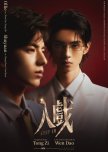
When Method Acting Shatters Reality: A Rare Partnership of Equals
One of the few BLs that features a true partnership of equals, rather than a standard "weak vs. strong" trope. Physically, they are almost equally matched. Both are actors, with the famous one having far more to lose, and both start out as seemingly real-world straight men with official girlfriends. The only other BLs I've seen with this kind of equal footing are KinnPorsche and Dare You to Death.Both actors are good-looking with decent acting skills. Ollie, in particular, is exceptional at micro-expressions, displaying a brilliant capability of conveying deep emotions without words or even actions.
I love how "Deep In" captures a chaotic gay awakening brought on by extreme method acting, where both leads genuinely believe they are straight until their off-screen realities completely unravel because of their on-screen chemistry.
Was this review helpful to you?
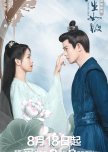
This review may contain spoilers
Crown to Coffin A Shakespearean Downfall: The Feudal Reality of Flawed Heroes
Set against the cruel backdrop of palace politics, *One and Only* suffers from deep moral hypocrisy. While it tries to sell a tragic romance, the reality is darker: a cornered, legitimate prince is emotionally starved by a passive-aggressive main couple who completely ignore feudal rules.### 👑 Liu Zixing: The Psychological Masterpiece of a Rightful King
Passed over for the throne after his parents died because his toxic stepmother used his illness as an excuse, Zixing was the legitimate oldest son. Shiyi was his childhood fiancée through Imperial decree, becoming his ultimate life anchor and obsession. When her family selfishly called off the engagement the moment he lost the Crown Prince title, the devastating loss shattered his stability and directly forced him to escalate his brutal struggle for power. Trapped in a violent palace, a teenage Wang Xingyue—gives a masterclass performance. He uses devastating body language—shifting from an anxious abuse victim to a heavy, sad monarch—to show a prince hardening to survive and claim his birthright.
### 💔 Cui Shiyi: The Cruelty of Emotional Starvation
Shiyi belonged to a powerful noble household where her mother and aunt had already sacrificed their love lives for family duty. Yet, she acts with cold entitlement, treating the Prince's genuine love like baggage. The fact that she was never honest with her fiancé—unlike her own brother and his wife who were honest—is a massive blot on her character. By refusing to talk, she leaves Zixing completely blindfolded. Blindsided by his own devotion, he naively believed that once they married, his love would make her forget everything. Instead, he was left fighting a ghost, entirely unaware of her love for her master. Her cold rejections validate his deepest psychological scars, stripping away the warmth that could have kept him humane.
### 🏛️ The Paradox of Toxic Matriarchs & Arrogant Vows
The drama shows that internal greed, not outside invasion, destroys this empire. The Empress Dowager is a monster who uses Zixing as a public whipping boy while completely emptying the imperial coffers to live a lavish lifestyle. She leaves the running of the state to a violent, corrupt noble family—a disastrous reality both royal sons openly call out on at least two occasions. In contrast, the main couple acts with supreme arrogance. Zhou Shengchen vows lifelong celibacy, yet breaks all rules of propriety by carrying Shiyi piggyback in public and taking her to his bedroom at night. Their reckless behavior creates nationwide rumors of a military coup, forcing a fragile court into a lethal fight for survival.
### ⚔️ The Trapped Regent & The Macbethian Downfall
Zixing’s story is a classic Shakespearean tragedy. He orders a necessary political strike to stop a powerful military threat, but he underestimates the brutal violence of his ally, Jin Rong. His mind breaks the night he watches Jin Rong slaughter his own uncles; he immediately compromises to stop the bloodshed. Later when his ministers are slaughtered, though he wins the throne but seems to be losing his sanity. Even then, he shows humanity by letting Shiyi visit the temple, letting her mother meet her—a kindness she repays with a public suicide that leaves him to rot in total isolation.
⚖️ **P.S. On the "Villainous Rival" Misconception**
Labeling Liu Zixing as a basic "villain" ignores the harsh reality of feudal history. Eliminating an overly powerful army general who threatens central control has always been the standard, historical norm for monarchs all over the real world and in dramas alike. By medieval standards, Zixing is incredibly patient. In a world where nationwide rumors and breaking royal boundaries meant high treason, a proud prince would have executed Shiyi’s entire clan. Zixing was a deeply traumatized survivor who was punished, broken, and driven to madness for a crime he didn't even realize he had committed.
Was this review helpful to you?

The drama rejects the trope of a fragile wife dragged into court politics. Yan Shing uses her legal expertise to carve out her own authority. The narrative never treats her career as a liability or belittles her youth, boldly establishing that a woman's value lies entirely in her intellect and moral spine.
Shen Du: From High-Handed Commander to Loyal Shield
He initially presents as a terrifying, high-handed He initially presents as a terrifying, controlling commander—a sharp contrast to Duke Su’s immediate confidence. However, once he witnesses Yan Shing’s extraordinary deduction skills, his rigid walls crumble. While Duke Su operates as a shadow assassin in the dark, Shen Du acts as a formal judicial shield. He actively legitimizes her investigations, using his official guard rank to ensure she can safely hunt down clues without court interference
♟️ Yan Zhenjing: The Expansion of Justice
Her journey marks a profound transition from a cautious scribe caught in a forced marriage into a fearless defender of the law. Her empathy expands past personal survival to seek justice for innocent victims of political conspiracies. She heals Shen Du’s deep-seated familial grief through her moral clarity, evolving from a terrified pawn into an indispensable partner in truth.
🏛️ Fragile Cowards vs. Judicial Integrity
The court's corruption is driven by insecure, weak-willed officials who orchestrate brutal conspiracies purely to preserve their official ranks. In sharp contrast stands the secure masculinity of Shen Du. He completely abandons the arrogant demands of a typical ancient husband, choosing to risk his own military position to champion and protect a female officer's career and safety.🔍 Courtroom Evolution & Bruised VulnerabilityTheir connection deepens through shared blood and high-stakes trials rather than empty words. Shen Du’s icy composure completely shatters during dangerous ambushes, revealing a desperate panic underneath his terrifying reputation. Their emotional peak hits a beautiful turning point when he swerves from an authoritarian husband to an emotionally vulnerable partner, asking out of a deeply bruised heart: "Why am I the last person you think of when in need?"
❤️❤️❤️ Why this is perfect for rewatching:Every rewatch uncovers new nuances in Shen Du’s micro-expressions as his demeanor shifts from cold suspicion to fierce devotion. Whether it is her utilizing the empire's legal codes to defend his honor, or his desperate physical maneuvers to shield her during assassination attempts, every viewing reveals brilliant psychological layers. An absolute masterpiece.
Was this review helpful to you?
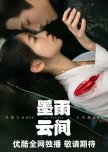
Best C-Drama Ever (The Ultimate Masterclass in Character)
🎬 The Gist 🎬The Double is a high-stakes, fast-paced revenge plot featuring a hyper-competent, resilient female lead #WuJinYan and a formidable, cunning male lead #WangXingyue. It is a psychological thriller, a political chess match, and a story of profound companionship. After being betrayed and literally buried alive by her scholar husband, Xue Fangfei survives and assumes the identity of Jiang Li—the abandoned daughter of the Grand Chancellor—to seek justice. The protectors are refreshingly confident without the need to dominate, and the villains are brilliantly layered in shades of grey.
💡 🌟 The Modernity of its Themes: Breaking the "Purity" TropeSet in a strict Neo-Confucianism era, The Double radically rejects the "purity" trope by refusing to weaponize a woman’s marital past as a source of shame. There are no insecure monologues where Xue Fangfei feels "unworthy" of the unmarried Duke Su due to her past marriage or lack of virginity. Her protectors, Xiao Heng and Ye Shijie, never reduce her value to her marital status, boldly proving a woman's worth lies entirely in her intellect and resilience.
🦊 Duke Su / Xiao Heng: 🕺 The Secure WarriorHe is the perfect antidote to toxic, controlling male leads. Powerful yet deeply secure, he never seeks to diminish or dominate Fangfei. Wang Xingyue masterfully uses micro-expressions—a tight jaw, moist eyes—to convey a storm of protective worry. He fiercely respects her autonomy, letting her lead her own battles while he silently neutralizes deadly variables behind the scenes. Ultimately, he provides absolute psychological safety; the heavily traumatized heroine can only sleep soundly in the presence of the kingdom's most lethal warrior.
♟️ Xue Fangfei / Jiang Li: 💃🏻 The Expansion of the SoulHer journey marks profound moral growth. She transforms from a broken woman seeking narrow personal revenge into a leader willing to risk everything to protect innocent strangers. Her emotional healing transitions beautifully from her broken courtyard declaration ("Use my life as a chess piece") to a playful, confident partnership with Duke Su as they legally tie their fates together to conquer the political landscape.
🏛️ The Paradox of Weak Men & Grey Villains 👽
The drama proves that righteousness without confidence is easily manipulated. Minister Jiang is an upright statesman but a domestic coward, easily manipulated into abandoning his daughter for household peace. In contrast to the secure masculinity of Duke Su and Ye Shijie, the villains are masterclasses in tragic psychology. Shen Yurong is a delusional narcissist who reframes Fangfei's disgust as "obsession" to justify his crimes, while Princess Wanning is a shattered antagonist whose toxic madness stems from a brutal past as a political hostage.
🔥 The Masterful Slow-Burn & Domestic Trust ❤️
Following Tong'er's tragic death, their bond deepens from strategic allies to a devoted, unshakeable couple. Duke Su completely abandons his detached spymaster persona—instinctively discarding clothing that triggers her trauma, and playfully oversharing court secrets like a husband debriefing his wife. Fangfei's reckless nature pushes his composure to the breaking point; the news of him trading the Fish Army talisman for her freedom causes her to break down in panic, finally forcing them to discard their masks. Their dynamic permanently shifts into an unbreakable, transparent front, anchored by his ultimate vow: "Live your life to the fullest and never compromise to please others, not even me."
🔁 Why this is perfect for rewatching: ❤️❤️❤️
True romance in this thriller isn't about grand speeches; it's about practical, respectful actions in the middle of chaos. Every single time you rewatch, you uncover another layer or nuance to a character or an event. Whether it is her jumping on his back out of a subconscious reflex of absolute trust over a tiny rat, or the micro-shifts in their political maneuvering, every viewing reveals new psychological layers. An absolute masterpiece.
------------------------------
⚖️ Postscript: On the Violence and "Misogyny" Claims
Critics claiming the brutal violence against female characters makes the drama misogynistic, confuse historical accuracy with narrative intent. Modelled after the turbulent Five Dynasties (907–960 AD) and Song Dynasty (960–1279 AD), the script accurately reflects an era of harsh institutional cruelty toward women. However, The Double removes passive victims. It gives women absolute agency as the primary drivers of the political chess match. The complex "vamps" are tragic products of a brutal era, explicitly proving that the true villainy lies in weak, cowardly men who held power but lacked the spine to protect them.
Was this review helpful to you?
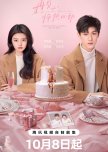
Nostalgic Romance held back by an Emotionally Defensive FL
## 🎬 Go Back Lover: A Toxic Autopsy of the High-IQ, Zero-EQ RomanceGo Back Lover attempts a nostalgic, "exes-to-lovers" healing narrative, but it ultimately delivers a clinical study of psychological demolition. Despite its structural flaws, the series remains an incredibly addictive, worthwhile watch for two reasons: Li Yunrui’s phenomenal acting and the infectious, lighthearted camaraderie of the cast. Whenever the two leads and their friends are simply hanging out—whether during their nostalgic high school days or later at the resort—the show comes alive with a warm, joyful energy and a delightful sense of playful banter and witty bickering.
However, as a core romance, it fails entirely. The script lazily mistakes toxic avoidance for independence, leaving the heavy lifting of genuine human growth entirely to a male lead who is systematically bled dry.
## 📉 Lu Xingyan: The White Knight’s Sunk Cost Fallacy
Li Yunrui delivers an outstanding, emotionally fluid performance that shatters any standard tropes. He captures a real man whose dignity is being slowly starved, using raw micro-expressions—the loss of light in the eyes, the nasal flare, the forced swallow, and the final desperate pivot to a drink—to convey profound devastation.
Lu Xingyan represents a masterclass in tragic codependency. Trapped by the Sunk Cost Fallacy after investing six years of youth, family resources, and unconditional protection, he repeatedly discards his pride and boundaries just to stay in her orbit. By the time he is dumped on a foreign roadside without explanation, his self-worth has been so thoroughly dismantled that he swallows his valid hurt, flying home alone to tragically blame himself for a broken heart he didn't cause.
## 🧊 Shen Xingruo: Calculated Duplicity and Negative EQ
In stark contrast, Shen Xingruo suffers from severe emotional stagnation. The script traps itself by equating academic brilliance with maturity, leaving Xingruo with negative emotional intelligence (EQ). She doesn't hide life-altering secrets—like the Germany move or a secret male flatmate—out of malice; she genuinely fails to comprehend that she is wrong.
This hypocrisy dates back to high school. As Lu Xingyan accurately notes: “You are fierce and intolerant to everyone... but in front of my mom you are like this extra sweet princess.” She actively weaponizes this persona to charm his saintly parents, while simultaneously treating the boy acting as her physical shield with unprovoked hostility.
As an adult, this deficit bleeds into glaring professional unprofessionalism. The show frames her public, screaming meltdown at an investor’s daughter as "establishing authority." In reality, barking "pack up and get out" reveals zero emotional regulation. A high-IQ producer would have used tact, shifting the argument to asset protection: "If the building is damaged, who will bear the cost of restoring a high-end resort?" By choosing raw hostility, she creates corporate chaos, relies on Xingyan's family status to clean up her mess, and then defaults to defensive rage.
She demands the full privileges of a devoted partner while paying "friendship prices." When caught in massive boundary violations, she deploys defensive reverse-gaslighting ("Is that how you think of me?"), weaponizing his normal need for security into a moral failing of "not trusting her." She rejects basic stability—like building a home—under the guise of modern independence, when it is actually just a toxic, defensive isolation that dissolves six years of devotion in a vat of concentrated emotional acid.
## ⚖️ The Ultimate Script Failure: A Toxic Echo Chamber
The core reason Go Back Lover fails as a romance is that the narrative completely abandons its male lead. Instead of an authority figure or therapist delivering a necessary reality check, the writer creates a toxic echo chamber. Her friends praise her icy walls as a virtue, while the second lead actively gatekeeps her trauma to ward off romantic rivals. No one ever forces Xingruo to face the music or accept that she bears at least 60% of the responsibility for the wreckage in Xingyan's life.
The profound irony is that the side female characters display far greater real-world bravery:
* Chen Xunran processes a painful divorce with maturity, co-existing on the show with her ex-husband.
* Shi Qin finds the breathtaking strength to escape domestic abuse and risk vulnerability with her crush.
Compared to her friends' deep resilience, Xingruo’s petty grudge—blaming Xingyan for his valid lack of trust and his volcanic reaction to her secret roommate—looks incredibly ungrateful. This is especially true considering his saintly parents raised her like their own daughter. Truly independent drama heroines use courage or quick wit to survive traps; Xingruo simply creates emotional and professional chaos, plays the princess when it suits her social standing, and relies on a good man to rescue her while the universe gaslights him into apologizing.
💔 The Client-Contractor Ultimatum: The Death of Self-Respect
The greenhouse confrontation marks the absolute destruction of Lu Xingyan’s dignity through narcissistic emotional hoarding. Shen Xingruo first disarms his pining soul with cruel validation, stating: “Our memories are most precious,” and “You are an inseparable part of my life.”Then comes the stomach-churning kicker: “Even though our Love didn't have a happy ending, I still want to be in your life... as a client and contractor.”
With that single line, 11 years of unconditional devotion, physical protection, and family wealth are reduced to a cold corporate transaction. She exploits his lingering feelings to keep him as a safety net while owing him nothing.To lock the trap, she deploys the ultimate weaponized ultimatum: “But if you don't want to see me anymore... I will leave your sight.” Threatening to vanish forces a weeping, devastated man into a corner. To avoid losing her completely, he surrenders his final shred of self-respect, offering the heartbreaking reply: “I don't want us to end up like strangers.” It is a brutal portrait of a good man thoroughly broken by emotional abuse.
The visual contrast in this moment is purely cruel. The wider her smile grows—basking in the triumphant relief that she has successfully trapped him into her client-zone—the more devastating his physical pain becomes. Threatening to vanish forces a weeping, suffocating man into a corner.
The Verdict: Come for the beautiful high school nostalgia, the fun friend-group dynamics, and Li Yunrui's heartbreakingly human portrayal of pining, but do not mistake this for a love story. It is a cautionary tale of what happens when a good man surrenders his ego to a partner who refuses to do the work to heal.
Was this review helpful to you?
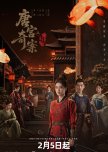
Cold Court Partners: Highly technical but Low on Soul
🎬 The Gist 🎬Unveil: Jadewind (2026) aims to be a cerebral, high-stakes historical procedural but ultimately trips over its own technical ambitions. By prioritizing cold, mechanical investigations over character dynamics, it transforms what could have been a legendary slow-burn partnership into a rigid, colleague-first corporate exercise. The script unfortunately confuses being professional with being cold and emotionless.
🤦♀️😕 Expecting a thriller? Well, Unveil: Jadewind is a period procedural that falls short due to:
The "Zero Surprises" Reality
Technical Detection with Zero Narrative Tension
Flat Bureaucracy with Low Stakes
⚙️ The Suppression of Chemistry: Overdoing the "Colleague" Trope
The script mistakenly believes that professional boundaries must completely erase romantic tension. Unlike the masterful slow-burn progression seen in The Double or Lost in the Kunlun Mountains, Unveil: Jadewind treats its leads' relationship with a frustratingly clinical hand. The narrative forces them into a static "co-workers first" box, suffocating their natural spark under formal deference and denying viewers any real emotional payoff.
📉 The Sidekick Trap: Relegating the Male Lead
Instead of a balanced pairing, the male lead is stripped of autonomy and relegated to a sidekick executing orders. This lack of an equal counter-weight drains his character of mystery and drive, leading to a palpable sense of boredom in his performance.
🔍 Technical Overload vs. Narrative Suspense
By over-explaining every clue like a math equation, the drama aggressively strips away the natural elements of surprise.
If you grew up on the airtight plotting of Agatha Christie, the brilliant deductive thrill of Sherlock Holmes, and the psychological tension of masters like Alfred Hitchcock, this script will feel completely lifeless. It lacks the engaging chemistry found even in benchmark procedurals like Imperial Coroner, Strange Tales of Tang Dynasty, NCIS, or Rizzoli & Isles. Plus, it entirely misses that essential C-Drama spark.
⚖️ The Wanted Detective: The Better Camaraderie
Compared to Jadewind's suppressed chemistry and clinical pacing, The Wanted Detective executes this genre far better. It relies on a balanced ensemble where genuine camaraderie enhances individual strengths rather than flattening them.
🔁 The Final Verdict
A polished watch for pure procedural purists, but a highly forgettable romance that values the blueprint of a case over the souls of the people solving it.
Was this review helpful to you?


