


 1
1


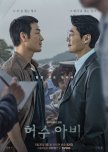
The Masks of the Scarecrow
The Scarecrow is a crime thriller that takes place primarily in 1988 during its first ten episodes, with the final two shifting to 2019. Why 1988? For one, it is a year frequently used in K-dramas (most notably Reply 1988), partly because South Korea hosted the Olympic Games that year. More importantly, it marks the final years of military dictatorship before the country's democratic transition. This historical context is crucial and should never be forgotten while watching the story unfold. It was an era when brutal police methods were commonplace. If investigators failed to catch the real culprit, they often settled for extracting confessions from innocent suspects through violence. The title The Scarecrow refers not only to the serial killer himself but also serves as a metaphor: a scarecrow is, above all, a decoy. Its purpose is to deceive, manipulate perception, and create an illusion. Throughout the drama, the line between truth, accusation, and manipulation becomes increasingly blurred, constantly confronting viewers with morally questionable decisions and difficult dilemmas. Emotionally, this is not a drama one walks away from unscathed.
Kang Tae-joo (Park Hae-soo) is a seasoned and fearless detective with little respect for authority. After being demoted and disciplined, he is transferred from Seoul back to the small town where he grew up. There, he soon finds himself investigating a serial killer targeting women at night along a rural road lined with rice fields and scarecrows—the murderer disguises himself as one to lure and deceive his victims. Tae-joo's path crosses once again with prosecutor Cha Si-young (Lee Hee-jun), a man who left deep psychological scars on him during their high school years through relentless bullying. Though Tae-joo still harbors a strong resentment toward him, the two bitter enemies are forced to work together to stop the monster terrorizing the region. However, Si-young comes from a powerful family, and his position as a prosecutor during the dictatorship grants him influence that often extends beyond his official authority. While the serial killer embodies calculated cruelty, the drama also exposes another form of monstrosity: the brutality of police officers serving a ruthless and corrupt system that shows little mercy toward the vulnerable. What follows is a manhunt spanning more than thirty years, leaving irreversible damage in its wake and destroying countless innocent lives.
The drama's structure relies on brief time jumps scattered throughout the narrative. The director carefully plants flash-forwards that either open or close chapters with prison encounters between Tae-joo and the real killer. Their exchanges become psychological duels, made all the more frustrating by the fact that the murderer's crimes are now beyond the statute of limitations, while he is incarcerated for entirely different offenses. This narrative device creates a fascinating dual timeline. As we follow the 1988 investigation—with all its flaws and systemic violence—these glimpses into the future act as a tragic countdown. We already know the hunt will last thirty years and that irreversible mistakes will be made. Yet the mystery remains compelling, as the killer's identity is not officially revealed until the end of Episode 7 (although attentive viewers may figure it out sooner). Knowing the culprit relatively early is not a problem because the story's real strength lies elsewhere. The suspense remains intact until the very end because the audience never truly knows what to expect, even when they think they do. The Scarecrow is, above all, a psychological drama that deliberately presses on painful wounds. It is raw, violent, often disturbing, but firmly rooted in reality.
Beneath its crime-thriller surface lies a much broader reflection on wrongful convictions, coerced confessions, and the institutional abuses that plagued South Korea during decades marked by authoritarian rule and anti-communist paranoia. The brief but remarkably filmed confrontation between students and police perfectly captures this atmosphere. Through characters who are falsely accused, imprisoned, or destroyed by suspicion, the series shines a light on the forgotten victims of rushed investigations, police pressure, and a justice system sometimes more concerned with closing cases than uncovering the truth. In this sense, the investigation itself ceases to be the heart of the story and instead becomes a symbol of a flawed system whose mistakes continue to haunt survivors decades later. That said, some writing choices raise questions. Why are certain characters never seriously considered as suspects? Why does the investigation cling so stubbornly to fragile assumptions, particularly regarding blood types? Viewed strictly as a detective story, the investigation can occasionally feel like a complete disaster. One ultimately accepts these shortcomings by reminding oneself of the historical context and investigative limitations of the period.
There are no simplistic heroes or villains here. Apart from the serial killer, every major character carries deep emotional wounds that cloud their judgment and threaten their mental stability. The line between good and evil is often razor-thin, and some will pay a terrible price for crossing it. What truly elevates the series is the confrontation between Park Hae-soo and Lee Hee-jun. Quite simply, both actors are exceptional in their respective roles. Having reportedly dreamed of acting together for over a decade, they bring remarkable authenticity and emotional intensity to their performances. Park Hae-soo delivers a nuanced portrayal of a man worn down by time, haunted by failure, and consumed by guilt. Opposite him, Lee Hee-jun is equally impressive. His constantly ambiguous performance maintains an atmosphere of tension throughout the entire series, making his character fascinating, unsettling, and profoundly human all at once. In a thriller, credibility is everything, and these two actors make every moment believable. Their conflict, rooted in a dark shared past, follows them throughout their lives. Eventually, one of them must step aside to protect the people he loves, displaying extraordinary resilience and self-sacrifice.
The production itself deserves praise as well. The opening sequence is magnificent, the direction often feels cinematic, and the rural late-1980s atmosphere is recreated with remarkable authenticity. At times, the show even evokes the feeling of an old American crime film, with acoustic guitar melodies adding an extra layer of charm. The supporting cast also deserves recognition for delivering strong performances across the board. As a fun piece of trivia, Lee Min-ki makes a brief appearance toward the end. The reason is simple: the director is also behind the K-drama Crash (Seasons 1 and 2), in which Lee Min-ki stars My only real reservation concerns the conclusion presented in the final episode. Personally, frustration outweighs satisfaction, even though I understand the creative choice the director made. Without revealing spoilers, the reactions of certain characters—particularly Sun-young, Tae-joo's younger sister, and her son—left me puzzled.
Some individuals are eventually exonerated, and the justice system acknowledges its mistakes, but not all cases can be corrected due to statutes of limitation. Curiously, some investigative avenues also appear to have been ignored in 2019, despite South Korea abolishing the statute of limitations for murder in 2015. At times, the suspense can feel predictable, and a few inconsistencies emerge to move the investigation forward. Morally and legally, however, do not expect a neat or universally satisfying ending. What remains is a masterclass in acting, a chilling story, a dark and melancholic atmosphere, and thought-provoking questions about ethics, justice, and morality. The Scarecrow is not a puzzle-box mystery designed to challenge viewers to identify the killer. Instead, it is a story about the suffering of innocent people and the devastating consequences when justice fails—or refuses—to do its job properly. Despite its imperfections, it is both heartbreaking and shocking. In the end, The Scarecrow is a powerful drama with real substance and weight, all the more compelling because it is deeply rooted in history.
Kang Tae-joo (Park Hae-soo) is a seasoned and fearless detective with little respect for authority. After being demoted and disciplined, he is transferred from Seoul back to the small town where he grew up. There, he soon finds himself investigating a serial killer targeting women at night along a rural road lined with rice fields and scarecrows—the murderer disguises himself as one to lure and deceive his victims. Tae-joo's path crosses once again with prosecutor Cha Si-young (Lee Hee-jun), a man who left deep psychological scars on him during their high school years through relentless bullying. Though Tae-joo still harbors a strong resentment toward him, the two bitter enemies are forced to work together to stop the monster terrorizing the region. However, Si-young comes from a powerful family, and his position as a prosecutor during the dictatorship grants him influence that often extends beyond his official authority. While the serial killer embodies calculated cruelty, the drama also exposes another form of monstrosity: the brutality of police officers serving a ruthless and corrupt system that shows little mercy toward the vulnerable. What follows is a manhunt spanning more than thirty years, leaving irreversible damage in its wake and destroying countless innocent lives.
The drama's structure relies on brief time jumps scattered throughout the narrative. The director carefully plants flash-forwards that either open or close chapters with prison encounters between Tae-joo and the real killer. Their exchanges become psychological duels, made all the more frustrating by the fact that the murderer's crimes are now beyond the statute of limitations, while he is incarcerated for entirely different offenses. This narrative device creates a fascinating dual timeline. As we follow the 1988 investigation—with all its flaws and systemic violence—these glimpses into the future act as a tragic countdown. We already know the hunt will last thirty years and that irreversible mistakes will be made. Yet the mystery remains compelling, as the killer's identity is not officially revealed until the end of Episode 7 (although attentive viewers may figure it out sooner). Knowing the culprit relatively early is not a problem because the story's real strength lies elsewhere. The suspense remains intact until the very end because the audience never truly knows what to expect, even when they think they do. The Scarecrow is, above all, a psychological drama that deliberately presses on painful wounds. It is raw, violent, often disturbing, but firmly rooted in reality.
Beneath its crime-thriller surface lies a much broader reflection on wrongful convictions, coerced confessions, and the institutional abuses that plagued South Korea during decades marked by authoritarian rule and anti-communist paranoia. The brief but remarkably filmed confrontation between students and police perfectly captures this atmosphere. Through characters who are falsely accused, imprisoned, or destroyed by suspicion, the series shines a light on the forgotten victims of rushed investigations, police pressure, and a justice system sometimes more concerned with closing cases than uncovering the truth. In this sense, the investigation itself ceases to be the heart of the story and instead becomes a symbol of a flawed system whose mistakes continue to haunt survivors decades later. That said, some writing choices raise questions. Why are certain characters never seriously considered as suspects? Why does the investigation cling so stubbornly to fragile assumptions, particularly regarding blood types? Viewed strictly as a detective story, the investigation can occasionally feel like a complete disaster. One ultimately accepts these shortcomings by reminding oneself of the historical context and investigative limitations of the period.
There are no simplistic heroes or villains here. Apart from the serial killer, every major character carries deep emotional wounds that cloud their judgment and threaten their mental stability. The line between good and evil is often razor-thin, and some will pay a terrible price for crossing it. What truly elevates the series is the confrontation between Park Hae-soo and Lee Hee-jun. Quite simply, both actors are exceptional in their respective roles. Having reportedly dreamed of acting together for over a decade, they bring remarkable authenticity and emotional intensity to their performances. Park Hae-soo delivers a nuanced portrayal of a man worn down by time, haunted by failure, and consumed by guilt. Opposite him, Lee Hee-jun is equally impressive. His constantly ambiguous performance maintains an atmosphere of tension throughout the entire series, making his character fascinating, unsettling, and profoundly human all at once. In a thriller, credibility is everything, and these two actors make every moment believable. Their conflict, rooted in a dark shared past, follows them throughout their lives. Eventually, one of them must step aside to protect the people he loves, displaying extraordinary resilience and self-sacrifice.
The production itself deserves praise as well. The opening sequence is magnificent, the direction often feels cinematic, and the rural late-1980s atmosphere is recreated with remarkable authenticity. At times, the show even evokes the feeling of an old American crime film, with acoustic guitar melodies adding an extra layer of charm. The supporting cast also deserves recognition for delivering strong performances across the board. As a fun piece of trivia, Lee Min-ki makes a brief appearance toward the end. The reason is simple: the director is also behind the K-drama Crash (Seasons 1 and 2), in which Lee Min-ki stars My only real reservation concerns the conclusion presented in the final episode. Personally, frustration outweighs satisfaction, even though I understand the creative choice the director made. Without revealing spoilers, the reactions of certain characters—particularly Sun-young, Tae-joo's younger sister, and her son—left me puzzled.
Some individuals are eventually exonerated, and the justice system acknowledges its mistakes, but not all cases can be corrected due to statutes of limitation. Curiously, some investigative avenues also appear to have been ignored in 2019, despite South Korea abolishing the statute of limitations for murder in 2015. At times, the suspense can feel predictable, and a few inconsistencies emerge to move the investigation forward. Morally and legally, however, do not expect a neat or universally satisfying ending. What remains is a masterclass in acting, a chilling story, a dark and melancholic atmosphere, and thought-provoking questions about ethics, justice, and morality. The Scarecrow is not a puzzle-box mystery designed to challenge viewers to identify the killer. Instead, it is a story about the suffering of innocent people and the devastating consequences when justice fails—or refuses—to do its job properly. Despite its imperfections, it is both heartbreaking and shocking. In the end, The Scarecrow is a powerful drama with real substance and weight, all the more compelling because it is deeply rooted in history.
Was this review helpful to you?


