


 1
1


Between Fan Service and Outdated Storytelling
“I expected nothing, and I’m still disappointed.” (Dewey, Malcolm in the Middle)
If anyone still wondered whether it was possible to produce a drama without a tangible script, Perfect Crown provides the official proof. Gathering bankable names (actors, idols, models) has never guaranteed quality, and this project is a sad reminder of that fact. To finance its luxury cast and grand sets, MBC pulled every possible lever: omnipresent product placement, a Disney+ partnership, and a premium royal packaging clearly designed for export. Between IU’s loyal fanbase and Byeon Woo-seok’s meteoric rise after Lovely Runner, this drama is above all a luxury marketing product built for return on investment. A veteran director, Park Joon-hwa, was placed at the helm, but he is unfortunately weighed down by a script that feels like it came from an internal network writing contest—often a warning sign for narrative disaster. The result? A porous, bland, and tedious story that feels like a poor remix of a past hit such as The King: Eternal Monarch. To survive Perfect Crown, one must abandon all expectations and choose a side: complete detachment or outright mockery. You can probably guess which one I chose.
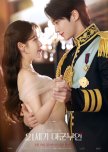
Perfect Crown follows the trend of dramas attempting to blend sageuk (historical drama) conventions with modern storytelling sensibilities. We are placed in a uchronian society where Korea has remained a monarchy. Yet, by necessity or modernization, it has evolved. This is not a constitutional monarchy but a neo-feudal one, as Prime Minister Min Jeong-woo (Noh Sang-hyun) belongs to the hereditary elite families that control political power. Seong Hui-ju (IU) is a commoner, but also the daughter of the country’s most powerful chaebol, running an empire comparable to LVMH. Her goal is to marry Prince I-an (Byeon Woo-seok), whose elder brother, the former king, died under mysterious circumstances three years earlier. Due to succession issues, the throne passed to a child king aged eight, under the influence of Queen Dowager Yoon Yi-rang (Gong Seung-yeon). All of them have known each other since childhood, having attended the same royal academy. Finally, another key figure is Yoon Sung-won (Jo Jae-yun), the queen’s father and head of the royal court. If you’ve seen Alchemy of Souls, you can already guess where this is going. It reeks of recycling and imitation.
The strengths are few and mostly visual: sets, both interior and exterior, costumes (modern fashion, hanboks, etc.), all serve the aesthetic ambition. The color grading and Mercedes sponsorship further amplify the glossy, bling-bling atmosphere. At times, it feels like IU simply stepped out of Hotel del Luna and into this role: similar acting style and princess-like wardrobe. Park Joon-hwa, known for hits such as What’s Wrong with Secretary Kim, Because This Is My First Life, and especially Alchemy of Souls, is clearly out of his comfort zone here, as the script is too thin and forces him to fill time during the first six episodes. Both palace intrigue and romance require patience—too much patience. What is sold as a dream quickly turns into a narrative nightmare in the first half of the series. Perfect Crown is not even a love story at first, but a marriage that resembles a corporate merger. As a result, chemistry feels entirely manufactured. Everything relies on the actors’ physical appeal, which is overplayed to the point of narcissism. One of the biggest flaws is the complete lack of suspense, with most key elements revealed within the first three episodes. The only redeeming sequence early on is a nighttime urban rodeo scene—short, but genuinely engaging.
The pacing is nonexistent, with unnecessary scenes piling up endlessly. The goal seems to be constant visual stimulation: everything must shine and dazzle. Around episode seven, the drama finally wakes up with a first twist. Without spoiling anything, the narrative then shifts toward the theme of romantic karma, but it is so poorly handled that it becomes tedious to follow. Everything is predictable, overacted, and feels like an empty shell or a luxury counterfeit. Even halfway through the series, there is still no real suspense, no credible antagonist, and above all, no romantic magic. It feels like a visual scam the viewer is forced to endure. It is far from The King: Eternal Monarch, which, despite its flaws, at least offered a dreamlike quality through its iconic pairing of Lee Min-ho and Kim Go-eun. Byeon Woo-seok shows no evolution since Lovely Runner, and beyond displaying his abs like in a commercial, his acting remains limited. IU, meanwhile, is on autopilot, overacting much like in Hotel del Luna, except this is no longer the same character. Their romance feels fake, forced, and painfully mechanical.
We are also clearly not in the territory of Under the Queen’s Umbrella, where the dowager queen is reduced here to something as threatening as a Yorkshire terrier facing an elephant, and the royal conspiracy feels like a ridiculous operetta-level villain plot. The sense of danger is artificial and becomes laughable. Steven Noh is also wasted in a role that offers far more potential. In a particularly lazy move, we are even served the classic nighttime truck accident explanation for a past death—again. It is time to stop excusing everything under the label of “it’s just a romance drama.” For example, whether one liked Queen of Tears or not, there was at least a real story, a real antagonist, and committed actors. The same applies to The King: Eternal Monarch: imperfect, but at least emotionally engaging. Here, between a constantly crying child king and dialogue worthy of a telenovela, the viewer is not exactly spoiled. Secondary characters are also treated carelessly, despite clearly deserving more depth over twelve episodes. Near the end, the queen undergoes a sudden moral transformation in a surreal scene (with all due respect, excessive soju consumption is harmful). The result is a parade of mediocrity, often pompous and artificial.
Perfect Crown wants to be a prestigious royal romance, but ends up as a catalogue of flashy clichés wrapped in premium aesthetics. A drama obsessed with its own image, incapable of delivering any genuine emotion. Behind the crowns, costumes, palaces, and luxury cars, there is only an enormous narrative void, further weakened by internal contradictions. Apart from two or three episodes, it tells almost nothing meaningful—a dull, self-contained exercise in déjà vu. It is excessively manichean, filled with worn-out tropes, devoid of sincerity, and overall quite disheartening. I didn’t come here to watch a couple relying solely on their looks, but to be told a story that, even if imperfect, would still feel engaging. Instead, it is often sluggish, easily watchable at double speed without missing anything important. Aside from a couple of brief twists that momentarily create doubt, the script is fully transparent. It is clear the target audience is not particularly demanding—more interested in packaging than content. I wanted to be lenient and give it an average score, but the final episode completely sinks it. At least the OST is salvaged—that’s something.
If anyone still wondered whether it was possible to produce a drama without a tangible script, Perfect Crown provides the official proof. Gathering bankable names (actors, idols, models) has never guaranteed quality, and this project is a sad reminder of that fact. To finance its luxury cast and grand sets, MBC pulled every possible lever: omnipresent product placement, a Disney+ partnership, and a premium royal packaging clearly designed for export. Between IU’s loyal fanbase and Byeon Woo-seok’s meteoric rise after Lovely Runner, this drama is above all a luxury marketing product built for return on investment. A veteran director, Park Joon-hwa, was placed at the helm, but he is unfortunately weighed down by a script that feels like it came from an internal network writing contest—often a warning sign for narrative disaster. The result? A porous, bland, and tedious story that feels like a poor remix of a past hit such as The King: Eternal Monarch. To survive Perfect Crown, one must abandon all expectations and choose a side: complete detachment or outright mockery. You can probably guess which one I chose.
Perfect Crown follows the trend of dramas attempting to blend sageuk (historical drama) conventions with modern storytelling sensibilities. We are placed in a uchronian society where Korea has remained a monarchy. Yet, by necessity or modernization, it has evolved. This is not a constitutional monarchy but a neo-feudal one, as Prime Minister Min Jeong-woo (Noh Sang-hyun) belongs to the hereditary elite families that control political power. Seong Hui-ju (IU) is a commoner, but also the daughter of the country’s most powerful chaebol, running an empire comparable to LVMH. Her goal is to marry Prince I-an (Byeon Woo-seok), whose elder brother, the former king, died under mysterious circumstances three years earlier. Due to succession issues, the throne passed to a child king aged eight, under the influence of Queen Dowager Yoon Yi-rang (Gong Seung-yeon). All of them have known each other since childhood, having attended the same royal academy. Finally, another key figure is Yoon Sung-won (Jo Jae-yun), the queen’s father and head of the royal court. If you’ve seen Alchemy of Souls, you can already guess where this is going. It reeks of recycling and imitation.
The strengths are few and mostly visual: sets, both interior and exterior, costumes (modern fashion, hanboks, etc.), all serve the aesthetic ambition. The color grading and Mercedes sponsorship further amplify the glossy, bling-bling atmosphere. At times, it feels like IU simply stepped out of Hotel del Luna and into this role: similar acting style and princess-like wardrobe. Park Joon-hwa, known for hits such as What’s Wrong with Secretary Kim, Because This Is My First Life, and especially Alchemy of Souls, is clearly out of his comfort zone here, as the script is too thin and forces him to fill time during the first six episodes. Both palace intrigue and romance require patience—too much patience. What is sold as a dream quickly turns into a narrative nightmare in the first half of the series. Perfect Crown is not even a love story at first, but a marriage that resembles a corporate merger. As a result, chemistry feels entirely manufactured. Everything relies on the actors’ physical appeal, which is overplayed to the point of narcissism. One of the biggest flaws is the complete lack of suspense, with most key elements revealed within the first three episodes. The only redeeming sequence early on is a nighttime urban rodeo scene—short, but genuinely engaging.
The pacing is nonexistent, with unnecessary scenes piling up endlessly. The goal seems to be constant visual stimulation: everything must shine and dazzle. Around episode seven, the drama finally wakes up with a first twist. Without spoiling anything, the narrative then shifts toward the theme of romantic karma, but it is so poorly handled that it becomes tedious to follow. Everything is predictable, overacted, and feels like an empty shell or a luxury counterfeit. Even halfway through the series, there is still no real suspense, no credible antagonist, and above all, no romantic magic. It feels like a visual scam the viewer is forced to endure. It is far from The King: Eternal Monarch, which, despite its flaws, at least offered a dreamlike quality through its iconic pairing of Lee Min-ho and Kim Go-eun. Byeon Woo-seok shows no evolution since Lovely Runner, and beyond displaying his abs like in a commercial, his acting remains limited. IU, meanwhile, is on autopilot, overacting much like in Hotel del Luna, except this is no longer the same character. Their romance feels fake, forced, and painfully mechanical.
We are also clearly not in the territory of Under the Queen’s Umbrella, where the dowager queen is reduced here to something as threatening as a Yorkshire terrier facing an elephant, and the royal conspiracy feels like a ridiculous operetta-level villain plot. The sense of danger is artificial and becomes laughable. Steven Noh is also wasted in a role that offers far more potential. In a particularly lazy move, we are even served the classic nighttime truck accident explanation for a past death—again. It is time to stop excusing everything under the label of “it’s just a romance drama.” For example, whether one liked Queen of Tears or not, there was at least a real story, a real antagonist, and committed actors. The same applies to The King: Eternal Monarch: imperfect, but at least emotionally engaging. Here, between a constantly crying child king and dialogue worthy of a telenovela, the viewer is not exactly spoiled. Secondary characters are also treated carelessly, despite clearly deserving more depth over twelve episodes. Near the end, the queen undergoes a sudden moral transformation in a surreal scene (with all due respect, excessive soju consumption is harmful). The result is a parade of mediocrity, often pompous and artificial.
Perfect Crown wants to be a prestigious royal romance, but ends up as a catalogue of flashy clichés wrapped in premium aesthetics. A drama obsessed with its own image, incapable of delivering any genuine emotion. Behind the crowns, costumes, palaces, and luxury cars, there is only an enormous narrative void, further weakened by internal contradictions. Apart from two or three episodes, it tells almost nothing meaningful—a dull, self-contained exercise in déjà vu. It is excessively manichean, filled with worn-out tropes, devoid of sincerity, and overall quite disheartening. I didn’t come here to watch a couple relying solely on their looks, but to be told a story that, even if imperfect, would still feel engaging. Instead, it is often sluggish, easily watchable at double speed without missing anything important. Aside from a couple of brief twists that momentarily create doubt, the script is fully transparent. It is clear the target audience is not particularly demanding—more interested in packaging than content. I wanted to be lenient and give it an average score, but the final episode completely sinks it. At least the OST is salvaged—that’s something.
Was this review helpful to you?


