


 1
1


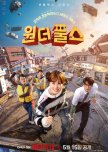
The Four Fantasists
Although the script is 100% Korean, its genesis traces back to the “The B-Team” concept developed by Stan Lee’s studio in 2018. Directed by Yoo In-sik (Dr. Romantic, Vagabond, Extraordinary Attorney Woo), this K-drama takes us to 1999, at the dawn of the Y2K bug, in the small town of Haeseong—marked by a dark incident dating back over twenty years. The WONDERfools naturally evokes Marvel or DC-style heroes, but it leans more toward a mix of works like Cashero, Hi-Five, and even The Boys, in the sense that these characters are not born as heroes but are the result of laboratory experiments or accidental contamination. In terms of atmosphere, they also carry a touch of Guardians of the Galaxy. So between satire and superhero deconstruction, do these late-20th-century “wonder kids” (in truth, broken misfits) succeed in delivering both spectacle and escapism?
At the end of 1999, Eun Chae-ni (Park Eun-bin), in fragile health, is expected not to survive into the new century due to a weak heart. She is a 27-year-old woman with a childish streak—likable but stagnant. Her only family is her grandmother, who runs a large restaurant. Her high school friend Kang Ro-bin (Im Sung-jae), somewhat intellectually limited, and her neighbor Son Gyeong-hun (Choi Dae-hoon), a lazy, compulsive liar of sorts, are her only companions. A new civil servant arrives at the town hall and surprises them with his rigidity: Lee Un-jeong (Cha Eun-woo) is a mysterious figure who takes a particular interest in Chae-ni. One night, after a tragedy, the trio accidentally acquire superpowers through an unfortunate chain of events. In reality, this awakens Chae-ni’s latent abilities while also granting her new ones. Elsewhere in the city, a diabolical figure returns: Professor Ha Won-do (Son Hyun-joo), released on parole after 20 years in prison. He is the source of the misfortunes awaiting the group and is directly tied to parts of their past.
From the very first minutes, the tone is set. The series opens with Radiohead’s iconic Creep, immediately immersing us in the melancholy and existential gloom of the late century. This temporal and musical contrast perfectly establishes an atmosphere that constantly oscillates between nostalgia and modernity. The retro aesthetic brings a carefully crafted vintage feel. It offers a fresh take on the superhero genre—far from standard blockbusters—focusing instead on humor and the clumsy, deeply human side of these “Wonderfools.” At its core, they stem from the “Wunderkinder Project” (yes, the German reference is deliberate), echoing the idea of scientific experiments reminiscent of World War II-era experimentation narratives. In keeping with the Y2K setting, the series leans heavily into nostalgia, portraying flawed heroes with limited lifespans whose already broken lives are further shaped by physical or psychological damage. The core idea is to show how ordinary, slightly dysfunctional people deal with overwhelming responsibility. They gradually discover strengths they never knew they had, especially courage and self-sacrifice.
In this kind of drama, the appeal is not in an unpredictable plot. The main strength of The WONDERfools comes down to one name: Park Eun-bin. Once again, she delivers an outstanding and compelling performance—an absolute showcase without ever overdoing it. She practically owns the screen. Credit is also due to Choi Dae-hoon and Im Sung-jae, both highly respected actors in Korean cinema and television. As for Cha Eun-woo, while I’m not particularly a fan, he delivers a surprisingly solid performance alongside his Clark Kent-like physique. The chemistry between the team members works well: they support each other, motivate one another, and grow together. Another smart choice is that their powers are unstable—they must learn to trigger and control them, often leading to comedic or chaotic action scenes. Their energy is contagious; it’s pure dopamine entertainment. You’re not here to think—you’re here to have fun. The direction is polished, the CGI solid, and the production design effective. The soundtrack also elevates key moments; the ending of episode 6, for instance, evokes a Guardians of the Galaxy-style sequence with a long tracking shot centered on Park Eun-bin.
The downside is that while the heroes are well-developed and the series entertaining, it somewhat misses the depth of its central conflict. Even though the danger is present, it never feels truly threatening. The antagonists are often too soft, lacking real menace despite having interesting abilities on paper. They are not cruel enough, and somewhat improbably, some even display empathy. The use of a cult as a cover for their actions feels like an overly familiar narrative shortcut. Moreover, Son Hyun-joo, a major figure in the industry, is underused and drifts through the story like a ghost. It’s a shame, as there was real potential to intensify the threat and raise the stakes in certain action sequences. That said, I understand Yoo In-sik’s intention to keep the focus on the “Fantastic Four” of misfits and their emotional journey. The entire moral arc revolves around what they choose to do with their flawed abilities—their decision to turn defect into altruistic sacrifice.
One final note: I’ll leave the discovery of the protagonists’ superpowers to the viewer, some of which, despite being seemingly “useless,” turn out to be crucial at key moments. It’s also worth noting the director’s clever handling of historical context, avoiding lazy flashbacks. While not particularly groundbreaking, the series delivers an enjoyable, feel-good yet occasionally darker story—a blend of burlesque comedy, human drama, and thriller elements. With solid production values, it is clearly a Netflix export-oriented project. The overall package is strong, even if sometimes chaotic, though viewers should be careful of occasional emotional overindulgence. The redemption arc of a certain character also feels somewhat too easy by the end. Ultimately, what remains is a high-energy series with a clean tone and highly likable, relatable heroes. Yes, it lacks consistency and rigor at times, but it never feels frustrating because the entertainment is clear and effective. As with many shows of this kind, the ending remains open. I initially planned to give it a 7, but Park Eun-bin alone earns it an extra point—she absolutely dominates the game.
At the end of 1999, Eun Chae-ni (Park Eun-bin), in fragile health, is expected not to survive into the new century due to a weak heart. She is a 27-year-old woman with a childish streak—likable but stagnant. Her only family is her grandmother, who runs a large restaurant. Her high school friend Kang Ro-bin (Im Sung-jae), somewhat intellectually limited, and her neighbor Son Gyeong-hun (Choi Dae-hoon), a lazy, compulsive liar of sorts, are her only companions. A new civil servant arrives at the town hall and surprises them with his rigidity: Lee Un-jeong (Cha Eun-woo) is a mysterious figure who takes a particular interest in Chae-ni. One night, after a tragedy, the trio accidentally acquire superpowers through an unfortunate chain of events. In reality, this awakens Chae-ni’s latent abilities while also granting her new ones. Elsewhere in the city, a diabolical figure returns: Professor Ha Won-do (Son Hyun-joo), released on parole after 20 years in prison. He is the source of the misfortunes awaiting the group and is directly tied to parts of their past.
From the very first minutes, the tone is set. The series opens with Radiohead’s iconic Creep, immediately immersing us in the melancholy and existential gloom of the late century. This temporal and musical contrast perfectly establishes an atmosphere that constantly oscillates between nostalgia and modernity. The retro aesthetic brings a carefully crafted vintage feel. It offers a fresh take on the superhero genre—far from standard blockbusters—focusing instead on humor and the clumsy, deeply human side of these “Wonderfools.” At its core, they stem from the “Wunderkinder Project” (yes, the German reference is deliberate), echoing the idea of scientific experiments reminiscent of World War II-era experimentation narratives. In keeping with the Y2K setting, the series leans heavily into nostalgia, portraying flawed heroes with limited lifespans whose already broken lives are further shaped by physical or psychological damage. The core idea is to show how ordinary, slightly dysfunctional people deal with overwhelming responsibility. They gradually discover strengths they never knew they had, especially courage and self-sacrifice.
In this kind of drama, the appeal is not in an unpredictable plot. The main strength of The WONDERfools comes down to one name: Park Eun-bin. Once again, she delivers an outstanding and compelling performance—an absolute showcase without ever overdoing it. She practically owns the screen. Credit is also due to Choi Dae-hoon and Im Sung-jae, both highly respected actors in Korean cinema and television. As for Cha Eun-woo, while I’m not particularly a fan, he delivers a surprisingly solid performance alongside his Clark Kent-like physique. The chemistry between the team members works well: they support each other, motivate one another, and grow together. Another smart choice is that their powers are unstable—they must learn to trigger and control them, often leading to comedic or chaotic action scenes. Their energy is contagious; it’s pure dopamine entertainment. You’re not here to think—you’re here to have fun. The direction is polished, the CGI solid, and the production design effective. The soundtrack also elevates key moments; the ending of episode 6, for instance, evokes a Guardians of the Galaxy-style sequence with a long tracking shot centered on Park Eun-bin.
The downside is that while the heroes are well-developed and the series entertaining, it somewhat misses the depth of its central conflict. Even though the danger is present, it never feels truly threatening. The antagonists are often too soft, lacking real menace despite having interesting abilities on paper. They are not cruel enough, and somewhat improbably, some even display empathy. The use of a cult as a cover for their actions feels like an overly familiar narrative shortcut. Moreover, Son Hyun-joo, a major figure in the industry, is underused and drifts through the story like a ghost. It’s a shame, as there was real potential to intensify the threat and raise the stakes in certain action sequences. That said, I understand Yoo In-sik’s intention to keep the focus on the “Fantastic Four” of misfits and their emotional journey. The entire moral arc revolves around what they choose to do with their flawed abilities—their decision to turn defect into altruistic sacrifice.
One final note: I’ll leave the discovery of the protagonists’ superpowers to the viewer, some of which, despite being seemingly “useless,” turn out to be crucial at key moments. It’s also worth noting the director’s clever handling of historical context, avoiding lazy flashbacks. While not particularly groundbreaking, the series delivers an enjoyable, feel-good yet occasionally darker story—a blend of burlesque comedy, human drama, and thriller elements. With solid production values, it is clearly a Netflix export-oriented project. The overall package is strong, even if sometimes chaotic, though viewers should be careful of occasional emotional overindulgence. The redemption arc of a certain character also feels somewhat too easy by the end. Ultimately, what remains is a high-energy series with a clean tone and highly likable, relatable heroes. Yes, it lacks consistency and rigor at times, but it never feels frustrating because the entertainment is clear and effective. As with many shows of this kind, the ending remains open. I initially planned to give it a 7, but Park Eun-bin alone earns it an extra point—she absolutely dominates the game.
Was this review helpful to you?


