


 1
1


Soft Hearts, Iron Fists
Sometimes there are series I don’t even try to analyze or break down. I immediately immerse myself in them, and that’s usually a good sign. Fifties Professionals instantly hooked me—not because of its story, which is fairly classic in essence, but because of its atmosphere. A well-balanced mix of genres: action, crime, comedy, romance, and above all this almost theatrical troupe feeling, carried by an ensemble cast that works like a solid collective. In this kind of setup, everything depends on balance. And here, the series generally avoids excess, which is never easy when you need to maintain constant emotional tension. Yes, the usual genre tropes are there, but they pass smoothly, almost naturally. For viewers not very familiar with K-dramas, the cast may not mean much. For others, these faces speak for themselves: seasoned actors who have nothing left to prove and who are here to showcase their craft, almost in a controlled playground.
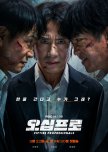
2016. To recover a USB drive containing compromising files involving North and South Korean agents, including a high-ranking NIS official, three of the best in their field end up in direct confrontation. A bag containing dozens of cut diamonds worth a fortune is also part of the loot. On one side, ghost agent Jung Ho-Myung (Shin Ha-Kyun), on the other, North Korea’s “weapon” Bulgae (Oh Jung-Se), and finally the right-hand man of a powerful gang, Kang Beom-Ryong (Heo Sung-Tae), nicknamed “Doksa” (the viper). But during a confrontation, the trio ends up stranded on the small island of Yeongseon. Bulgae, who has taken the loot, becomes amnesiac and forgets everything about his past. The other two lose his trail. 2026. Ho-Myung, now a wanted man, continues his mission in secret, despite being married and a father. Beom-Ryong watches him from a distance, while his boss is in prison. Expelled from the gang, he has become a convenience store manager. As for Bulgae (fire dog), renamed Bong Je-Soon, he now lives an ordinary life.
The most interesting part of the drama is therefore not the plot, but the evolution of these three heroes ten years later. If Je-Soon is not aware of his change due to his amnesia, the other two have evolved in surprising ways. This is where the psychological aspect becomes interesting and surprising: Ho-Myung must deal with family responsibilities, while Beom-Ryong, who brought Gong-Bok (Lee Hak-Joo), his right-hand man, along with him, has by chance become a convenience store manager and a fundamentally good man. Now, I’m not trying to sell this as a psychological drama, but what I want to highlight is that alongside their original mission, we have three men in reconstruction whose common point is not their past, but their attempt to live differently, in a form of unconscious redemption. Because behind the spy storyline, the series raises a simple but effective question: can one truly start over after a life of violence and secrets? These characters are not manichean and do not follow binary logic. They are not war machines, but human beings with strengths and weaknesses. Even love, directly or indirectly, gets involved. The three women around them are not decorative props either.
Indeed, these are strong, grounded and humane women who embody the present, stability, but also a moral and institutional gaze on these men returning from their former lives. Don’t expect a rom-com style romance here—it is more a stylistic device used to express the idea of existing or emerging romantic partnerships. One of the series’ greatest strengths is its ability to shift registers: it smoothly moves from action to comedy, from drama to “romance.” There are intense moments, but also lighter ones. The director, who can rely on works such as Squad 38 and Bad Guys: Vile City, handles this with fluid transitions, never abrupt. The famous “switch” in tone is well mastered, thanks to acting, editing, and music. Even the dialogues may seem simple or even absurd, but they often work through situational contrast, reinforcing the slightly surreal tone of the whole. What caught my attention is this very diverse gallery of characters, which creates an immediate and almost fusion-like chemistry. There is above all no downtime, which does not mean there are no calmer moments allowing us to connect with their lives.
The series subtly alternates between fights and conviviality, against a backdrop of political conspiracy, influence trafficking, and drugs. The action is clear and spectacular when needed. But as you already understood, the main strength of the drama lies in its cast, and in the way they are highlighted through solid and effective directing. I mentioned the trio of actors, but it would be unfair not to mention Kim Shin-Rok, Shin Dong-Mi, and Han Ji-Eun, who all bring something complementary. They also have long careers behind them. The atmosphere of the series is truly excellent; there is a strong feel-good spirit behind very serious stakes. The plot is simple and easy to follow, but the most important thing lies elsewhere, in relationships, group dynamics, and the reconstruction of broken lives. There are few notable twists, and the heroes are rarely in real danger, but honestly, that is not a problem. The director Han Dong-Hwa’s approach is to remain sober: action scenes have scale when needed, but there is no overuse of gratuitous violence or gore. Violence exists, but it is contained. I would never have expected such a drama to deliver so much emotion, because it is deeply human.
Fifties Professionals does not reinvent the wheel. But what makes the series stand out is its strong ensemble chemistry, its theme of redemption, and the right to happiness in a second life. This is easily accepted, because although the two agents had to kill as part of their institutional roles, the gangster, while he did “break faces,” never actually killed anyone. This is a drama about people trying to rebuild their lives without completely denying their past. The chosen format helps densify the narrative and avoids artificial filler. The only drawback—and truly the only criticism I can make—is that the ending feels rushed. It is a real shame. It is frustrating, because after taking such care in building its characters over twelve episodes, they deserved a proper moment of emotional breathing space before the credits. Five or ten extra minutes would have been enough to give more emotional weight to their farewells. They were truly endearing, and I would really love to see them again in other adventures because I thoroughly enjoyed them.
2016. To recover a USB drive containing compromising files involving North and South Korean agents, including a high-ranking NIS official, three of the best in their field end up in direct confrontation. A bag containing dozens of cut diamonds worth a fortune is also part of the loot. On one side, ghost agent Jung Ho-Myung (Shin Ha-Kyun), on the other, North Korea’s “weapon” Bulgae (Oh Jung-Se), and finally the right-hand man of a powerful gang, Kang Beom-Ryong (Heo Sung-Tae), nicknamed “Doksa” (the viper). But during a confrontation, the trio ends up stranded on the small island of Yeongseon. Bulgae, who has taken the loot, becomes amnesiac and forgets everything about his past. The other two lose his trail. 2026. Ho-Myung, now a wanted man, continues his mission in secret, despite being married and a father. Beom-Ryong watches him from a distance, while his boss is in prison. Expelled from the gang, he has become a convenience store manager. As for Bulgae (fire dog), renamed Bong Je-Soon, he now lives an ordinary life.
The most interesting part of the drama is therefore not the plot, but the evolution of these three heroes ten years later. If Je-Soon is not aware of his change due to his amnesia, the other two have evolved in surprising ways. This is where the psychological aspect becomes interesting and surprising: Ho-Myung must deal with family responsibilities, while Beom-Ryong, who brought Gong-Bok (Lee Hak-Joo), his right-hand man, along with him, has by chance become a convenience store manager and a fundamentally good man. Now, I’m not trying to sell this as a psychological drama, but what I want to highlight is that alongside their original mission, we have three men in reconstruction whose common point is not their past, but their attempt to live differently, in a form of unconscious redemption. Because behind the spy storyline, the series raises a simple but effective question: can one truly start over after a life of violence and secrets? These characters are not manichean and do not follow binary logic. They are not war machines, but human beings with strengths and weaknesses. Even love, directly or indirectly, gets involved. The three women around them are not decorative props either.
Indeed, these are strong, grounded and humane women who embody the present, stability, but also a moral and institutional gaze on these men returning from their former lives. Don’t expect a rom-com style romance here—it is more a stylistic device used to express the idea of existing or emerging romantic partnerships. One of the series’ greatest strengths is its ability to shift registers: it smoothly moves from action to comedy, from drama to “romance.” There are intense moments, but also lighter ones. The director, who can rely on works such as Squad 38 and Bad Guys: Vile City, handles this with fluid transitions, never abrupt. The famous “switch” in tone is well mastered, thanks to acting, editing, and music. Even the dialogues may seem simple or even absurd, but they often work through situational contrast, reinforcing the slightly surreal tone of the whole. What caught my attention is this very diverse gallery of characters, which creates an immediate and almost fusion-like chemistry. There is above all no downtime, which does not mean there are no calmer moments allowing us to connect with their lives.
The series subtly alternates between fights and conviviality, against a backdrop of political conspiracy, influence trafficking, and drugs. The action is clear and spectacular when needed. But as you already understood, the main strength of the drama lies in its cast, and in the way they are highlighted through solid and effective directing. I mentioned the trio of actors, but it would be unfair not to mention Kim Shin-Rok, Shin Dong-Mi, and Han Ji-Eun, who all bring something complementary. They also have long careers behind them. The atmosphere of the series is truly excellent; there is a strong feel-good spirit behind very serious stakes. The plot is simple and easy to follow, but the most important thing lies elsewhere, in relationships, group dynamics, and the reconstruction of broken lives. There are few notable twists, and the heroes are rarely in real danger, but honestly, that is not a problem. The director Han Dong-Hwa’s approach is to remain sober: action scenes have scale when needed, but there is no overuse of gratuitous violence or gore. Violence exists, but it is contained. I would never have expected such a drama to deliver so much emotion, because it is deeply human.
Fifties Professionals does not reinvent the wheel. But what makes the series stand out is its strong ensemble chemistry, its theme of redemption, and the right to happiness in a second life. This is easily accepted, because although the two agents had to kill as part of their institutional roles, the gangster, while he did “break faces,” never actually killed anyone. This is a drama about people trying to rebuild their lives without completely denying their past. The chosen format helps densify the narrative and avoids artificial filler. The only drawback—and truly the only criticism I can make—is that the ending feels rushed. It is a real shame. It is frustrating, because after taking such care in building its characters over twelve episodes, they deserved a proper moment of emotional breathing space before the credits. Five or ten extra minutes would have been enough to give more emotional weight to their farewells. They were truly endearing, and I would really love to see them again in other adventures because I thoroughly enjoyed them.
Was this review helpful to you?


