
 Editorials

 1
1



A Caramel-Mushy Village of Morons
When I finished the drama, I honestly thought we'd been handed some kind of webtoon pastiche or parody aimed at teenage girls. Because when it comes to tropes and clichés, this was Champions' League level. And why not, after all, if the writing had been brilliant and those tropes had been used intelligently and effectively. Unfortunately, much to my regret, the keys to the truck were once again handed to an amateur with the writing talent of a hack. The premise itself was simple and cute, but after a first episode that hinted at some interesting themes built around the romance, we quickly switched to "the dumber it is, the more easily it goes down" mode. We went way past the land of marshmallow, soft caramel and cotton candy and stepped headfirst into pure silliness and mawkishness. Thankfully, Heo Sung-Tae is there to bring at least a semblance of credibility to the crime side of the drama, because otherwise there wouldn't have been much left to save. In Hangul, the title basically means "a shitty love" or "a damn crappy love." At least it's explicit, and you're not being lied to about what you're getting. Maybe if this drama had aired at Christmas, I might have given it a passing grade. But in the middle of August, everything melted. My brain included.
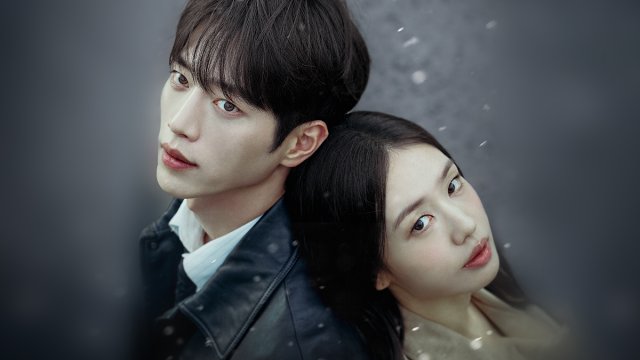
For more than 14 years, Jang Tae-Ha (Jung Hae-In), a former promising young boxer, has been the right-hand man of a powerful crime boss. He's got blood on his hands. But before returning to his childhood village, called Caramel, and finally putting this disgraceful chapter of his life behind him, his boss Baek Sang-Gil (Heo Sung-Tae) gives him one last assignment: make prosecutor Go Eun-Sae (Ha-Young) disappear. After beating her unconscious, Tae-Ha is ordered to get rid of her. But he recognizes someone from his past in her. In complete secrecy, he manages to smuggle her to a remote rural hospital. When she wakes up 15 days later, she has amnesia and there is no way to identify her. Tae-Ha then pretends to be her fiancé and takes her back home to protect her. His mentor and former boxing coach Hong Do-Yeop (Jeon Bae-Su), his wife, the village's three gossips and his grandmother Go Young-Hong (Kim Young-Ok) will help him with the task. Tae-Ha has always had a crush on her, but is it mutual now that she's lost her memory?
After teasing us with a first episode that wasn't too bad, the drama quickly reveals the limits of its narrative construction. A light rom-com doesn't have to mean a stupid rom-com written for an audience with the intellectual appetite of a kitchen sponge, ready to swallow absolutely anything. Especially since there is a crime storyline that shouldn't be ignored, even though it will disappear for numerous episodes. In short, there was a good idea here, but the writers systematically choose the easiest possible solution, piling up coincidences, contrivances and implausible situations. Credibility has no place in Our Sticky Love: you're simply expected to accept everything and anything. Everything is telegraphed and predictable, whether it's the romantic scenes, the fights or the flashbacks. As I said, it's a festival of tropes and clichés by the dozen; nothing has been left out. But Netflix Original means no PPL, except for Volvo. We're stuck with the usual stereotypes of a backward village, embodied by the trio of gossips who apparently have no lives of their own. The story is so thin that even halfway through the drama, practically nothing has happened. We're just going around in circles. What also stands out is the shameless black-and-white morality: every character is flat, with the villains being very, very evil and the good guys being very, very good. It's utterly boring.
Let's talk about the romance. At first, it's all cute and sweet, but we quickly realize the limitations of the situations. For an amnesiac, Eun-Sae is remarkably trusting and is never really on her guard. The script tells you to accept the situation, so you accept it. Period. To put it bluntly, the drama seems to confuse romance with an accumulation of romantic tropes. And here we go: lingering looks, ultra-aesthetic lighting, piano music, painfully childish dialogue, "Oppa," rain, kisses, etc. The problem isn't that these elements exist. They are part of the classic language of Korean rom-coms. The problem is that they practically replace the writing of the relationship itself. We're constantly shown that these characters are in love, but we rarely feel why they actually love each other. Their chemistry therefore feels manufactured by the direction rather than created by the characters themselves. The drama almost never lets the emotion arise naturally. It's basically a romance starter kit for complete beginners. Everything is explained, underlined, accompanied and repeated. The result is that you feel absolutely nothing for this couple, who, incidentally, are never really in sync, because there's another, more annoying problem: the acting. The two actors are never on the same wavelength, and it's painfully obvious. As for chemistry, forget it.
By now, I know Jung Hae-In well enough to be able to take a critical look at his work. He's a good actor, provided he has an excellent actress opposite him and/or a script worthy of his abilities. But he too often confines himself to easy romances because he has that "straight-A student" kind of face. Here, he turns in an even flatter performance than in Love Next Door. He's better in emotional dramas because he usually has talented actresses opposite him and scripts that give him something to work with. In D.P., in a completely different genre, he was excellent. Here, he brings back that familiar sad-puppy look, even though his character was supposed to have spent years as a gangster. And on top of that, we're apparently supposed to believe he's the biggest virgin of the decade! Opposite him, Ha-Young, in her first lead role, overdoes it, but at least she brings something to the table. Her character is so unintentionally out of sync with the situation that it becomes either hilarious or embarrassing, depending on the scene. This actress isn't just pretty; she has genuine potential. But here, she comes across more like a clueless idiot than a prosecutor. As for the rest, everything is telegraphed, including the bargain-basement "second romance" and the completely cartoonish crime storyline, with some ridiculously dumb fight scenes. Finally, it feels as though everything takes place in a tiny little microcosm designed to make the plot easier to move along, even though the plot is already incredibly simplistic. The rest of the cast is basically there to serve up the necessary lines and tell you when you're supposed to laugh or cry.
This story was obviously destined to end in full-on Care Bears mode, so naturally the fact that Tae-Ha spent nearly 15 years as a violent criminal is conveniently swept under the rug. Not only is he never investigated by the police, he doesn't spend a single day behind bars. The power of love, I suppose... Or maybe the power of stupidity. I honestly can't remember anymore. Yet again, this is another element that turns a light rom-com into a pile of nonsense where you're expected to swallow every last absurdity. For once, that ever-reliable "five years later" would actually have been useful. Instead, we're simply told to accept that yes, Tae-Ha was a violent thug, but apparently the "good guy deep down" rule applies before and after. Structurally, this drama is far too long for the story it has to tell. It could easily have ended around episode 10, and honestly, they could have fit the whole thing into eight episodes. But because they apparently had to fill a quota, we get a completely improbable coincidence at the end masquerading as a twist, straight out of Darth Vader meeting Luke in Cloud City on Bespin. There is also a very violent scene toward the end that could easily have been left out. If it was supposed to convey some message about repentance or resilience, it completely fails. The finale feels like the final banquet scene in Asterix, with the most shameless fan service imaginable. Nothing has been forgotten, and nothing has been spared.
In the end, Our Sticky Love is exactly the kind of drama that might work for a viewer who isn't very familiar with the codes of Korean rom-coms, but quickly becomes unbearable for anyone who has already watched dozens of them. It's the same old stuff we've seen a thousand times. I have no problem with tropes when they're well written. Here, they're simply piled on top of one another, highlighted in neon and used as crutches for the script. At no point does the drama try to surprise us, genuinely develop its characters or give even a minimum of credibility to its situations. Even the few good ideas in the premise are gradually sacrificed on the altar of mawkishness. What we're left with is a succession of predictable situations, caricatured characters, childish dialogue, artificial romance and implausible plot devices that eventually make the whole thing unintentionally funny. Everything is so relentlessly "happily ever after," like a fairy tale. By trying so hard to be cute, comforting and harmless, the drama ultimately ends up being hollow. Between writing that's scraping the bottom of the barrel, zero credibility and a romance that feels more like an illustrated manual of genre clichés than an actual love story, Our Sticky Love ultimately felt like watching an unintentional parody of a K-drama. Occasionally funny without meaning to be, but ultimately just bad.
For more than 14 years, Jang Tae-Ha (Jung Hae-In), a former promising young boxer, has been the right-hand man of a powerful crime boss. He's got blood on his hands. But before returning to his childhood village, called Caramel, and finally putting this disgraceful chapter of his life behind him, his boss Baek Sang-Gil (Heo Sung-Tae) gives him one last assignment: make prosecutor Go Eun-Sae (Ha-Young) disappear. After beating her unconscious, Tae-Ha is ordered to get rid of her. But he recognizes someone from his past in her. In complete secrecy, he manages to smuggle her to a remote rural hospital. When she wakes up 15 days later, she has amnesia and there is no way to identify her. Tae-Ha then pretends to be her fiancé and takes her back home to protect her. His mentor and former boxing coach Hong Do-Yeop (Jeon Bae-Su), his wife, the village's three gossips and his grandmother Go Young-Hong (Kim Young-Ok) will help him with the task. Tae-Ha has always had a crush on her, but is it mutual now that she's lost her memory?
After teasing us with a first episode that wasn't too bad, the drama quickly reveals the limits of its narrative construction. A light rom-com doesn't have to mean a stupid rom-com written for an audience with the intellectual appetite of a kitchen sponge, ready to swallow absolutely anything. Especially since there is a crime storyline that shouldn't be ignored, even though it will disappear for numerous episodes. In short, there was a good idea here, but the writers systematically choose the easiest possible solution, piling up coincidences, contrivances and implausible situations. Credibility has no place in Our Sticky Love: you're simply expected to accept everything and anything. Everything is telegraphed and predictable, whether it's the romantic scenes, the fights or the flashbacks. As I said, it's a festival of tropes and clichés by the dozen; nothing has been left out. But Netflix Original means no PPL, except for Volvo. We're stuck with the usual stereotypes of a backward village, embodied by the trio of gossips who apparently have no lives of their own. The story is so thin that even halfway through the drama, practically nothing has happened. We're just going around in circles. What also stands out is the shameless black-and-white morality: every character is flat, with the villains being very, very evil and the good guys being very, very good. It's utterly boring.
Let's talk about the romance. At first, it's all cute and sweet, but we quickly realize the limitations of the situations. For an amnesiac, Eun-Sae is remarkably trusting and is never really on her guard. The script tells you to accept the situation, so you accept it. Period. To put it bluntly, the drama seems to confuse romance with an accumulation of romantic tropes. And here we go: lingering looks, ultra-aesthetic lighting, piano music, painfully childish dialogue, "Oppa," rain, kisses, etc. The problem isn't that these elements exist. They are part of the classic language of Korean rom-coms. The problem is that they practically replace the writing of the relationship itself. We're constantly shown that these characters are in love, but we rarely feel why they actually love each other. Their chemistry therefore feels manufactured by the direction rather than created by the characters themselves. The drama almost never lets the emotion arise naturally. It's basically a romance starter kit for complete beginners. Everything is explained, underlined, accompanied and repeated. The result is that you feel absolutely nothing for this couple, who, incidentally, are never really in sync, because there's another, more annoying problem: the acting. The two actors are never on the same wavelength, and it's painfully obvious. As for chemistry, forget it.
By now, I know Jung Hae-In well enough to be able to take a critical look at his work. He's a good actor, provided he has an excellent actress opposite him and/or a script worthy of his abilities. But he too often confines himself to easy romances because he has that "straight-A student" kind of face. Here, he turns in an even flatter performance than in Love Next Door. He's better in emotional dramas because he usually has talented actresses opposite him and scripts that give him something to work with. In D.P., in a completely different genre, he was excellent. Here, he brings back that familiar sad-puppy look, even though his character was supposed to have spent years as a gangster. And on top of that, we're apparently supposed to believe he's the biggest virgin of the decade! Opposite him, Ha-Young, in her first lead role, overdoes it, but at least she brings something to the table. Her character is so unintentionally out of sync with the situation that it becomes either hilarious or embarrassing, depending on the scene. This actress isn't just pretty; she has genuine potential. But here, she comes across more like a clueless idiot than a prosecutor. As for the rest, everything is telegraphed, including the bargain-basement "second romance" and the completely cartoonish crime storyline, with some ridiculously dumb fight scenes. Finally, it feels as though everything takes place in a tiny little microcosm designed to make the plot easier to move along, even though the plot is already incredibly simplistic. The rest of the cast is basically there to serve up the necessary lines and tell you when you're supposed to laugh or cry.
This story was obviously destined to end in full-on Care Bears mode, so naturally the fact that Tae-Ha spent nearly 15 years as a violent criminal is conveniently swept under the rug. Not only is he never investigated by the police, he doesn't spend a single day behind bars. The power of love, I suppose... Or maybe the power of stupidity. I honestly can't remember anymore. Yet again, this is another element that turns a light rom-com into a pile of nonsense where you're expected to swallow every last absurdity. For once, that ever-reliable "five years later" would actually have been useful. Instead, we're simply told to accept that yes, Tae-Ha was a violent thug, but apparently the "good guy deep down" rule applies before and after. Structurally, this drama is far too long for the story it has to tell. It could easily have ended around episode 10, and honestly, they could have fit the whole thing into eight episodes. But because they apparently had to fill a quota, we get a completely improbable coincidence at the end masquerading as a twist, straight out of Darth Vader meeting Luke in Cloud City on Bespin. There is also a very violent scene toward the end that could easily have been left out. If it was supposed to convey some message about repentance or resilience, it completely fails. The finale feels like the final banquet scene in Asterix, with the most shameless fan service imaginable. Nothing has been forgotten, and nothing has been spared.
In the end, Our Sticky Love is exactly the kind of drama that might work for a viewer who isn't very familiar with the codes of Korean rom-coms, but quickly becomes unbearable for anyone who has already watched dozens of them. It's the same old stuff we've seen a thousand times. I have no problem with tropes when they're well written. Here, they're simply piled on top of one another, highlighted in neon and used as crutches for the script. At no point does the drama try to surprise us, genuinely develop its characters or give even a minimum of credibility to its situations. Even the few good ideas in the premise are gradually sacrificed on the altar of mawkishness. What we're left with is a succession of predictable situations, caricatured characters, childish dialogue, artificial romance and implausible plot devices that eventually make the whole thing unintentionally funny. Everything is so relentlessly "happily ever after," like a fairy tale. By trying so hard to be cute, comforting and harmless, the drama ultimately ends up being hollow. Between writing that's scraping the bottom of the barrel, zero credibility and a romance that feels more like an illustrated manual of genre clichés than an actual love story, Our Sticky Love ultimately felt like watching an unintentional parody of a K-drama. Occasionally funny without meaning to be, but ultimately just bad.
Was this review helpful to you?


