




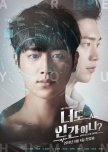
Perfect for my inner science fiction nerd that also likes a little romance
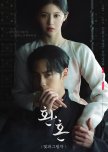
10/10 is my rating. I really liked both the male (Seo Kang-jun) and female (Gong Seung-yeon) leads in this drama. This 2018 South Korean drama spans 36 episodes (although most places you watch it the episodes are combined with 18 episodes with a "split" in the middle and they wind up being about an hour so equivalent to most that would just run 18 episodes). It explores the very complex issue of when robots become so complex that they are virtually indistinguishable from humans can humans develop feelings and relationships with them. Dr. Oh (Oh Laura) is a mother and a robot scientist well ahead of her time. When her husband dies/commits suicide/is murdered (that is part of the mystery) the grandfather takes her young son who will be heir to the family business and fortune. He puts mother and son (Nam Shim) in a position where neither feel they can subvert the grandfather's wishes without harm coming to the other. Still grieving over the loss of her husband and her separation from her young son, Dr. Oh develops robots to mirror the image of her son as he grows. When tragedy strikes she has the robot stand in for the real Nam Shim to hold his place in the line of succession.spoiler 🚨 Nam Shim's female body guard (Kang So-bong) and many of Nam Shim's co-workers try to figure out why the son seems to undergo a dramatic change in character (for the better). Slowly the body guard begins to develop feelings for the robot thinking, at first, he is human. When she discovers his secret you wonder if her feelings will change. The male lead plays both the human and the robot so masterfully they really seem like two distinct characters. There is not so much a chemistry between the male and female leads (that would be a bit weird) as there is just this sense of two that perfectly complement each other. There is a villain, of course, who tried to kill Nam Shim once (which is the reason he is in a coma) and threatens to kill and/or remove anyone who gets in his way. I really liked this one because it is like a window to the future and questions what it means to be human. It was not hard to understand So-bong's feelings as many of us develop some emotional attachment to objects in our life such as our car or maybe our electronic vacuum. And those are simple and cannot respond back to us. I liked this drama the entire way through and was sorry when it ended as I so enjoyed my time with these characters. I thought it ended nicely and all of the major plot points were wrapped up. This is up with my all time favorites and I highly recommend it.

If you just think of it like a stage play it is less disappointing
My rating is 8/10Bon Appétit, Your Majesty is an entertaining and amusing historical drama with a fresh twist, blending time travel, palace intrigue, and a heavy dose of culinary flair. The 12-episode series kept me engaged throughout with its lighthearted take on familiar tropes, offering comedic elements that set it apart from typical historical dramas. The romance between Han Yu-ri (Kim Seo-ha) and King Lee Chan (Lee Je-hoon) isn’t particularly sizzling, especially in the early episodes, but it builds to a satisfyingly sweet conclusion. The show leans heavily into cooking, particularly in the first half, making it a delight for fans of period dramas, time-travel narratives, and cooking shows. While it’s not a series I’d rewatch endlessly, it was a fun one-time watch that I’d recommend to those who enjoy period settings with a quirky, culinary spin.
Spoilers
The show requires a bit of a stage-play mindset, as some plot points stretch historical plausibility. Han Yu-ri’s (Kim Seo-ha) brazen, disrespectful speech toward King Lee Chan (Lee Je-hoon) and other royals would’ve been unthinkable in a real palace setting—other royals would’ve never tolerated it, even if Lee Chan himself was unbothered. Yet, she faces no serious consequences, which feels unrealistic. Lee Chan’s early brutality, like imprisoning Yu-ri in stocks, makes it hard to buy her quick forgiveness and budding feelings for him. His initial unlikability is intentional and well-executed, but with only 12 episodes, the turnaround to a believable romance feels rushed and less compelling.
The show leans heavily into the “magic” of Yu-ri’s cooking, which borders on fantastical—her food convinces reluctant eaters and nearly heals the crown prince, which feels exaggerated even for a comedic drama. The cooking competition, while a fun centerpiece, is blatantly forced but works if you embrace the show’s playful tone. Yu-ri’s character, while a talented cook, comes off as foolish in other areas, especially her ignorance of royal etiquette despite being in a palace. Her lack of shock at time-traveling to the past is odd, and her obsession with finding a book to return to the future feels illogical—she has no evidence it’s a two-way trip or that she could bring others, yet she clings to this idea. And not in a just “this is my only chance” type mindset but it seems she thoroughly believes it to the extent she acts as if she can just bring others along.
The ending has highs and lows. The climactic fight where Lee Chan battles his uncle is tense, but Yu-ri’s inaction—standing there fixated on the book while he’s fighting for his life—feels frustrating, though she redeems herself by throwing herself in front of a sword. Lee Chan’s arrival in the future is a sweet touch, but the show glosses over how it happens, leaving it to a vague “missing page” in the book. My daughter, who watches dramas with me, felt the writers deliberately trolled us by raising the question of how he time-traveled and then dismissing it without explanation. It’s also disappointing that history still records Lee Chan as a tyrant who mysteriously disappeared. While he did harsh things early on—understandable given constant assassination attempts—his later redemption makes the tyrant label feel unfair, and I wished the show had shown history altered to reflect his growth. He could have willingly stepped down after restoring his name.
The reincarnation of past characters as identical modern counterparts is another unanswered question, adding to the silliness. How did that happen? Other reincarnation tropes always have them with the same “soul” but their bodies typically look different.
The 12-episode length suits the story’s light, whimsical nature, but it limits the depth of Yu-ri and Lee Chan’s romance. While sweet by the end, their connection doesn’t feel like they’re utterly devoted, making it less emotionally gripping. Still, for what it is—a quirky, cooking-centric time-travel romp—it’s enjoyable, if not a masterpiece.
A huge round of applause from me that Netlix, for once, did not throw a bunch of “woke” elements in this time. Maybe a tiny bit with her “I am woman hear me roar” sassiness in the beginning but it wasn’t overt like they do a lot of times when they throw in something that is either inaccurate for the historical frame or just doesn’t fit the plot. At least they didn’t do that this time.
Synopsis
Year: 2025
Number of Episodes: 12
Runtime: Approximately 1 hour per episode
In this delectable fusion of time-travel fantasy and historical romance, Bon Appétit, Your Majesty transports the ambitious modern chef Yeon Ji-yeong (Im Yoon-ah) from the cutthroat kitchens of contemporary Seoul to the opulent yet treacherous Joseon palace during a tyrannical king's reign. Thrust into the role of royal cook after a solar eclipse mishap, Ji-yeong must blend her French culinary flair with Joseon staples to appease the volatile King Yi Heon (Lee Chae-min), whose discerning palate could mean life or death. As forbidden sparks ignite amid palace conspiracies and jealous rivals, Ji-yeong's innovative dishes not only tempt the king's heart but also unravel the mysteries of his tormented past, forcing her to choose between rewriting history and savoring a love that defies eras.
Major Characters
*Yeon Ji-yeong (Im Yoon-ah): A fiercely talented French-trained chef from the present day who time-slips into Joseon and becomes the king's personal cook, using her modern recipes to survive court dangers and spark an unlikely romance.
*King Yi Heon (Lee Chae-min): The brooding, tyrannical Joseon ruler infamous for his explosive temper and exquisite taste buds, whose icy facade softens through Ji-yeong's flavorful innovations, revealing a vulnerable soul haunted by betrayal.
*Kang Mok-ju (Kang Han-na): A scheming and envious palace consort driven by ambition, who views Ji-yeong's arrival as a threat to her status and orchestrates plots to undermine the new royal chef.
*Prince Je Seon (Choi Gwi-hwa): The king's cunning and power-hungry uncle, a key antagonist who manipulates court politics and family loyalties to challenge Yi Heon's throne.
*Queen Dowager (Seo Yi-sook): The formidable and tradition-bound mother of the king, who wields subtle influence over palace affairs and scrutinizes Ji-yeong's "foreign" ways with a mix of suspicion and reluctant admiration.
*Seo Gil-geum (Yoon Seo-ah): A kind-hearted palace maid who forms a fast friendship with Ji-yeong, providing loyal support and insider knowledge to help her navigate the treacherous royal household.
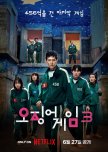
Knew better than to expect happy but an ending would have been nice
Review with SpoilersMy rating for this third season is a 7/10.
After the relentless tension of Season 1 and the slow-burn rebellion of Season 2, I dove into Squid Game Season 3 expecting a climactic endgame—a moment where Seong Gi-hun (Lee Jung-jae) would finally topple the sadistic machine behind the games. Creator Hwang Dong-hyuk hyped this as a “devastating conclusion,” and he wasn’t kidding: the season is a blood-soaked descent into despair that makes the earlier seasons feel almost restrained. But devastation doesn’t equal satisfaction. Season 3 cranks the gore and psychological horror to soul-crushing extremes, introducing a newborn baby into the carnage and pushing moral boundaries past the breaking point. Yet, it sacrifices coherent character arcs and narrative payoff for a bleakness that feels more exhausting than profound. Seong Gi-hun’s (Lee Jung-jae) near-catatonic guilt and baffling choices left me frustrated, and the finale’s hollow sacrifice only deepened the disappointment. It’s a visually stunning, thematically raw story that mirrors society’s moral decay but stumbles over its own cynicism, leaving me desperate for a mental cleanse.
When Season 3 hits, it hits. The production value is jaw-dropping—every frame drips with dread, from the neon-lit arena to the island’s claustrophobic bunkers. The new games are nightmarish inventions: the knife-filled hide-and-seek traps players in a maze where “seekers” wield blades, turning every corner into a potential slaughter. The jump rope game, played with a massive cable that crushes instead of trips, is a grotesque spectacle, its rhythmic thuds syncing with the players’ screams. The “Sky Squid Game” platform challenge is a final blow in an already emotionally gruesome cadre of horrific one upmanship. You sort of know the outcome as the "Os" have already shown they were psycho before they got there. No sidebars between them and horrific murderous acts has not improved their characters.
Thematically, the season is a brutal mirror to our world. The inclusion of Jun-hee’s (Jo Yu-ri) newborn is a stroke of twisted genius—her labor during a game forces players to protect her while dodging death. The baby’s cries become a haunting motif, symbolizing innocence crushed by systemic greed. The murder of their friend who had protected them to that point, by the baby's father was stunning. I thought I couldn't be more shocked after all we viewed in the other shows but I was. The mother-son duo adds another layer of heartbreak; their desperate alliance unravels as the games demands betrayal. These elements elevate the stakes beyond Season 1’s cash-driven desperation, exposing how far humanity can fall when greed and survival trump morality. The VIPs, now more prominent, are cartoonishly vile yet chillingly plausible—think tech billionaires wagering crypto fortunes on human lives. Their masked revelry, sipping champagne as players bleed, feels ripped from headlines about untouchable elites.
But here’s where my frustration kicked in, it with Seong Gi-hun (Lee Jung-jae). His performance is magnetic—those hollow eyes scream a man broken by guilt—but the writing traps him in a mental fog for way too long. After his failed Season 2 rebellion, where a trusted ally (revealed as Player 001, Il-nam’s successor, played by Gong Yoo) betrayed him, Gi-hun is paralyzed by self-blame and obsession with that traitor’s role in the collapse. He’s convinced the failure was his fault, yet also fixates on Il-nam’s lingering shadow, muttering about how one man’s greed doomed them all. This internal spiral renders him nearly comatose for the first half, sleepwalking through games while others die. As a viewer, it’s maddening: Gi-hun was our beacon of defiance, the one who dared to fight the system with a plan that could’ve saved hundreds. Seeing him reduced to a passive observer feels like a betrayal of his arc. One scene has him staring blankly as Jun-hee (Jo Yu-ri) begs for help during her labor, and I wanted to scream, “Snap out of it!” Lee Jung-jae sells the trauma, but the script overplays it, sidelining our hero when we need him most.
The detective subplot with Hwang Jun-ho (Wi Ha-joon) is an even bigger letdown. You’d think a seasoned cop would be sharper, but Jun-ho’s arc is a masterclass in narrative faceplants. His mission to infiltrate the island and unmask the Front Man (Lee Byung-hun), his own brother, sounds thrilling—until it isn’t. Jun-ho blindly trusts a shady captain (a new character, Kang Min-soo.
Did it end? It sure did not feel like it. We see they are still recruiting. None of the orchestrators were brought to justice. And there are a bunch of untied loose ends. The North Korean soldier woman is headed to China to potentially find her baby. The detective is given a baby and some money. Is he going to raise the child? It seems the structure still exists and we don't see any authorities rushing in and finding evidence. It felt very unfinished. And the one person who truly wanted to end the game is now gone. The Mr. "Why" detective seemed only interested in going to the island again and shouting why at his brother. Not sure what that accomplished but he sure did not seem that determined to end the game. So what? That is an end? It felt like a pause.
Synopsis
Season 3 finale released on June 27, 2025, with **6 episodes** averaging **60 minutes** each, delivering a disturbing crescendo of psychological horror and societal indictment that dares you to qestion your own role in the spectacle; if the first two seasons' thrills hooked you, this one is a bit of must watch as it does tie up some things
With the rebellion crushed and alliances in tatters, a broken Gi-hun awakens handcuffed in the players' dormitory, his quest for vengeance now a desperate bid for survival in the final, most sadistic iteration of the Squid Games—where floral fields hide lethal traps, VIP spectators wager on human frailty, and a newborn's fate hangs in the balance amid escalating betrayals, including a traitor in the detectives' ranks and a shocking international recruiter who seals the saga's grim reflection on complicity.
**Major Characters:**
- **Seong Gi-hun (Player 456) (Lee Jung-jae)**: Tormented by self-blame and the weight of lost allies, the once-idealistic survivor channels raw fury into a last-stand infiltration, his unraveling psyche blurring heroism with madness as he confronts the games' architects head-on.
- **Hwang In-ho / The Front Man (Lee Byung-hun)**: The iron-fisted overseer, haunted by his brother's dogged pursuit and his own faded ideals, enforces the endgame with chilling detachment, his fractured family ties exposing cracks in the unyielding facade of control.
- **Hwang Jun-ho (Wi Ha-joon)**: The rogue detective, now leading a fractured team plagued by internal betrayal, risks everything in a high-stakes island assault, his unyielding quest for truth clashing with the lethal cost of proximity to the organization's core.
- **Park Jung-bae (Player 390) (Lee Seo-hwan)**: Gi-hun's loyal bar-owning confidant, thrust into the arena by debt and friendship, whose steadfast camaraderie provides fleeting hope amid the carnage, only to underscore the games' toll on unbreakable bonds.
- **Kim Jun-hee (Player 222) (Jo Yu-ri)**: A resilient young mother-to-be entangled in the new games, her fierce protectiveness over her unborn child fuels cunning alliances and moral stands, turning personal stakes into a poignant symbol of innocence at risk.
- **Hyun-ju (Player 120) (Park Sung-hoon)**: The bold transgender ex-sex worker, hardened yet hopeful, leverages her street-honed instincts and vulnerability to challenge biases and forge solidarity, her arc a defiant cry for dignity in the face of systemic erasure.
- **Jang Geum-ja (Player 149) (Kang Ae-sim)**: The sharp-tongued granny con artist, blending maternal grit with sly manipulations, becomes an unlikely matriarch of the survivors, her foul-mouthed wisdom cutting through the despair like a knife.
- **Park Yong-sik (Player 007) (Yang Dong-geun)**: The anxious, gadget-obsessed gamer boy, saddled with familial debts, whose nerdy ingenuity shines in tech-twisted challenges, evolving from wide-eyed panic to reluctant backbone for the group's underdogs.
- **The American Recruiter (Cate Blanchett)**: A commanding, enigmatic femme fatale who lures high-profile marks with icy allure, her brief but magnetic presence amplifies the games' global reach, delivering a dramatic capstone on exploitation's borderless hunger.
- **Captain Park (Oh Dal-su)**: The duplicitous police captain harboring a treacherous secret within Jun-ho's squad, his oily charm and hidden motives unravel the investigators' fragile unity, embodying the rot of corruption from within.
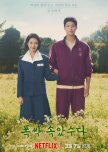
"The Notebook" level of sad, such a harsh slice of reality yet beautiful and masterfully done
Review9/10 is my rating. This is "The Notebook" level of sad. "Marley and Me" and any other sad show you can think of that was super good, well written, engaging but really sad. There is nothing wrong with it. I just am not a fan of shows that are so real they are sad because they match the sad aspects of reality. I watch shows to escape the sad reality. So this show was masterfully done. The love story is heart warming. It is well acted. Well scripted. Everything about it is amazing. But I probably would not watch it again. Not because it wasn't good. But because one time on that emotional roller coaster was enough. I would recommend it with a warning label. If you are someone that doesn't like sad then maybe think seriously about watching this one.
Spoilers
This is "Notebook" level of sad. I loved her mother so much that I was super sad when she died at only 29. I mean, come on, 29. And then main girl is an orphan. And no one really wants her. That is horribly sad. Then, she grows up a little, still without really much of anything and clings to the one lifeline she has which is main guy. And they have this beautiful love story and you hope their lives will get off to a good start. But no. First his mother and grandmother are horribly abusive to her. And then he finally takes her out of that situation and they have their own place. Only they are starving. Then he is horribly abused and winds up disfigured from the ship captain who was jealous of him. And then they tragically lose their child. Yet they keep bouncing back and finding ways and through it all is their very strong love for each other and their kids. Then the kids grow up and are horrible to them. Say the most hurtful things. And then they finally have just a little bit and he has cancer and dies. And now she is all alone without him.
Real? Yes. So real. I grew up poor and can say that desperation and hopelessness are a thing. Losing a child? Lifetime devastation.
Scroll down for a unique synopsis
Synopsis
We don't often see Jeju Island in its earlier days, but this one is set on the island in the 1960's. Things were not the same for women back then particularly not impoverished women who lost their father at a young age, with a mother who remarried. So, Oh Ae-sun's (IU)'s life starts off difficult. Despite the challenging background young Ae-sun dreams of going to the mainland and becoming a literature major in college. A series of unfortunate event occur to Ae-sun starting with her haenyo (diver) mother, Jeon Gwang-rye (Yeom Hye-ran) dying at the young age of 29. And now she goes from being a child with only one parent to being an orphan. Her friend and fierce admirer, Yan Gwan-sik (Park Bo-gum) has always been there for the spirited girl, feeding her fish from his families business as a show of love. Her dream is to become a scholar; his dream is her. Be prepared for a story that is not linear in anyway it flashes forward and back and from location to location. It is an emotional roller coaster. You might laugh and cry at the same time. It takes a deep dive into the life and the culture of that region at that time through the eyes of a young woman trying to forge a different path.
#WhenLifeGivesYouTangerines
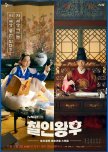
Very comedic yet maintains a serious and engaging plot
9.5/10 is my rating. This is a 2020/2021 South Korean Historical Romantic Comedy with paranormal elements. There are 20, 70-90 minute episodes. It is also known under the web comic name "Go Princess Go".
In the modern age Jang Bong-hwan (Choi Jin-hyuk) was a star chef at the Blue House until one of the dishes he made was dangerously sabotaged and he was nearly arrested. While escaping arrest he falls into a swimming pool and wakes up to find himself not only in the Josean era but in the body of a woman. And not just any woman but a woman who, in days, will become Queen. Queen Cheorin (Shin Hye-sun) somehow wound up in the lake and part of Bong-hwan's goal is to get back to the lake and get his former self and life back. Only one problem - the lake was drained after the incident under the Dowager Queen's order and she is not immediately willing to refill it. Luckily Bong-hwan/Queen Cheorin is able to use her cooking skill to win favor with the dowager to get the lake refilled. Bong-hwan had not heard good things about King Cheoljong (Kim Jung-hyun) from the history books and figures he will be easy to manipulate. However, it seems there are reasons why history recorded him as a weak king and a prolific womanizer. Things are not all they seemed from history and Bong-hwan/Queen Cheorin have their work cut out for them to sort through the mess and make it back to the future. There is more to King Cheoljong than meet the eye and keeping your friends close and your enemies closer seem to be the rule of the day for Bong-hwan. Will Bong-hwan be successful in returning to his own time/body and will the sparks that fly between King Cheolijong and his curious and spirited wife become something more?
I laughed so hard in the beginning of this. His horror at being in a female body coupled with him trying to submerge his head in every bit of water to “get back” was funny. spoilers***
At first I really liked her cousin as second guy as he seemed sweet and caring but his character got darker as time went on to the point I no longer wanted to see her with him. The historical information the chef knew about the king was interesting. According to the modern time history books he was not a very good king and was only interested in women. Queen Cheorin originally found that she was supposed to be only there as a convenient marriage to keep a power structure in place and the king was not at all inerested in her because she was associated with a very corrupt and powerful family. The king’s love interest in the beginning was his concubine and since the queen was now actually a man in a woman’s body she was perfectly fine with him directing his attention elsewhere. Ironically the fact that she was so disinterested in him was something that piqued the king‘s interest. The queens somewhat bizarre behavior and interesting antics wound up endearing her not only to the king but to a lot of the palace servants as well. I liked how the relationship between the king and the queen evolved over time and each character had a lot of character growth and development throughout. There were some truly villainess and evil people in the palace and they were constantly after the king and also the queen to take as much power for themselves as possible. In fact when they discovered the king was not the convenient figurehead they thought he was it became their goal to get rid of both the Royals. The queen discovered why the king was the way he was and that in reality he was very capable and working behind the scenes to try to take down the evil and corrupt family behind the royal structure. The entire series held my interest from beginning to end. The only thing I did not like was the chef left the queen‘s to return to modern times and it felt like the queen was not fully the person the king had fallen in love with. Also now the chef is back in modern times and you assume he returned to his previous lifestyle which did not seem all that good. It felt like you spent a long time getting to know the queen who was a combination of the girl and the modern day chef and even though they tried to illustrate that she still remembered a lot of how he was it still did not fully seem like the same person. To me it felt like both the king and the chef were cheated out of a relationship they developed. Since the he was in a she body then it wasn’t like a male to male relationship it was like a female to male relationship with a female that just happened to be a little more masculine in her thinking. It seemed to me that they returned him to modern times leaving the body fully to the queen just to avoid any to male to male overtones. Love is love so I did not see any gain from having the queen changed at the last minute to being only partially what she had been when the queen king fell in love with her. The chef’s return to modern times also meant he could look at history and see it changed but that would have been obvious even if he stayed in the past. Overall it is still very good and I would highly recommend it as one of the funniest and most engaging Korean dramas.
i
Answers all the questions and beautifully continues and nicely ends the story
9/10 is my rating. This is a 2022/2023 South Korean Action, Fantasy romance drama with 10, 69-87 minute episodesFirst I provide a Unique Synopsis then review
Synopsis
If you watched the first season and experienced the cliff hanger and tragedy that was the ending, be reassured season two will resolve all that. One could just let things end where they did but why? This continues the story. Jang uk (Lee Jae wook) survived but is now dressed and acts in a very dark manner (shadow). As the most powerful mage in Daeho, he is charged with hunting down and executing soul shifters. Doing so takes an additional emotional tax on him as he is able to see who that person was before going “wild” and erects rock cairns to honor the departed. His nights are spent being “haunted” by wraiths and the memories of his love he lost. When chasing a soul shifter into Jinyowon leads to a chance encounter with Jin Bu yeon (Go Youn Jung) the recently found daughter of Jin Ho Gyeong (Park Eun Hye), the two form an unlikely alliance. Bu Yeon has spent the last 3 years locked in Jinyowon to hide her true identity from the other mages. Jang uk knows that if he can get rid of the ice stone his life will end and he believes Jin Bu yeon will be able to do that. Jin Bu yeon wants freedom as her mother’s plan is to keep her locked away yet have her marry and produce offspring to continue the Jinyowon.
Season two continues the story with all the characters and you find out what happened with them in the three years since the events that happened at the end of Season 1.
Review
I loved this series. I highly recommend it and will watch it again. I am a huge fan of Star Wars and Star Trek and other such otherwordly shows so the complete other world built in this seres greatly appealed to me. I was concerned that the main actress in this second season was different than the primary actress in the first but in the context of this show it makes perfect sense. It did not disrupt my like or feeling for that character at all i just found myself waiting for the aspects that were Naksu like to emerge.
Spoilers
I seriously liked the complexity of the soul shifters in this series. In Season 1, Mu deok (Jung so min) is a character unlike either her original self, Cho Yeong, the assassin Naksu (Go Youn Jung) nor the soul from the body she inhabits, Jin Bu yeon. It was so skillful both in the script and in the way the actresses portrayed these characters how you could, at times, see aspects of each of those souls and, other times, see a individual that was all of them and none of them. Finding out, towards the end, that because Jin Bu yeon lived and didn’t die as a stillbirth only because Seol ran, the original and very powerful priestess actually controlled a lot of what happened with those souls. It is why Bu yeon was born blind as Seol ran was blind, and also why she was more powerful than any of the priestesses in her blood line.
It was my fond wish that others would learn the truth about Naksu and I was very happy that it was revealed that she was tricked into being an assassin and then used as a murder weapon through sorcery by Jin Mu (Jo jae yoon). There was so much hatred toward even her memory that I found that incredibly tragic. I was sad that Seo Yul (Hwang Min-hyun) had planned to kill Bu yeon when he discovered she had the soul of Naksu as his view on the situation was so cut and dry. It made sense for his character to thin that way and actually was the reason I felt less sad he never got to be with the girl he loved. He was one of the few loose ends in the story as it would have been even better if he would have found someone who loved him enough he would get over Cho Yeong (young Naksu).
I have to commend Do Sang-woo the actor who played the soul shifted Jin Mu. The expressions on his face and even his voice transformed to Jin mu and that took a lot of acting skill to carry that off so well. He was an annoying side character as Seo Yun oh that was power hungry and arrogant and was able to kick that up to the level of Jin mu’s evil sorcerer level in a very believable way.
The friendships that developed were such a wonderful part of this series. Jang uk was already close with his childhood friends Seo Yul and Park Dang-gu (Yoo In-soo). But, as the series develops his relationship with Crown Prince, Go Won (Shin Seung ho) becomes closer and friend/family like (and he is sort of the cousin of the Crown Prince depending on whether you consider the father the soul or the body. Go Won seems destined to befriend Naksu as he is intrigued by, and befriends her, in her many forms.
I really liked that he became the King and that Jang uk wanted him to be the king and fully supported him. The writers and creators had an well executed twist when they led viewers to think that Go won had joined Jin Mu’s dark plans.
There are a lot of flashbacks that seem unnecessary and disrupt the flow of the show but that is just Netflix. When these shows are created or sponsored on any of the streaming platforms I expect there will be certain deviations from the formula that has made Asian dramas so successful. There will be flashbacks galore (that does happen in the Asian shows but it is an order of magnitude), the scenes with kissing or skin contract will be a degree more risque and it will end with question if there will be additional seasons or not. I read that the Hong Sisters themselves indicated they did not plan beyond Season 2 so I think any indicators of a Season 3 are likely rumors. There is so much they could do with Daeho, prequels and side stories, but I hope they let the main story remain completed as it is.
I could continue on about this excellent series but will stop there. I just finished Season 2 and miss Daeho already.
#LeeJaeWook
#GoYounJung
#AlchemyofSouls2
#ShinSeungHo
#DoSangWoo
#JungSoMin
Given the True Nature of Royalty, no fairy tale was expected
My rating: 10/10Review
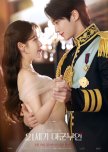
I actually delayed watching The Perfect Crown because I had seen several reviews mentioning that certain story decisions made the ending disappointing. Then I kept seeing it appear on "best of" lists, and my curiosity finally got the better of me. I decided that even if it didn't end the way I would have preferred, I was going to give it a chance. I'm really glad I did.
This drama was incredibly entertaining from beginning to end. I loved the characters, and the premise of a Korean monarchy surviving into modern times was such an intriguing "what if" scenario. It wasn't just a romance. It blended mystery, political intrigue, humor, and a surprising amount of action into a story that always felt engaging.
There were also elements that reminded me of the Princess Diana era of the British royal family. While the situations were obviously fictional, the exploration of public expectations, royal duty, media attention, and the burden of status felt surprisingly grounded. The series also explored class distinctions and privilege in thoughtful ways without ever allowing those heavier themes to overwhelm the pacing. It managed to ask meaningful questions while still remaining an enjoyable romantic drama.
Another strength was its characters. Most weren't written to be morally ambiguous simply for the sake of appearing complex. Instead, they grew naturally in both positive and negative directions as life shaped their decisions. That made them feel more believable because people aren't static. They evolve based on the choices they make and the experiences they endure.
I can certainly understand why some viewers disagreed with one of the drama's biggest story decisions, but for me it never diminished the overall experience. Other reviewers were often divided over the ending, while many praised the performances, chemistry, and unique premise. I ultimately fell firmly into the latter camp.
This is a drama I'll happily watch again someday. If someone else had it on, I'd gladly sit down and watch it with them, and I would recommend it to anyone who enjoys romance, political intrigue, mystery, fantasy, or modern fairy tales.
Spoilers
The biggest point of criticism I saw from other reviewers—and the reason I delayed watching this for so long—was the decision to dissolve the monarchy. So many people seemed disappointed that Prince I-an wanted to abolish the crown that I assumed it would completely undermine the fairy-tale quality of the story.
Instead, I found it to be one of the most logical and noble decisions in the entire drama.
The series spends so much time exposing the darker side of royalty. It isn't just about beautiful palaces and elegant ceremonies. It shows how power, status, and privilege attract greed. Not just greed for money, but greed for influence, recognition, and authority. History is full of examples of people willing to betray, exile, or even kill family members for a crown. The drama explores that reality exceptionally well.
Being one of the "good" royals often means carrying enormous responsibility while enjoying very few of the benefits. At the same time, the entire structure inherently creates social classes where some people are viewed as superior simply because of birth. I-an had experienced firsthand how destructive that system could become. To me, a character like him was never going to preserve it simply because tradition demanded it. Dissolving the monarchy wasn't abandoning the fairy tale—it was the natural conclusion of everything the story had been building toward.
My only real disappointment was that I wish we had spent just a little more time with Hui-ju (female lead) and I-an (male lead) as queen and king before everything changed.
It almost felt like watching someone climb a mountain only for the story to end just as they reached the summit. I wanted a little more emotional payoff. I wanted to see Hui-ju enjoy that position for a while after everything she endured. Maybe that's a little bit of social revenge on my part, but I wanted to see her finally have the authority to dismiss the people who had looked down on her throughout the series. I especially would have enjoyed seeing her outrank the Queen Mother, even if only briefly.
The epilogue showed enough of their future together that I was satisfied with where they ended up. My only small disappointment involved the modern interpretation of their happily-ever-after.
I wasn't particularly thrilled that I-an became a house husband while Hui-ju returned to being almost entirely career-focused. To me, it leaned back into the modern "girl boss" trend where the successful woman is so consumed by work that they still haven't started a family while her husband quietly waits for her attention. That simply isn't my favorite type of ending.
Personally, I would have preferred to see them become more of a true partnership. Maybe I-an could have taken on an important role within the company so they worked together as equals. I like relationships where both partners contribute in different but equally meaningful ways. I think that would have better reflected how much they had both sacrificed throughout the story.
I also really appreciated that Hui-ju and her brother ultimately reconciled. Their relationship could have easily remained bitter, but instead they both experienced meaningful growth. Likewise, I was happy that her father ultimately proved to be a genuinely loving father despite the complicated circumstances surrounding their family.
The only aspect that left me wanting a little more was Hui-ju's overall character arc. I-an gave up virtually everything—not only for her, but for the future he believed was right. Meanwhile, Hui-ju ultimately returned to being the same intensely career-driven person she had been at the beginning of the series. While she certainly grew emotionally and learned to trust others, I don't think her priorities evolved quite as much as his did.
Even so, these are relatively minor criticisms in what I thought was an outstanding drama. None of them came close to diminishing my enjoyment. The romance was compelling, the political intrigue remained engaging, the mystery kept me invested, and the characters were genuinely enjoyable to spend time with. For me, The Perfect Crown delivered exactly what I hoped it would—and even surprised me in a few places along the way.

Has Deadpool/KickAss/X-Men Vibes in a good way
My Rating: 9/10As a fan of the superhero genre, I found this one incredibly interesting. I particularly like the unusual supers that take a unique spin. And this was a fit for that slice of the super hero pie. The powers are unique, and the premise—with its blended aspects of X-Men, Deadpool, Kickass vibes—kept me hooked. The villain characters were compelling, the acting was strong overall. Cha Eun-woo and Park Eun-bin are among my favorite actors. Having the two of them together was a highlight. It features a lot of great characters and actors, making it enjoyable just for the cast alone. It wraps up well enough to stand on its own but leaves a bit of room for more, in Netflix fashion. I am not a fan of open ended but this was not completely open, it left possibility without leaving the ending hanging. If you like superhero stories, are a fan of any of the actors, or just want something a little different that isn’t heavily romance-focused, I definitely recommend it.
Spoilers
It was a minor annoyance that it took them so long to learn how to use their powers effectively. I had the most fun toward the end when they figured it out and became more capable. I understand they stretched it for comedy, but it felt a bit slapstick at times. They portrayed the female lead character, Eun Chae-ni, (Park Eun-bin), as kind of simple or not the brightest at first, but I was hoping for (and glad to see) some underlying intelligence—she grew into it, and her character felt complicated in a good way.
I had a hard time understanding, as an American, why the lead male character, Lee Un-jeong (Cha Eun-woo), would give up a friend for a mother who had never been around, but I recognize that as a cultural thing. Wasn't ever sure exactly what happened with the mother, if she gave him up willingly, he was "kidnapped" or what. But, in any case, he turned Chae-ni over for a chance to see/know what happened with his mother. Harsh.
I thought for the longest time that the sticky guy character, Son Gyeong-hun (Choi Dae-hoon) wasn’t very useful, but his ability turned out to be very handy in the end. Like I said it was more fun, to me, when they learned how to fully use their superpowers.
I don’t know what it is with the stinky/shower-averse characters in these dramas lately—I know she had been traveling or whatever, but it was kind of weird to lean into that so much. Not sure why they did it; I wouldn’t have thought much of it, but there was another drama where they commented on hair stinking, and as a very clean person, I found it disturbing (others might not notice as much). It was supposed to be funny, but rubbing her stink on him - ooh.
I’m a hopeless romantic, so of course I would’ve liked more romance. There was a little—just enough not to annoy non-romantics you might watch with—but I love both leads in romantic roles, so it was hard not to want more. The kiss and the hug were both heartwarming. But, I think they made a great couple so would have liked more. Maybe if they do have a second season.
I loved the actress who played the grandmother character Kim Jeon-bok (Kim Hae-sook) and her role here.
Some of the wonderkinder turning more villainous was an interesting dynamic. The setup with some developing almost Stockholm syndrome toward the evil doctor felt believable, as that’s a real phenomenon.
If someone had this on, I’d definitely rewatch it. I may even watch it again myself in the future, though with so many options it’s hard to return to things. I thoroughly enjoyed it. If they do a second season, I’ll likely watch—unless I hear it’s really horrible—but they have plenty of material for more.
One of the Most Heartwarming Series I have seen (and I have watched over 400 at this point)
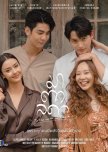
My Rating: 10/10This is a beautifully heartwarming romance filled with vivid, deeply lovable characters you quickly grow attached to. It explores themes of kindness as a transformative force—how consistent gentleness and compassion can soften even the hardest hearts and shift attitudes in meaningful ways. The story also celebrates found family, genuine friendships, and building the supportive relationships we all crave.
If you love feel-good romances that leave you smiling and a little misty-eyed, this one is absolutely worth watching. It balances emotional depth with lighter, joyful moments and handles more complex themes with surprising grace. Several characters are transvestite, but they are integrated naturally as important parts of the story rather than feeling shoehorned in. For me (and I’m religious), it was one of the most tasteful and respectful portrayals I’ve seen—it doesn’t preach or force a viewpoint, and the characters’ kindness and humanity shine through regardless of background. The exterior details ultimately matter far less than the goodness within, and that message only enriched the central romance instead of distracting from it.
If you’re open to stories that mix sweet romance with reflections on family dynamics, personal growth, and chosen family, this is a standout. Highly recommended.
Spoilers
The only minor element that stood out (though not enough to detract from my perfect score) was how negatively most marriages were portrayed. From a cultural perspective as someone from the US, it was also jarring to see the overbearing, sometimes emotionally and physically abusive parental dynamics common in the story—though the show doesn’t present these behaviors as good or ideal. Understanding a bit about Thai cultural context around family hierarchy and even informal mistresses helped frame it, but it still felt heavy at times.
That said, the characters more than made up for any discomfort. Mata (female lead) was an absolute delight—a free-spirited, kind-hearted force of nature who operated from a place of genuine love, largely thanks to her wonderful father. Watching her gently dismantle the grandfather’s gruff exterior and win over difficult people through unwavering kindness was one of the most satisfying arcs. She served as a balm for the male lead, who had endured harsh treatment from his own father (with his mother not intervening until later). Their growing connection, and the way her family acted as a mirror highlighting healthier ways of relating, was deeply moving.
Grace (another key character) felt like kindness personified—she embodied many of the compassionate ideals I associate with strong moral teaching, gently encouraging others to respond with understanding rather than anger. I also really appreciated learning the backgrounds of the transvestite characters; revealing them as highly educated added welcome layers and avoided stereotypes.
The cousin Try’s storyline was tragic and affecting. His mother’s past cruelty (especially the mental abuse toward him) was hard to watch, and while his forgiveness made sense given the cultural and familial context, it was tough for me to fully accept—she never seemed to take full accountability. I was glad he didn’t end up romantically with the woman originally intended for an arranged connection with the male lead. Both are quite broken, and the story wisely seemed to position them as friends rather than partners. The hint that Try might connect with her friend (someone who could help him grow while he boosts her confidence) felt much healthier and more hopeful.
The dogs were surprisingly wonderful additions to the story! Olive’s slow acceptance of the female lead was almost as rewarding as the main romance’s solidification. The dogs served as perfect litmus tests for character—people the dogs trusted were almost always good at heart.
I loved the nosy, initially hostile neighbor’s transformation through persistent kindness into a true friend and advocate. The party scene where the father tried to humiliate Mata was intense, but it became a powerful turning point, prompting the mother to finally step up for her son.
The male lead was wonderfully written too—kind despite his upbringing, with a strong support network of doctor friends at the hospital. Their gentle (and sometimes not-so-gentle) pushing regarding his feelings for the other doctor was adorable. The hospital staff’s protocols for dealing with his chaotic family members added realistic texture, while their warm care for Mata’s father was touching. The heart operation scene with the father carried beautiful symbolism about kindness and healing. I also enjoyed the subplot with the friend, the father, and the grandmother—watching them confront past mistakes and rebuild into a loving family was hopeful and satisfying.
Overall, the romance, the emphasis on chosen family, the power of kindness, and the growth across so many characters made this an incredibly rewarding watch. The beautiful central love story, supported by all these rich relationships (human and canine!), is what I’ll remember most. A true 10/10 for me.

I looked forward to the bento reveal as much as the characters did
10/10 is my rating (my daughter says 9/10)My daughter and I watched this Japanese drama together as drama buddies who enjoy bonding over stories, and it quickly became one of our favorites. As a relatively new fan of Japanese content (just a few years)!, I’ve been catching up on dramas while she has a solid 10+ years of manga, webtoons, and anime under her belt. We bring different perspectives—she’s seen similar plots many times, it is fresher to me but we both adored this one. I gave it a full 10/10, and she rated it a 9/10. I'll explain a bit more below. It’s a delightful, heartwarming romance packed with engaging storytelling and so many genuinely cute moments that it’s worth watching just for those alone.
If you love Japanese romance dramas, well-acted stories, or anything centered around the gaming industry, this is a must-watch. The leads (Inoo Kei as the male lead and Matsumoto Honoka as the female lead) deliver fantastic performances that make their connection feel real and endearing. I highly recommend it!
Spoilers
One of the first cute moments happens right at the start when the female lead (Karashima Naho) spills coffee on the male lead’s (Amami Haru) shirt. This was during a "catch fall scene" He pretended to be upset while secretly thrilled because it gives him an excuse to have her make bentos for him for 30 days. His interest was immediate so her being the "perpetrator" that needed to repay him, the "victim" (his titles in his feigned outrage) provided an excuse for him to get to know her better. He was genuinely distressed when the maid sent the shirt out and the stain had been removed! I’ve seen other shows drag out similar secrets to the point of near-breakups, but here the male lead (Amami Haru) is so sweet—he tells her right away, and they happily continue the bento tradition anyway. That scene really sets the tone for the many adorable, low-drama interactions between them.
The female lead (Karashima Naho) has such a sunny, warm personality that she makes the male lead (Amami Haru) feel safe and confident. You can tell she cooks her bentos with real love and thoughtfulness, and he feels it deeply. It’s equally touching when he starts wanting to make bentos for her too. I loved the little rating system with stamps they use—it adds such a charming, personal touch to their growing relationship. He has one somewhat bumbling confession where he compares her to something he really likes and she's not sure whether to be complemented or offended and it really doesn't get the point across. That was super cute. They don't make us wait long and he confesses to her for real
Their romance feels refreshingly clear and straightforward compared to some other Asian dramas. Confessions and feelings are expressed relatively quickly and honestly, which mirrors what I’ve observed in a lot of real Japanese relationship videos by Japanese people . The male lead (Amami Haru) falls first and harder, but once the female lead (Karashima Naho) falls for him, they’re both all in and nearly inseparable. It’s pure heartwarming bliss with very few conflicts, and those that exist are brief and passing. They have one little point of misunderstanding when an old friend/his psychologist comes back to Japan and is hanging around him. It seems as though she's interested and even though she says she wasn't I kind of thought she was. FL was angry/hurt with him and she makes him a bento that appears to be all broccoli. Later it was revealed in his flashback that she had buried good stuff under it like the sausages he loved and stuff because she really couldn't be mean. That characterized their relationship well even angry at him - it was sort of like getting punched by a teddy bear, But he got the point and found a way to make it up to her and the sweetest way.
Throughout I found myself enjoying their bento reveals as much as the characters seem to. I loved when it showed them cooking and all the different camera camera and angles. It really played into my inner foodie. So, if you are also a foodie that aspect might appeal to you as well. The color saturation was a bit high, which drove my artist daughter nuts, but I didn't mind it. Made it "pop" in my opinion.
The ML had so much character growth. And she was both his muse and a person that really helped him heal. I especially enjoyed how the male lead (Amami Haru) regains his inspiration and becomes a top game developer again, and how the female lead (Karashima Naho) helps him reconnect with his mom and gain some understanding there. The Japanese-style makeover scene (where he buys her outfits) and her family’s immediate warm acceptance of him—basically trying to hitch them right away—were incredibly cute. Her family embracing him and wanting to cook for him felt so wholesome.
Now to why we rated it slightly different - we had a few differing views, which made our discussions fun. My daughter found some moments a bit cheesy or overdone, while I thought that added to the charm. She also felt the male lead (Amami Haru) had more of a “pretty boy” look that wasn’t very masculine, whereas I saw it as perfect “gamer boy cute”—youthful and fitting for his character. As an artist herself, she was critical of the female lead’s (Karashima Naho) portrayed art skills and found it hard to believe she’d get a big solo project, but I was happy to suspend disbelief and imagine her even better than shown. She was also bothered by some plot conveniences (like the old man’s millionaire reveal saving the company), but I found them sweet and predictable in the best way—like an angel stepping in. One minor criticism we shared: after the emotional reconciliation with his mom (who has serious cancer), the storyline doesn’t really follow up on it. And in the end, there’s a nice opportunity for the female CEO to acknowledge the irony of trying to separate the very couple who ended up saving the company, but it’s never addressed.
Overall, this was a quick, enjoyable watch from beginning to end. The leads make the cutest couple, and the gaming world setting adds a fun, unique layer. I’d happily rewatch it anytime. If you’re looking for feel-good romance with genuine smiles, bentos, and heart, this one delivers!

Thoroughly Enjoyed this Legal Romance Drama
My Rating: 9.5/10My Boss was exactly the kind of office romance comedy I enjoy. It combines workplace drama, romance, humor, and emotional payoff in a way that feels satisfying from beginning to end. It also uses one of my favorite romance tropes: forced co-habitation. Watching the FL (Cheng Yao) and ML (Qian Heng) go from reluctant roommates and employee versus domineering boss to something deeper was genuinely entertaining.
Another thing I loved was the emotional dynamic between the leads. The FL (Cheng Yao) slowly melts the frozen heart of the ML (Qian Heng), but the progression felt natural. She likes him first, though not in some overwhelming, obsessive way. Once the ML (Qian Heng) realizes his own feelings, however, he is completely committed. I always enjoy romances where the emotional shift is obvious once the emotionally distant lead finally falls.
One of the biggest strengths of this drama is the FL (Cheng Yao). She was not written as an overly childish, cutesy, constantly whining character. She felt young and optimistic without being immature. Her deeper, slightly raspy voice and more grounded personality made her feel like an actual person instead of an exaggerated romance heroine.
I also appreciated the way the ML (Qian Heng) was portrayed. He was masculine without crossing into the aggressive behavior that some romance dramas mistake for passion. I have seen too many C-dramas where the ML violently grabs the FL, slams her against walls, or forces kisses in ways that feel more disturbing than romantic. Thankfully, My Boss avoids that completely. The chemistry between the leads works because it feels emotionally driven instead of physically domineering.
Is the story predictable? Sure, to an extent—but I honestly do not see that as a flaw. Most romance stories follow familiar emotional beats. We usually know the ML and FL will eventually develop feelings and progress romantically. That is simply part of the genre formula, just like horror stories usually involve characters being tormented before the villain is defeated. Predictability only becomes a problem when the journey itself is boring, and I never found that to be the case here.
The acting was strong, the music fit the tone well, and the pacing of the relationship felt rewarding. I especially liked the legal case elements woven throughout the drama. They added substance to the story without overpowering the romance.
Another thing I appreciated was that the show avoided excessive slow-motion staring scenes. There were emotional pauses and romantic gazes, of course, but not to the frustrating degree that some dramas rely on. Conversations actually moved forward, and the relationship developed in ways that felt meaningful. It was also not plagued by excessive flashbacks or reviews of prior incidents.
Overall, I would absolutely recommend this drama to anyone who enjoys more traditional romance stories. It hits many of the classic romance beats people expect from the genre, but for me, that is part of the appeal. It delivers emotional payoff, strong chemistry, enjoyable humor, and a satisfying romantic journey.
Spoilers
Others have pointed this out, and I do agree that the FL (Cheng Yao) stayed oblivious to the ML’s (Qian Heng’s) feelings for a very long time. At the same time, though, I understood why. The ML (Qian Heng) was extremely harsh toward her in the beginning and repeatedly emphasized that he did not want subordinates developing feelings for him. He pushed the “strictly professional” mindset very hard, so it made sense that the FL (Cheng Yao) struggled to believe him once his feelings changed. Of course, we all knew he would eventually suffer for that attitude—and he absolutely did. Watching the ML (Qian Heng) struggle while the FL (Cheng Yao) doubted his sincerity became one of the more satisfying parts of the relationship arc. I would have expected it to take longer for Cheng Yao to trust his feelings for her because she had so much to lose if she read him wrong. Not only would maintaining that job become difficult if they had tension, but it could harm her chances of other positions as well. So she was rightfully cautious in accepting his feelings. Maybe a little bit too much as it did become frustrating when she kept blowing hot and cold. But at least there was a clear reason why she was that way.
The stakes in the FL’s (Cheng Yao’s) personal life were also surprisingly serious at times. Her evil ex-brother-in-law was genuinely awful. The attempted assault scene involving her sister was disturbing and uncomfortable to watch, but it made his eventual downfall incredibly satisfying. For a while I thought the drama had abandoned that storyline, so I was happy they eventually circled back and gave him a very public and deserved takedown. She had her opportunity to defeat him court, then Qian Heng and her sister defeated him on the social stage.
One of the biggest emotional payoff moments for me was when the FL (Cheng Yao) had a client try to pressure and manipulate her, and the ML (Qian Heng) completely destroyed him without hesitation. He did not care about losing money or business opportunities—he immediately protected her. That scene was one of the most satisfying moments in the entire drama.
Let me just say "gutter oil." I saw a video on this one time and if you don't know what it is, look it up, quite horrifying really. And they don't only use it in restaurants but the food supply. Highly illegal and they don't want to get caught but still. There is this part where a rival romantic interest is trying to get him to leave and says "and you don't know this doesn't have gutter oil." It was the first time I heard this acknowledged in a drama. I was like WHAT. So, that really is a thing that they know about and "joke" about.
The dog, Megatron, also deserves special mention because that dog was unbelievably adorable. I could have watched it for the dog alone. One of my favorite scenes involved the FL’s sister recognizing that the ML (Qian Heng) was emotionally struggling and bringing him the dog as comfort. She pretended it was just because he needed to watch it, but it was clearly an act of emotional support. I loved that detail because it showed how much she understood what he was going through emotionally. And, he had been a bit stand offish with the dog when FL was watching it. But, the dog totally won him over as his emotional support buddy. That dog turned him into a dog person. So cute!
My main criticism—and the reason I cannot quite call this a perfect drama—is that I think the relationship dynamic swung too far in the opposite direction near the end. Earlier in the story, the ML (Qian Heng) held most of the emotional power. Later, it started to feel like the FL (Cheng Yao) became a little unnecessarily harsh toward him.
I also initially disliked the idea of the FL (Cheng Yao) moving to another law firm, though I understood her reasoning. She was tired of people whispering about her being “the boss’s woman” instead of recognizing her own abilities. I worried the move would put her in another toxic environment where clients or coworkers expected personal “favors.” Thankfully, the decision ultimately worked out well for her professionally.
The ending was the weakest part of the drama for me.
First, I really disliked the decision to place the wedding after the credits. If viewers did not realize there was extra content afterward, they could easily miss it entirely.
Second, I thought the wedding itself lacked romance. The FL (Cheng Yao) suddenly “finds time” to arrange the ceremony, but it felt more like an ambush than a meaningful romantic moment. She did not even wear a beautiful wedding dress. She wore a veil but was wearing jeans and a blouse I think. Which, despite the highly decorated location, made the entire scene felt oddly casual considering how emotionally invested the relationship had become.
Personally, I prefer more traditional romantic payoffs where the ML proposes, the FL accepts, and they plan a meaningful wedding together. Instead, it felt like the ML (Qian Heng) was robbed of the emotional experience of planning the wedding and seeing his bride fully prepared for that moment. I like when the ML deeply loves the FL character but not when he gets pushed around to the point of emotional neglect. And that is what it felt like. She decided when and how on the wedding, no input from him, not even letting him know and that felt very emotionally insensitive.
As if the casual nature of the wedding approach was not enough, they even briefly tried to mislead viewers with the legal-genius nephew, making it seem like he might be the child of the FL (Cheng Yao) and ML (Qian Heng). But what that revealed, in terms of the wedding, is she had to have strung him along for about seven years (her sister had to get married, go through a pregnancy and have a child about five years old). Given one of the last scenes we had before the close credits and end scene after was of him asking, again, and her not answering but kissing him. Was that a yes? Well, apparently not because he mentioned he asked many times. I did not like that. Nor find it romantic.
That said, even with my complaints about the finale, I still loved the drama overall. The chemistry was strong, the humor worked, the emotional moments landed, the legal aspects were interesting and the relationship progression remained engaging throughout almost the entire series. For me, My Boss is still one of the better office romance dramas I have watched recently.

When I find Myself Wishing for More Episodes
Spirit Fingers is a wonderful coming-of-age Korean drama that stands out as an underrated hidden gem. It delivers heartfelt growth, self-discovery, and a slow-burn romance with a classic opposites-attract dynamic, all while emphasizing personal development and emotional recovery. The series shines through its warm, feel-good energy and creative flair. It follows a shy high school girl who finds her voice and confidence through an eccentric sketch club called Spirit Fingers, where members embrace colorful personalities and imaginative themes. The club’s meetings transform ordinary spaces into vibrant, thematic “sets” with spot-on costumes and cosplay-like elements that feel magical and immersive—pure enjoyment on their own. The romance develops gradually and naturally, balancing sweet tension with genuine character growth. Supporting relationships and friendships add layers of charm, humor, and heart. The show avoids feeling overly silly or circus-like despite its playful title and cover art; once you dive in, the “Spirit Fingers” concept reveals itself as a meaningful symbol of unity and personal spirit (each member linked to a color representing their essence).Visually creative, emotionally uplifting, and packed with laugh-out-loud moments alongside quieter reflective ones, Spirit Fingers left me missing the characters and world when it ended. It’s the kind of comforting, rewatchable drama you’d happily put on again or recommend to friends. I highly suggest it to fans of romance, youth stories, and light-yet-meaningful tales about building self-esteem and finding your people. Don’t judge it by the cover—this one surprises in the best way.Spoilers
The only real detractor for me was the portrayal and resolution of Song Woo-yeon’s family dynamics, particularly with her mother and father. The parents came across as deeply toxic—Song Woo-yeon’s mother was clearly emotionally abusive toward her, constantly criticizing and tearing her down, while the father exhibited emotionally abusive behavior that felt like it could easily tip into physical territory. Comparisons between siblings in a negative light struck me as classic abuser tactics. Coming from the “spare the rod, spoil the child” generation where respecting elders was non-negotiable and parents weren’t expected to be their kids’ friends, I still believe there’s a healthy middle ground. A parent’s role isn’t to constantly criticize or diminish a child. The show leaned more into portraying them as overly stern rather than fully acknowledging the abuse, which softened the impact for me. Even more unrealistic was the quick turnaround at the end, where the family suddenly becomes supportive. In real life, deep-seated toxic patterns rarely resolve that neatly or quickly. If it were more realistic, Song Woo-yeon (and her older siblings) might have distanced themselves more permanently—perhaps her moving in with friends or leaning harder into independence, especially since her brother was already carving his own path. Other dramas handle similar situations with more permanent separation, which felt more credible here.That said, I deeply appreciated how the drama handled Song Woo-yeon’s personal arc. Her low self-esteem made complete sense given the emotional abuse from her mother. The Spirit Fingers club played a beautiful role in her growth, helping her gain confidence, learn to like herself, and finally stand up for what she wanted—insisting on staying in the club and pursuing her relationship with Gi-jeong was a huge, empowering milestone that showed real character development. I loved Song Woo-yeon’s alter ego/imaginary friend. It felt psychologically grounded; in abusive environments, people often mentally dissociate or create alternate mental pathways to cope, which can evolve into vivid inner voices or personalities. This element rang true rather than feeling gimmicky. The club’s creativity was another highlight: the thematic sets and costumes for each meeting were amazing and added so much visual delight. The way the club called out and ousted the bully girl was satisfying, as was the main guy’s strong stance against bullying in general. Song Woo-yeon’s little brother was adorable—smart, observant, and it was sweet how he eventually warmed up to the “big creep” (the main guy). The second couple felt compelling and well-developed, and there was a nice subtle hint of a third couple with the guy waiting for her return from Germany.
A couple of minor mysteries lingered: the exact situation with Gi-jeong's parents wasn’t fully explained, leading to an orphan-like assumption, and the ownership of the cafe felt a bit vague. I wonder if the show intentionally kept those details light and mysterious to preserve a magical tone.
Overall, even the absolute toxic behavior being under scrutinized and called out for what it was didn’t detract much from the experience. The show’s heart, the joyful chaos of the Spirit Fingers group, and Song Woo-yeon’s inspiring journey far outweighed the family resolution quibble. It’s a feel-good story that balances realism in personal growth with whimsical creativity, and I’ll definitely rewatch it someday. The title and concept make perfect sense once you’re in—it’s about collective spirit and unity, not anything cheer- or circus-related.
If you enjoy warm, character-driven youth romances with creative flair and meaningful themes of self-acceptance, Spirit Fingers delivers in spades. Highly recommended!

Mastered what few can was exciting and thrilling yet deeply emotional and romantic
Speed and Love is an absolute standout for me. There were a couple of very minor elements that weren't entirely to my taste, but they were so insignificant that they didn't impact my rating at all. This is easily one of the best dramas I've watched in recent years, delivering a perfect mix of high-energy action, heartfelt romance, and nuanced family drama.One aspect that impressed me in particular was the extraordinary work by the hair, wardrobe, and makeup teams in portraying the characters at different ages. It was hands-down the most convincing de-aging and aging I've ever seen in a drama. Esther Yu as Mu Mu looked so convincingly youthful in the early episodes that I genuinely thought they had cast a younger actress, despite recognizing her from other projects. The transition to older versions felt completely natural—huge credit to everyone involved.
Some viewers have critiqued Esther Yu's early portrayal of Mu Mu as overly cutesy, silly, or clingy, but I feel that's missing the cultural context. In many modern Chinese dramas, characters in their early 20s are shown as still very sheltered and childlike under heavy parental influence, which reflects real societal expectations rather than any acting misstep. Esther Yu perfectly captured a character who is both intentionally youthful and younger than the actress's real age. I have seen other series with her in them such as "Ski Into Love" but I expect a certain percentage of women would be that way in reality in a cultural context where young women are expected to remain pure, be careful about interactions with the opposite sex, and so that "cutesy" behavior aligns with that well. I think you either don't mind it or you do. For me, so far, I have liked many of the series she has been in so she must pick good roles.
The chemistry between Mu Mu and the male lead was electric—truly sizzling without ever feeling gratuitous or overly sexualized. I also adored the friend group; the male lead's best friend was especially endearing toward Mu Mu. He clearly could have been romantically interested in her if she wasn't his best friend's love interest, but that just increased the romantic tension. The whole garage crew treated her like a treasured little princess in the most charming way. The stepmother was a refreshing standout too—genuinely kind and supportive without being pushy or overbearing, which is rare for that archetype.
The early adrenaline-fueled sequences involving boxing and racing brought thrilling excitement, giving the first half a distinct high-octane energy that complemented the more emotional second half beautifully.
Mu Mu was a wonderfully balanced female lead who asserted herself firmly when needed without ever going overboard, while the male lead's growth made it clear he would become a devoted partner who had truly learned from past mistakes. Their shared thrill-seeking streak shone through in a hilarious, perfectly fitting ending that felt earned and true to their personalities.
This drama has it all and executes every element with heart and polish.
Spoilers
One slight disappointment was the choice to have the family and the male lead's best friend withhold the truth about his condition after the accident. The "we're doing this for your own good" trope isn't my favorite, but it was thoughtfully redeemed later when Jin Zhao stressed that true partners face difficult things together rather than alone. The only small missing piece was Mu Mu directly confronting the others and receiving proper apologies, but that felt minor in the grand scheme.
I thought it was a bit odd the relationship between her besties wealthy cousin and Jin Zhao was interesting and I could never quite figure out what the cousin's intent was. It was clear he admired Jin Zhao and wanted to race him. Or have him on his race team. But he almost seemed romantically interested in him. Which was weird because early on they said he was a playboy. And then for like a second he seemed interested in Mu Mu. He became a close friend with Jin Zhao but there was definitely something strange with it because they never showed cousin being a playboy after that, nor having a relationship, just seeming a bit jealous when Mu Mu and Jin Zhao were first back together.
I appreciated that Mu Mu didn't grant instant forgiveness upon their reunion. She gave him some much-deserved emotional distance—what my family calls "pickle jarring" him (from Lilo & Stitch, where she punishes friends by trapping their dolls in a jar)—for all the pain his absence caused. He earned that brief cold shoulder, yet she didn't drag it out unnecessarily, which kept it realistic and satisfying.
It was touching to see Mu Mu genuinely try moving on with other dates, only to realize no one else measured up. I also wished for more explicit scenes of her father and stepmother fully embracing the couple's relationship, given the layered but ultimately positive dynamic around the father's alcoholism (portrayed compassionately as a disease rather than a moral failing).Mu Mu's evolving bond with her younger half-sister felt authentic—starting with understandable jealousy (especially over the sister's easy closeness with the male lead) before warming into genuine affection. The Canada arc was pure emotional gold. Seeing the male lead decide he wanted to marry Mu Mu and travel there for his mother's blessing was beautiful, especially after the early heartbreak of his mother initially distancing herself and only staying involved because young Mu Mu expressed interest in him. The moment she finally acknowledged projecting her resentment toward his father onto him and embraced him fully as her son was profoundly heartwarming and cathartic—one of the most gratifying payoffs in the entire drama.Once the male lead fully committed, his growth into a thoughtful, devoted husband was unmistakable. I also loved that he channeled his thrill-seeking nature in safer ways without returning to racing, while the final motorcycle getaway—"eloping" after their wedding party got too drunk and slept through their planned wedding—was both hilarious and perfectly in character. Denying everyone the big fancy ceremony as playful payback was such a fun, fitting capstone to their arcs.
Finally, to address some viewer discomfort with their living arrangement feeling quasi-adoptive (the father treating him like a son, Mu Mu viewing him as an older brother figure), and thus weird later when they became romantically involved. They were not blood related. And he was never fully adopted into her family. Her father treated him like a son, she acted toward him like he was an older brother and he treated her like he would a younger sister. It was more friends to lover vibe to me. Especially since they were not even living together for many years after the parents split. I thought it was handled appropriately and never crossed into anything inappropriate.
Everything came together so well that this drama remains a 10/10 for me—highly recommended!
It takes courage to reinvent your life
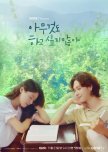
My rating is 9.5/10I loved pretty much everything about this series my only real complaint is that it's short. I would've enjoyed it even more if they'd done a few more episodes and actually allowed the character stories to more fully play out.
It covers a lot of really heavy issues but not in a way that drags you down. If anything, it's uplifting to see somebody escape corporate bullying and build a life that's meaningful for them. It's heartwarming in the found family/friendship group that Lee Yeo-reum forms, how she fits into the town, and especially the main couple. You can clearly see Yeo-reum and Ahn Dae-beom so completely complement each other in their manners and personalities.
I would recommend this to others, and I would watch it again. It's more of a hidden gem type of quality—like if you've watched a lot of other things and you're looking for something fresh, this is one that might surprise you with how good it actually is.
Spoilers
My main complaint was that Yeo-reum and Dae-beom are only at the point of holding hands in the end, and it's pretty clear the relationship will probably continue to progress. But it would've been super heartwarming to see them fully get together with some kind of confession or something—because they never really have a big confession to each other. They just kind of naturally melt together in a way.
Actually, the second couple—the young couple with Heo Jae-hoon and Kim Bom—their romance is a lot more definitive. He asks her to marry him, and she sort of brushes it off, but it does make it clear that's where things are headed.
There's another potential couple with the single dad Bae Sung-min who has the little kid Bae Joon, and the girl Jo Ji-young who used to like Dae-beom so much. You see them hanging out together all the time. Honestly, I cared about that one the least because I thought Jo Ji-young was so negative about everything, and she pushed Dae-beom in directions he really didn't need to go. Yes, she did eventually see that, but she seemed more tuned to success than happiness. Still, it would've been cute to see something more definitive in that relationship as well, because Bae Sung-min liked her so much, he had the little boy, and she started paying attention to and doing things for the little boy, which made it seem like she was thinking along those lines. But again, it wasn't very clear.
With Dae-ho, they cleared him and showed that he wasn't the criminal—he himself was a victim who had witnessed some really scary things—but it didn't show that he'd gotten professional help. It kind of implied it, and you could tell he was doing a little better with his emotion control, but it didn't actually show that was the case.
So that's the main flaw I think with it, and I think it's also a factor of its 12 episodes when it could've easily been 16. That's what kept it from being a show that always rises to the top of people's must-watch lists.
Like a lot of viewers, I was very angry with the way Kim Bom's dad Kim Jung-hoon was, and that he basically got away with stabbing his young daughter and not getting in trouble for it because she covered for him. It was an accident, yes, but he was headed out to do something really bad, and she was trying to stop him. You don't get into an aggressive fight with somebody you love with a knife in your hand—that's just never acceptable.
They also had Yeo-reum cover up what she thought had happened because Dae-ho would never do something like that, they said. But all the facts pointed to him having done it. And she wound up getting blamed and ostracized for not accusing him and potentially stopping the murder. You later discover why she should've been protective, but she didn't know it at that time.
The townspeople are also okay with Kim Jung-hoon slapping her for supposedly allowing the murderer to be free, when they were the ones who had pressured her to protect him. No one, including Kim Bom, came forward to comfort her in that really hard time. I had such a warm fuzzy feeling for that town up to that point, but it showed that they never truly embraced people they consider outsiders.
I was glad she stayed in the town for Dae-beom, and I was also glad she reconciled with Bom—because Bom was young, and so her error was a bit understandable. But it was sad that none of the other people she had befriended said anything when Kim Jung-hoon attacked her like that.
Major characters:
Lee Yeo-reum (Kim Seol-hyun) — A resilient but exhausted 28-year-old former office worker who declares a "life strike" after personal tragedies, moving to the countryside to rediscover joy in simplicity.
Ahn Dae-beom (Yim Si-wan) — A shy, stuttering village librarian and former mathematical genius haunted by family loss, whose quiet kindness hides deep emotional wounds.
Jo Ji-young (Park Ye-young) — Dae-beom's longtime friend and admirer who runs a local billiard hall, grappling with unrequited feelings and her own vulnerabilities.
Kim Bom (Shin Eun-soo) — A troubled high school girl facing bullying and family dysfunction, who forms a heartfelt sisterly bond with Yeo-reum while searching for stability.

I have watched over 400 dramas and this one is now one of my favorites
ReviewI rate this a 10/10, and I honestly don’t indicate perfect scores very often. I couldn’t find a single thing wrong with it.
The premise is incredibly refreshing and adorable: Hana Iwayama has severe social anxiety and can’t meet people’s eyes, while Sosuke Kojima has a phobia of being touched by others—yet from the very first moment they meet, they can look at and touch each other without any problem. It’s such a sweet, clever twist on the “fated connection” idea. What makes it truly special is how both characters grow and heal each other throughout relatively short series. Sosuke is smitten with Hana from the start (and never wavers), which is just pure catnip for romance fans. The series is funny when it needs to be, deeply heart-warming the rest of the time, and surprisingly thoughtful in its portrayal of anxiety disorders and trauma without ever feeling heavy-handed. The chocolate-making scenes are gorgeous—almost therapeutic to watch—and the happy, wholesome vibe is off the charts. If you love feel-good romances with zero second-lead syndrome, no unnecessary angst, and a perfect happy ending, this is an absolute must-watch. I already want to re-watch it, and that basically never happens.
Spoilers
Hana Iwayama is one of the genuinely sweetest, most selfless female leads I’ve ever seen. Giving up her prized original recipe at the chocolate competition so her teammate could take the spotlight? That moment was the cherry on top of her kindness.Sosuke Kojima is just as lovely. When his cousin tries to stage a hostile takeover of the family company, Sosuke doesn’t get bitter or vengeful—he understands the envy, empathizes, and immediately offers to share the top position. Even his best friend Daigo is an absolute gem (no wonder Hana briefly mistakes him for the guy who saved her at the beginning; they’re cut from the same ridiculously decent cloth).There’s none of the tired Japanese drama tropes I usually groan at—no silent pining from afar, no “I loved you first so you owe me” nonsense, no cold chaebol/F4-type male lead. Sosuke is soft and melty for Hana pretty much from episode 1, and it’s glorious. The story is fairly predictable, but in the best comfort-food way. And that ending—seeing them get married, Hana freezing in panic halfway down the aisle, and Sosuke just casually walking over to meet her instead? Perfect encapsulation of how they’ll keep supporting each other forever. I was grinning like an idiot. Easily one of the best short romances I’ve ever watched—yes, even compared to my beloved Korean dramas. 100% recommended.
Synopsis
Aired: 2025
Number of Episodes: 8
Average Run Time per Episode: 50 minutes
In the enchanting world of artisanal chocolate, two guarded souls navigate the delicate art of vulnerability, discovering that the sweetest confections are born from the courage to connect. Sosuke Fujiwara (Shun Oguri), the reclusive heir to a faltering sweets dynasty plagued by an aversion to physical contact, acquires a quaint Tokyo chocolaterie to revive his family's legacy. There, he encounters Ha-Na (Han Hyo-Joo), a masterful yet reclusive confectioner who crafts divine treats under a pseudonym, her genius veiled by a paralyzing fear of eye contact. As their professional collaboration ignites unexpected sparks—forged in late-night tastings and whispered recipes—they form an unlikely alliance, immune to each other's deepest anxieties. Through a tapestry of melting ganaches and tentative gestures, they unravel personal scars, blending professional rivalry with budding affection in a heartfelt ode to love's imperfect alchemy.
*Sosuke Fujiwara (Shun Oguri): The introspective president of a struggling chocolate empire, haunted by tactile phobias from past trauma, who steps into the kitchen to reinvent his legacy and finds solace in unexpected partnership.
*Ha-Na (Han Hyo-Joo): A prodigious chocolatier with scopophobia that keeps her hidden behind aliases and aprons, whose innovative flavors and quiet resilience bloom into bold self-expression amid budding romance.
*Takashi Fujiwara (Ryo Narita): Sosuke's steadfast childhood companion and confidant, a pragmatic executive at the family firm who offers wry humor and unwavering support while navigating his own tangled loyalties.
*Motomi Kawamura (Ayumi Ito): The bubbly, ever-optimistic sales whiz at the chocolaterie, whose infectious energy and meddlesome matchmaking often propel the leads toward awkward but pivotal heart-to-hearts.
*Kenji Koiwa (Eiji Okuda): The wise, no-nonsense veteran chocolatier and former mentor figure, dispensing gruff yet profound advice on life's bitter-sweet balances from his perch behind the counter.
*Shuntaro Fujiwara (Koichi Sato): Sosuke's imperious father and the iron-fisted patriarch of the Fujiwara confectionery empire, whose high-stakes expectations clash with his son's quiet rebellion in pursuit of authentic passion.


