



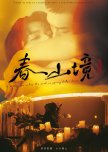
A Winter Sun Wakes the Wind in Spring Hills' Dream
1 people found this review helpful
by serendipityhope
This review may contain spoilers
If I were rating only the two leads and their chemistry, this would be a very different review. Unfortunately, I am rating the drama.
A Winter Sun Wakes the Wind in Spring Hills’ Dream is one of those frustrating dramas that mistakes suffering for depth, stupid choices for the weight of life, melodrama for character development, and explaining its themes for actually exploring them.
There is a huge difference between a story that contains an idea and a story that constantly explains its own ideas to you. This drama desperately wants to impart profound lessons about love, freedom, sacrifice, grief, independence, letting go, finding yourself, and allowing the person you love to follow their own path. None of these ideas are inherently bad. Some of them could have made for a genuinely interesting story.
The problem is that the actual plot rarely earns them.
Instead of allowing conflict to grow organically from the characters and their choices, the writers repeatedly throw increasingly dramatic events at them in order to manufacture an emotional reaction.. Death. Trauma. Separation. The Hunter School. Five years apart. Whenever the story needs another emotional climax, something terrible happens, and afterwards somebody says something vaguely philosophical about life, love or destiny as though the speech retroactively gives the preceding events narrative depth.
It doesn’t.
The death of Qingtian is perhaps the clearest example. It feels less like the inevitable or meaningful conclusion of a character arc and more like the writers realizing that killing a character the audience cares about is an extremely efficient but cheap way to make people cry. And with three couples on stage at least one had to have a tragic ending or the story wouldn’t be noble enough. Killing of characters are enormous events, but enormous events are not automatically meaningful ones.
The drama continually substitutes intensity for causality.
And then there is Changyang.
This is a man who spends two years obsessively pursuing Qinglang. He wants him with extraordinary intensity, inserts himself into his life, can be manipulative and controlling in the name of protecting him, repeatedly makes it clear that being with Qinglang is one of the things he wants most in the world, and spends much of the drama wanting to protect and care for him.
Then, once he finally has the relationship he fought so hard to obtain, the story suddenly needs us to believe that leaving Qinglang for the Hunter School represents personal growth and independence.
Why?
Wanting to share your life with the person you love is not dependency. It can be a choice. Independence does not require geographical separation, and having an identity outside your relationship does not require abandoning the relationship for years.
The idea the writers appear to be aiming for is perfectly understandable: two people should not lose themselves in love. They should remain individuals, pursue their own paths, and love each other without possession.
Fine.
But the drama never convincingly establishes why the Hunter School is Changyang’s path. There is an enormous difference between “I love you enough to let you pursue the dream that has always mattered to you” and “I love you enough to accept your sudden decision to disappear for years to pursue something the screenplay has abruptly decided represents personal growth.”
If the Hunter School had been established from the beginning as Changyang’s ambition, the conflict could have been heartbreaking. If his decision had instead been presented as a psychologically unhealthy response to his inability to protect Qinglang — an obsessive need to become stronger after feeling powerless — that could also have been fascinating, because it would have developed one of Changyang’s existing flaws.
Instead, the Hunter School feels like a plot device wearing a sign that says PERSONAL GROWTH.
Qinglang’s side of this is equally frustrating. The drama repeatedly seems to confuse unconditional love with having almost no boundaries. Respecting another person’s freedom does not mean having no needs of your own. Changyang has every right to choose his path, but Qinglang should have an equally valid right to say: “I respect your choice, but I do not have to put my life on hold waiting for you.”
Instead, Changyang gets both freedom and the emotional security of expecting Qinglang to remain there for him. The story presents Qinglang’s acceptance and waiting as evidence of the greatness of his love, when after a certain point it made me wish he would discover some self-respect.
This is especially irritating because the drama has all the ingredients for a much more interesting exploration of love. Changyang’s tendency to protect Qinglang until protection becomes control, combined with Qinglang’s own history and his difficulty establishing boundaries, could have produced a genuinely complicated relationship. The question could have been: how do two people who deeply love each other build a life together without either controlling or disappearing into the other?
That story was already there.
The writers apparently decided we needed deaths, prison, prolonged separations and motivational philosophy instead.
The fundamental problem is that you can constantly see the writers’ hands moving the characters around. Eventually you stop thinking, “What would this character do now?” and start thinking, “What do the writers need to happen now so they can produce another tragic scene?”
Once that happens, melodrama stops being moving and becomes manipulative.
And by the final stretch, something even worse happened to me: I stopped sympathizing with the characters’ suffering because so much of it resulted from decisions that felt avoidable, irrational or artificially imposed by the screenplay. Angst only works while I still care about the people experiencing it. Eventually my reaction stopped being “please let these poor people finally be happy” and became “you are all responsible for your own misery.”
That is disastrous for a romance approaching its happy ending.
Which brings me to the greatest waste in the entire drama: the leads.
They are beautiful together and have real chemistry. In their quieter scenes — sometimes simply looking at each other, touching, hesitating or sharing space — they create more emotional complexity than pages of the screenplay’s pseudo-philosophical dialogue. There are moments when you can see the much better drama that could have existed with these same actors and characters.
Then someone starts delivering another life lesson and I wanted to throw something at the television.
There is nothing wrong with melodrama. There is nothing wrong with tragedy. There is nothing wrong with separating lovers, killing characters, or making people suffer.
But suffering is not automatically profound.
A story should make its ideas emerge from its characters, their choices and the consequences of those choices. It should not force the characters through arbitrary misery and then explain to the audience what profound meaning we are supposed to find in it.
If I want to read platitudes passed on as philosophical truth, I can read fortune cookies messages.
At least they don’t require sixteen episodes of my life.
A Winter Sun Wakes the Wind in Spring Hills’ Dream is one of those frustrating dramas that mistakes suffering for depth, stupid choices for the weight of life, melodrama for character development, and explaining its themes for actually exploring them.
There is a huge difference between a story that contains an idea and a story that constantly explains its own ideas to you. This drama desperately wants to impart profound lessons about love, freedom, sacrifice, grief, independence, letting go, finding yourself, and allowing the person you love to follow their own path. None of these ideas are inherently bad. Some of them could have made for a genuinely interesting story.
The problem is that the actual plot rarely earns them.
Instead of allowing conflict to grow organically from the characters and their choices, the writers repeatedly throw increasingly dramatic events at them in order to manufacture an emotional reaction.. Death. Trauma. Separation. The Hunter School. Five years apart. Whenever the story needs another emotional climax, something terrible happens, and afterwards somebody says something vaguely philosophical about life, love or destiny as though the speech retroactively gives the preceding events narrative depth.
It doesn’t.
The death of Qingtian is perhaps the clearest example. It feels less like the inevitable or meaningful conclusion of a character arc and more like the writers realizing that killing a character the audience cares about is an extremely efficient but cheap way to make people cry. And with three couples on stage at least one had to have a tragic ending or the story wouldn’t be noble enough. Killing of characters are enormous events, but enormous events are not automatically meaningful ones.
The drama continually substitutes intensity for causality.
And then there is Changyang.
This is a man who spends two years obsessively pursuing Qinglang. He wants him with extraordinary intensity, inserts himself into his life, can be manipulative and controlling in the name of protecting him, repeatedly makes it clear that being with Qinglang is one of the things he wants most in the world, and spends much of the drama wanting to protect and care for him.
Then, once he finally has the relationship he fought so hard to obtain, the story suddenly needs us to believe that leaving Qinglang for the Hunter School represents personal growth and independence.
Why?
Wanting to share your life with the person you love is not dependency. It can be a choice. Independence does not require geographical separation, and having an identity outside your relationship does not require abandoning the relationship for years.
The idea the writers appear to be aiming for is perfectly understandable: two people should not lose themselves in love. They should remain individuals, pursue their own paths, and love each other without possession.
Fine.
But the drama never convincingly establishes why the Hunter School is Changyang’s path. There is an enormous difference between “I love you enough to let you pursue the dream that has always mattered to you” and “I love you enough to accept your sudden decision to disappear for years to pursue something the screenplay has abruptly decided represents personal growth.”
If the Hunter School had been established from the beginning as Changyang’s ambition, the conflict could have been heartbreaking. If his decision had instead been presented as a psychologically unhealthy response to his inability to protect Qinglang — an obsessive need to become stronger after feeling powerless — that could also have been fascinating, because it would have developed one of Changyang’s existing flaws.
Instead, the Hunter School feels like a plot device wearing a sign that says PERSONAL GROWTH.
Qinglang’s side of this is equally frustrating. The drama repeatedly seems to confuse unconditional love with having almost no boundaries. Respecting another person’s freedom does not mean having no needs of your own. Changyang has every right to choose his path, but Qinglang should have an equally valid right to say: “I respect your choice, but I do not have to put my life on hold waiting for you.”
Instead, Changyang gets both freedom and the emotional security of expecting Qinglang to remain there for him. The story presents Qinglang’s acceptance and waiting as evidence of the greatness of his love, when after a certain point it made me wish he would discover some self-respect.
This is especially irritating because the drama has all the ingredients for a much more interesting exploration of love. Changyang’s tendency to protect Qinglang until protection becomes control, combined with Qinglang’s own history and his difficulty establishing boundaries, could have produced a genuinely complicated relationship. The question could have been: how do two people who deeply love each other build a life together without either controlling or disappearing into the other?
That story was already there.
The writers apparently decided we needed deaths, prison, prolonged separations and motivational philosophy instead.
The fundamental problem is that you can constantly see the writers’ hands moving the characters around. Eventually you stop thinking, “What would this character do now?” and start thinking, “What do the writers need to happen now so they can produce another tragic scene?”
Once that happens, melodrama stops being moving and becomes manipulative.
And by the final stretch, something even worse happened to me: I stopped sympathizing with the characters’ suffering because so much of it resulted from decisions that felt avoidable, irrational or artificially imposed by the screenplay. Angst only works while I still care about the people experiencing it. Eventually my reaction stopped being “please let these poor people finally be happy” and became “you are all responsible for your own misery.”
That is disastrous for a romance approaching its happy ending.
Which brings me to the greatest waste in the entire drama: the leads.
They are beautiful together and have real chemistry. In their quieter scenes — sometimes simply looking at each other, touching, hesitating or sharing space — they create more emotional complexity than pages of the screenplay’s pseudo-philosophical dialogue. There are moments when you can see the much better drama that could have existed with these same actors and characters.
Then someone starts delivering another life lesson and I wanted to throw something at the television.
There is nothing wrong with melodrama. There is nothing wrong with tragedy. There is nothing wrong with separating lovers, killing characters, or making people suffer.
But suffering is not automatically profound.
A story should make its ideas emerge from its characters, their choices and the consequences of those choices. It should not force the characters through arbitrary misery and then explain to the audience what profound meaning we are supposed to find in it.
If I want to read platitudes passed on as philosophical truth, I can read fortune cookies messages.
At least they don’t require sixteen episodes of my life.
Was this review helpful to you?


