The biggest plus point, and the reason my usual BL rating for 98% of series like this jumps from 7.5 to an 8, is that the cute/aegyo-style acting from both TeeTee and his friends wasn’t cringe at all. It felt natural, and I genuinely enjoyed it. Thats why it got +0.5.
Really looking forward to this simple, cute and happy 2 months journey.
If I'm not wrong,someone said (based on novel) that duang also popular at his campus too. so actually both duang…
whatever Duang is a goal. Loved it. Previous series it was other way around, and this is opposite, but Teetee can act and his aegoo acting was without cringe, that was huge plus.
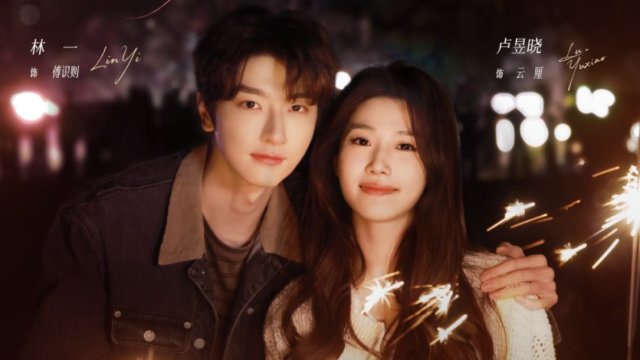
Ji Dan, the author of Addicted, says she’s preparing legal action against the producers of Love After Addiction for allegedly adapting her novel without authorization. Her goal is to halt the project and stop the series from being released.
The show is currently slated to premiere this Friday on Gaga and Viki, but it’s unclear whether this dispute will delay or block the broadcast.
Honestly, I get her stance, if the adaptation really happened without rights clearance, that’s not a “misunderstanding,” it’s copyright infringement. At this point it either goes to court or ends in a settlement behind the scenes.
This is especially rough for Chen Wen and Fengsong, this was being framed as a big comeback after nearly a decade, and now it’s hanging in the balance. It’s genuinely disappointing, and I hope there’s a legal path that still allows the series to air.
From what I understand, Ji Dan may have already intended to develop her own official adaptation, so her frustration makes sense. If the producers knowingly used her work without permission, they absolutely should be held accountable.
You are treating “not innocent” as a moral judgment rather than a legal one, and that’s the core problem…
p.s: but naturally you are his fan so you will come up with any "excuse" just like him, as it is to fight. God luck, hope he gets to settle his dues, literally or otherwise!
You are treating “not innocent” as a moral judgment rather than a legal one, and that’s the core problem…
He already posted an apology. He didn’t deny it, but he didn’t admit it either. He said it wasn’t an excuse—yet that typical “sorry” template letter was basically an excuse.
You’re treating this like a courtroom and I’m treating it like real life, because it is. “Innocent until proven guilty” is a legal standard for criminal punishment, not a rule that the public must keep handing out moral credibility and “nice guy” points while someone’s in a tax mess.
“No conviction” doesn’t magically reset someone to “innocent.” It just means the process isn’t finished. And “no finding of intent” isn’t a halo either, it’s a detail the courts will decide, not a reason for the audience to pretend nothing happened.
Also, don’t play dumb with the influence point. Influence doesn’t change “standard of proof,” sure, nobody said it does. What it changes is the damage and the hypocrisy. A public figure monetizes trust, sells values, lectures people on TV, and builds a brand on respectability. When that person gets caught doing something shady, even if it’s “small”, it hits harder because they weren’t just a private citizen; they were a product made of credibility.
And stop twisting my words into “career lynching.” I literally said I don’t support destroying his life or career. What I do support is stripping away the fake saint narrative and refusing to be preached to by people who can’t meet the standards they market.
So no, this isn’t “presumption of guilt.” It’s refusing to be gaslit into calling obvious misconduct a neutral event just because lawyers are still arguing about it. Accountability doesn’t begin after a verdict. It begins the moment the public stops treating celebrities like moral authorities.
In China, you sometimes see reports of a celebrity getting involved in something like a minor hit-and-run, and the issue appears to be wrapped up quickly, whether that’s truly “efficient policing” or simply influence doing its job, who really knows. But either way, it gets settled. That contrast is exactly why KSR’s case feels so chilling: her situation wasn’t treated like a case to be investigated and resolved, but like a spectacle of punishment, so extreme it crossed into humiliation and psychological torture.
That’s why I don’t romanticize any political system. Democracy, authoritarianism, “rule of law,” “stability”, these are labels. In practice, any system becomes dangerous the moment accountability turns selective, when power decides whose mistakes can be forgiven, whose can be buried, and whose suffering can be turned into a lesson for everyone else.

 Editorials
 4
4  1
1  2
2  1
1  1
1 


Really looking forward to this simple, cute and happy 2 months journey.
Ji Dan, the author of Addicted, says she’s preparing legal action against the producers of Love After Addiction for allegedly adapting her novel without authorization. Her goal is to halt the project and stop the series from being released.
The show is currently slated to premiere this Friday on Gaga and Viki, but it’s unclear whether this dispute will delay or block the broadcast.
Honestly, I get her stance, if the adaptation really happened without rights clearance, that’s not a “misunderstanding,” it’s copyright infringement. At this point it either goes to court or ends in a settlement behind the scenes.
This is especially rough for Chen Wen and Fengsong, this was being framed as a big comeback after nearly a decade, and now it’s hanging in the balance. It’s genuinely disappointing, and I hope there’s a legal path that still allows the series to air.
From what I understand, Ji Dan may have already intended to develop her own official adaptation, so her frustration makes sense. If the producers knowingly used her work without permission, they absolutely should be held accountable.
You’re treating this like a courtroom and I’m treating it like real life, because it is. “Innocent until proven guilty” is a legal standard for criminal punishment, not a rule that the public must keep handing out moral credibility and “nice guy” points while someone’s in a tax mess.
“No conviction” doesn’t magically reset someone to “innocent.” It just means the process isn’t finished. And “no finding of intent” isn’t a halo either, it’s a detail the courts will decide, not a reason for the audience to pretend nothing happened.
Also, don’t play dumb with the influence point. Influence doesn’t change “standard of proof,” sure, nobody said it does. What it changes is the damage and the hypocrisy. A public figure monetizes trust, sells values, lectures people on TV, and builds a brand on respectability. When that person gets caught doing something shady, even if it’s “small”, it hits harder because they weren’t just a private citizen; they were a product made of credibility.
And stop twisting my words into “career lynching.” I literally said I don’t support destroying his life or career. What I do support is stripping away the fake saint narrative and refusing to be preached to by people who can’t meet the standards they market.
So no, this isn’t “presumption of guilt.” It’s refusing to be gaslit into calling obvious misconduct a neutral event just because lawyers are still arguing about it. Accountability doesn’t begin after a verdict. It begins the moment the public stops treating celebrities like moral authorities.
That’s why I don’t romanticize any political system. Democracy, authoritarianism, “rule of law,” “stability”, these are labels. In practice, any system becomes dangerous the moment accountability turns selective, when power decides whose mistakes can be forgiven, whose can be buried, and whose suffering can be turned into a lesson for everyone else.