

 2
2


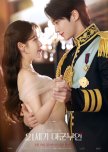
This review may contain spoilers
✦ Perfect Crown — “Love was never the weakness. Suppression was.” ✦
(aka: I watched it, I survived it, and I’m still emotionally unemployed)❖ INTRODUCTION: I came prepared. The drama did not care.
I came into Perfect Crown terrified.
Not because it looked bad — quite the opposite. It looked like one of those emotionally suspicious dramas that pretends to be safe while quietly setting up your downfall.
And considering certain actors’ history of “we swear this is happy but actually cry for 3 weeks,” I genuinely spent the entire runtime emotionally bracing myself like I was defusing a bomb.
Instead, what I got was worse.
A romance so emotionally coherent that I forgot I was supposed to be a detached viewer.
And honestly? That’s the problem.
Because this drama doesn’t force you to feel things. It makes you realize you already do.
❖ THEMES: Love as resistance, not decoration
At its core, Perfect Crown is not a romance.
It is a study in suppression.
The palace is not a backdrop — it is a system designed to erase individuality:
love must be strategic
desire must be hidden
identity must be controlled
grief must be quiet
And into this system step two people who absolutely refuse emotional compliance.
So the romance doesn’t feel like escape.
It feels like rebellion. And that’s where it gets dangerous.
Because suddenly:
affection becomes political defiance.
❖ CHARACTER CORE: Two people who forgot how to exist freely
✦ The Grand Prince — “a man trained to disappear”
He is not weak. He is over-controlled.
A man who could easily take the throne but has spent his entire life practicing emotional erasure:
don’t want
don’t react
don’t attach
don’t become noticeable
And all of this is rooted in loss:
mother’s traumatic death
father’s preventable death
brother’s palace fire death
At this point, his emotional stability is basically a myth maintained by repression.
So when Huiju enters his life, he doesn’t fall in love.
He destabilizes.
Because she behaves like a system error in his emotional programming.
✦ Huiju — “rebellion with emotional intelligence”
Huiju is not just “strong female lead.”
She is structured defiance.
Her ambition is not greed — it is emotional compensation:
“If I become undeniable, will I finally be acknowledged?”
And what makes her compelling is not just strength. It’s that she never becomes smaller to fit love.
Instead:
she becomes more herself while loving him.
Which is rare enough to feel suspicious.
❖ ROMANCE: Opposites → emotional mirroring → shared destruction (affectionately)
Initially:
he is restraint
she is rebellion
Classic setup.
But the writing does something far more interesting:
It removes the distance between them emotionally.
They begin to mirror each other:
both protect too much
both sacrifice too easily
both assume love equals danger
both choose others before themselves
And then comes the moment that breaks you a little:
“I wanted to divorce you to protect you.”
Which is basically the drama saying:
“Congratulations, you are now emotionally synchronized.”
❖ EXECUTION: Tropes, but make it emotionally expensive
Yes, the drama uses familiar tropes:
contract marriage
palace conspiracies
poison attempts
hidden identities
political tension
But instead of pretending to be original, it does something smarter:
It commits emotionally.
Nothing feels thrown in for shock value.
Everything feels like it had weight building underneath it.
Which is why even predictable moments still hurt.
❖ VISUAL LANGUAGE: rebellion without speeches
This drama doesn’t over-explain.
It shows.
Huiju wearing red at a royal event is the perfect example:
No monologue.
No dramatic pause.
Just defiance.
“Nobody said I couldn’t.”
And suddenly you realize:
The system only works because people obey rules that were never written.
❖ POLITICS & VILLAINS: Everyone is emotionally compromised
No one is purely evil.
Everyone is:
emotionally damaged
politically trapped
or morally exhausted
The Queen Mother is not just a villain — she is a consequence of suppression.
The Prime Minister is not just ambitious — he is ambition that consumed everything else.
And that makes him worse, actually.
Because he doesn’t fall into darkness.
he chooses it repeatedly.
❖ THE WORLD: The crown is the real antagonist
The monarchy is not glamorous. It is suffocating.
It destroys:
identity
love
freedom
and emotional honesty
Even children are bound by it.
So when abolition is discussed, it doesn’t feel political. It feels inevitable.
Like the only logical emotional outcome.
❖ EMOTIONAL CORE: Why it actually works
Everything works because nothing is sudden.
Love is not instant. It is cumulative:
fear
hesitation
protection
breakdown
attachment
repetition
So when they finally love each other openly…
It doesn’t feel written. It feels arrived at.
❖ ENDING FEELING: I thought I could move on. I was wrong.
And now we arrive at the part the drama did not warn me about:
The aftermath.
Because I finished Perfect Crown thinking:
“That was beautiful. I can move on.”
I lied.
Because now I’m here:
watching edits at inappropriate hours
replaying their gazes like they are evidence in a trial
losing emotional stability over hand-holding scenes
and developing a concerning inability to accept that fictional people are fictional
And it’s not even just nostalgia. It’s worse.
It’s the feeling that:
every touch meant something, and now it’s over.
The kisses, the hand-holding, the finger-grasping, the almost-touch moments — they don’t feel like scenes anymore.
They feel like memory fragments. And that’s why it hurts.
Because the drama didn’t just show romance. It made intimacy feel real enough to miss.
So yes.
I am crying over edits.
Yes.
I am emotionally unwell.
And yes.
I will probably rewatch everything anyway.
Because apparently I enjoy suffering with good cinematography.
★ FINAL RATING: 9/10 (emotionally irreversible condition) ★
✔ Beautiful emotional writing
✔ Strong character mirroring
✔ Visual storytelling that actually means something
✔ Romance that feels earned, not assigned
✔ Politics that support themes instead of overwhelming them
✘ Prime Minister needs consequences (legally and emotionally)
✘ Viewer may develop attachment disorder (fictional only, hopefully)
✘ Post-drama withdrawal is not included in warnings but should be
Final verdict?
This is not a drama you “finish.”
It is a drama that stays.
In scenes.
In edits.
In your brain at 2 AM.
And apparently… in your emotional stability.
Was this review helpful to you?
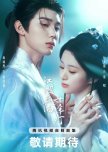
This review may contain spoilers
Generation to Generation — A Love Story Raised by Ruin ⚔️
✨ “Some stories are not born beneath kind skies; they are dragged into the world through blood, grief, and names already sharpened into weapons.”
There are people who say this drama asks for too much patience, too much endurance, too much waiting through distance and silence and pain — but how else was a story like this supposed to be told? 🖤
This was never a love story meant to bloom beneath sunlight. It was born in the wreckage of old hatred, in a world where blood feud had already outlived the people who began it, where revenge was no longer a choice but an inheritance, where children were handed grief before they were ever handed peace. 🕯️
So no, the push and pull did not feel excessive to me. It felt inevitable. Because Cai Zhao and Mu Qingyan were not merely trying to love each other — they were trying to reach each other through generations of ashes. ⚔️🩸
And that is what made this drama so beautiful to me. Not because it was soft, but because it dared to remain tender in a world that had every reason to become cruel.
🖤 The Story Misleads You First — And That Is Precisely Its Strength
✨ “It lets you stand at the edge of the truth with empty hands, mistaking the wound for the whole heart.”
What I admired most is that this drama does not reveal itself all at once.
It does not open like a confession. It opens like a veil. It lets you misunderstand. It lets you believe in false shapes. It lets you think you know these people before quietly unraveling everything you thought you understood. And that is why the emotional weight lands. 🌙
Because Cai Zhao is introduced in a way that makes it easy to mistake gentleness for naivety, softness for unawareness, compassion for blindness. But as the story unfolds, that illusion breaks.
She was never blind. She was never weak. She was never simply a girl being moved by the current of other people’s choices. She knew more than people thought she did. She saw far more than the world assumed. And she still chose with her own heart. 🤍
That is what makes her so powerful. Not that she loved without knowing, but that she loved while knowing. And there is something far more devastating, far more beautiful, about a woman who sees every fracture in a person and still chooses not out of ignorance, but out of will.
🕊️ Cai Zhao — Mercy That Refuses to Die
✨ “She was not soft in the way that breaks easily; she was soft in the way moonlight is soft — quiet, steady, and impossible to kill with bare hands.”
Cai Zhao is one of those female leads who becomes more beautiful the more deeply you understand her. Not because she changes into someone stronger, but because you slowly realize strength was in her from the very beginning. 🌿
It lived in her restraint. In her loyalty. In the way she stood beside the people she loved without letting pain poison the center of who she was. And that is what makes the moment with the ashes so unforgettable. 🕯️
Even after betrayal. Even after harm. Even after everything done to her sect, her family, her people — she still carries her master’s ashes from the Forbidden Forest and lays them beside her aunt’s, as if even after all that destruction, she still wished peace upon the dead. That is not weakness. That is a kind of humanity so deep that even grief cannot bury it. 🌟
Because this drama understands something painful and true: that betrayal does not always kill love, that being wounded does not always erase mourning, that sometimes the people who break us still remain in the chambers of our sorrow. 🤍
Cai Zhao does not forgive cheaply. She does not forget. She does not erase what was done. But she refuses to let cruelty be the final thing left alive in her.
And I think that is one of the most powerful things this drama ever says.
⚔️ Mu Qingyan — A Man Who Learned Love Through Suffering
✨ “When a life has been starved of warmth, even one hand reaching through the dark begins to feel like salvation.”
Mu Qingyan is the kind of character whose intensity only fully makes sense once you sit with the horror of what his life has been. 🩶
And when you do, it hurts. Because this is not simply a man who loves too much. This is a man who was broken before life had even begun to open for him.
A child mutilated. A child caged in darkness. A child forced to exist like something less than human, as though suffering had claimed him before the world ever did. And even when he grows older, there is still no real peace.
Healing arrives through pain. Survival arrives through violence. Love arrives only after loss. Even breath feels temporary in a life like his.
So how could someone like Cai Zhao not become everything to him? 🌙
She sees through the mask and does not immediately turn away. She knows enough to hesitate, enough to keep her distance, enough not to trust blindly — and that matters. Because her love is not foolishness.
But even after the truth of who he is rises like a blade between them, she still chooses to see his actions, his humanity, the person beneath the identity the world would condemn.
To someone who has lived as if every wall had ears, every step had danger, every day was another battle to remain alive — that kind of recognition would not feel ordinary. It would feel sacred. 🔥🕯️
That does not justify every part of his possessiveness, his obsession, or the intensity of his attachment. But it makes it achingly understandable.
Because some people do not know how to love in gentle measures. Some people love like the starved, like the wounded, like those who have lived too long in darkness and mistake the first light for something they must hold onto or die. And Mu Qingyan loves like someone who has never truly been allowed to rest.
🌑 No One Is Entirely Innocent, No One Is Entirely Monstrous
✨ “In stories shaped by inherited hatred, the line between sinner and victim is often drawn in blood that belonged to generations long dead.”
What stayed with me most is that this drama refuses the comfort of simple morality. 🖤
It does not hand you easy heroes. It does not hand you villains untouched by grief.
It does not let anyone remain only one thing.
Instead, it gives you people carrying centuries inside them — centuries of blood feud, resentment, indoctrination, loss, and pain so old it has become tradition.
And because of that, the story grows larger than revenge. By the end, it is no longer asking who was right and who was wrong.
It is asking something far more difficult: who will be the first to stop bleeding history into the future? 🩸🌑
That is what makes the coexistence so meaningful. Not because it is easy. Not because the wounds disappear. Not because everyone is absolved. But because after so much suffering, the greatest act of courage is no longer destruction. It is refusal.
Refusal to keep feeding hatred simply because hatred was what you inherited. Refusal to keep mistaking revenge for justice. Refusal to keep handing violence down like it is the only legacy worth leaving behind. And that is a devastatingly beautiful message.
💫 Their Love — Not Gentle, Not Easy, But Real Enough to Survive the Ruins
✨ “They did not meet in a world made for tenderness; they met in a world that kept asking them to become each other’s enemy, and still they reached out.”
What moved me most about Cai Zhao and Mu Qingyan is that their love never feels shallow. 🤍
It is not built only on attraction. It is built on seeing. On recognition. On the quiet, painful understanding of two people who keep finding each other even when the world keeps placing a blade between them.
There is always something beneath them — a thread. A pulse. A wound.
A tenderness that survives even when trust is bruised and names become dangerous. And that is why the push and pull never felt meaningless to me.
Every hesitation had history behind it. Every distance had fear behind it. Every return had ache behind it.
They were not being kept apart just to prolong longing. They were trying to choose each other in a world that had already chosen hatred for them. ⛓️
And maybe that is why their love lingers. Because it does not feel like a romance born in safety. It feels like a fragile light protected between two shaking hands while the whole world keeps trying to blow it out.
⭐ Final Rating — Why It Earns a 9/10
✨ “Not all beautiful stories are flawless; some are remembered because they leave sorrow glowing at the edges long after they end.”
Generation to Generation is not perfect.
Its pacing may feel heavy to some. Its emotional back-and-forth may test the patience of viewers who want something smoother, simpler, more immediate. But to dismiss it as merely frustrating is to miss the soul of it entirely. 🌙
This drama gives us layered storytelling,
misdirection that deepens rather than cheapens, performances full of ache and restraint, a female lead whose compassion feels like quiet strength, a male lead whose love is shaped by unspeakable suffering, and a world where morality is blurred by grief, history, and survival. ⚔️
Most importantly, it gives us a story that does not worship revenge, but coexistence. Not cruelty, but humanity. Not the triumph of one side over another, but the painful hope that the cycle can end.
And that is why, for me, it is a solid 9/10. ✨🖤
Because this is not only a drama about love.
It is a drama about inherited wounds, mercy after betrayal, and what it means to remain human in a world that keeps trying to harden you into something merciless. 🕊️
🌌 “Some loves are unforgettable not because they were pure, but because they bloomed in places where nothing tender was ever meant to survive.”
Was this review helpful to you?
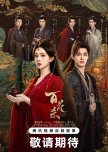
Don't disappoint me now. And dear C-dramas, take notes.
⭐ 9/10 (Ep. 1–5)
Okay...
Can we PLEASE keep this energy till the finale? 😭
Because five episodes in, and I'm already attached to the main characters. That almost never happens to me. Usually, I'm sitting there till Episode 7 or 8 wondering, "Okay... so when am I supposed to care?" Not here.
First of all...THE LEADS.
They're both ridiculously intelligent, constantly reading each other, hiding their own cards, yet somehow slowly letting the other person in. It's not a battle of who's smarter. It's two equally capable people trying to outplay everyone else... and accidentally falling for each other in the process.
And I'm absolutely eating it up.
The female lead? Exactly my kind of heroine.
Composed. Ruthless. Elegant. Brilliant. Doesn't need the script to remind me every five minutes that she's "strong."
She simply is.
And the male lead...
Sir. I SEE YOU. 😭🤚
You're out here smiling sweetly one second, plotting three moves ahead the next, while quietly making sure she's safe without ever taking away her agency.
One thing I appreciate even more? This drama actually respects my time.
The plot moves. The characters move. The relationships move. Imagine that. 😭
And can we please appreciate the women in this drama?
A female physician who's also a bodyguard.
A female heir playing the political game.
Women with ambitions, influence, and actual personalities instead of existing solely to worship or sabotage the female lead.
More of THIS, please.
Now yes...I've already noticed a few logical loopholes.
But here's the funny thing.
I noticed them......and then immediately moved on.
Because I was having way too much fun. That's when I know a drama is doing something right.
If I'm emotionally invested, I'll happily overlook a few flaws.
If I'm bored?
Congratulations. You've just awakened the most annoying critic alive. 😭
So please...
Don't pull a "strong first half, messy second half."
Don't make your intelligent leads suddenly forget all their brain cells.
Don't manufacture misunderstandings for the sake of dragging the plot.
Just keep doing whatever you're doing.
Because right now...
I'm seated. Very unapologetically seated.
Please don't make me regret it. 🌸
Was this review helpful to you?

This review may contain spoilers
The Tragedy of Wasted Potential
“A masterpiece of what could’ve been… and what never was.”⭐ Review of Pursuit of Jade
Rating: 8/10 (pure generosity, by the way)
I went into this drama expecting brilliance.
What I got instead was a visually stunning collection of unrealized potential.
This isn’t a bad drama.
It’s worse.
It knows exactly what it wants to be… and still fails to become it.
📉 Story & Writing — All the right ingredients, none of the right execution.
“A story with depth means nothing if it never dares to descend into it.”
The drama sounds incredible on paper: revenge, trauma, identity, justice.
And yet—
A story can have depth, but if it doesn’t flow, it drowns in its own ideas.
The male lead’s revenge? Supposedly his life’s purpose.
Reality? A side quest he remembers in the last 10 episodes.
His trauma is introduced like a checklist:
battlefield ✔
dead mother ✔
nightmares ✔
…and then promptly forgotten.
The female lead’s identity arc? Powerful in theory.
But instead of driving the story, it just… exists.
This isn’t a narrative—it’s a series of missed connections.
⏳ Pacing — Why is everything either dragging… or sprinting?
“Time moves forward, but this story stands still—until it suddenly runs.”
This drama does not understand time. It lingers where it shouldn’t, and rushes where it matters.
First few episodes: engaging
Middle: painfully stretched
Ending: speed-running emotional closure
And don’t even get me started on the final episode.
An entire alternate timeline reduced to a rushed afterthought. That could’ve been a masterpiece. Instead, it’s a footnote.
💔 Romance — They lived together, so… love?
“Closeness is easy. Connection is earned.”
Let’s be honest. Proximity is not chemistry.
The drama confuses:
living together
caring for each other
being comfortable
with:
falling in love
The real issue?
I was told they loved each other. I was never shown why.
They feel like:
roommates → acquaintances → suddenly soulmates?
❓The Missing Emotional Core — Love without weight is just presence.
“Love is not built in silence—it is revealed in what breaks it.”
No:
shared breakdowns
emotional dependence
exclusive vulnerability
Just… presence.
🕊️ The “Peace” Narrative — A feeling that was named, but never nurtured.
“Peace is not a statement. It is a pattern.”
We’re told:
she gives him peace
But do we feel it?
Peace isn’t stated. It’s built.
There’s no repetition, no emphasis, no emotional weight.
So instead of:
“She is his only safe place”
It feels like:
“She’s… around.”
🧠 Emotional Disconnect — Parallel lines that never meet.
“They share a story, but never a soul.”
Here’s the biggest problem:
They exist in the same narrative, but not in the same emotional space.
She has her realization. Alone. Good.
But then? No meaningful moment with him.
No:
reassurance
belief
promise
A bond isn’t built in silence—it’s built in response.
That one missing scene—
where he tells her he’ll stand by her, help her clear her father’s name — would have turned presence into love.
Instead?
Two strong characters. Zero emotional intersection.
⚔️ Character Logic — Realism quietly left the chat.
“Growth without process is just illusion.”
Now let’s talk about logic.
Martial Arts Arc — Skill without struggle is spectacle, not storytelling.
She:
stops training
becomes a butcher
gets advice
…and suddenly defeats a seasoned general?
Character growth is not unlocked through dialogue prompts.
Where was:
practice?
struggle?
progression?
Even prodigies don’t work like this.
“Talent explains potential, not miracles.”
⚰️ Missed Opportunity — Connection was possible. It was simply ignored.
The male lead helping her train? That would’ve:
built realism
built chemistry
built connection
But no.
The story skips the journey and expects the destination to matter.
🧩 Continuity & Identity — Important… but not important enough.
“If it doesn’t linger, it didn’t land.”
Major revelations feel forgettable. If the audience doesn’t remember it, it wasn’t impactful enough.
Her identity as the general’s daughter should’ve been:
emotional
defining
unforgettable
Instead, it’s:
underwhelming and poorly reinforced
👑 Feminism — A concept introduced… and then abandoned.
The drama hints at feminism:
female shop owners
women in positions of power
a female general
Sounds promising, right?
“Representation without exploration is just decoration.”
Where is:
systemic resistance?
structural change?
narrative payoff?
💔 The Biggest Miss — Power offered, then quietly taken back.
The royal princess could’ve ruled.
She didn’t.
If you introduce power, let women actually hold it. Instead, the drama plays it safe.
🎬 Direction — This is where everything collapses.
“A story is not its ideas—it is the way they are brought to life.”
At some point, you have to ask:
Was it the writing… or the direction?
Because the ideas are there.
The execution? Not so much.
Compared to:
The Coroner's Diary
Fated Hearts
…the difference is obvious.
Good dramas show growth. This one implies it.
🎥 Production — At least it’s pretty.
“Beauty can elevate a story, but it cannot replace it.”
Let’s give credit where it’s due. If nothing else, it looks beautiful while disappointing you.
✔ stunning cinematography
✔ aesthetically pleasing visuals
✔ emotionally appealing moments (in isolation)
And honestly?
The edits might be better than the actual drama.
⭐ Final Verdict — A beautiful almost.
“It reached for greatness—and settled for potential.”
This drama is not bad. It’s just:
Painfully aware of its own potential—and still unable to reach it.
It had:
strong characters
emotional depth
meaningful themes
But failed to connect them.
⭐ Rating: 8/10
And yes, this is generous.
Because sometimes you don’t rate what it is—you rate what it could have been.
If I were being honest?
This is a 6.5 disguised as an 8.
Was this review helpful to you?
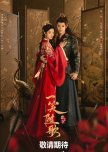
A Gem of A Drama – No Clichés, No Nonsense
You can even binge-watch Fated Hearts, just like I did and I fell in love.The characters are meticulously portrayed through awe-strucking acting and story writing. The characters are complex, ever evolving, humane, and you can understand the motives for their actions, that is something I haven't seen in many dramas.
The storyline was fantastic and it really stepped past those annoying clichés.
In short. Watch for the Characters, their growth, their motives and the NO-Nonesense Storyline.
One critic if I must say, is that the side couple/romance, including the ML's younger sister, FL's ex-fiancé, and the emperor of that empire should have not been given the amount of screen time it was given. It was quite insignificant and didn't add much to the whole storyline otherwise. But, you can definitely watch those scenes as a standalone, because it definitely once again portrays human natures, our motives, ambitions, experiences and how they shape us beautifully.
And one last critic, the drama should have had 2 more episodes, for a better, paced closure.
But, overall, it was mesmerizing, emotional and fascinating!
Was this review helpful to you?


