


 1
1


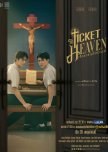
A Quiet, Devastating, Beautiful Story About Love, Faith, and Choosing Your Own Life
I almost dropped Ticket to Heaven after the first episode.
That would have been a terrible mistake.
By episode two, I was completely absorbed, and by the end I considered this one of the most extraordinary dramas I have watched.
The premise sounds simple enough: Tanrak is a deeply religious scholarship student at a Catholic school who has spent most of his life believing that becoming a priest is his path. After losing his parents young, his faith and his future vocation have become deeply connected to his hope of someday reuniting with them in heaven. Then Barth arrives.
What follows is not simply a story about a religious boy realizing he is attracted to another boy. Ticket to Heaven explores faith, grief, sexuality, abuse, family expectations, vocation, guilt, identity, and the frightening question of whether the life you have always planned is actually the life you would have chosen for yourself.
The writing is remarkably restrained. Some of the best scenes involve almost nothing happening externally. Two characters can simply stand near one another, and the emotional tension is overwhelming. The series trusts the actors, the camera, silence, and small physical choices instead of constantly explaining what the characters are feeling.
And that brings me to Fourth Nattawat.
His performance as Tanrak is exceptional.
So much of Tanrak’s conflict happens internally, and Fourth communicates it through his eyes, posture, hesitation, stillness, and tiny shifts in expression. There are scenes where Tanrak barely speaks, yet you can see desire, fear, jealousy, guilt, confusion, longing, and love moving across his face. He never needs to announce what Tanrak is feeling because you already know.
Gemini Norawit is also excellent as Barth. Barth is more emotionally direct than Tanrak, but he is carrying his own complicated history with religion, family, violence, and rejection. Gemini gives him warmth without making him uncomplicated, and his chemistry with Fourth is extraordinary.
And I do mean chemistry—not merely convincing kissing scenes.
Some of the most emotionally charged moments happen before they ever touch. A look across a room can carry more intensity than an entire NC scene in another drama. Their relationship feels intimate because we watch it grow through attention, vulnerability, private jokes, jealousy, fear, and the gradual realization that each has become central to the other’s life.
The religious themes are also handled with far more nuance than I expected.
The story does not simply frame religion as bad and romantic love as good. Different characters sincerely choose different paths. Some continue toward priesthood. Others question it. Some remain people of faith while living lives that do not fit the narrow expectations they were given. The deeper question becomes whether faith must require denying yourself—or whether love of God and love of self can coexist.
That complexity is one of the strongest things about the series.
Barth’s own relationship with religion adds another layer. His disbelief is not casual rebellion. It comes from lived experience and unanswered prayer, and his perspective forces Tanrak to reconsider some of the moral assumptions he has never previously had reason to question.
The supporting characters matter too. Father Arnon, Master Phak, Kongdech, and others are not simply obstacles or mouthpieces. Each represents a different relationship to belief, obligation, doubt, and choice.
The finale is unusually long, but in this case I did not mind. It gives the story space to breathe, revisit important relationships, and resolve the major emotional threads without rushing through them. At the same time, the series is impressively economical when it needs to be. Several storylines are given satisfying resolution with only a few lines rather than being stretched into unnecessary episodes.
That balance is rare.
If you are looking for a light school romance, this is not that.
Yes, the main characters are students, but the emotional and thematic scope of the story is much larger than its setting. Ticket to Heaven is about young people confronting questions that many adults spend their entire lives avoiding: Who am I if I stop living according to other people’s expectations? What do I actually believe? What makes a life meaningful? And what happens when the person I love forces me to imagine a future I never knew I was allowed to want?
Beautifully acted, thoughtfully written, emotionally restrained, and deeply affecting.
I am extremely glad I gave it a second episode.
That would have been a terrible mistake.
By episode two, I was completely absorbed, and by the end I considered this one of the most extraordinary dramas I have watched.
The premise sounds simple enough: Tanrak is a deeply religious scholarship student at a Catholic school who has spent most of his life believing that becoming a priest is his path. After losing his parents young, his faith and his future vocation have become deeply connected to his hope of someday reuniting with them in heaven. Then Barth arrives.
What follows is not simply a story about a religious boy realizing he is attracted to another boy. Ticket to Heaven explores faith, grief, sexuality, abuse, family expectations, vocation, guilt, identity, and the frightening question of whether the life you have always planned is actually the life you would have chosen for yourself.
The writing is remarkably restrained. Some of the best scenes involve almost nothing happening externally. Two characters can simply stand near one another, and the emotional tension is overwhelming. The series trusts the actors, the camera, silence, and small physical choices instead of constantly explaining what the characters are feeling.
And that brings me to Fourth Nattawat.
His performance as Tanrak is exceptional.
So much of Tanrak’s conflict happens internally, and Fourth communicates it through his eyes, posture, hesitation, stillness, and tiny shifts in expression. There are scenes where Tanrak barely speaks, yet you can see desire, fear, jealousy, guilt, confusion, longing, and love moving across his face. He never needs to announce what Tanrak is feeling because you already know.
Gemini Norawit is also excellent as Barth. Barth is more emotionally direct than Tanrak, but he is carrying his own complicated history with religion, family, violence, and rejection. Gemini gives him warmth without making him uncomplicated, and his chemistry with Fourth is extraordinary.
And I do mean chemistry—not merely convincing kissing scenes.
Some of the most emotionally charged moments happen before they ever touch. A look across a room can carry more intensity than an entire NC scene in another drama. Their relationship feels intimate because we watch it grow through attention, vulnerability, private jokes, jealousy, fear, and the gradual realization that each has become central to the other’s life.
The religious themes are also handled with far more nuance than I expected.
The story does not simply frame religion as bad and romantic love as good. Different characters sincerely choose different paths. Some continue toward priesthood. Others question it. Some remain people of faith while living lives that do not fit the narrow expectations they were given. The deeper question becomes whether faith must require denying yourself—or whether love of God and love of self can coexist.
That complexity is one of the strongest things about the series.
Barth’s own relationship with religion adds another layer. His disbelief is not casual rebellion. It comes from lived experience and unanswered prayer, and his perspective forces Tanrak to reconsider some of the moral assumptions he has never previously had reason to question.
The supporting characters matter too. Father Arnon, Master Phak, Kongdech, and others are not simply obstacles or mouthpieces. Each represents a different relationship to belief, obligation, doubt, and choice.
The finale is unusually long, but in this case I did not mind. It gives the story space to breathe, revisit important relationships, and resolve the major emotional threads without rushing through them. At the same time, the series is impressively economical when it needs to be. Several storylines are given satisfying resolution with only a few lines rather than being stretched into unnecessary episodes.
That balance is rare.
If you are looking for a light school romance, this is not that.
Yes, the main characters are students, but the emotional and thematic scope of the story is much larger than its setting. Ticket to Heaven is about young people confronting questions that many adults spend their entire lives avoiding: Who am I if I stop living according to other people’s expectations? What do I actually believe? What makes a life meaningful? And what happens when the person I love forces me to imagine a future I never knew I was allowed to want?
Beautifully acted, thoughtfully written, emotionally restrained, and deeply affecting.
I am extremely glad I gave it a second episode.
Was this review helpful to you?


