



Beautiful and Difficult
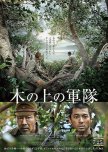
This film was inspired by events surrounding the Battle of Okinawa towards the end of World War II, and focuses on the experiences of two Japanese soldiers — one, a regular officer, and the other a very raw recruit, local to the island on which the film is set. After their island has been taken over by American forces they hide in a giant Banyan tree, waiting for reinforcements to arrive, not realizing the war has ended. The film explores their relationship and how they navigate the considerable differences in their social standing, life experiences, and expectations. Both actors do a great job. Shinichi Tsutsumi plays the older, embittered, officer and Yuki Yamaha the young recruit. I found Yamada’s character the most poignant — he saw so many of his friends killed. The film is largely structured in terms of the relationship between the two men who are forced into close confinement. An almost fatherly bond forms between the older officer and the new recruit. It raises larger questions of how difficult it is to navigate profound loss — not only personal loss, but loss of an identity that structured a person’s day to day life in Imperial Japan when old answers to questions about how to be a loyal citizen and a good person don’t seem to reflect reality anymore.The film has a strong anti-war message. I thought this was a very good film. I watched it right after having seen the Chinese film Dongji Island, about Japanese atrocities which also took place partly on an island. It was an interesting combination.
Was this review helpful to you?
This review may contain spoilers
Reflection on What Gives Life Meaning
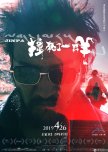
There have been a number of reviews of this wonderful film by Pema Tseden. Some reviewers note the fact that it has a kind of road trip movie feel to it. Two of the characters are named “Jinpa” — one, a truck driver — lives a life that recalls the Myth of Sisyphus. He drives back and forth across the Kekexili Plateau in Tibet. It also reflects the cyclic nature of life — his, the truck driver’s life — but also the cyclic nature of existence itself. We can infer from images in the cab of the truck various things about his life. He has a daughter, there is a lama he respects. He also likes “O Sole Mio”. He carries the meaning of his life with him as he travels.The truck driver picks up a hitchhiker, also “Jinpa” who is on a quest. Jinpa the hitchhiker is searching for his father’s murderer in order to exact revenge. It is given that he must do so since tradition demands revenge. But the film explores what it means to break away from the scripts we are given by tradition. We find significance and meaning through our own free choices.
This is a very moving film with a number of absurdist touches, such as Jinpa the truck driver feeling guilty for accidentally killing a sheep and then later buying part of a butchered sheep for meat. Philosophically very interesting. I highly recommend.
Was this review helpful to you?


