

 2
2 5
5 1
1 1
1 1
1
This review may contain spoilers
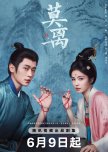
Bai Lu and Cheng Lei in a story that doesn't leave audiences indifferent
The drama was much discussed from inception to final airing. Although it is based on a novel ("Sheng Shi Di Fei" 盛世嫡妃 by writer Feng Qing 凤轻), the drama version differs too much to be labeled as other than "inspired by" original story. Scriptwriter Zhao Na completely rewrote the script while an earlier version was discarded, causing its writer to later raise a ruckus on social media after the drama started airing, furthermore targeting the lead actress as if that other scriptwriter had become a leader of her haters! Since this person had no copyright to the story anyway, she only appeared to shoot herself in the foot, and is kindly best forgotten, but her since quelled controversy (she ended up apologizing), caused a lot of unwelcome attacks (causing production and Bai Lu to sue).
Still, the new script is not flawless; some characters which played important parts in the novel, ended up as having disappointing roles in The First Jasmine: this was notably the case for Han Mingxi (played by much anticipated Lin Muran appearing on screen again after the breakthrough success he achieved in "Pursuit of Jade", as antagonist) .
The initial meaning of the Chinese title Mò Lí, coined from the names of the protagonists Mò Xiūyáo and Yè Lí, which can be summed up as "Never Part" got distorted in the translation into English, although defenders of the choice threw in that the flower was almost rhyming in the quote "送君茉莉,愿君莫离" [Sòng jūn mòlì, yuàn jūn mò lí] : “I give you jasmine, wishing we will never be apart.” But since the story differs so much in the drama version from the novel one, the heavily perfumed title (a trend in recent dramas with "blooms" and "blooming" occurring almost as much now as "love") does fit the romance transformation of an initially more battle heavy story featuring a strong female warrior deriving her power from transmigration (totally absent in the drama, which modified the story from fantasy to an equally difficult to believe female Tarzan like upbringing, despite bringing in ghosts and apparently demonic creatures). Many incongruities were remarked upon such as the true end of Ye Li's mother. The initial sprawling novel of over 458 chapters became a spiky romance, where overcoming hurdles hid in mazes made the plot grow puzzling.
Nevertheless, the drama carried an addictive mystery aura which made many try and guess what would come next, what were the explanations for Ye Li (played by Bai Lu) apparently seeing ghosts while otherwise appearing to function normally, or for the sometimes crazy like outburst of Mo Xiuyao (played by Cheng Lei) who seemed to take a lot of time to accept his wife's ministrations and sincere feelings for him.
Another reason for the rewrite may have been the poor state of health of Bai Lu who experienced very worrying health troubles and exhaustion bouts during the long shoot which lasted from May 31 to October 11, 2025 at Xiangshan Film and Television City (Xiangshan Film City) in Ningbo, Zhejiang Province. All the palace and princely mansion, mountain academy, scenes were filmed there. But it must be noted that the summer of 2025 was particularly torrid. A heat wave lasting from June to August with relentless humid temperatures above 45°C was later acknowledged : it was the worst heatwave since the 2022 record one. In China, in the past decade, the excessively hot temperatures have been played down on weather forecasts (like in many other countries now, which find "reasons" to explain why they can't deliver a usable forecast, and blame it on El Nino, or on sudden unpredictable "heat domes") because in the PRC, the legal framework of the Administrative Measures for Heatstroke Prevention and Cooling sets limits based on outdoor and indoor working conditions where workers should not be exposed to heat over 40°C outdoors, over 33°C indoors: industries are supposed to pause then... So even with air conditioning and portable fans, the conditions were particularly difficult. Bai Lu fell ill around July 18 with searing pain from her neck to her back and headaches. She was treated with modern and traditional medicine but still lost 5kg from her already slight weight, and was often exhausted. She laughed it off as usually (never lingering on self pity) on her post-wrap meeting of October, saying the directors praised her "unhappy look" which fit with the early scenes, and her recovered look about a month later, when she played more active scenes. The BTS videos where she can be seen resting her head in the lap of Cheng Lei were not just for CP ads, and it is fortunate that Cheng Lei proved to be an attentive colleague during the shooting.
This was a drama that made me dig a bit, since I have visited the real Lishan near Xi'an, with the Guifei baths, and remember enough from this place to feel that it had no connection whatsoever with the story in the drama. On the contrary, although I at first thought of Huashan in the Qinling mountains south of Xi'an, I think the closest model was Songshan near Luoyang, There was a Confucean academy on Songshan, called Songyuan, which could be the model for the drama imaginary Lishan academy, which showed teachers who seemed to believe in a different form of creed from the Daoism that is often referred to in many scenes during the drama.
The story seemed to mix together some bits of Song dynasty, such as the rise of Confucean academies like the Songyuan one. and the earlier Tang dynasty power struggle a century earlier of empress Wu Zetian (690–705 CE). But the status of Buddhism as an almost state religion such as that reign brought is totally absent from the drama.
The story of Dowager Guo Jin ( played by Dong Jie) and the treatment of her memory after she handed power over to her son was nevertheless clearly modeled on the historical Wu Zetian , who also started her career as an out of favor concubine, although her son Li Xian , known as emperor Zhongzong, was not a youth when Wu Zetian handed power over to him. Unlike Mo Yanqi, (played by Xu Wailuo as a rather indecisive adolescent in the drama),
The Da Chu name of the imaginary country Mo Yanqi and Guo Jin jointly reigned over was just decoration to get a feel of "otherness" and "ancient History", but could not in any way be connected to Tang History. -- Contrary to the Cangbei tribes shown as enemies or potential allies in the drama, who probably got modeled on the real Xiangbei - but those were already not a threat any longer at the time of Wu Zetian, so if they are enemies in the drama, there is a small discrepancy when thinking of the name of one minister character in the drama: Murong Shen, whose name is distinctively of Xiangbei origin (Murong Shen, played by Wang Shuo, appears as the Chief Imperial Secretary who openly showed support for Mo Xiuyao, who was aligned with his cousin, emperor Mo Yanqi).
The main antagonist in the drama derives his power from his position: Zhou Jing/marquis Muyang (played by Yu Jinwei) is the Court of Judicial Review Minister, also known as Dàlǐ sì (大理寺) which has nothing to do do with a mysterious 寺 Buddhist temple in Dali 大理 town.... As such he commands what appears as a gang of corrupt and wicked ministers and inquisitors. Foremost among those was the ruthless and ugly Lu Chang Fu [General of Imperial Guard]( played by Li Hongquan), who meets a spectacular end in the drama.
Of course, the drama story is fictional, but like most "historical" fictional dramas, it does draw on some History, real or legendary, and impressions of those times' customs, dresses, and technology. The use of white phosphorus to set silk on fire, in the drama, is a creative idea; although silk can indeed catch fire from the phosphorus which reacts with atmospheric oxygen. In other scenes in the drama, oil was mentioned as an incendiary agent, and that does more conform with documented Chinese History which used 猛火油 (měng huǒ yóu) petrol bombs at least since the Eastern Han Dynasty.
I was also looking into the connection with ghost stories and the monkeys or apparently supernatural elements in the drama, and into the flower symbolism beyond the jasmine one which was not depicted in the series :
* Ye Li's rock flowers,
* the golden flowers grown in pots by for princess Lingyun, played shortly but memorably by Li Muyun (probably "Golden queen" aka Jinlian hua 金杯花, which originate in Mongolia and look like double buttercup flowers),
* the beloved potted flowers of the empress,
* the deep pink blooms of the curcuma potted plant which Ye Li stares at, in episode 39,
* the Red Pearl fruits of the plant Mo Xiuyao sends her an astringent wine from the border in ep.38,
* the bouquet of purple flowers that Ye Ying (played by Yang shuyi) brings to her last meeting with Mo Jingli. These look like aconitum aka monkshood which are "extremely toxic in all parts to humans and animals"!!
* finally, the white flowered twigs which Ye Li and Mo Xiuyao used to spar in martial arts in last episode were, I think, plum tree twigs. Plum flowers have quite a powerful symbolism in China among which Resilience and Strength, since the "méi huā"梅花 , blooming in harsh cold symbolizes the ability to endure adversity and maintain integrity (like in the famous beloved 1983 mandopop song 一剪梅 sung by singer Fei Yuching - this song is not featured in The First Jasmine of course, but the OST has many nice songs.)....
Ye Li had from start of the drama a mission, symbolized by the straw dolls which she weaved and took down from Li Shan mountain/prison. She went about showing superior craftiness and outstanding skills in unexpected fields of knowledge from a girl barely out of adolescence who had survived without relying on helpers, before she was released to get married in the capital, on her coming of age (usually around 15-16 years old in Tang dynasty times). No money had been provided: her family or other did not bring any help for that journey. She still managed to reach the city, to find that her intended had been swapped; having her own reasons, she did not complain. She had already matured beyond her years. But she had a troubled mind.... Her husband, and her brother in law Mo Jingli (played by Cai Zhengjie) also had their own demons in mind to fight, as they had been forced to hide their strengths and intentions. Mo Jingli, nephew of Mo Xiuyao and illegitimate son of the late emperor in the story, is also a somewhat tragic character whose reasons for rebellion are understandable although not really excusable. The palace politics are ruthless, despite the polished appearance of the Dowager and the Consort Qin Zheng (played by Zhang Yue) who withheld but finally released a crucial piece of evidence.
I differ about the notion of "happy ending" since the last picture show the married couple facing each other but not touching, with a gap between them: what positive developments will come next for them or for their friend Li Feibai (played by Zhang Shulun) is only implied. The moral justification in the end, expounded in the young emperor's edict, feels very preachy and spin, cant. Whatever relevance it could have with modern morals is not very clear. The opening Douban rating of 6.3 on June 30 feels too low, although we know how Douban seldom rates much higher especially for historical dramas "One and only" still sits at 7.3 in the high rating of historical dramas category); it still feels disappointing and perhaps a results of hater actions that this drama got rated below "Story of Kunning Palace", another ambitious historical drama, which garnered 6.8 on Douban.
But this TV series was still gripping enough to make me consider re-watching parts or whole. It has comedic moments and political struggle, and many other angles, some scenes with nice cinematography, such as the misty scenes on Lishan, the views in the palaces, details that can be pondered. It is very different from Bai Lu's other tragic masterpiece drama "One And Only", set in an earlier dynasty, and the story is less painful. Because of the way it kept my attention and the way the leads managed to portray their characters bridging the hurdles, I have given it top score and would recommend it to those who like historical romance dramas and prefer mature themes.
Still, the new script is not flawless; some characters which played important parts in the novel, ended up as having disappointing roles in The First Jasmine: this was notably the case for Han Mingxi (played by much anticipated Lin Muran appearing on screen again after the breakthrough success he achieved in "Pursuit of Jade", as antagonist) .
The initial meaning of the Chinese title Mò Lí, coined from the names of the protagonists Mò Xiūyáo and Yè Lí, which can be summed up as "Never Part" got distorted in the translation into English, although defenders of the choice threw in that the flower was almost rhyming in the quote "送君茉莉,愿君莫离" [Sòng jūn mòlì, yuàn jūn mò lí] : “I give you jasmine, wishing we will never be apart.” But since the story differs so much in the drama version from the novel one, the heavily perfumed title (a trend in recent dramas with "blooms" and "blooming" occurring almost as much now as "love") does fit the romance transformation of an initially more battle heavy story featuring a strong female warrior deriving her power from transmigration (totally absent in the drama, which modified the story from fantasy to an equally difficult to believe female Tarzan like upbringing, despite bringing in ghosts and apparently demonic creatures). Many incongruities were remarked upon such as the true end of Ye Li's mother. The initial sprawling novel of over 458 chapters became a spiky romance, where overcoming hurdles hid in mazes made the plot grow puzzling.
Nevertheless, the drama carried an addictive mystery aura which made many try and guess what would come next, what were the explanations for Ye Li (played by Bai Lu) apparently seeing ghosts while otherwise appearing to function normally, or for the sometimes crazy like outburst of Mo Xiuyao (played by Cheng Lei) who seemed to take a lot of time to accept his wife's ministrations and sincere feelings for him.
Another reason for the rewrite may have been the poor state of health of Bai Lu who experienced very worrying health troubles and exhaustion bouts during the long shoot which lasted from May 31 to October 11, 2025 at Xiangshan Film and Television City (Xiangshan Film City) in Ningbo, Zhejiang Province. All the palace and princely mansion, mountain academy, scenes were filmed there. But it must be noted that the summer of 2025 was particularly torrid. A heat wave lasting from June to August with relentless humid temperatures above 45°C was later acknowledged : it was the worst heatwave since the 2022 record one. In China, in the past decade, the excessively hot temperatures have been played down on weather forecasts (like in many other countries now, which find "reasons" to explain why they can't deliver a usable forecast, and blame it on El Nino, or on sudden unpredictable "heat domes") because in the PRC, the legal framework of the Administrative Measures for Heatstroke Prevention and Cooling sets limits based on outdoor and indoor working conditions where workers should not be exposed to heat over 40°C outdoors, over 33°C indoors: industries are supposed to pause then... So even with air conditioning and portable fans, the conditions were particularly difficult. Bai Lu fell ill around July 18 with searing pain from her neck to her back and headaches. She was treated with modern and traditional medicine but still lost 5kg from her already slight weight, and was often exhausted. She laughed it off as usually (never lingering on self pity) on her post-wrap meeting of October, saying the directors praised her "unhappy look" which fit with the early scenes, and her recovered look about a month later, when she played more active scenes. The BTS videos where she can be seen resting her head in the lap of Cheng Lei were not just for CP ads, and it is fortunate that Cheng Lei proved to be an attentive colleague during the shooting.
This was a drama that made me dig a bit, since I have visited the real Lishan near Xi'an, with the Guifei baths, and remember enough from this place to feel that it had no connection whatsoever with the story in the drama. On the contrary, although I at first thought of Huashan in the Qinling mountains south of Xi'an, I think the closest model was Songshan near Luoyang, There was a Confucean academy on Songshan, called Songyuan, which could be the model for the drama imaginary Lishan academy, which showed teachers who seemed to believe in a different form of creed from the Daoism that is often referred to in many scenes during the drama.
The story seemed to mix together some bits of Song dynasty, such as the rise of Confucean academies like the Songyuan one. and the earlier Tang dynasty power struggle a century earlier of empress Wu Zetian (690–705 CE). But the status of Buddhism as an almost state religion such as that reign brought is totally absent from the drama.
The story of Dowager Guo Jin ( played by Dong Jie) and the treatment of her memory after she handed power over to her son was nevertheless clearly modeled on the historical Wu Zetian , who also started her career as an out of favor concubine, although her son Li Xian , known as emperor Zhongzong, was not a youth when Wu Zetian handed power over to him. Unlike Mo Yanqi, (played by Xu Wailuo as a rather indecisive adolescent in the drama),
The Da Chu name of the imaginary country Mo Yanqi and Guo Jin jointly reigned over was just decoration to get a feel of "otherness" and "ancient History", but could not in any way be connected to Tang History. -- Contrary to the Cangbei tribes shown as enemies or potential allies in the drama, who probably got modeled on the real Xiangbei - but those were already not a threat any longer at the time of Wu Zetian, so if they are enemies in the drama, there is a small discrepancy when thinking of the name of one minister character in the drama: Murong Shen, whose name is distinctively of Xiangbei origin (Murong Shen, played by Wang Shuo, appears as the Chief Imperial Secretary who openly showed support for Mo Xiuyao, who was aligned with his cousin, emperor Mo Yanqi).
The main antagonist in the drama derives his power from his position: Zhou Jing/marquis Muyang (played by Yu Jinwei) is the Court of Judicial Review Minister, also known as Dàlǐ sì (大理寺) which has nothing to do do with a mysterious 寺 Buddhist temple in Dali 大理 town.... As such he commands what appears as a gang of corrupt and wicked ministers and inquisitors. Foremost among those was the ruthless and ugly Lu Chang Fu [General of Imperial Guard]( played by Li Hongquan), who meets a spectacular end in the drama.
Of course, the drama story is fictional, but like most "historical" fictional dramas, it does draw on some History, real or legendary, and impressions of those times' customs, dresses, and technology. The use of white phosphorus to set silk on fire, in the drama, is a creative idea; although silk can indeed catch fire from the phosphorus which reacts with atmospheric oxygen. In other scenes in the drama, oil was mentioned as an incendiary agent, and that does more conform with documented Chinese History which used 猛火油 (měng huǒ yóu) petrol bombs at least since the Eastern Han Dynasty.
I was also looking into the connection with ghost stories and the monkeys or apparently supernatural elements in the drama, and into the flower symbolism beyond the jasmine one which was not depicted in the series :
* Ye Li's rock flowers,
* the golden flowers grown in pots by for princess Lingyun, played shortly but memorably by Li Muyun (probably "Golden queen" aka Jinlian hua 金杯花, which originate in Mongolia and look like double buttercup flowers),
* the beloved potted flowers of the empress,
* the deep pink blooms of the curcuma potted plant which Ye Li stares at, in episode 39,
* the Red Pearl fruits of the plant Mo Xiuyao sends her an astringent wine from the border in ep.38,
* the bouquet of purple flowers that Ye Ying (played by Yang shuyi) brings to her last meeting with Mo Jingli. These look like aconitum aka monkshood which are "extremely toxic in all parts to humans and animals"!!
* finally, the white flowered twigs which Ye Li and Mo Xiuyao used to spar in martial arts in last episode were, I think, plum tree twigs. Plum flowers have quite a powerful symbolism in China among which Resilience and Strength, since the "méi huā"梅花 , blooming in harsh cold symbolizes the ability to endure adversity and maintain integrity (like in the famous beloved 1983 mandopop song 一剪梅 sung by singer Fei Yuching - this song is not featured in The First Jasmine of course, but the OST has many nice songs.)....
Ye Li had from start of the drama a mission, symbolized by the straw dolls which she weaved and took down from Li Shan mountain/prison. She went about showing superior craftiness and outstanding skills in unexpected fields of knowledge from a girl barely out of adolescence who had survived without relying on helpers, before she was released to get married in the capital, on her coming of age (usually around 15-16 years old in Tang dynasty times). No money had been provided: her family or other did not bring any help for that journey. She still managed to reach the city, to find that her intended had been swapped; having her own reasons, she did not complain. She had already matured beyond her years. But she had a troubled mind.... Her husband, and her brother in law Mo Jingli (played by Cai Zhengjie) also had their own demons in mind to fight, as they had been forced to hide their strengths and intentions. Mo Jingli, nephew of Mo Xiuyao and illegitimate son of the late emperor in the story, is also a somewhat tragic character whose reasons for rebellion are understandable although not really excusable. The palace politics are ruthless, despite the polished appearance of the Dowager and the Consort Qin Zheng (played by Zhang Yue) who withheld but finally released a crucial piece of evidence.
I differ about the notion of "happy ending" since the last picture show the married couple facing each other but not touching, with a gap between them: what positive developments will come next for them or for their friend Li Feibai (played by Zhang Shulun) is only implied. The moral justification in the end, expounded in the young emperor's edict, feels very preachy and spin, cant. Whatever relevance it could have with modern morals is not very clear. The opening Douban rating of 6.3 on June 30 feels too low, although we know how Douban seldom rates much higher especially for historical dramas "One and only" still sits at 7.3 in the high rating of historical dramas category); it still feels disappointing and perhaps a results of hater actions that this drama got rated below "Story of Kunning Palace", another ambitious historical drama, which garnered 6.8 on Douban.
But this TV series was still gripping enough to make me consider re-watching parts or whole. It has comedic moments and political struggle, and many other angles, some scenes with nice cinematography, such as the misty scenes on Lishan, the views in the palaces, details that can be pondered. It is very different from Bai Lu's other tragic masterpiece drama "One And Only", set in an earlier dynasty, and the story is less painful. Because of the way it kept my attention and the way the leads managed to portray their characters bridging the hurdles, I have given it top score and would recommend it to those who like historical romance dramas and prefer mature themes.
Was this review helpful to you?


