



This review may contain spoilers
If I were a bramble and you were a rose
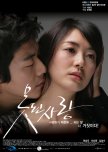
“Cruel Love” (or “Bad Love”) is a typical example of a genre product that falls victim to the very nature of Korean dramas, which are capable of changing direction midway through: a powerful premise, built upon a chain of tragic events and tangible consequences, which at a certain point is gradually replaced by a more conventional and convoluted melodrama, full of artificial obstacles capable of inducing a state of utter frustration. No one is claiming to want a happy ending at all costs, but rather demanding – for the sake of dramatic and intellectual integrity – that the story’s development remains consistent with what it initially promised.
The first part of the drama works extremely well because, through melodramatic coincidence, in every episode each tragedy brings about a consequence and every event perfectly alters the course of the story, through a whole series of external and irreversible obstacles (scandal, a ruined career, abortion, the breakdown of a family, bereavements, the rekindling of love, etc.) which create a rupture with the characters’ previous lives.
The romantic drama arises naturally from the situation that has been created. The psychological consequences depicted in the first part of the story are an extremely powerful driving force for the narrative’s progression: characters who suffer the consequences of their own decisions, or are forced to confront events that have now irrevocably altered their lives.
It is exactly this aspect that makes the first half particularly successful: however exaggerated the events may be, the pain does not seem gratuitous, because it leaves its mark and forces the protagonists to rebuild their identities from the ruins. In-jung, in particular, is not simply subjected to a series of misfortunes: she is transformed by them, and her newfound love for Yong-gi takes on meaning simply because it comes after a life that is completely different from the one she had imagined.
But then, as the action shifts from the provinces to Seoul, a melodrama of misunderstandings seems to unfold, a victim of its own need to carry on. Although the obstacles are gradually removed, the script seems compelled to create new ones, including through the introduction of utterly laughable and redundant characters, resulting in decidedly weaker situations that end up influencing the fate of the protagonists – who love one another and should therefore be together, but for some reason cannot…
The problem is that, at this stage, the complications no longer seem to arise naturally from the accumulated wounds, but become, in themselves, the fuel needed to prolong the story. What in the first part was a drama built on consequences gradually becomes a drama built on obstacles: when one obstacle is removed, another must be found immediately. And so the narrative ends up losing the very force that had made it interesting, because the viewer begins to see the mechanism at work rather than being drawn into the events.
The introduction of Park Shin Young, the lookalike of the protagonist’s first love, is a twist that ends up creating a narrative dynamic different from the premise, whilst also missing a great opportunity; whereas previously the focus was on the psychological consequences of what had happened, the story now attempts to play the classic melodrama card with ‘the past returning’ in an almost physical form.
This, in itself, could have been interesting, but instead it ends up shifting the narrative tone, being used explicitly to further complicate the relationship, when it could have carried greater psychological weight – perhaps to truly explore the relationship between memory, guilt, grief and desire, with all that this entails within the relationship between the two protagonists.
The very nature of this subsequent agreement (“let’s stay together until spring”) presupposes that the characters no longer act according to their own inclinations, but rather in the interests of the script. Two adults are in love, the main obstacles are gradually being overcome (by the way: is there a ranking of the most absurd terminal illnesses in the Dramaverse?) and neither of them has a concrete reason to give up on the other: the viewer’s question inevitably becomes: “But why!?” Even the suspension of disbelief breaks down; everything seems to boil down to justifying the 20-episode run.
These two different forms of melodrama ultimately distort the romantic dynamics of the story as well: the first part told the story of people who suffer the consequences of their own decisions; the second seems to focus on people who make decisions with the aim of bringing about new consequences. And this is a substantial difference, because in the first case the tragedy is part of the story, whilst in the second it becomes almost a plot device within it.
The paradox really comes to the fore in the final episode. After the inevitable time ellipsis, both have rebuilt their lives; almost all the obstacles that had prevented the two protagonists from living out their love for much of the story have simply vanished. And so the inevitable ‘Is that it!?’ arises, because the ending demonstrates, almost retrospectively, just how contrived much of the previous, tormented journey had been. The meeting, the glances, the embraces and the promise of eternal love… The end.
The bench built by Yong-gi, the return to Samcheok, the walk hand in hand: it’s all symbolically very beautiful and brings the story full circle with elegance, but it lacks what would have been most interesting to see – namely, a genuine confrontation between the two.
There is no real conversation capable of making sense of what has happened, no shared analysis of the wounds, the blame, the fears and the sacrifices that have kept them apart. The traumas of the past seem simply to have been absorbed and dissolved by the passage of time and the disappearance of external obstacles. With these removed, the two can finally love one another. But the most interesting drama would have been to understand how two people so deeply scarred by what they had been through could find one another again and consciously choose each other.
For this reason, the ending – whilst consistent with the series’ romantic tone and undoubtedly evocative both visually and emotionally – leaves one with a sense of incompleteness. The story has spent an enormous amount of time setting up the obstacles, but surprisingly little on actually showing how the protagonists overcame them.
There is, however, still much to be commended about the overall production of “Bad Love”: the excellent performances, the beautiful soundtrack, the atmosphere, the cinematography, the provincial landscapes, the melancholic charm of Samcheok and, above all, that initial ability to craft a mature, painful and compelling romantic story. It is a series that manages to be elegant, evocative and even poignant, and which, in its first half, achieves moments of remarkable intensity.
It’s a shame that, as the story unfolds, that very elegance ends up being little more than packaging – like a beautifully wrapped present: fine wrapping paper, a perfect bow, every detail meticulously attended to, all of which whets your curiosity about what might be inside. Only to open it and find the cheap little ring that comes with an Easter egg.
After a truly excellent first half – with convincing performances, a great atmosphere and a remarkably captivating audiovisual production – “Bad Love” culpably ends up gradually losing the narrative focus of its story (ironically, with the metaphor of the bench and swing clearly evident!), replacing the power of the consequences with a succession of increasingly contrived complications needed solely to drag the whole thing out.
The emotional turmoil and depth that had led one to expect the very best fade away in a conclusion that is far too hasty and complacent, culpably made up of haphazard narrative choices and missed opportunities. What remains is the memory of something that could have been far greater than what it ultimately managed to be.
6 ½
The first part of the drama works extremely well because, through melodramatic coincidence, in every episode each tragedy brings about a consequence and every event perfectly alters the course of the story, through a whole series of external and irreversible obstacles (scandal, a ruined career, abortion, the breakdown of a family, bereavements, the rekindling of love, etc.) which create a rupture with the characters’ previous lives.
The romantic drama arises naturally from the situation that has been created. The psychological consequences depicted in the first part of the story are an extremely powerful driving force for the narrative’s progression: characters who suffer the consequences of their own decisions, or are forced to confront events that have now irrevocably altered their lives.
It is exactly this aspect that makes the first half particularly successful: however exaggerated the events may be, the pain does not seem gratuitous, because it leaves its mark and forces the protagonists to rebuild their identities from the ruins. In-jung, in particular, is not simply subjected to a series of misfortunes: she is transformed by them, and her newfound love for Yong-gi takes on meaning simply because it comes after a life that is completely different from the one she had imagined.
But then, as the action shifts from the provinces to Seoul, a melodrama of misunderstandings seems to unfold, a victim of its own need to carry on. Although the obstacles are gradually removed, the script seems compelled to create new ones, including through the introduction of utterly laughable and redundant characters, resulting in decidedly weaker situations that end up influencing the fate of the protagonists – who love one another and should therefore be together, but for some reason cannot…
The problem is that, at this stage, the complications no longer seem to arise naturally from the accumulated wounds, but become, in themselves, the fuel needed to prolong the story. What in the first part was a drama built on consequences gradually becomes a drama built on obstacles: when one obstacle is removed, another must be found immediately. And so the narrative ends up losing the very force that had made it interesting, because the viewer begins to see the mechanism at work rather than being drawn into the events.
The introduction of Park Shin Young, the lookalike of the protagonist’s first love, is a twist that ends up creating a narrative dynamic different from the premise, whilst also missing a great opportunity; whereas previously the focus was on the psychological consequences of what had happened, the story now attempts to play the classic melodrama card with ‘the past returning’ in an almost physical form.
This, in itself, could have been interesting, but instead it ends up shifting the narrative tone, being used explicitly to further complicate the relationship, when it could have carried greater psychological weight – perhaps to truly explore the relationship between memory, guilt, grief and desire, with all that this entails within the relationship between the two protagonists.
The very nature of this subsequent agreement (“let’s stay together until spring”) presupposes that the characters no longer act according to their own inclinations, but rather in the interests of the script. Two adults are in love, the main obstacles are gradually being overcome (by the way: is there a ranking of the most absurd terminal illnesses in the Dramaverse?) and neither of them has a concrete reason to give up on the other: the viewer’s question inevitably becomes: “But why!?” Even the suspension of disbelief breaks down; everything seems to boil down to justifying the 20-episode run.
These two different forms of melodrama ultimately distort the romantic dynamics of the story as well: the first part told the story of people who suffer the consequences of their own decisions; the second seems to focus on people who make decisions with the aim of bringing about new consequences. And this is a substantial difference, because in the first case the tragedy is part of the story, whilst in the second it becomes almost a plot device within it.
The paradox really comes to the fore in the final episode. After the inevitable time ellipsis, both have rebuilt their lives; almost all the obstacles that had prevented the two protagonists from living out their love for much of the story have simply vanished. And so the inevitable ‘Is that it!?’ arises, because the ending demonstrates, almost retrospectively, just how contrived much of the previous, tormented journey had been. The meeting, the glances, the embraces and the promise of eternal love… The end.
The bench built by Yong-gi, the return to Samcheok, the walk hand in hand: it’s all symbolically very beautiful and brings the story full circle with elegance, but it lacks what would have been most interesting to see – namely, a genuine confrontation between the two.
There is no real conversation capable of making sense of what has happened, no shared analysis of the wounds, the blame, the fears and the sacrifices that have kept them apart. The traumas of the past seem simply to have been absorbed and dissolved by the passage of time and the disappearance of external obstacles. With these removed, the two can finally love one another. But the most interesting drama would have been to understand how two people so deeply scarred by what they had been through could find one another again and consciously choose each other.
For this reason, the ending – whilst consistent with the series’ romantic tone and undoubtedly evocative both visually and emotionally – leaves one with a sense of incompleteness. The story has spent an enormous amount of time setting up the obstacles, but surprisingly little on actually showing how the protagonists overcame them.
There is, however, still much to be commended about the overall production of “Bad Love”: the excellent performances, the beautiful soundtrack, the atmosphere, the cinematography, the provincial landscapes, the melancholic charm of Samcheok and, above all, that initial ability to craft a mature, painful and compelling romantic story. It is a series that manages to be elegant, evocative and even poignant, and which, in its first half, achieves moments of remarkable intensity.
It’s a shame that, as the story unfolds, that very elegance ends up being little more than packaging – like a beautifully wrapped present: fine wrapping paper, a perfect bow, every detail meticulously attended to, all of which whets your curiosity about what might be inside. Only to open it and find the cheap little ring that comes with an Easter egg.
After a truly excellent first half – with convincing performances, a great atmosphere and a remarkably captivating audiovisual production – “Bad Love” culpably ends up gradually losing the narrative focus of its story (ironically, with the metaphor of the bench and swing clearly evident!), replacing the power of the consequences with a succession of increasingly contrived complications needed solely to drag the whole thing out.
The emotional turmoil and depth that had led one to expect the very best fade away in a conclusion that is far too hasty and complacent, culpably made up of haphazard narrative choices and missed opportunities. What remains is the memory of something that could have been far greater than what it ultimately managed to be.
6 ½
Was this review helpful to you?


