



This review may contain spoilers
I expected a light romance. I found a story that quietly stole my heart.
Some dramas impress you with epic battles, tragic endings, or grand political schemes.
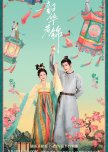
And then there are dramas like Youthful Glory—stories that quietly win your heart until one day you realize you've become attached to every character.
Honestly, I started this drama with almost no expectations. I only knew that the cast looked good, but I wasn't familiar enough with the actors to have any expectations about their performances. After finishing several emotionally heavy historical dramas, I simply wanted something light before diving into titles known for breaking viewers' hearts.
At first, Youthful Glory was exactly that.
It was charming, funny, and genuinely relaxing to watch. The banter between Jiang Xu and Ming Tan felt playful and natural, and their chemistry never felt forced. Unlike many historical romances that rely on endless misunderstandings to create drama, their relationship developed through shared experiences, mutual respect, and quiet acts of care. It felt refreshingly mature.
Then the Marquis Jing'an case happened.
Watching Marquis Jing'an—General Ming Tingyuan, one of the empire's most respected military commanders and Ming Tan's father, being poisoned, framed, and sentenced to death genuinely broke my heart. I went into this drama expecting nothing more than a comfort watch, so I was completely unprepared for how emotional that storyline would become.
Even though I already suspected there was a larger plan unfolding behind the scenes, Ming Tan knew absolutely nothing. Watching her desperately try to save her father while feeling powerless made me cry far more than I expected. For a drama I thought would remain light from beginning to end, this arc completely changed my perspective and added the emotional weight that elevated the entire story.
Jiang Xu became one of the biggest surprises for me.
As the King of Dingbei, he carried the authority of an imperial prince and the responsibility of one of the empire's most trusted military leaders, yet he never relied on his status to command respect. Instead, he earned it through calm judgment, quiet confidence, unwavering loyalty, and his willingness to protect others without asking for recognition.
He isn't the type of male lead who constantly makes grand declarations of love.
He simply acts.
There were many moments when I wanted him to explain everything to Ming Tan, but as the story progressed, I understood why he couldn't. Every decision he made carried political consequences, and revealing his plans too early could have endangered everyone he was trying to protect.
His love language wasn't words.
It was action.
Watching this respected prince become completely helpless while trying to win back Ming Tan's trust was honestly one of the cutest parts of the drama. For someone so composed on the battlefield and inside the imperial court, seeing him become awkward and almost clueless in love made him even more endearing.
Ming Tan also won me over far more than I expected.
She wasn't written as a perfect heroine who always made the right decisions. She was emotional, stubborn, occasionally impulsive, and sometimes allowed her feelings to cloud her judgment. Yet those imperfections made her feel human. More importantly, she learned from every hardship she experienced. Her growth never felt rushed or forced—it happened naturally, making it easy to root for her until the very end.
One of the drama's greatest strengths was its supporting cast.
Instead of existing solely to support the main couple, every major supporting character had their own personality, purpose, and emotional journey that naturally enriched the story.
I especially loved Zhang Huai Yu (Bai Shu) and Bai Min Min (Dai Lu Wa). At first, they brought warmth, humor, and a refreshing contrast to Jiang Xu and Ming Tan's calmer romance. Their playful banter and constant teasing made many of the lighter moments genuinely entertaining. But beyond the comedy, I appreciated how their relationship quietly evolved through companionship, trust, and unwavering support for one another. They never felt like a couple added simply to provide comic relief. They had their own story, their own struggles, and their own reasons to become memorable.
I also found myself becoming attached to Shu Jing Ran (Quan Yi Lun) and Yun Yi (Ke Ying). Compared to the lively dynamic of Zhang Huai Yu and Bai Min Min, their relationship unfolded much more quietly. Their story was built on loyalty, understanding, and shared hardships rather than dramatic romantic moments. It was subtle, sincere, and beautifully developed alongside the main narrative.
What impressed me most was that neither couple ever felt like filler.
They weren't simply following Jiang Xu and Ming Tan throughout their journey. Whether accompanying the leads during dangerous missions, participating in investigations, helping uncover conspiracies, or standing beside them throughout the Lizhou smuggling investigation, every member of the group had meaningful contributions to the story.
By the time the Lizhou arc unfolded, I realized I was no longer watching the drama solely for Jiang Xu and Ming Tan.
I had become emotionally invested in the entire group.
That is something I always value in historical dramas.
When every supporting character has a meaningful role instead of merely existing around the protagonists, the emotional impact becomes much stronger. Youthful Glory wasn't simply about one couple falling in love—it became the story of a group of people who laughed together, investigated together, fought together, protected one another, and slowly became a family through every challenge they faced.
The balance between romance, political intrigue, investigations, military affairs, and family relationships was another one of the drama's greatest strengths. It never became overwhelmingly political, yet it never abandoned its historical identity either. Every major case—from the Marquis Jing'an conspiracy to the Lizhou smuggling investigation—kept the story moving while naturally strengthening the relationships between the characters.
Visually, the drama was consistently elegant.
The cinematography was beautiful without trying too hard to be grand. The costumes suited each character perfectly and reflected their personalities and status well. The soundtrack blended naturally into the scenes, supporting the emotions without overpowering them. While the OST wasn't particularly unforgettable, it complemented the overall atmosphere beautifully.
As for the performances, I finished this drama genuinely impressed.
Song Weilong portrayed Jiang Xu with remarkable restraint. Instead of relying on exaggerated emotions, he allowed subtle expressions, quiet moments, and body language to carry the character's emotional weight. He made Jiang Xu feel dependable, capable, composed, and deeply sincere.
Bao Shang'en also exceeded my expectations. Her performance matured alongside Ming Tan's character, making every stage of her emotional journey believable. By the second half of the drama, I completely believed in her transformation from a sheltered noble daughter into someone capable of standing beside Jiang Xu through every hardship.
If I had one criticism, it would be that some political conflicts wrapped up a little too conveniently, and a few antagonists lacked the complexity that would have made the stakes even stronger. There were moments when I wished the villains had been written with the same depth as the heroes.
Even so, those minor flaws never overshadowed my overall experience.
Looking back, I'm actually glad I chose Youthful Glory before moving on to emotionally devastating dramas like Nirvana in Fire or Goodbye, My Princess.
It became exactly the emotional break I needed.
It made me laugh.
It unexpectedly made me cry.
It gave me a romance built on trust rather than unnecessary misunderstandings.
It gave me supporting characters I genuinely cared about.
And it reminded me that not every unforgettable historical drama has to leave me emotionally shattered.
Sometimes, a story filled with quiet love, loyal families, meaningful friendships, political conspiracies, and people who slowly grow together through every challenge is more than enough.
Youthful Glory may not be the grandest historical drama I've watched, but it quietly became one of the most heartfelt and unexpectedly memorable
And then there are dramas like Youthful Glory—stories that quietly win your heart until one day you realize you've become attached to every character.
Honestly, I started this drama with almost no expectations. I only knew that the cast looked good, but I wasn't familiar enough with the actors to have any expectations about their performances. After finishing several emotionally heavy historical dramas, I simply wanted something light before diving into titles known for breaking viewers' hearts.
At first, Youthful Glory was exactly that.
It was charming, funny, and genuinely relaxing to watch. The banter between Jiang Xu and Ming Tan felt playful and natural, and their chemistry never felt forced. Unlike many historical romances that rely on endless misunderstandings to create drama, their relationship developed through shared experiences, mutual respect, and quiet acts of care. It felt refreshingly mature.
Then the Marquis Jing'an case happened.
Watching Marquis Jing'an—General Ming Tingyuan, one of the empire's most respected military commanders and Ming Tan's father, being poisoned, framed, and sentenced to death genuinely broke my heart. I went into this drama expecting nothing more than a comfort watch, so I was completely unprepared for how emotional that storyline would become.
Even though I already suspected there was a larger plan unfolding behind the scenes, Ming Tan knew absolutely nothing. Watching her desperately try to save her father while feeling powerless made me cry far more than I expected. For a drama I thought would remain light from beginning to end, this arc completely changed my perspective and added the emotional weight that elevated the entire story.
Jiang Xu became one of the biggest surprises for me.
As the King of Dingbei, he carried the authority of an imperial prince and the responsibility of one of the empire's most trusted military leaders, yet he never relied on his status to command respect. Instead, he earned it through calm judgment, quiet confidence, unwavering loyalty, and his willingness to protect others without asking for recognition.
He isn't the type of male lead who constantly makes grand declarations of love.
He simply acts.
There were many moments when I wanted him to explain everything to Ming Tan, but as the story progressed, I understood why he couldn't. Every decision he made carried political consequences, and revealing his plans too early could have endangered everyone he was trying to protect.
His love language wasn't words.
It was action.
Watching this respected prince become completely helpless while trying to win back Ming Tan's trust was honestly one of the cutest parts of the drama. For someone so composed on the battlefield and inside the imperial court, seeing him become awkward and almost clueless in love made him even more endearing.
Ming Tan also won me over far more than I expected.
She wasn't written as a perfect heroine who always made the right decisions. She was emotional, stubborn, occasionally impulsive, and sometimes allowed her feelings to cloud her judgment. Yet those imperfections made her feel human. More importantly, she learned from every hardship she experienced. Her growth never felt rushed or forced—it happened naturally, making it easy to root for her until the very end.
One of the drama's greatest strengths was its supporting cast.
Instead of existing solely to support the main couple, every major supporting character had their own personality, purpose, and emotional journey that naturally enriched the story.
I especially loved Zhang Huai Yu (Bai Shu) and Bai Min Min (Dai Lu Wa). At first, they brought warmth, humor, and a refreshing contrast to Jiang Xu and Ming Tan's calmer romance. Their playful banter and constant teasing made many of the lighter moments genuinely entertaining. But beyond the comedy, I appreciated how their relationship quietly evolved through companionship, trust, and unwavering support for one another. They never felt like a couple added simply to provide comic relief. They had their own story, their own struggles, and their own reasons to become memorable.
I also found myself becoming attached to Shu Jing Ran (Quan Yi Lun) and Yun Yi (Ke Ying). Compared to the lively dynamic of Zhang Huai Yu and Bai Min Min, their relationship unfolded much more quietly. Their story was built on loyalty, understanding, and shared hardships rather than dramatic romantic moments. It was subtle, sincere, and beautifully developed alongside the main narrative.
What impressed me most was that neither couple ever felt like filler.
They weren't simply following Jiang Xu and Ming Tan throughout their journey. Whether accompanying the leads during dangerous missions, participating in investigations, helping uncover conspiracies, or standing beside them throughout the Lizhou smuggling investigation, every member of the group had meaningful contributions to the story.
By the time the Lizhou arc unfolded, I realized I was no longer watching the drama solely for Jiang Xu and Ming Tan.
I had become emotionally invested in the entire group.
That is something I always value in historical dramas.
When every supporting character has a meaningful role instead of merely existing around the protagonists, the emotional impact becomes much stronger. Youthful Glory wasn't simply about one couple falling in love—it became the story of a group of people who laughed together, investigated together, fought together, protected one another, and slowly became a family through every challenge they faced.
The balance between romance, political intrigue, investigations, military affairs, and family relationships was another one of the drama's greatest strengths. It never became overwhelmingly political, yet it never abandoned its historical identity either. Every major case—from the Marquis Jing'an conspiracy to the Lizhou smuggling investigation—kept the story moving while naturally strengthening the relationships between the characters.
Visually, the drama was consistently elegant.
The cinematography was beautiful without trying too hard to be grand. The costumes suited each character perfectly and reflected their personalities and status well. The soundtrack blended naturally into the scenes, supporting the emotions without overpowering them. While the OST wasn't particularly unforgettable, it complemented the overall atmosphere beautifully.
As for the performances, I finished this drama genuinely impressed.
Song Weilong portrayed Jiang Xu with remarkable restraint. Instead of relying on exaggerated emotions, he allowed subtle expressions, quiet moments, and body language to carry the character's emotional weight. He made Jiang Xu feel dependable, capable, composed, and deeply sincere.
Bao Shang'en also exceeded my expectations. Her performance matured alongside Ming Tan's character, making every stage of her emotional journey believable. By the second half of the drama, I completely believed in her transformation from a sheltered noble daughter into someone capable of standing beside Jiang Xu through every hardship.
If I had one criticism, it would be that some political conflicts wrapped up a little too conveniently, and a few antagonists lacked the complexity that would have made the stakes even stronger. There were moments when I wished the villains had been written with the same depth as the heroes.
Even so, those minor flaws never overshadowed my overall experience.
Looking back, I'm actually glad I chose Youthful Glory before moving on to emotionally devastating dramas like Nirvana in Fire or Goodbye, My Princess.
It became exactly the emotional break I needed.
It made me laugh.
It unexpectedly made me cry.
It gave me a romance built on trust rather than unnecessary misunderstandings.
It gave me supporting characters I genuinely cared about.
And it reminded me that not every unforgettable historical drama has to leave me emotionally shattered.
Sometimes, a story filled with quiet love, loyal families, meaningful friendships, political conspiracies, and people who slowly grow together through every challenge is more than enough.
Youthful Glory may not be the grandest historical drama I've watched, but it quietly became one of the most heartfelt and unexpectedly memorable
Was this review helpful to you?


