



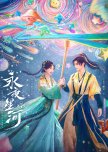
A Healing Fantasy Where Love Wins Without Endless Suffering
After months of emotionally devastating xianxia and historical dramas where love is measured by sacrifice, death, and endless misunderstandings, Love Game in Eastern Fantasy felt like a refreshing reminder that a compelling romance does not need to be built on relentless suffering to leave a lasting impact.
At first glance, the drama presents itself as a lighthearted fantasy romance inside a game world. However, beneath its playful premise lies a carefully written story about healing, forgiveness, family, identity, and the courage to choose love over fear.
The greatest strength of this drama is its pacing. Unlike many fantasy dramas that spend too much time establishing the world before rewarding viewers emotionally, this series understands exactly when to introduce comedy, mystery, romance, and emotional conflict. Every arc naturally builds upon the previous one without feeling repetitive. Even the frustrating bracelet arc—which admittedly tested my patience—ultimately served a meaningful purpose by reinforcing one of the drama's central themes: genuine love cannot be erased by external control. One of my favorite symbolic moments was when Miaomiao, despite being manipulated by the bracelet, unconsciously wrote that she wanted to marry Ziqi instead of Zhao Ruoshi. It beautifully suggested that while the mind may be deceived, the heart always remembers.
The romance between Ling Miaomiao and Mu Sheng is undoubtedly the heart of the series. Rather than relying on exaggerated misunderstandings or dramatic sacrifices every few episodes, their relationship grows through trust, vulnerability, and gradual emotional healing. Their chemistry feels effortless because every confession, every protective gesture, and every quiet conversation is earned. Watching Mu Sheng slowly lower the emotional walls he built around himself became one of the most satisfying character journeys I've seen in recent fantasy dramas.
Mu Sheng easily stands among the strongest male leads in recent years. His strength never comes from overwhelming power alone, but from his emotional restraint, quiet devotion, intelligence, and unwavering loyalty. He carries unimaginable guilt throughout the story yet never allows bitterness to define him. Instead of seeking revenge, he constantly chooses compassion, even when it demands personal sacrifice. His love language is protection, but more importantly, he learns that allowing himself to be loved is just as important as protecting others. That emotional evolution is what makes him unforgettable.
Ling Miaomiao is equally impressive. She never remains the typical transported heroine who simply reacts to events around her. As the story progresses, she becomes emotionally mature, courageous, and willing to face difficult truths instead of avoiding them. Her love for Mu Sheng gradually transforms from curiosity into complete understanding. She does not merely save him emotionally—she helps him rediscover the life he deserves.
The supporting cast deserves equal recognition. Mu Yao, Liu Fuyi, Zhao Ruoshi, and even the antagonists all contribute meaningfully to the narrative instead of existing solely to support the main romance. Each character reflects a different response to grief, guilt, responsibility, and forgiveness, making the world feel emotionally complete. Their relationships create a genuine sense of found family, one of the drama's most touching qualities.
Perhaps what impressed me most is how the story balances emotional weight with optimism. It never ignores tragedy or trauma, yet it refuses to romanticize suffering. Instead, it argues that healing is possible, forgiveness is powerful, and love should inspire growth rather than endless pain. In a genre often dominated by repeated sacrifices and tragic separations, this perspective feels surprisingly refreshing.
My only real criticism concerns the ending. While emotionally satisfying, the modern-world epilogue felt far too brief. After investing so deeply in the characters and their journey, I wished the reunion outside the fantasy world had been explored more thoroughly. A few additional scenes showing their lives together would have elevated an already excellent conclusion into a truly unforgettable one.
Overall, Love Game in Eastern Fantasy is more than just a romantic fantasy. It is a story about breaking cycles of hatred, embracing vulnerability, and proving that the deepest love is not measured by how much people suffer for each other, but by how they help each other heal.
It is the perfect palate cleanser after countless heavy-angst dramas—and ironically, that very choice makes it stand out among them.
At first glance, the drama presents itself as a lighthearted fantasy romance inside a game world. However, beneath its playful premise lies a carefully written story about healing, forgiveness, family, identity, and the courage to choose love over fear.
The greatest strength of this drama is its pacing. Unlike many fantasy dramas that spend too much time establishing the world before rewarding viewers emotionally, this series understands exactly when to introduce comedy, mystery, romance, and emotional conflict. Every arc naturally builds upon the previous one without feeling repetitive. Even the frustrating bracelet arc—which admittedly tested my patience—ultimately served a meaningful purpose by reinforcing one of the drama's central themes: genuine love cannot be erased by external control. One of my favorite symbolic moments was when Miaomiao, despite being manipulated by the bracelet, unconsciously wrote that she wanted to marry Ziqi instead of Zhao Ruoshi. It beautifully suggested that while the mind may be deceived, the heart always remembers.
The romance between Ling Miaomiao and Mu Sheng is undoubtedly the heart of the series. Rather than relying on exaggerated misunderstandings or dramatic sacrifices every few episodes, their relationship grows through trust, vulnerability, and gradual emotional healing. Their chemistry feels effortless because every confession, every protective gesture, and every quiet conversation is earned. Watching Mu Sheng slowly lower the emotional walls he built around himself became one of the most satisfying character journeys I've seen in recent fantasy dramas.
Mu Sheng easily stands among the strongest male leads in recent years. His strength never comes from overwhelming power alone, but from his emotional restraint, quiet devotion, intelligence, and unwavering loyalty. He carries unimaginable guilt throughout the story yet never allows bitterness to define him. Instead of seeking revenge, he constantly chooses compassion, even when it demands personal sacrifice. His love language is protection, but more importantly, he learns that allowing himself to be loved is just as important as protecting others. That emotional evolution is what makes him unforgettable.
Ling Miaomiao is equally impressive. She never remains the typical transported heroine who simply reacts to events around her. As the story progresses, she becomes emotionally mature, courageous, and willing to face difficult truths instead of avoiding them. Her love for Mu Sheng gradually transforms from curiosity into complete understanding. She does not merely save him emotionally—she helps him rediscover the life he deserves.
The supporting cast deserves equal recognition. Mu Yao, Liu Fuyi, Zhao Ruoshi, and even the antagonists all contribute meaningfully to the narrative instead of existing solely to support the main romance. Each character reflects a different response to grief, guilt, responsibility, and forgiveness, making the world feel emotionally complete. Their relationships create a genuine sense of found family, one of the drama's most touching qualities.
Perhaps what impressed me most is how the story balances emotional weight with optimism. It never ignores tragedy or trauma, yet it refuses to romanticize suffering. Instead, it argues that healing is possible, forgiveness is powerful, and love should inspire growth rather than endless pain. In a genre often dominated by repeated sacrifices and tragic separations, this perspective feels surprisingly refreshing.
My only real criticism concerns the ending. While emotionally satisfying, the modern-world epilogue felt far too brief. After investing so deeply in the characters and their journey, I wished the reunion outside the fantasy world had been explored more thoroughly. A few additional scenes showing their lives together would have elevated an already excellent conclusion into a truly unforgettable one.
Overall, Love Game in Eastern Fantasy is more than just a romantic fantasy. It is a story about breaking cycles of hatred, embracing vulnerability, and proving that the deepest love is not measured by how much people suffer for each other, but by how they help each other heal.
It is the perfect palate cleanser after countless heavy-angst dramas—and ironically, that very choice makes it stand out among them.
Was this review helpful to you?


