



This review may contain spoilers
Cheng Yi Deserved a Better Story?
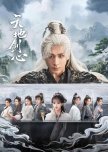
I started Sword and Beloved because of Cheng Yi, but I stayed because I wanted to understand Wangquan Fugui—not simply as the strongest swordsman, but as the son of Hongye and Dongfang Huaizhu from Love in Pavilion, a child born from sacrifice and raised to become a weapon.
And that premise had so much potential.
Fugui inherits the extraordinary power of both his parents, but instead of being given the freedom his mother wished for him, he is raised by his father to become the strongest possible weapon against their enemies. His entire identity is built around strength, duty, emotional restraint, and sacrifice.
That is exactly the kind of internally conflicted character Cheng Yi can play beautifully.
And he does.
🎭 Cheng Yi Was NOT the Problem
If anything, Cheng Yi was the reason I remained invested as long as I did.
His Fugui is deliberately restrained. He isn't supposed to be openly emotional at the beginning. He has been conditioned to suppress attachment and prioritize strength, so much of Cheng Yi's performance happens through his expressions, silence, body language, and the subtle moments when Fugui begins questioning the life that was chosen for him.
But this also made me compare him with two of Cheng Yi's strongest roles:
Si Feng in Love and Redemption and Li Lianhua/Li Xiangyi in Mysterious Lotus Casebook.
And that comparison is where Sword and Beloved unfortunately loses.
In Love and Redemption, Cheng Yi was given a story that constantly challenged Si Feng emotionally. His love, suffering, sacrifice, misunderstandings and relationship with Xuanji were central to the narrative.
In Mysterious Lotus Casebook, Li Lianhua was practically inseparable from the story itself. His identity, his past, the mysteries, his relationships and his physical decline were all woven into the central plot.
Cheng Yi wasn't merely acting those stories.
He was at the center of them.
Fugui had the potential to become another unforgettable Cheng Yi character. But Sword and Beloved doesn't consistently give him enough space to be one.
There is a point where I found myself wondering:
“Where is Fugui? Why does it feel like the protagonist has become nothing more than a side character?”
And unfortunately, other viewers had the same complaint about the middle portion of the drama.
That is why I cannot blame Cheng Yi for the drama's low reception.
The actor was better than the material he was given.
🕷️ And Then There Was Qingtong
This is probably my biggest personal problem with the drama.
I simply did not connect with Qingtong the way I wanted to.
The idea of a spider demon becoming the person who challenges Fugui's worldview is actually interesting. But the execution of her character and the prolonged spider-related storyline made it increasingly difficult for me to remain emotionally invested.
And because Fugui and Qingtong are supposed to be at the heart of the story, their relationship needed to remain the emotional anchor.
Instead, after the major Thousand Swords turning point around Episode 17, the story increasingly separates the two leads and gives more attention to supporting characters and their relationships.
For me, that was the point where the story began losing its center.
⚔️ The Turning Point
The Thousand Swords sequence is one of the strongest early turning points because Fugui is finally forced out of the life that has defined him.
But after that, the drama becomes increasingly fragmented.
There are important plot developments, revelations and character arcs, but the main romance becomes less prominent, while side stories receive more attention.
This is especially frustrating because the central premise is actually strong:
A son raised to be a weapon finally has to decide whether he wants to remain a weapon—or become a person who chooses his own life.
That should have been the emotional spine of the entire drama.
💔 The Love in Pavilion Connection Makes It Even More Tragic
Having watched Love in Pavilion first, Fugui's story carries an additional layer of sadness.
Huaizhu dies giving birth to Fugui because she believes her son can help end the threat that destroyed their generation.
But she also leaves behind a very important wish:
If Fugui ever wants to walk away and choose peace for himself, he should be allowed to do so.
And this is where Hongye tragically fails her.
He protects Fugui's life, but he doesn't protect his freedom.
Instead, he raises his son to become the strongest weapon possible.
That contradiction is one of the most compelling aspects of Fugui's character.
And Sword and Beloved eventually makes Hongye confront that mistake.
So I don't think the deaths in Love in Pavilion were meaningless.
The tragedy was supposed to become the wound inherited by the next generation.
But here's where I struggled:
We already went through this.
The Masked Group was devastated.
Huaizhu died.
Hongye survived.
Fugui inherited the consequences.
And then in Sword and Beloved, we return to the same overarching enemy and another cycle of sacrifice and death.
At some point, I couldn't help asking:
“Was the tragedy of the previous generation meant to be resolved—or are we simply watching the same tragedy happen again?”
Thematically, the idea of breaking that cycle is powerful.
Emotionally, however, the repetition became exhausting.
📉 Why the Ratings Fell
This is also why I understand the surprisingly low reception.
The problem isn't simply that the drama is tragic.
Tragedy can be beautiful when the story earns it.
The bigger issue is execution:
• uneven pacing
• an increasingly fragmented storyline
• prolonged side arcs
• the main romance losing focus
• inconsistent use of the leads
• Qingtong becoming difficult for some viewers to connect with
• Fugui feeling strangely sidelined despite being the protagonist
• and an ending built around sacrifice after the audience has already endured so much loss
There are viewers who genuinely loved the drama, particularly its early episodes, Cheng Yi's performance, the visual presentation and its themes.
But the mixed-to-negative reception across multiple platforms shows that the problems weren't limited to one site's rating.
And personally, I understand why.
🎬 Did I Finish All 36 Episodes?
No.
And I'm actually okay with that.
I watched the early portion properly because I wanted to experience Fugui's development and the relationship between Fugui and Qingtong for myself.
After the story began losing focus, I chose to watch the important Fugui/Qingtong scenes, major revelations and key plot developments while fast-forwarding through portions that no longer held my interest.
I also followed the later story closely enough to understand how Fugui's journey and the major conflicts conclude.
I don't regret making that choice.
Because watching 36 episodes simply so I could say “I finished it” would not have changed my opinion of the writing.
And honestly?
Cheng Yi already gave me enough reason to stay until the point where I felt the story was no longer rewarding my investment.
⭐ Final Thoughts
There is a genuinely good story hidden inside Sword and Beloved.
Fugui is a fascinating character.
His relationship with his father is compelling.
His inheritance from Hongye and Huaizhu gives his journey emotional weight.
The idea of breaking away from a life built entirely around hatred, duty and strength is meaningful.
And Cheng Yi understands Fugui.
That's why it hurts to see the story gradually lose focus.
Compared with Si Feng in Love and Redemption and Li Lianhua/Li Xiangyi in Mysterious Lotus Casebook, Fugui had the potential to become another defining Cheng Yi performance.
But those dramas knew how to build the story around their central character.
Sword and Beloved increasingly struggled to do that.
So my biggest criticism isn't:
“Cheng Yi couldn't carry the drama.”
It is the opposite.
Cheng Yi carried the drama farther than the story could carry itself.
And perhaps the saddest conclusion I can give is this:
I didn't stop watching because Cheng Yi wasn't worth watching.
I stopped because Cheng Yi was worth watching in a story that knew what to do with him.
Cheng Yi: 9/10
Fugui as a character: 8.5/10
Premise: 8/10
Visuals/Action: 8/10
Romance: 6/10
FL Characterization: 5/10
Story Execution: 5/10
Pacing: 4.5/10
Overall: 6/10
A strong premise, a compelling protagonist and a very good Cheng Yi performance—unfortunately trapped inside a story that became increasingly messy, unfocused and emotionally exhausting.
And that premise had so much potential.
Fugui inherits the extraordinary power of both his parents, but instead of being given the freedom his mother wished for him, he is raised by his father to become the strongest possible weapon against their enemies. His entire identity is built around strength, duty, emotional restraint, and sacrifice.
That is exactly the kind of internally conflicted character Cheng Yi can play beautifully.
And he does.
🎭 Cheng Yi Was NOT the Problem
If anything, Cheng Yi was the reason I remained invested as long as I did.
His Fugui is deliberately restrained. He isn't supposed to be openly emotional at the beginning. He has been conditioned to suppress attachment and prioritize strength, so much of Cheng Yi's performance happens through his expressions, silence, body language, and the subtle moments when Fugui begins questioning the life that was chosen for him.
But this also made me compare him with two of Cheng Yi's strongest roles:
Si Feng in Love and Redemption and Li Lianhua/Li Xiangyi in Mysterious Lotus Casebook.
And that comparison is where Sword and Beloved unfortunately loses.
In Love and Redemption, Cheng Yi was given a story that constantly challenged Si Feng emotionally. His love, suffering, sacrifice, misunderstandings and relationship with Xuanji were central to the narrative.
In Mysterious Lotus Casebook, Li Lianhua was practically inseparable from the story itself. His identity, his past, the mysteries, his relationships and his physical decline were all woven into the central plot.
Cheng Yi wasn't merely acting those stories.
He was at the center of them.
Fugui had the potential to become another unforgettable Cheng Yi character. But Sword and Beloved doesn't consistently give him enough space to be one.
There is a point where I found myself wondering:
“Where is Fugui? Why does it feel like the protagonist has become nothing more than a side character?”
And unfortunately, other viewers had the same complaint about the middle portion of the drama.
That is why I cannot blame Cheng Yi for the drama's low reception.
The actor was better than the material he was given.
🕷️ And Then There Was Qingtong
This is probably my biggest personal problem with the drama.
I simply did not connect with Qingtong the way I wanted to.
The idea of a spider demon becoming the person who challenges Fugui's worldview is actually interesting. But the execution of her character and the prolonged spider-related storyline made it increasingly difficult for me to remain emotionally invested.
And because Fugui and Qingtong are supposed to be at the heart of the story, their relationship needed to remain the emotional anchor.
Instead, after the major Thousand Swords turning point around Episode 17, the story increasingly separates the two leads and gives more attention to supporting characters and their relationships.
For me, that was the point where the story began losing its center.
⚔️ The Turning Point
The Thousand Swords sequence is one of the strongest early turning points because Fugui is finally forced out of the life that has defined him.
But after that, the drama becomes increasingly fragmented.
There are important plot developments, revelations and character arcs, but the main romance becomes less prominent, while side stories receive more attention.
This is especially frustrating because the central premise is actually strong:
A son raised to be a weapon finally has to decide whether he wants to remain a weapon—or become a person who chooses his own life.
That should have been the emotional spine of the entire drama.
💔 The Love in Pavilion Connection Makes It Even More Tragic
Having watched Love in Pavilion first, Fugui's story carries an additional layer of sadness.
Huaizhu dies giving birth to Fugui because she believes her son can help end the threat that destroyed their generation.
But she also leaves behind a very important wish:
If Fugui ever wants to walk away and choose peace for himself, he should be allowed to do so.
And this is where Hongye tragically fails her.
He protects Fugui's life, but he doesn't protect his freedom.
Instead, he raises his son to become the strongest weapon possible.
That contradiction is one of the most compelling aspects of Fugui's character.
And Sword and Beloved eventually makes Hongye confront that mistake.
So I don't think the deaths in Love in Pavilion were meaningless.
The tragedy was supposed to become the wound inherited by the next generation.
But here's where I struggled:
We already went through this.
The Masked Group was devastated.
Huaizhu died.
Hongye survived.
Fugui inherited the consequences.
And then in Sword and Beloved, we return to the same overarching enemy and another cycle of sacrifice and death.
At some point, I couldn't help asking:
“Was the tragedy of the previous generation meant to be resolved—or are we simply watching the same tragedy happen again?”
Thematically, the idea of breaking that cycle is powerful.
Emotionally, however, the repetition became exhausting.
📉 Why the Ratings Fell
This is also why I understand the surprisingly low reception.
The problem isn't simply that the drama is tragic.
Tragedy can be beautiful when the story earns it.
The bigger issue is execution:
• uneven pacing
• an increasingly fragmented storyline
• prolonged side arcs
• the main romance losing focus
• inconsistent use of the leads
• Qingtong becoming difficult for some viewers to connect with
• Fugui feeling strangely sidelined despite being the protagonist
• and an ending built around sacrifice after the audience has already endured so much loss
There are viewers who genuinely loved the drama, particularly its early episodes, Cheng Yi's performance, the visual presentation and its themes.
But the mixed-to-negative reception across multiple platforms shows that the problems weren't limited to one site's rating.
And personally, I understand why.
🎬 Did I Finish All 36 Episodes?
No.
And I'm actually okay with that.
I watched the early portion properly because I wanted to experience Fugui's development and the relationship between Fugui and Qingtong for myself.
After the story began losing focus, I chose to watch the important Fugui/Qingtong scenes, major revelations and key plot developments while fast-forwarding through portions that no longer held my interest.
I also followed the later story closely enough to understand how Fugui's journey and the major conflicts conclude.
I don't regret making that choice.
Because watching 36 episodes simply so I could say “I finished it” would not have changed my opinion of the writing.
And honestly?
Cheng Yi already gave me enough reason to stay until the point where I felt the story was no longer rewarding my investment.
⭐ Final Thoughts
There is a genuinely good story hidden inside Sword and Beloved.
Fugui is a fascinating character.
His relationship with his father is compelling.
His inheritance from Hongye and Huaizhu gives his journey emotional weight.
The idea of breaking away from a life built entirely around hatred, duty and strength is meaningful.
And Cheng Yi understands Fugui.
That's why it hurts to see the story gradually lose focus.
Compared with Si Feng in Love and Redemption and Li Lianhua/Li Xiangyi in Mysterious Lotus Casebook, Fugui had the potential to become another defining Cheng Yi performance.
But those dramas knew how to build the story around their central character.
Sword and Beloved increasingly struggled to do that.
So my biggest criticism isn't:
“Cheng Yi couldn't carry the drama.”
It is the opposite.
Cheng Yi carried the drama farther than the story could carry itself.
And perhaps the saddest conclusion I can give is this:
I didn't stop watching because Cheng Yi wasn't worth watching.
I stopped because Cheng Yi was worth watching in a story that knew what to do with him.
Cheng Yi: 9/10
Fugui as a character: 8.5/10
Premise: 8/10
Visuals/Action: 8/10
Romance: 6/10
FL Characterization: 5/10
Story Execution: 5/10
Pacing: 4.5/10
Overall: 6/10
A strong premise, a compelling protagonist and a very good Cheng Yi performance—unfortunately trapped inside a story that became increasingly messy, unfocused and emotionally exhausting.
Was this review helpful to you?


