I agree, the editing was definitely choppy, but saying Ding Yuxi was the only good thing about the drama feels…
That’s fair if you preferred him in You Are My Lover Friend everyone’s going to connect with performances differently. I’d really recommend Tender Light if you haven’t seen it though, because that’s one of the best examples of how incredible Zhang Xincheng actually is. It’s a much more serious drama, he was absolutely superb in it, and it deals with some very sensitive topics in a really beautiful way.
If you’re into BL, I’d also recommend Justice in the Dark, he was fantastic there too, and it shows how versatile he is outside of romcom roles. He even lost a lot of weight for that role, so he’s clearly very dedicated to his craft. So it’s completely understandable if his performance here just didn’t work for you personally, but saying Ding Yuxi was the only good thing about the drama still comes off as pretty dismissive of Zhang Xincheng and the rest of the cast, because there was a lot more carrying this drama than just one performance.
Ding Yuxi was the only good thing out of this whole drama. His acting was great as usual without a bit of disappointment.…
I agree, the editing was definitely choppy, but saying Ding Yuxi was the only good thing about the drama feels unfair to Zhang Xincheng. He carried a huge part of this story too, and his performance was one of the reasons the drama worked as well as it did. He’s such a versatile actor, and the way he played his character here had so much nuance and presence that I genuinely can’t picture anyone else in that role. Ding Yuxi was great, absolutely, but Zhang Xincheng deserves just as much credit for what made this drama worth watching.
Zhang qiling ? Isn't he the character of The lost tomb?
Yes, both dramas are connected because they’re part of the Grave Robbers’ Chronicles universe. The Lost Tomb is a direct adaptation of the main story, while Archives: The Nanyang Mystery is set in the same shared universe and expands on its lore, characters, and mysteries. They aren’t the exact same storyline, but they take place in the same world created by Xu Lei, so you’ll notice connections between the series.
You’re welcome! If you like wuxia, I’d really recommend trying The Blood of Youth. If you enjoy it, then watch Dark River afterward since it’s set in the same universe and focuses on the past of two characters who were already older in The Blood of Youth. I’d also recommend Joy of Life. It has a lot of twists and a strong political side to the story, but it’s still incredibly entertaining. Even if political plots aren’t usually your thing, I’d still really encourage you to give it a try :) I have more if you’d like 🙃
If you’re looking for a really good wuxia, I’d strongly recommend Joy of Life, it leans more political, but it’s still super engaging, full of twists, and keeps you on edge. If you prefer something with more fantasy elements, The Blood of Youth is a great choice. And once you finish it, you can watch Blood River since it’s set in the same universe and focuses on two characters when they were younger, before the events of The Blood of Youth. Both shows are amazing in their own way, but honestly, I think Joy of Life is one of the best wuxia out there.
The poem recited at the end, as Su Changhe and Su Muyu ride off into the sunset, goes: 极地地狱 可见光明 云雾皆散 得见明月
“Even in the polar hell, there is a light that still shines. When the clouds and mist disperse, the bright moon reveals itself.”
It is the same poem Su Changhe and Su Muyu recite to each other before Su Muyu kills Su Changhe — a beautiful yet deeply sorrowful reference, a tragically beautiful homage to their bond. In The Blood of Youth, it connects powerfully to their ending in BR. In BR, the poem carried a sense of hope and freedom; but in TBOY, it becomes a farewell — a haunting echo of their past as sworn brothers.
It strikes painfully in the heart to imagine what it must have felt like for Su Muyu to kill his brother, and for Su Changhe to realize, too late, the weight of his betrayal — that he had wronged the person he once called brother. He never made it to “the other side of the shore,” where they dreamed of walking freely in the light, no longer as tools of others, but as men of their own will, away from the manipulation of the Seventh Prince Xiao Yu.
Their story is truly tragic — Su Muyu delivering the final blow himself, not out of hatred, but as a final farewell to what they once shared.
What episodes do Su Muyu and Su Changhe appear in TBOY?
The Dark River first appears in Episode 15, where we’re introduced to Su Muyu, Su Changhe, and the other members. Su Changhe has more screen time in the earlier episodes, while Su Muyu becomes more prominent from Episodes 30 to 36. Their final meeting takes place in Episode 36.
BTW, Dashing Youth, The Blood of Youth, and the ongoing series Blood River are all set in the same universe. If you want the full story and don’t want to get confused by the characters’ names or their importance to the plot, it’s best to watch all three.
Personally, my favorite is The Blood of Youth since it was the first one released. Even though Dashing Youth is technically a prequel, I still recommend watching The Blood of Youth first, followed by Dashing Youth, and then Blood River. Some people prefer to start with Dashing Youth because it’s the prequel, but since it was directed by someone else, I find the storytelling a bit messy compared to TBOY. It might even make new viewers less interested in continuing with TBOY and Blood River.
Omg yes! I thought I was the only one who noticed the similarities between those two! And it has the same vibe…
Oh yeah, I know it’s set in the same universe as TBOY 😄 I just brought it up because Dashing Youth was kind of a letdown for me — maybe because it had a different director. BR being directed by Yin Tao (same as TBOY) totally explains why it gives off that familiar vibe!
I’m a huge fan of Zhou Mu Nan’s work and the whole world he’s built — love how it stays true to both the donghua and the novel. And hey, the fact that you’re a Bleach fan automatically means you’ve got great taste 😎 (we Bleach fans just get drawn to those deep quotes before someone dies lol).
The wuxia and shōnen genres share so many things I love — epic fights, philosophy mid-battle, and characters leveling up through pain and purpose. Definitely my favorite stuff to watch. (And btw, Joy of Life is such a gem too!)


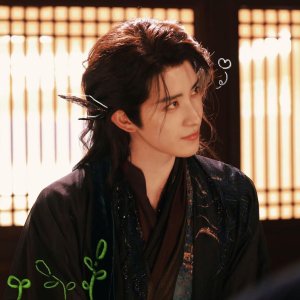


If you’re into BL, I’d also recommend Justice in the Dark, he was fantastic there too, and it shows how versatile he is outside of romcom roles. He even lost a lot of weight for that role, so he’s clearly very dedicated to his craft. So it’s completely understandable if his performance here just didn’t work for you personally, but saying Ding Yuxi was the only good thing about the drama still comes off as pretty dismissive of Zhang Xincheng and the rest of the cast, because there was a lot more carrying this drama than just one performance.
If you prefer something with more fantasy elements, The Blood of Youth is a great choice. And once you finish it, you can watch Blood River since it’s set in the same universe and focuses on two characters when they were younger, before the events of The Blood of Youth. Both shows are amazing in their own way, but honestly, I think Joy of Life is one of the best wuxia out there.
极地地狱
可见光明
云雾皆散
得见明月
“Even in the polar hell, there is a light that still shines.
When the clouds and mist disperse, the bright moon reveals itself.”
It is the same poem Su Changhe and Su Muyu recite to each other before Su Muyu kills Su Changhe — a beautiful yet deeply sorrowful reference, a tragically beautiful homage to their bond. In The Blood of Youth, it connects powerfully to their ending in BR. In BR, the poem carried a sense of hope and freedom; but in TBOY, it becomes a farewell — a haunting echo of their past as sworn brothers.
It strikes painfully in the heart to imagine what it must have felt like for Su Muyu to kill his brother, and for Su Changhe to realize, too late, the weight of his betrayal — that he had wronged the person he once called brother. He never made it to “the other side of the shore,” where they dreamed of walking freely in the light, no longer as tools of others, but as men of their own will, away from the manipulation of the Seventh Prince Xiao Yu.
Their story is truly tragic — Su Muyu delivering the final blow himself, not out of hatred, but as a final farewell to what they once shared.
Personally, my favorite is The Blood of Youth since it was the first one released. Even though Dashing Youth is technically a prequel, I still recommend watching The Blood of Youth first, followed by Dashing Youth, and then Blood River. Some people prefer to start with Dashing Youth because it’s the prequel, but since it was directed by someone else, I find the storytelling a bit messy compared to TBOY. It might even make new viewers less interested in continuing with TBOY and Blood River.
I’m a huge fan of Zhou Mu Nan’s work and the whole world he’s built — love how it stays true to both the donghua and the novel. And hey, the fact that you’re a Bleach fan automatically means you’ve got great taste 😎 (we Bleach fans just get drawn to those deep quotes before someone dies lol).
The wuxia and shōnen genres share so many things I love — epic fights, philosophy mid-battle, and characters leveling up through pain and purpose. Definitely my favorite stuff to watch. (And btw, Joy of Life is such a gem too!)