



A Winter Sun Wakes the Wind in Spring Hills' Dream
1 people found this review helpful
by NaraLookpeach
There are series you watch, and then there are series you inhabit.
A Winter Sun Wakes the Wind in Spring Hills' Dream belongs firmly in the second category.
Maybe that's also why I watched it in portions, waiting until new episodes were out, and taking several days at the end to finally finish it.
Not because it hadn't completely pulled me in. Quite the opposite.
I think I was simply trying to postpone the moment when I would have to admit that it was really over. Because that would mean accepting that there may never be another series like A Winter Sun.
I can say with certainty that the story itself isn't even the main reason this series moved me so deeply. It's the way it's told.
The story begins with Feng Qinglang, a celebrated actor at the height of his career who wants to escape the pressure of the entertainment industry. He retreats to the mountains of Yunnan and ends up with Xu Changyang, a young tea farmer living a life that couldn't be further from Qinglang's world.
And the mountains of Yunnan aren't a backdrop here. They're almost a character in their own right. They create a world where two people can briefly exist outside of everything that otherwise defines them. Qinglang isn't a star there. Changyang isn't living in anyone's shadow. They're simply two people getting to know each other and the series is patient enough to let that feel real.
The tea plantations, the dense forests, the search for termite mushrooms together, roasting tea over an open fire, sharing food, sitting in a silence that nobody needs to fill — A Winter Sun understands that intimacy doesn't always need words. Sometimes it's simply the way someone notices what you need before you ask.
And that is exactly the kind of love language I find most beautiful.
Qinglang and Changyang speak to each other in a language that nobody else seems to understand. There is something almost dance-like about the way they move around one another.
The series constantly works with hidden layers of meaning, lines that carry meaning beyond their words, numbers that carry significance, colours, light, camera positioning. Everything plays a role. Everything means something.
There are so many moments. Too many to list. And I don't think a list would explain why they work anyway.
There are very few series that make me feel something without telling me what I'm supposed to feel. A Winter Sun does this constantly. It does this by focusing on images, gestures, silence, landscapes and the smallest changes in facial expression. Sometimes a line of dialogue lands — but just as often it's something nobody says at all.
For me, this series feels like a painting that draws you in before you understand why. Or like a song in a language you don't fully speak and yet you feel that ache in your chest, that rising of tears, without being able to name exactly what those tears are for.
I think the loudest reason for my tears came from Feng Qing Tian — Qinglang's younger brother.
His story unfolds in fragments, quietly devastating from the beginning. The weight of the guilt he carries. The smile he keeps putting back on his face. The series shows us a person who has become so good at surviving that he has almost forgotten he's allowed to want more than that. It shows us a person living with depression, without reducing him to it.
And then comes episode thirteen. That episode shook me in a way I still don't have the right words for.
Qing Tian's story makes the central love story even more painful in a strange way. Qinglang and Changyang find a place where they can be honest with each other. Qing Tian keeps searching for that same freedom, while carrying the expectations, the guilt and the consequences of everyone around him.
Their stories are different, but they're asking the same question: how much of yourself are you allowed to keep when the world keeps telling you who you're supposed to be?
But A Winter Sun is telling more than a love story in the mountains.
It's also a surprisingly sharp portrait of the Chinese entertainment industry — CPs manufactured for profit, fanservice sold as authenticity, relationships used as tools and discarded the moment they become inconvenient. Qinglang's history with another actor shows what happens when an industry turns intimacy into a product and what it costs to finally step outside of that. His decision to leave the industry and publicly stand by the person he loves isn't simply romantic.
It's a rejection of a system that spent years deciding which version of him was acceptable.
I know this series isn't for everyone. I understand if the dialogue is sometimes difficult to follow, if the time jumps are confusing, if you find plot holes or struggle to keep up with everything happening around the film industry. Some transitions are too abrupt, some storylines ask for more patience than they give back and toward the end I occasionally wished the series trusted itself enough to simply stop and breathe in certain moments.
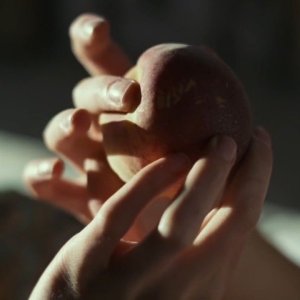
And yet — I recommend this series. Especially in a time when we increasingly encounter AI-generated imagery and CGI in films and series, A Winter Sun reminded me of the beauty of simply capturing something real. Almost every frame could be printed and hung on a wall — that's how cinematic this series is.
And perhaps that's exactly why, despite being far from perfect, it feels so unmistakably alive. It is painful and beautiful and messy. People make wrong decisions, get lost and find their way back. Love sometimes isn't enough to stop something devastating from happening — and yet the series keeps returning to the same quiet insistence:
Life continues.
The mountains remain.
The tea grows.
Someone waits.
Someone comes home.
Maybe that's also why I watched it in portions, waiting until new episodes were out, and taking several days at the end to finally finish it.
Not because it hadn't completely pulled me in. Quite the opposite.
I think I was simply trying to postpone the moment when I would have to admit that it was really over. Because that would mean accepting that there may never be another series like A Winter Sun.
I can say with certainty that the story itself isn't even the main reason this series moved me so deeply. It's the way it's told.
The story begins with Feng Qinglang, a celebrated actor at the height of his career who wants to escape the pressure of the entertainment industry. He retreats to the mountains of Yunnan and ends up with Xu Changyang, a young tea farmer living a life that couldn't be further from Qinglang's world.
And the mountains of Yunnan aren't a backdrop here. They're almost a character in their own right. They create a world where two people can briefly exist outside of everything that otherwise defines them. Qinglang isn't a star there. Changyang isn't living in anyone's shadow. They're simply two people getting to know each other and the series is patient enough to let that feel real.
The tea plantations, the dense forests, the search for termite mushrooms together, roasting tea over an open fire, sharing food, sitting in a silence that nobody needs to fill — A Winter Sun understands that intimacy doesn't always need words. Sometimes it's simply the way someone notices what you need before you ask.
And that is exactly the kind of love language I find most beautiful.
Qinglang and Changyang speak to each other in a language that nobody else seems to understand. There is something almost dance-like about the way they move around one another.
The series constantly works with hidden layers of meaning, lines that carry meaning beyond their words, numbers that carry significance, colours, light, camera positioning. Everything plays a role. Everything means something.
There are so many moments. Too many to list. And I don't think a list would explain why they work anyway.
There are very few series that make me feel something without telling me what I'm supposed to feel. A Winter Sun does this constantly. It does this by focusing on images, gestures, silence, landscapes and the smallest changes in facial expression. Sometimes a line of dialogue lands — but just as often it's something nobody says at all.
For me, this series feels like a painting that draws you in before you understand why. Or like a song in a language you don't fully speak and yet you feel that ache in your chest, that rising of tears, without being able to name exactly what those tears are for.
I think the loudest reason for my tears came from Feng Qing Tian — Qinglang's younger brother.
His story unfolds in fragments, quietly devastating from the beginning. The weight of the guilt he carries. The smile he keeps putting back on his face. The series shows us a person who has become so good at surviving that he has almost forgotten he's allowed to want more than that. It shows us a person living with depression, without reducing him to it.
And then comes episode thirteen. That episode shook me in a way I still don't have the right words for.
Qing Tian's story makes the central love story even more painful in a strange way. Qinglang and Changyang find a place where they can be honest with each other. Qing Tian keeps searching for that same freedom, while carrying the expectations, the guilt and the consequences of everyone around him.
Their stories are different, but they're asking the same question: how much of yourself are you allowed to keep when the world keeps telling you who you're supposed to be?
But A Winter Sun is telling more than a love story in the mountains.
It's also a surprisingly sharp portrait of the Chinese entertainment industry — CPs manufactured for profit, fanservice sold as authenticity, relationships used as tools and discarded the moment they become inconvenient. Qinglang's history with another actor shows what happens when an industry turns intimacy into a product and what it costs to finally step outside of that. His decision to leave the industry and publicly stand by the person he loves isn't simply romantic.
It's a rejection of a system that spent years deciding which version of him was acceptable.
I know this series isn't for everyone. I understand if the dialogue is sometimes difficult to follow, if the time jumps are confusing, if you find plot holes or struggle to keep up with everything happening around the film industry. Some transitions are too abrupt, some storylines ask for more patience than they give back and toward the end I occasionally wished the series trusted itself enough to simply stop and breathe in certain moments.
And yet — I recommend this series. Especially in a time when we increasingly encounter AI-generated imagery and CGI in films and series, A Winter Sun reminded me of the beauty of simply capturing something real. Almost every frame could be printed and hung on a wall — that's how cinematic this series is.
And perhaps that's exactly why, despite being far from perfect, it feels so unmistakably alive. It is painful and beautiful and messy. People make wrong decisions, get lost and find their way back. Love sometimes isn't enough to stop something devastating from happening — and yet the series keeps returning to the same quiet insistence:
Life continues.
The mountains remain.
The tea grows.
Someone waits.
Someone comes home.
Was this review helpful to you?


