

 76
76 328
328 9
9 1
1 4
4 12
12 2
2 3
3 2
2 1
1 5
5 10
10 1
1 1
1 2
2 2
2 3
3 2
2 2
2 2
2 1
1 1
1 8
8


The Art of Strategic Retreat
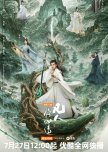
Immortal Ascension is the long-awaited live-action adaptation of the hit xianxia web-novel A Record of a Mortal's Journey to Immortality by Wang Yu (忘语), a defining work of the "mortal cultivation" sub-genre. While the novel chronicles protagonist Han Li's thousand-year journey over a sprawling 2,400 chapters, this ambitious adaptation condenses the first 200 years into 30 episodes. It is set in a brutal, realistic immortal world where might makes right. The Heavenly Dao (天道) is indifferent to concepts of "good" or "evil"; the path to immortality isn't about grand morality or predestined genius, but about raw power and survival. Here, cunning, alchemy, and artifacts can trump sheer talent.Three borrowed bowls of flour for flatbread. That is why an ordinary village boy, Han Li, stumbles on to a thousand year path to immortality. It isn't a profound or carefully considered decision or even a conscious choice on his part —just survival instinct, pure and simple. It begins in Shenshou Valley, a place that opens his eyes to a world beyond his wildest imagination and offers his first chilling glimpse into the callous utilitarianism and transactional nature of cultivation relationships. He picks up the underappreciated skill of gardening and chances upon his most invaluable artifact. From his first mentor, Physician Mo, Han Li learns the core secret to immortality: live to fight another day. He is the master of the art of strategic retreat—my lips would twitch every time he began stealthily backing away at the slightest hint of hostility.
Han Li is an unconventional protagonist. He isn't motivated by naive heroism and chooses a path that is ultimately selfish and solitary. Often underestimated, he prevails through cautious pragmatism and resourcefulness, relying on methodical long-term planning, deception, and fleeing unwinnable conflicts. Despite the running gag that Han Li is very plain, Yang Yang is perfectly cast. His immaculate appearance and radiant, ageless glow convey the aura of a character who is ultimately unattainable. I've never been a fan of his acting, but this is by far his best role. His portrayal is exquisite: the careful circumspection in his movements, the nuanced flicker in his eyes, the micro-expressions that signal he is always watchful and calculating; that fraught stillness when sensing danger; and the intense, cold-blooded ruthlessness in combat. Yang Yang's power, grace, and natural athleticism are on full display. Instead of just standing around uselessly waving a fan (Who Rules the World), he delivers multiple thrilling, intense, and brilliantly choreographed action sequences that showcase Han Li's ability to think on his feet, using his cunning and resources to level the playing field. The visual effects, however, are a bit dated and at times overwhelm the impressive stunt work, detracting from how flawlessly Yang Yang executes difficult mid-air acrobatics while staying completely in character.
I love the decision to shoot mostly on location—it vividly reinforces the vastness, timelessness, and solitude of Han Li's journey. It may have made lighting and framing more difficult to control, but it's far superior to the typical fake, over-lit, and stagnant xianxia set. The plot feels condensed, and the pacing is uneven, alternating rapidly between character introductions, heavy world-building via dialogue, and high-octane action. Some important characters—Physician Mo, Mo Caihuan, and a few of Han Li's Yellow Maple Valley mentors—are fleshed out, but too many others zip by cursorily. While Wang Duo plays the villain with great relish and humor, Wang Chan's character is a cardboard cutout, because Han Li's greatest antagonist is truly the indifferent universe—and Han Li himself, and the humanity he must leave behind.
At times, this feels like a video game, but it is actually a quite sad and profound story. The narrative tone doesn't indulge in sadness; Han Li's moments of temptation and regret are subtle and transient: a pause, a concealed glance behind lowered eyelids, the slightest hesitation, the moment he gives in to a brief hug. It's all in the subtext, in how he regularly shouts out to Li Feiyu, recalling his last mortal friend. Han Li is not a relatable protagonist; it's hard to feel sorry for him, as he does not feel sorry for himself or for the people he coldly leaves behind.
Fittingly, at the end of this first phase, we come full circle to a precious piece of flatbread that Nangong Wan casually snatches from him. Ms. Mo would never have done that. It's why she is not the endgame; she isn't ruthless or selfish enough to accompany him on his journey. While this is not a romantic story, the character who moved me most was Ms. Mo. It is with his first love and final obsession that Han Li almost allows himself to be mortal.
I don't know how to feel about this kind of story or Han Li's path. It is inspiring as a tale of how an ordinary person can become extraordinary. And a sobering lesson about at what price. It is a story that has stayed with me. I have to rate it 9/10.
Was this review helpful to you?
One step forward for mankind and two giant steps backwards for womankind.
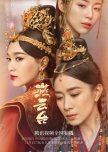
This romanticized account of the life story of Xiao Yanyan, the accomplished Khitan Empress Chengtian (953-1009), gives voice to folk or unofficial history of her relationship with Han Derang. Wild history of their love affair survived over a thousand years and continues to fire the imagination of Chinese historians today.Please be aware of mild spoilers ahead (unless you already know the history).
It is known that Xiao Yanyan, was once engaged to Han Derang, who was from an elite Han Chinese family loyal to the Khitan rulers. According to the drama (which is based on a novel), her father chancellor Xiao Siwen and Han Derang help Mingyi (Emperor Jingzong) ascend the throne. Mingyi is sickly and his hold onto power is thus unstable; many branches of the royal family vie for the throne. Mingyi insists on marrying Yanyan so that like both his main rivals who married Yanyan's older sisters, his wife is also of royal bloodline. This kind of ill fated romance has limited appeal to most romance watchers and is an unnecessary digression for most historical or political drama buffs.
Although I was primarily interested in the history, Tang Yan and Dou Xiao's portrayal of the young lovebirds captured my heart and I was devastated by their forced separation. But alas their chemistry fizzles out later on in the drama and leaves me unconvinced that they are soul mates whose love is as deep or as epic as folk history suggests. At face, the bare facts are tantalizing - he shores up her regency over her young son Emperor Shengzong; is her trusted confidante and is highly ranked in her court; they may even have married and had a child together and; he was likely buried besides her. But in their more mature personas, both characters just seem sad, tired and lonely and not long lost soul mates who finally have their moment in the sun. It does not help that Tang Yan appears to have an easier, more natural chemistry with Jing Chao's Mingyi. To make matters worse, there are no nuances or subtleties in Yanyan's interactions with Mingyi and Derang that suggests they mean different things to her, that her relationship with and affection for each of them is not the same.
Mingyi is the most layered, complex and interesting character in this drama and probably one of the best grey characters I have seen this year. Although I resent his manipulation, his selfishness, his obscene sense of entitlement and his disingenuous excuses for doing terrible things, I also grudgingly empathized with him and the monumental task in front of him. Jing Chao really delivers one of the most convincing portrayals of a sociopath emperor who has the audacity to steal his best friend's fiancé and yet demands and expects them to protect his legacy. Unfortunately although she delivers a few good scenes, Tang Yan fails to evoke a strong and powerful empress who can rule alongside and then after the emperor. She cannot hold onto her strong moments, just defaults back to her comfort zone of a very beautiful and feminine woman that is to be rescued and protected. Her attempts at gravitas just results in a cold, aloof empress that doesn't allow any sparks to fly; even when she is free to be with the alleged love of her life. To be fair Tang Yan was pregnant during the shooting and that put limits on her ability to do the more physically challenging scenes but she still did not have to be written to be so mopey and passive aggressive.
The other magnificently and effortless acted role is Sheh Szeman's Xiao Hunian who is everything and more of what I imagined Yanyan would be. Her portrayal of a strong, yet feminine woman who bows to duty without wallowing in self pity; who is a fierce, strategic warrior that stands up to the menacing Yansage; who does as she pleases and shows her displeasure as effectively in words as in action puts Tang Yan's meek and insipid performance to shame. When Hunian tells Han Derang that it was just a twist of fate, else she would be just as great an empress, that resonates because art imitates life; a younger Sheh Szeman would have conveyed an unforgettable Xiao Yanyan. I did not approve of how the writing undermines Hunian in the final arc - even though Sheh Szeman got more airtime and had some awesome scenes, it was just not the right thing to do to the character.
While this drama as a whole does not live up to my expectations, I found many parts of it to be riveting. The power struggles and the battle for the throne are well written and shot but the story peaks at the Yansage arc. The battle footage and strategies used to route the enemy in this arc are bloodthirsty and exciting but is too early for the climax of the drama. To some extent that cannot be helped as it is the correct sequence historically. That said, after the Yansage arc, the focus of the story should shift from internal strife to external strife rather than focus on a series of much weaker, rather pathetic attempts at coups by the least interesting characters in the drama. It does little more than to drive home how hard it is for a widowed empress to hold on to the throne as regent without a strong military backer. It does highlight Han Derang's contributions and achievements as the unsung hero and the true power behind the Liao throne.
To me this is a 7.5/8.0 but I am going with 7.5 because I expected to watch a drama about a woman warrior who chose her country over her true love and then went on to make Liao great so that her sacrifice would be worth something. Instead, I may as well have watched her get her revenge on Mingyi by doing nothing besides get fat on sweet cakes and having flings with stable boys. But I learned many things about Liao/Khitan culture, including that Khitan women were very equal and progressive - they can get divorced, remarry if widowed, lead armies, hold positions and even rule in court. Which is really ironic because Mingyi's legacy Han reforms that were among Yanyan and Han Derang's greatest achievements basically Sinicized the nomadic Liao people to their vast benefit in terms of agriculture, language, culture and administrative and legal systems. But it also set Liao women back thousands of years in terms of the status and freedom. So what our warrior empress really achieved was one step forwards for mankind and two giant steps backwards for womankind. Maybe Tang Yan's portrayal wasn't that far off...
Was this review helpful to you?
To Catch a Thief
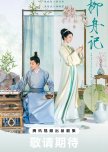
Cui Xingzhou, the mighty Prince Huaiyang has been trying to catch a thief, the slippery bandit Lu Wen for some time. He stumbles upon a comatose Liu Mintang and like all princes, he simply cannot let sleeping beauties lie. Convinced she must be the beloved mistress of his nemesis, he rescues her intending to use her as bait. Conveniently, she has amnesia and mistakes him for her husband ! Thus this cold and formidable fief lord awkwardly assumes the persona of an indolent and not terribly successful merchant who dotes on his wife. Miantang's true colors emerge as a determined and capable business woman with an scary knack for turning hairpins into lethal weapons. It seems Xingzhou may have bitten off more than he can chew as it becomes clear Miantang has secrets and hidden depths that she herself barely remembers. Meanwhile his elaborate charade and lies keep snowballing until eventually half the town is complicit. What ensues is the kind of comedy of errors that arises when hero syndrome meets analysis paralysis. Complicating matters, her memory and past life catches up with them just as they both become invested in their fake domestic bliss and fall for each other. How will they to resolve their past grievances and make a life together as their true selves?What I appreciate most about this drama is both Xingzhou and Miantang are grey characters who have agency if not free will. They are well matched in terms of cunning, intellect, ability and ruthlessness. I enjoyed watching them work against each other almost as much as I enjoyed their working together. As someone who loves dark characters, I wish they toned down the comedy and dived into a darker and more passionate exploration of their undeniable chemistry and stunning visuals. While Zhang Wanyi is an exceptional character actor, comedy is not his forte. His expressions and delivery is almost too textbook perfect and his comedic timing lacks spontaneity. He pauses for too long to let the punchline sink in when he should keep going as the audience already got it and is waiting for the next joke. The humor is straightforward and not that sophisticated so it needs to unfold at a fast pace to hold audience interest. To speed things along, I watched most of this drama at 1.25 speed, something I almost never do. The comedy also masks that Xingzhou is quite a dark character that does controversial things to Miantang, manipulating her to the point of gaslighting. Zhang Wanyi could have pulled off a darker portrayal in an absolutely riveting and charismatic way so that is an opportunity missed. Nonetheless, he is compelling as a powerful and complicated fief lord who to his chagrin, falls in love with the enemy; a most unlikely and unsuitable woman.
Wang Churan is a vivid beauty and her comedic timing is more instinctive than Zhang Wanyi's. Her portrayal of the amnesiac Miantang is natural and charming. However, her character transitions after Miantang recovers her memory could be better written and portrayed. Part of the problem is in the novel, Xingzhou crosses some lines that he does not cross in the drama. Thus Miantang's rage and sense of betrayal is disproportionate to what actually happened. The stabbing scene was undeserved and this kind of violence is off-putting and has no place in a story where the couple is not breaking up for good. Beyond that, Miantang is a worldly character, a rebel who was on fairly intimate terms with Ziyu without much regard for her reputation. She played in the same sandbox with the big boys so it was baffling to see her go so full on girl angry at Xingzhou, who was just doing his job. These are mostly writing issues but there is also something lacking in the acting. Wang Churan was not able to reflect the character's evolution and approached it as if Miantang became a different person. There are unspoken ways to convey that at the core, Mianting is still the same Miantang; that the person Xingzhou fell for is still there. A more experienced actress would have used micro-expressions and subtle character traits to achieve this. And then just as inexplicably after the angst drags on long enough, she becomes sweet and forgiving domestic Miantang again! Since Wang Churan is new to lead roles and she is so lovely, I am happy to be forgiving. Nonetheless this diminishes Xingzhou as a character and made him appear no less a foolish, love brain than Ziyu. I am also left with a nagging concern that Miantang may be bipolar!
Even though this drama has some interesting and unique ideas and is refreshing in the way women are portrayed, I found it to be a bland watch overall. Despite some fun and memorable moments, the plot arcs are shallow and rehash well known battle for the throne tropes. Which is fine if the character arcs are well done but while the main characters are complex, they are dumbed down by the comedic focus. Miantang is inconsistently written; she starts out as a strong and independent woman who doesn't need to get married to have a fulfilling life. She abandons Ziyu's cause without a backward glance, abandons her revenge arc after a half-hearted attempt to infiltrate the palace, takes over an escort business before deciding she liked playing house best. At the end, I couldn't figure out what she was about. The character I enjoyed best turned out to be Shi Xueji. She finds so much joy in life's simple pleasures, is resilient and her quiet wisdom and dignity impressed me as much as Miantang's inconsistencies did not. I loved how the actress conveyed a layered character with deep and moving emotions via subtle expressions and a gentle smile that radiates with unbridled happiness. I also quite enjoyed Ziyu's character but the second couple was coma inducing and completely irrelevant to the story.
The drama finishes strongly at the climax in both the conspiracy and character arc but doesn't change the fact that despite its fresh premise it did not have enough substance to support 40 episodes. It would have been a more enjoyable watch at a tight 24 episodes or if they had engaged in a deeper and darker exploration of the characters. Nonetheless if you don't over analyse, it is very entertaining as a light romantic watch with phenomenal acting by Zhang Wanyi. My rating is 8/10 but I can see romance fans rating it a bit higher.
Was this review helpful to you?
Survivor: The Mother-in-Law Obstacles.
Xu Lingyi, marquis Yongping is all that a mother could ask for: a patriotic high ranking court official, ethical, cultured, responsible and a shining example of Confucian filial piety who asks not if he is happy with his wives, it is enough that his mother is. When his official wife dies, he takes her younger half-sister Luo Shiyi, a lowly concubine's daughter as his official wife, thus preserving the marriage ties between the Luo and Xu family. But Shiyi is a talented and resourceful woman ahead of her times and values her freedom and independence over making such an excellent match. She has her own agenda and unlike his fawning concubines, is quite happy to be neglected by Lingyi and left to her own devices. Her attitude bemuses and intrigues Lingyi out of his indifference and he finds to his dismay that he is increasingly attracted to her.The best part of this drama is how the romance blossoms at a realistic pace between Lingyi and Shiyi, leisurely exploring important phases from distrust, to mild annoyance, to intrigue and blossoming attraction, to collaboration with some conflict and a healthy dose of jealousy thrown in. Neither character is perfect - Lingyi is a workaholic, neglects his harem, is aloof, overly strict with his children and his brother and just generally comes across as no fun at all. Except for the flashes of subtle humour that emerges when he deals with impertinence from his close aides or criticism from his family. Wallace Chung really delivers a very nuanced portrayal as a lonely and kind nobleman beneath a strict and unapproachable exterior. I really enjoy watching him come out of his shell and become a more complete person as he discovers happiness with Shiyi. Shiyi grows from a rather headstrong and defiant young wife into the caring, responsible and capable mistress of Yongping manor. This is a very different kind of role for Tan Songyun and although I feel her interpretation of the role is not that inspired, her Shiyi is likeable and pleasant to watch. Both leads are consummate actors with very solid chemistry, delivering many sweet and thrilling romantic moments as they fall in love and grow together as a couple.
Even though I don't expect much from the plot when it comes to character dramas, I have to say that the writing overall leaves a lot to be desired. It actually starts out fairly well even though it is incredibly tropey from the beginning. That is because there is a satirical approach to the writing, with subtle humour nicely woven neatly into the dialogue that had me grinning away. And some of the characters, especially the hateful concubine Qiao and Erniang were such parodies and so well acted that I got many chuckles and base enjoyment out of their setbacks and defeats. That fizzles out after the Qiao arc and at that point the mystery and defeat of the mastermind should have just been quickly wrapped out instead of dragged into repetitive plot lines and themes. The writer with a sense of humour must also have bowed out at that point because it wasn't funny anymore.
Which brings me to the mother-in-law from hell. This MIL is a real piece of work - she picks all of her sons wives, she is snobbish, biased, hypocritical, is completely illogical and plays the matriarch card all the time to get her way. This character turned the drama into some bizarre edition of Survivor where the contestants are parachuted into Ming Dynasty where they need to survive the mother-in-law of all obstacles and win the heart of the dude. Shiyi and all of Lingyi's wives are pitted against this troll who thinks that the ultimate reward is marriage to her son. The most unbelievable part of the story is that none of these rather ruthless and resentful bitches took the initiative to poison her. It would have made for an excellent Murder on the Orient Express kind of murder mystery if they all did it. As for Shiyi, her winning strategy is to kill everyone from her MIL to her love rivals with kindness. This took so long and we have to endure so many ridiculous, lazily written and repetitive arcs that I couldn't help but think poison would work so much faster.
The two main takeaways from this drama is it really sucked to be a woman during Ming Dynasty and bad shit happens when your mother picks your wives. Overall an ok watch to pass time but nothing to write home about. 7.5/8.0 overall, maybe 8.0 for just the first ~half.
Was this review helpful to you?
The father, the son and the holy sheep.
After a long hiatus, Young Blood 2 picks up right where Season 1 left off with the team heading to Western Xia to rescue Zhao Jian's father. There they get embroiled in a plot to assassinate Yuan Hao, aka Emperor Jingzong of Western Xia. Yuan Hao was a formidable general and founder of the Tangut dynasty, which lasted almost two centuries. This narrative largely respects history so if you do not want to be majorly spoiled as to how this ends, resist the urge to Google him.Initially, Season 2's somber, pensive tone took me aback. But it is fitting for the desolate, rugged, mystical Helan Mountain terrain. It also ties well with the personal losses, betrayals, and disillusionment the team experiences at the end of Season 1. While screenwriter Wang Juan's humor and clever dialogues are evident in the writing, the difference in the directing team is noticeable. Character shots and comedic moments are not as well captured by the camera. Many of the people shots are not filmed at interesting camera angles and the main cast's humor does not flow naturally. The actors may be trying too hard to convey that some of their joie de vivre have faded after all that they've been through. Their energy often seems lethargic and their banter is lackluster despite the witty dialogue. What still shines is their unspoken affection and trust in each other which seems more mature, time-tested, and unbreakable. The "new" Yanei integrates well even though he unavoidably looks younger and is missing the swagger. Su Xiaotong's acting has most visibly improved and I enjoyed Pei Jing's growth this season.
In terms of comic relief, the antagonists steal the show in Season 2. The humor in their dialogues, the bald-faced lies traded with deadpan expressions among the Western Xia royal family had me in stitches. But it is the oddly gullible, absurdly superstitious, and unexpectedly sincere Yuchi Yuan that made me laugh hardest only to cry hardest when he admits he is someone that just needs to believe in divine intervention. Many supporting roles like Yuchi Yuan, the heroic Section 8, and the antagonists are so well written and dimensioned that they are the show stealers. Not only does Section 7's banter seem to lose its mojo, they also don't get to do the important tasks in the mission, other than show up for the finale. Indeed the main architect or spymaster is not from Section 7.
This season, most of the main characters grapple with the kind of person their father is, what he expects of them, and whether that is compatible with who they want to be. To different degrees, each parent and child take a measure of one another and don't quite like what they see. Yuan Zhongxin's dad may be a particularly nasty, cold-hearted, and misguided sociopath with questionable methods; but ultimately he wants his son to survive. This is not the case with Yuan Hao, who is the biggest, baddest, daddy of them all. Thanks to Hai Yitian's intimidating screen presence, Yuan Hao is a terrifying freak of nature, a giant rock formation that must have been hewn out of the sacred mountain itself. Just his menacing, diabolical appearance made me break out in cold sweat. Yuan Hao knows exactly what his son is up to and he gives him every opportunity, practically dares him to succeed. The dialogue within the dialogue and the dark humor behind barely veiled threats that petrifies poor Ningling Ge out of his wits is signature Wang Juan. I never felt more sorry for such a vile and duplicitous character; an apple that falls far, far from the tree. He seems diminished and less smart in Season 2, over-shadowed by the larger-than-life Yuan Hao. Father and son are both oddly pitiful to me as their story as recorded in history is already wildly dramatic and treacherous.
The plot is tighter and more focused than Season 1 because there is only one mission that spans several years with a time jump that interrupts the momentum slightly. The sub-plots are cleverly structured around the interplay of recurring themes around the father, the son and the holy sheep. At the time, the Tanguts practiced folk or natural relgion steeped in mysticism with shamans, and many spirits or gods. Like many ancient cultures, they believed that the ruler is divinely blessed but in times of chaos or natural disaster, can lose the mandate of heaven. In planning the mission, the yummy Wen Wuqi of Section 8 infiltrates Western Xia by assuming the identity of a sheep deity's envoy come to anoint Yuan Hao's regime. There are many allusions to fēngshén/封神 or the creation of gods, which is the underlying strategy the Song spies use initially to elevate and then subsequently to undermine Yuan Hao. Wang Juan's well researched and superbly written script clearly draws inspiration from Fēngshén Yǎnyì 封神演义 or The Investiture of Gods one of the great vernacular novels about Chinese history, mythology, folklore, fantasy and legends.
The ending will not come as a surprise to anyone who knows the history (or used Google). Even then, the finale delivers an epic showdown that the entire season builds up to. The fast paced and thrilling action choreography is one of the highlights of Season 2. The desperate, bloodthirsty and stunning final fight had me squealing, jumping up and down and bouncing off walls with adrenaline fuelled fear and excitement. I personally would have ended the story at the mid-way point of the final episode, where the ending credits roll. It is fitting and exactly the kind of irony, cynicism and dark humor I expect of Wang Juan. But that would have resulted in an outcry of gargantuan proportions and I equally enjoyed the final message that a father does not have to explain himself to his son. Despite the fantastic writing, I still wish the original team's chemistry worked a bit better. So for me, this was mostly tracking just a bit better than an 8.0/10.0 but I think ending a drama well is super important and I like the ending so much so I am happy to bump this up to an 8.5/10.0.
Was this review helpful to you?
Flower Power.
The Starry Love is a divine comedy packed with romance, sisterhood, friendship, adventure, mystical powers, and gut-busting laugh-out-loud moments. It takes dead aim at the tired, cliche-ridden xianxia formula. I was sold on both the drama and the female lead the moment she asks the most relevant question; after thousands of years, does the equipment still work? I laughed so hard that I fell off my treadmill. Be warned; it can be life-endangering to eat junk food or sip wine while watching this hilarious xianxia spoof.This story rehashes a well-known plot about mixed-up brides where two sisters end up with each other's intended. Born under auspicious omens, the elder, virtuous, and good-natured Princess Qingkui is engaged to the aloof and righteous Shaodian Youqin, Sky prince and protector of the realm. The ill-omened, defiant, and mischievous younger Princess Yetan is to be married to the ominous Void realm, where the unfavored, scheming, and ruthless third prince, Chaofeng plots against his brothers to be the next Void Tyrant. Through a comedy of errors, Yetan ends up in the Sky realm where she turns the world of the pompous Youqin upside down while Qingkui stupefies the nefarious Chaofeng with her goodness. Both couples hilariously discover that opposites attract and two wrongs make a right. All too soon they discover that they are twin flowers born from a sacred tree that can unleash chaos on the four realms. Can their flower power prevail over destiny or will their stories only be remembered by the starry skies?
The more familiar you are with common xianxia tropes, the funnier this drama is. The plot unfolds along recognizable lines, gobsmacking you with unexpected twists along the way. The sisters truly love and support each other and the friendships are genuine and tested by hardship and sacrifice. While there is a healthy dose of the genre-defining angst that made my eyes burn with tears, it is usually short-lived, turning into humor in the blink of an eye. This is a very self-aware drama that pokes fun at the absurdity of tired tropes by acknowledging that even invincible immortals fear death, that the Sky realm is a very boring place and most of the eye candy lives in the Void realm. While it is a humorous fresh take on the genre, the underlying messages about good and evil are all too familiar and there is not much substance to the story.
It is undeniable that the sis-mance and romances are the highlights of this drama. Each sister finds in her mate all the qualities she loves best in her sister! The sisters are loyal to each other almost ahead of their lovers and their men get it and accept that there are more important things than love. Newcomer Chen Muchi gave me palpitations with his sexy and charismatic portrayal of the duplicitous and manipulative Chaofeng. It was a joy to watch Qingkui awaken that spark of conscience that sets him on the right path without losing his air of devil-may-care wickedness. I was initially less impressed with Chen Xingxu's cliched and stiff portrayal of Youqin's stony indifference. But the way Youqin comes alive once that facade crumbles and how he shows us the many sides of Youqin - germaphobe, pyromaniac, mercenary, and playboy; once again attests to this actor's versatility and mastery. Chen Xingxu's and Li Landi's wonderful chemistry and the way they are able to play off each other's emotions and reactions are authentic and captivating. Li Landi is really a young actress to watch. Her Yetan is so brave, naughty, and infectiously bubbly that it is no wonder she had not just Youqin but the entire Sky realm at her feet. All four lead actors have excellent comedic timing and the impressive ability to pull off many simply uproarious lines with a straight face.
The biggest criticism I have of this drama is the overuse of bright lighting and the over-lit Sky realm. It makes for an overbearing visual experience that makes the back of my eyeballs feel like I have been staring down a torchlight. The production values and CGI are not the best and almost made me skip this drama, which would have been a mistake. Because it is addictive from the start and overall well-paced although it loses some momentum in the mortal realm before reaccelerating to the finish. The final arcs take on a more serious and angsty tone and the villains are a bit cliched and too easily identifiable. It also overuses the bad dad trope and some of the rationale of the Sky emperor in particular does not bear close scrutiny. Although many are not pleased with the ending, I have watched enough xianxias to expect something like that so it just made me laugh. I think it was quite comical and oddly fitting with the spirit of the drama. I am happy to recommend this as a very enjoyable light watch. I rate it 8.5/10.0.
Was this review helpful to you?
No smiling matter.
Ye Pingan must be a witch. So whisper the common folk of Chang'an uneasily amongst themselves. Her medical practices are eyed with disdain by the ruthless and ambitious young magistrate Yuan Shaocheng. When she finds herself entangled in a murder, he investigates her unsparingly. To his chagrin, she manages to stay one step ahead of him. They are both complicated characters with dark histories and hidden agendas. They fall into an uneasy alliance where they use each other and inevitably start to uncover each other's secrets. The story is set in treacherous times during the reign of Empress Wu and at the pinnacle of the power struggle between the Li faction and the Wu faction. They are both mere ants caught in the crosshairs between powerful stakeholders. Thus their interests don't always align and they find themselves at times on opposite sides.This is a well paced, suspenseful plot-driven story pitting two smart protagonists, at times for and at times against each other. There are conspiracies within conspiracies that reveal an abominable, heart-wrenching secret that Ye Pingan vows to expose. The subject matter is no smiling matter; it is an unflinching depiction of the vilest form of abuse of the powerful against the defenseless. It is ironic that during the only time a woman ruled the world in Chinese history where at the upper echelons, women are as powerful and capable as men, at the bottom of the social strata they are weak and unspeakably abused. Led by Ye Pingan, the victims refused to roll over and play dead. Instead, they make terrible sacrifices to seek redress for what happened to them against practically untouchable antagonists. The way these damaged women bond and joy from their friendship and common purpose is the heart of the drama.
While there is undeniable romantic tension between them, Pingan and Shaocheng's relationship is more of a side story as they are both committed to causes that are larger than themselves. Even though I am normally not a fan of either Liu Shishi or Dou Xiao's acting, they are both well cast in their roles here and deliver mature and nuanced portrayals. Liu Shishi's taut, impassive expression and her cold, bright-eyed glare perfectly captures an avenging angel with just a hint of inner trauma. And Dou Xiao is the consummate ruthless, grey character who could be friend or foe... as long as he keeps his pearly whites hidden. Thankfully the somber tone of the story only allowed him to traumatize me twice with that killer 1,000 MW preternaturally white, extra toothy smile. That said, I found it hard to root for either of the leads. While I like that they are rather amoral characters who are in it to win it, they fight for other people. I find characters like Ni Chang or Wu Ankang who also know how and when to fight for themselves or when to walk away to be wiser and more relatable.
While I enjoyed the many twists and how the reveals build upon one another, the sub-plot arcs all follow the same formula so after the second arc, the reversals are predictable and anti-climatic. Nonetheless the drama held my interest to the end because of the entrance of the yummy Zheng Yecheng who delivers some exciting fight scenes. Not to mention I always enjoy dramas set during Wu Tzetian's reign and Chen Jin pulls off the role with gravitas and charisma. What I do not like is how these kinds of stories never fail to end without a dire message about the dangers of an over-ambitious woman.
Overall a sober story about lives lost in the name of vengeance and atonement, both ultimately hollow goals. Its a pretty good watch even though there really is nothing feel good about the story. I rate it 7.5/10.0.
Was this review helpful to you?
May the baddest man win.
This is the drama adaptation of a popular female harem web novel "Kun Ning" (坤宁) by Shi Jing (时镜) with an interesting approach; readers voted on who the female protagonist ends up with. It is a dark and gripping tale of intrigue, conceit, betrayal, revenge and redemption. Jiang Xuening is the alluring but resentful, selfish and ambitious daughter of a court official who ruthlessly parleys her charm and cunning into becoming empress. Her schemes lead to the downfall of the royal family and the ruin of both her childhood sweetheart Yan Lin and the erstwhile incorruptible Zhang Zhe. Desperate and full of regret, she barters her life with the blackbellied Xie Wei to save Zhang Zhe. She finds herself reborn as her 18-year old self with a chance for a do-over. She vows to do better this time, to steer clear of the bastions of power and the malevolent Xie Wei. She tries to use her preternatural knowledge to save Yan Lin and Zhang Zhe from their sad fortune. As she embarks on a journey of atonement, she discovers there is an element of destiny that pulls her towards the center of power. This time, with greater wisdom and insight, she uncovers hidden secrets and unexpected allies that help her better grasp the intrigue unfolding around her. Is that enough to change their destinies or are they doomed to the same tragic fate?This story explores the causal links between the past, the present and the future.; the idea that if only knowing what we know now, we can go back and do what we should have, could have but did not do. It begins with a Ning'er who is already a fully realised character that is not yet revealed; a charming beauty who had the world at her feet and lived a wicked and self-indulgent life. Even though Ning'er's goals change, her innate nature stays the same. The past is told in flashbacks just before the moment plays out again in the present. This works in terms of the more detailed plot points but dilutes the character and relationship stories. Thus while Bai Lu pulls off her role well overall, the piecemeal telling of the backstory doesn't capture the depth of Ning'er's regret or the layers in her relationships with some of the main characters.
Where the storytelling falls short is in Zhang Zhe's arc. To me, it is the most pivotal love story in the drama. He was the best of men, a morally upright official who betrayed his principles for her. And she was a selfish person who was so moved she became selfless for him. Their emotions were so powerful it pushed them both outside of themselves towards a mutually destructive outcome. Sadly unlike the novel, their do-over relationship is shallow and barely scratches the surface of the unfinished affinity between them. It's a pity that instead sticking to the novel which better fleshes out this arc they wasted a bunch of time on the nasty Consort Shu's boring and tropey petty antics. Wang Xingyue delivers such an empathetic portrayal of Zhang Zhe that I was disappointed his character was short changed by the narrative.
As for Xie Wei, I have a weakness for unapologetic, unspeakably damaged, vengeful and morally ambiguous characters like this. Zhang Linghe delivers an intense portrayal of this dark and complex role. Although he overdoes some of the snarls and sneers, his performance overall deserves praise and is his strongest to date. Every time the full fury of Xie Wei's fiery death glare flashes across the screen, I go weak at the knees and my brain turns to mush. Yups, I am definitely a "may the baddest man win" kind of girl. Xie Wei is far from the best man but they are well matched, morally flexible ends justify means kind of people. Their romance arc only takes off later on but it is worth the wait. A mutual understanding develops gradually between them before things get really hot and steamy. When it does, their audacious chemistry explodes in a way that sets a new bar for passionate kiss scenes going forward.
Even though the political conspiracy is not that complicated, it is well told and riveting. Xie Wei's origins are a bit too obvious early on but I enjoyed how Ning'er and Xie Wei work together to uncover the conspiracy. They are both diabolical in how they manipulate the different factions around like chess pieces. The villains are no pushovers but they are overshadowed by the force of nature that is Xie Wei and Ningér's combined dark ruthlessness. This is not an action heavy drama but all of the fight scenes were well shot. I particularly enjoyed the vicious ferocity and absolute glee with which Yan Lin cuts through a melee. I hope this fight maniac Zhou Junwei's small indiscretion does not stand in the way of future roles in action intensive wuxias. Outside of one unnecessary and infuriatingly gratuitous death, the drama ends on a strong note after a bloody, intense and thrilling showdown.
While I enjoyed this drama immensely, the storytelling left me vaguely dissatisfied; as if I only watched the cliff note version of a story that had a lot more depth, nuance and substance than the drama managed to convey. This director is not great at knowing which plot arcs to give more weight to and has an unfortunate predilection for over-bright spot lights and spinning cameras. The production values are mediocre at best. This is a story that had so much potential it deserved to be in the hands of a better director and a better budget. I still rate this a highly reccomended 8.5/10.0.
Was this review helpful to you?
Scorched earth.
This is an artfully related dark crime thriller about a long, life blood sucking and soul destroying quest for justice. A body in a suitcase, a bomb scare, an incriminating old photograph and a looming terrorist threat captures headlines and puts acclaimed investigator Yan Liang on the case. He quickly discovers that these events are linked to a decade old cold case. The narrative navigates three time periods and alternates skillfully between the original team on the case led by prosecutor Jiang Yang (Bai Yu) and the present investigation led by Yan Liang as both investigations proceed down a parallel path. This is done so seamlessly it is not at all confusing; indeed all of the characters, events and clues flow fluidly and clearly. The pallete is sparse and dark toned consistent with the title and tone of the drama.While the mystery and suspense part of the drama is very well written and doesn't reveal itself too soon, this is really more of a character drama about Jiang Yang, a brilliant young prosecutor with a lot of fire in his belly. Without a doubt, this is Bai Yu's best acted role to date. His signature gigantic forehead was so well concealed I didn't recognize him for awhile. The way his Jiang Yang's indomitable idealistic youthful spirit is extinguished into a subdued, quiet desperation and almost but not quite defeated acceptance is one of the most moving and nuanced portrayals I have seen in a long time. He deserves to win awards for this role. I wish I could say the same for Liao Fan's Yan Liang but I was not wowed by his crime solving brilliance which is supposedly signified by pondering and obsessive ball bouncing. Despite some failed and misplaced attempts at humor, Yan Liang's present day team also lacks the rapport and chemistry that oozes out of Jiang Yang's "hot pot" team. Anchored by Bai Yu's powerful performance and a solid cast overall, there is still an unbalanced or somewhat lacking feeling. This is amplified by the fact that the adversary is just powerful with unlimited resources and tentacles everywhere. There is no well developed mastermind at work - all we see are a bunch of petty villains who employ rather crude tactics to suppress the truth.
The drama peaks at the end with the final reveal in a truly masterful and heart wrenching performance by Bai Yu. Yet I am left feeling unsatisfied; I am missing the satisfaction of a showdown and fitting consequences for the villains. Indeed the repercussions seem far worse for those who resort to scorched earth methods to uncover the truth. Thus to me, this is a dark drama - it far from glorifies the quest for the truth and justice. It leaves a lingering sense that it is far more worth while to just live a good and happy life.
This is an excellent watch but be warned, it is dark and sad. I don't consider it to be quite in the same league of the Bad Kids and give it an 8.5.
Was this review helpful to you?
Hope is not a strategy.
The Hope is the Chinese adaptation of a Japanese manga Dragon Zakura about an unconventional teacher who takes on a class of underachieving students. While I haven't watched the Japanese television version, this Chinese adaptation has clearly been heavily localized even though it retains a manga-like flavor in certain characterizations and comedic sequences. This drama critically examines the Chinese education system and its strong emphasis on the all-important Gāokǎo/高考 nationwide college entrance exam which takes 9 hours over two or three days. In a nation of largely single-child families, nothing is more important than getting their only child into the college of their dreams. With over 10mm taking the Gāokǎo each year, the competition is intense. Even though the pass rate is very high (85-90 percent), a minimum score of 600 (out of 750) is needed to gain acceptance to the most elite universities. Less than 7pct of students are accepted at these top universities and the acceptance rate at Qingbei (Tsinghua University and Peking University) where the crème de la crème matriculate is less than 0.1pct.After a series of entrepreneurial setbacks, star lecturer Lei Ming returns to teaching. He teams up with Sang Xia, a psychology teacher on an experimental program to turn around students that are not living up to their potential. His handpicks five students for his experimental Class 11; an orphan Li Ran, a math whizz Cheng Yushan, an aspiring rapper Jiang Qinglang, gossip girl Bian Xiaoxiao and the browbeaten Yu Yang. With Gāokǎo just a year away, his lofty boast of getting all five of them into Qingbei is widely ridiculed. His biggest skeptics are the students themselves and Sang Xia. His methods though unconventional are hardly trailblazing; much of it involves tried and tested methods used by successful students including time management, minimising distractions, identifying focus areas and being tactical about selecting courses. The drama makes it clear that hope is not a strategy and that while there are smarter, better ways to study, there is just no way around putting in the hours.
This is an exceptional drama that makes a poignant and compassionate case for students who have fallen behind. It exposes how they are failed by an indifferent sink or swim kind of education system. Each of the young actors does a fantastic job portraying their hardships, self-doubt and how they discover their best selves in their struggle against overwhelming odds. I don't have a favorite among them because they all have their own special talents, their own crosses to bear and blossom in their own ways as they learn to take ownership over their own destines rather than just being victims of circumstances they can only change at the margin. Lei Ming and Sang Xia are like fairy god parents who can help but can't make their lives perfect. Rather, they impart upon them the invaluable gift of learning how to cope and the ability to feel compassion for others. This is seen in how the understanding they show poor little rich boy Shen Yao and Lei Ming himself when he lets them down. In saving them, in many ways Lei Ming saves himself.
As for Zhang Ruoyun, he once again shows his uncanny ability to pick fantastic scripts. As always, he leaves so much runway for his young co-stars to shine and lets this story really be about them without defaulting into simply being a plot device. Because his Lei Ming is far from perfect; he is cynical and beneath his confident facade, deeply damaged by his resentment of his father, the great teacher Lei. In helping Class 11 in their struggles with Gāokǎo and their personal devils, he gains perspective on his own journey many years ago and gains some understanding of his father. My heart was in my throat watching Zhang Ruoyun portraying this role so movingly in light of his own difficult relationship with his father. Probably largely due to Zhang Ruoyun's powerful charisma, I found Sang Xia's constant baiting and argumentativeness to be pompous and super annoying initially. But she grew on me and I came to appreciate how their relationship actually thrives on calling each other out and challenging each other to do better.
This drama for all intents and purposes ends at episode 29 and it is fine to just stop there. The episode 30 "twelve years later" epilogue replaces the young actors with older vague lookalikes. That broke my connection with the young actors that I grew to love so much. I didn't mind the sober tone of the epilogue. It delivers the right message that there are no absolutes in life; that even Qingbei is no guarantee that all's well that ends well. The biggest lesson learned, the one that stands the test of time beyond all the academics is about coping with life's ups and downs. And they are still young enough that the whole world still lies ahead of them so their journey continues. My biggest issue with it is I had hoped for better for Lei Ming. But I guess that is what makes this drama so special; this ability of to be so incredibly inspiring yet so unbearably realistic at the same time. If you wish to skip the realism, then call it a day at episode 29. It still falls short of a fairytale but at least there is an abundance of hope.
This is a highly recommended and very memorable watch that I enthusiastically rate 8.5/10.0.
Was this review helpful to you?
Cop out.
Despite a strong start, Who is the Murderer? deflates into yet another over-hyped and ultimately mediocre production in the 2021 Mist Theatre (soon to be known as Miss Theatre) lineup. This kind of simple and straightforward plot around the hunt for a long hidden serial killer relies heavily on good execution to impress. I don't know if it is an indictment of the competence of the Chinese police force but practically every Chinese crime thriller revolves around a stone cold case and the lamentably long road to justice.The lives of the three main characters collide when young Xiamu's foster mother is murdered by a serial killer. A fatal moment of weakness by then newbie cop Leng Xiaobing enables the murderer to escape with collateral damage. Teenage Shen Yu's father disappears without a trace after appearing near the scene of the crime. Seventeen years later, the revival of this cold case entangles Shen Yu, Xia Mu and Xiaobing, united by the scars from the past yet divided by different and at times conflicting agendas. Without a doubt all three leads deliver stellar performances as characters who all experience a shattering personal loss from this common event which shapes them in very different ways. Overall I found Xiao Yang's portrayal of the gruffly amiable but subtly guilt ridden Leng Xiaobing most natural and convincing. While both Zhao Liying and Dong Zijian delivered intense and very well acted portrayals of Shen Yu and Xia Mu, they erred on the melodramatic side with excessive posing.
One of the big issues with this drama is that the suspense does not arise from the plot itself but is heavily contrived, induced by background music that accompanies angsty and heavy dark posturing by both Xia Mu and Shen Yu that goes absolutely nowhere. While compellingly acted Xia Mu's PTSD is out of proportion to the trauma he experienced and after a lot of build up and suggestive behavior, this character just gets side-lined and he is bafflingly short changed in the final showdown even though he is on the scene. While Zhao Liying's impressive portrayal of the cold, creepily inscrutable and sociopathic Shen Yu exceeded my expectations, the plot again simply fails to rise to the occasion when it comes to her story either even though she hogs the final confrontation. At the end, I feel both characters led me on a merry chase, teasing with suggestive dialogues and actions that ultimately never fully plays out. It is very frustrating because this setup and the story could have gone down many more intriguing paths with thrilling and shocking outcomes but after setting it all up, the writer pulls a much bigger cop out on us than Xiaobing's pivotal gun shy moment.
Reminiscent of The Pavilion, the plot gets hijacked by character explorations that not only don't advance the plot, they distract from it with artificially induced suspense. This led to my greatest disappointment in the way the murderer is introduced and revealed. It completely violates the unspoken bargain of giving the viewer a sporting chance of identifying the murderer. The murderer falls far short of that lurking evil presence that creates an aura of danger around the main characters and their motive is a big yawn. This does not by any stretch of the imagination qualify as a whodunit, it is at best literally a spoiler homonym of a whodidit. Bottom line, this is little more than a very unremarkable investigative crime thriller so if you were looking forward to playing armchair detective, look elsewhere. The further extension of the mundane plot with non substantive filler episodes that introduce unnecessary characters further irritated me when I would have preferred to better understand what happened to Xia Mu's foster mother as well as Shen Yu's father. The fact that the only character I cared about was Xiaobing's (hot cop) friend at the beginning says it all about how big a fail this is.
I can only rate this a generous 7.0 out of 10. I waited to write this review because right after the ending, my very incensed mother was leaning on me not to rate this better than a 5.0.
Was this review helpful to you?
Remember us and all we used to be.
After One and Only stabbed me in the heart, I needed justice, I needed closure and most of all I needed to hear Shi Yi say "Zhousheng Chen, remember us and all we used to be." Theirs was such a splendid, intense love with so much passion and yearning that could not run its natural course. Sadly, after being restrained for ~5000 years, all that is unleashed are faint echoes of the past. Thus, my final impression is that what was, is never again.What this is, is a very sweet, very ordinary, reasonably touching but hardly memorable love story that is markedly lacking in intensity. It falls down hard in its failure to connect the characters of the past with the present. Aside from appearance, both Zhousheng Chen and Shi Yi could be entirely different people and this an entirely different drama. Of course in the present, they will be different but there must be that je ne sais quoi, that certain aura that lingers. Even the essence of their relationship changes, in fact it regresses. Shiyi and Zhousheng Chen of the past were of one heart and mind - she gifts part of her dowry to pacify Nanxiao and accepts her marriage hoping to reassure Zixing of her Prince Nanchen's loyalty. Shi Yi of the present asks no questions, she just trusts Zhousheng Chen absolutely without understanding his family's background or his plans. And he tries to protect her without telling her anything - it is the one thing about him that bugged me in the novel and it is the one thing they should have but did not change! As such, the sense of them being soulmates that are connected on a level beyond words is not there.
Ren Jialun and Bai Lu are both very solid actors with good enough chemistry that I genuinely enjoyed the good (pink moped), bad (lame kiss) and ugly (I am ready) of their moments together. Overall I enjoyed Ren Jialun's endearing portrayal of the shy, awkward and introverted professor whose world goes from revolving around uninhabitable planets to revolving around Shi Yi. That said, there were some truly cringe moments and he often came across as having no fire in his belly, likely due to his heavy sighing and lethargic, monotonous line delivery. I must praise how even though it took awhile, they fell into a much more natural rhythm as a couple in the last quarter of the drama and I was moved by how they grieved together and consoled one another. So despite some initial hiccups, there is genuine relationship development and that aspect finishes strongly.
The main issue with this drama that it lacks both plot and engaging and complex supporting characters. Everything really revolves around the two main leads and their romance, which moves too slowly and uneventfully to really anchor the drama. Besides Uncle Lin and possibly Mei Xing, none of the supporting characters are that likeable or empathetic. Zhousheng Chen's stepmother is the only truly complex and interesting secondary character, everybody else including the villains are rather two dimensional and the two cloddish servants are downright annoying. The plot is for the most part suspended in favour of the romance before it rushes through to the end. It is also rife with somewhat melodramatic rich family tropes from greed and envy to infidelity.
If One and Only is slow burn, Forever and Ever is like watching paint dry by comparison because there is no burn. I had to entertain myself by speculating on who got reincarnated into who and looking for hidden clues and traces of the past while mourning the fact that I was not going to see Zhousheng Chen reborn as a present day sexy beast. Which begs the question: considering how tortuous One and Only was, should Forever and Ever be watched as a standalone romance? Well, without the backstory, this is just about how an absolutely gorgeous but likely slightly delusional voice dubber falls head over heels in love with a fictional ancient drama character Prince Nanchen. She throws herself at a complete stranger; a nutty, loner of a professor with the same name who is a bit slow on the uptake but eventually realises he just got very, very lucky and thus the story unfolds. If that works for you, then by all means, skip the heartache that is One and Only.
I only watched this because I was looking for Prince Nanchen and Eleven. Sadly the future is but a mere shadow of the past. But still this is a sweet, well acted love story so I am not throwing rocks at it or at the actors. Nonetheless, this sequel did not live up to its potential so I can only rate it a 7.5. I would give both dramas together a 8.0-8.5.
Postscript:
For those of you who still need closure, there is a very well fan made alternate ending ending for One and Only produced by industry professionals. I have fan subbed it and hidden it as a spoiler in the comment section of my One and Only review.
Was this review helpful to you?
The Princess Bride.
Lost You Forever is a dark, beautiful, suspenseful and, poignant tale of intrigue, treachery and longing. This drama is immersive with its air of mystery, the shiver of danger, a whisper of regret and a sense of profound loss and longing that saturates every scene. It is a story about love but it is not a love story. It is a far more complex and expansive exposition of the many kinds of love and how it can be restraining and boundless at the same time.Set in Dahuang, a magical, treacherous and unpredictable world where humans, demons and deities co-exist, two forsaken royal orphans vow to always cherish and protect one another. Shattered by a broken promise, Xiao Yao loses herself, misplaced during a time of great turmoil. She assumes the appearance of a man and lives among the humans and demons of Qingshui Town as the village fertility doctor. This is the most exciting arc because everyone has secrets and danger lurks around every corner. When cornered, Xiao Yao is most adept at grovellng, lying or poisoning her way out of trouble. Yet she is carefree, uninhibited and almost contented in Qingshui Town with her found family. Alas, destiny catches up with her as Cang Xuan, Tushan Jing and Xiang Liu all converge upon Qingshui Town, shattering her refuge.
The latter arcs take on a political tone as Cang Xuan emerges as a contender for the Xiyan throne with Xiao Yao clearing the path for him. They must establish Cang Xuan's support base among the restless and resentful Central Plains; where the noble clans and families have complicated blood ties to remnants of the defeated Chenrong state. Xiao Yao is the princess bride, a chess piece that Cang Xuan dangles temptingly in front of the scions of the powerful aristocratic families he seeks to win over. Marriage to him is simply a means to seal alliances. He supresses his heart's deepest, secret longing by sheer willpower. Zhang Wanyi adroitly portrays Cang Xuan as a consummate politician, a very dangerous, smiling tiger / xiàomiànhǔ 笑面虎 who has his enemies in a death lock before they even know it. Love is not of paramount importance for Cang Xuan and Xiao Yao, whose destinies are interlocking as a result of their childhood oath. They work towards a greater purpose with one heart and one mind. Anyone and everyone else is always subordinated to this purpose. They are both unattainable characters who have already carved out so much of themselves for each other that there is not much left for anyone else. This is why what Xiao Yao seeks is an unequal relationship with essentially, a doormat. The princess in her however prefers that it is a doormat made of fox fur rather than a rather foolish, entitled product of too much in-breeding.
Xiao Yao is by far the darkest, most complicated, and most independent female protagonist I have come across in Chinese dramas. This is an awesome and challenging role that Yang Zi delivers magnificently. As someone who had a huge allergic reaction to her earlier works, I am speechless at her portrayal. Her Wei Xiaoliu has decisively unseated Ni Ni's Fang Weizhi as the most convincingly acted female disguised as a male character. But it is her heart-wrenching homecoming scene that can squeeze tears from a rock that truly captures the depth of Xiao Yao's sense of abandonment and despair over the person she lost forever. I can't think of another actor that has so visibly taken their acting to a high a new level the way Yang Zi has. That said, no power on this earth will make me revisit her past roles though I enthusiastically look forward to her future ones.
Tushan Jing is the weakest link in this drama both in terms of how the character is written and portrayed. Despite his stunning physical appeal, this is not a role that a promising but inexperienced actor like Deng Wei is ready for. He pulls off a charismatic and endearing Ye Shiqi that melted Wei Xiaoliu's stone-cold and lonely heart. But he lacks depth and range and visibly struggles to get into character as Tushan Jing. His perpetual stricken, deer-in-the headlight expression threw me out of some of the drama's best, most intense moments. When the Haoling King assures his daughter that the shrewd and canny Tushan Jing must have already guessed her identity, the camera pans to a dumbfounded looking Tushan Jing! I burst out laughing even though I am absolutely sure I was not supposed to. It does not help that the character's weak and indecisive waffling does not match Tushan Jing's reputation as one of the most brilliant and cunning minds of Dahuang. There is clearly also a writing issue but it does not excuse the actor's inability to make the character seem deeply conflicted rather than just weak and lacking basic smarts and survival instincts. This is a glaring weakness that weighs on both my viewing experience and my rating.
Xiang Liu is Xiao Yao's greatest nightmare, a demon that she is bonded to by a spell no one fully grasps. He is her soul mate; they are both lonely, realistic characters trapped by a cause that is bigger than themselves and thus have no free will. Tan Jianci's masterful, subtly tragic rendering of this vicious, resentful and enigmatic nine-headed demon with a shockingly passionate heart has catapulted this fantastic actor to a new level recognition. His styling is spectacular but what takes my breath away is how with the angle of the head or a flicker of an eye, his expression can change from unholy amusement to vicious cruelty; from tortured to pure, unbridled joy and affection. I don't know how Xiang Liu's story ends but the fact that he is committed to a lost cause that pits him against the person Xiao Yao protects at all costs fills me with dread. I cannot see any scenario in which this ship does not somehow sink but my heart won't listen to my head that urges me to get on the lifeboat to safety before it is too late.
Season 1 sets up the backstory of a world torn apart by war and introduces many well-written and multi-faceted characters that were collateral damage in the conflict. Intricate relationships and debts that will at some point come due accumulate between the various stakeholders. After some draggy politicking, Season 1 ends triumphantly with an unexpected twist and sets the stage very nicely for Season 2. I expect Season 2 to reveal even more secrets from the past that will force Xiao Yao to make some impossible choices. How unbreakable is her bond with Cang Xuan? Will the tragic story of Chi Chen and the Xiling witch repeat itself? Will Deng Wei finally get his act together and give us the real Tushan Jing? Will Xiao Yao shock us with her marksmanship by shooting her rival in her black heart? I hope we will not have to wait too long to find out. At the same time, I am grateful that this breaks in a good place for a time out. I have come to care too much for these characters and something tells me that this is the kind of story where even those who get what they want may not truly want what they get.
So far, Lost You Forever is the most addictive and immersive drama I have watched in 2023. I rate this a 9.0 for now because there are some notable flaws but if Season 2 comes together well, there is scope for me to revise it up.
Was this review helpful to you?
The Virtuous Husband.
In this witty satire, a modern business man finds himself in ancient China where he is Ning Yi, a soon to be zhui xu/赘婿 or matrilocal husband to Su Tan'er, the heiress of a wealthy cloth merchant. Using modern business methods, he hilariously wins his Tan'er's heart and mind as they take down internal and external rivals together and he proves his worth beyond being a useless kept man.The wicked role reversals as Ning Yi and Tan'er navigate their marriage made my shoulders quiver with laughter, especially the darned Academy of Male Virtue. I love the way Ning Yi is written in this drama - he is cunning, compassionate, innovative, ruthless and far from the virtuous husband, he is the academy's most farcically subversive element. Guo Qilin and Song Yi sparkled together, transitioning seamlessly between brilliant comic timing and repartee, heart stopping action and moving emotional moments. The colorful ensemble characters, friend and foe alike are well dimensioned and written and acted with verve and audacity. The humble Guard Geng with a big heart and big dreams is my favorite supporting character.
I thoroughly enjoyed the first half of this drama, which is easily a 9.0+, the second half is noticeably loses its mojo and is at best a 7.5/8.0. The decision to back burner both Tan'er and Guard Geng would have been fine if comparable new characters stepped up to fill the void. Unfortunately while Xigua starts out as a powerful and interesting character, she becomes pathetic. It does not help that while she is lovely and likable, the actress Jiang Yiyi is miscast here - she not funny and has little chemistry with Ning Yi/Guo Qilin. Ditto for his shifu and the creepy Lou Shuwan; I didn't really see the point of either character. The drama only picks up again when Guard Geng and Tan'er re-emerge and our power couple is reunited. This makes it obvious that despite Guo Qilin's undeniable talent, he cannot pull off these uproarious moments when he is not lined up with the right team.
Similarly, the antagonists in the first arc are very comical but in the bandit arc, the villains were mostly trying too hard to be humorous caricatures. The attempts at comedy are also often at odds with the heavily political and increasingly complicated plot line, one that leaves scarce room for Ning Yi the maverick to save the day. The story also takes a darker and more cynical turn and even though Guo Qilin impresses with his ability to make me feel the weight of his loss and cry alongside him, the drama ends in a way that does not leave me thirsty for the heavily hinted season 2.
Overall I rate this a 8.0. I would recommend dropping after completing the much more outstanding first arc.
Was this review helpful to you?
A cacophony of crows.
The Story of Minglan is a leisurely and meandering account of how with patience and cunning, Sheng Minglan, the low born daughter of a concubine triumphs over many challenges to achieve both personal and social success. Minglan's father is a middling court official who over indulges his favorite concubine and allows her to turn his household upside down. The petty tyranny of harem rivalry leads to tragedy and Minglan ends up being raised under her grandmother's wing. Minglan's great misfortune has a giant silver lining because this formidable old lady is a force to be reckoned with. She sees to it that Minglan is well schooled and helps her navigate the many pitfalls of harem politics. Minglan blossoms into a quietly underestimated young lady who catches the eye of the most eligible bachelors despite her low status.This drama digs deep into what lurks beneath the genteel façade of Confucian propriety among the status conscious Song dynasty nobility. The deceptively sedate, mundane, humdrum of women living lives of quiet desperation, occasionally broken by shrill outbursts that crescendo horrifyingly in a cacophony of crows. My eardrums barely survived the assault of this panoply of nasty, caterwauling women. The early arcs on Minglan's childhood and coming of age are the best, most empowering ones. The drama climaxes at her vengeance arc, where I found her quiet scheming and utter ruthlessness chilling and impressive. After that the domestic bliss arcs drag on far too long with the couple dealing with repetitive villains with all too similar modus operandi. We really did not need to see version 2.0, 3.0 etc of essentially the same not very smart wicked women archetypes that are too handily dealt with by our power couple.
Zhao Liying delivers a credible portrayal of a docile, Song dynasty noblewoman with hidden depths. The way she digs into you with her eyes, the fleeting cunning smirk and brief flash of fury in her placid gaze foreshadows her evolution into a full-on temper tantrum throwing wife! That said, Zhao Liying is still best at fierce roles rather than as a docile still waters run deep kind of character. Zhao Liying and Feng Shaofeng paint the perfect picture of domestic bliss.Their chemistry is that of a long married couple in harmony and less of the sizzling kind that flared up between her and Lin Gengxin in Princess Agents. It is rare to see Zhu Yilong in a costume drama and I felt real sorry for his Qi Heng who unlike both Gu Tengye and Sheng Minglan, has no free will as he is unable to free himself from the social strictures of his time. The cast overall is very strong with many veteran actors that deliver comical parodies of the ridiculous pretensions of the Song aristocracy.
I am afraid I did not enjoy this very well made drama as much as many other people did. The 70+ episode narrative goes on for too long, conveying an unnecessarily realistic impression of how suffocating it was to be a Song dynasty woman. Considering Gu Tingye's incredibly modern attitudes with respect to polygamy and empowering his wife, I am convinced it was impossible to be a Sheng Minglan in those times. Some of the early arcs are worth 8.5 but the story climaxes too early and is bogged down by repetitive plots in the latter half. This weighs my overall rating down to 8.0. This is a drama that patient viewers with robust eardrums will enjoy more.
Was this review helpful to you?


