
 Editorials




This review may contain spoilers
A promising yet unfulfilled journey
Prior to troubling the waters with my critique, I would be remiss not to honor the quiet revolution unfolding on screen. Ahn Ji Ho and Lee Sang Jun, rising stars in Korean cinema, have chosen paths less traveled. They assumed the personae of those whose affections stand in defiance of the heterosexist orthodoxy, and in doing so, they performed resistance. Others in the public eye might be moved to follow so commendable an example
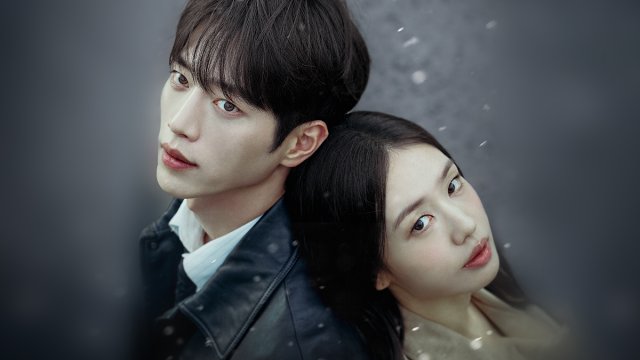
The interplay between Ji Ho (Hee Su) and Sang Jun (Seung Won) is, without a shadow of a doubt, endearing. Sang Jun (Seung Won) is a reticent and emotionally guarded suitor, yearning to draw closer to Ji Ho (Hee Su). True to the source material, the glances that linger just beyond propriety, the verbal exchanges, and the physical proximities that tremble with implication accumulate with intentionality and culminate in a long-withheld romantic confession
Seung Won: "I don't like Ji Yu"
Hee Su: "Why did you lie?"
Seung Won: "Because I wanted to keep hanging out with you" (chapters 42-43)
A screenshot: https://imgur.com/a/7ElUfSX
Drama Seung Won, too, nudges drama Hee Su to acknowledge his true feelings and discover the solace and happiness that await him in drama Seung Won's arms
Complementing Ji Ho (Hee Su) and Sang Jun (Seung Won)'s chemistry, the adaptation gains narrative sophistication through drama Hee Su's empathetic disposition. This is exemplified in the first episode (5:10-7:04), where he lends an impartial ear to a woman's self-exploration of same-sex desire/introspective reckoning with her attraction toward another woman. He invites us into a space of uncoerced emotional authenticity
Now, it is conceivable that my observation might provoke dissent; however, I am disengaged by a dissonance between the performers' mature appearances and the adolescent roles they enact. Their mature appearances suggest individuals well into their late twenties, if not beyond. The collision of adult identity with the stylized "immaturity" of high school/teenage tropes generates a dissonance that is, for me, disruptive to the suspension of disbelief. A more coherent and plausible alternative might have been to transpose the setting into a university or workplace
I can be lenient with these matters. What troubles me is the pacing and the straightwashing of the source material to cater to the squeamishness of homophobic audiences wary of encountering too many rainbows on their screens. The central gay relationship spends the bulk of its runtime vying for visibility and relevance against the privileged "straight" script that overshadows it in both duration and execution. "Straightness" centers the stage by force, reasserting its dominance and softening the gayness for broader consumption. It has no rightful place here
The source material refrains from constructing a non-platonic Chan Yeong x Ji Yu storyline. To fabricate one where none exists, and to do so by excising the secondary gay pairing of Sun Woo and Yoo Dahm, is a move I find dishonest and regressive. A screenshot of Sun Woo and Yoo Dahm from chapter 56: https://imgur.com/a/OInfwbQ
How mind-boggling it is that our same-sex ships/pairings are condemned as corrosive to friendships, while society destroys opposite-sex friendships by defaulting to non-platonic arcs with nary a consequence
Some might rationalize the excision of the secondary gay couple by appealing to their placement in the second season. It is a dubious, flimsy excuse at best. Being classmates and friends, Hee Su is acquainted with the secondary gay couple. Their early introduction could have contributed to the exploration of identity, intimacy, or social belonging and accelerated Hee Su's journey toward self-acceptance. Sun Woo and Yoo Dahm need not have been "useless" or "irrelevant"
Timelines are malleable. The screenwriters were afforded the opportunity to recalibrate the timeline of the source material/fine-tune the sequence of events in order to optimize the seamless integration of two seasons into a compact drama format. Nevertheless, their creativity was not exercised in service of non-straight visibility. They delegitimized non-straight modes of subjectivity and relegated them to an inferior, irrelevant, or disruptive status
Those reading might pose the question, "are you a hater?" To which I will respond in the negative. Neither animosity nor resentment informs my evaluation
My contention is that preserving one of the two gay pairings is not a sufficient or ambitious act of fidelity. It is, in fact, justified for audiences to experience discomfort when confronted with deviations from the source material. The phenomenon is not unprecedented. Public discourse surrounding the cinematic reimaginings of "The Little Mermaid" (2023) and "Snow White" (2025) demonstrated how even superficial modifications precipitate public disapproval. By parallel reasoning, it follows that modifications to gay source materials would precipitate scrutiny and disapproval
Questioning the producers' call to accommodate societal prejudices against gay-centered narratives does not amount to prejudice or -phobia. The public dissemination of a creative or intellectual work instigates a dynamic feedback mechanism, wherein audience reception, positive or negative, re-enters the production process and compels producers to adapt to the cultural climate and evolve or risk obsolescence
I do appreciate the effort invested in the part-BL/part-gay adaptation. Moving forward, I would love to see BLs exclusive in focus that center and honor gay love without compromise or dilution
The interplay between Ji Ho (Hee Su) and Sang Jun (Seung Won) is, without a shadow of a doubt, endearing. Sang Jun (Seung Won) is a reticent and emotionally guarded suitor, yearning to draw closer to Ji Ho (Hee Su). True to the source material, the glances that linger just beyond propriety, the verbal exchanges, and the physical proximities that tremble with implication accumulate with intentionality and culminate in a long-withheld romantic confession
Seung Won: "I don't like Ji Yu"
Hee Su: "Why did you lie?"
Seung Won: "Because I wanted to keep hanging out with you" (chapters 42-43)
A screenshot: https://imgur.com/a/7ElUfSX
Drama Seung Won, too, nudges drama Hee Su to acknowledge his true feelings and discover the solace and happiness that await him in drama Seung Won's arms
Complementing Ji Ho (Hee Su) and Sang Jun (Seung Won)'s chemistry, the adaptation gains narrative sophistication through drama Hee Su's empathetic disposition. This is exemplified in the first episode (5:10-7:04), where he lends an impartial ear to a woman's self-exploration of same-sex desire/introspective reckoning with her attraction toward another woman. He invites us into a space of uncoerced emotional authenticity
Now, it is conceivable that my observation might provoke dissent; however, I am disengaged by a dissonance between the performers' mature appearances and the adolescent roles they enact. Their mature appearances suggest individuals well into their late twenties, if not beyond. The collision of adult identity with the stylized "immaturity" of high school/teenage tropes generates a dissonance that is, for me, disruptive to the suspension of disbelief. A more coherent and plausible alternative might have been to transpose the setting into a university or workplace
I can be lenient with these matters. What troubles me is the pacing and the straightwashing of the source material to cater to the squeamishness of homophobic audiences wary of encountering too many rainbows on their screens. The central gay relationship spends the bulk of its runtime vying for visibility and relevance against the privileged "straight" script that overshadows it in both duration and execution. "Straightness" centers the stage by force, reasserting its dominance and softening the gayness for broader consumption. It has no rightful place here
The source material refrains from constructing a non-platonic Chan Yeong x Ji Yu storyline. To fabricate one where none exists, and to do so by excising the secondary gay pairing of Sun Woo and Yoo Dahm, is a move I find dishonest and regressive. A screenshot of Sun Woo and Yoo Dahm from chapter 56: https://imgur.com/a/OInfwbQ
How mind-boggling it is that our same-sex ships/pairings are condemned as corrosive to friendships, while society destroys opposite-sex friendships by defaulting to non-platonic arcs with nary a consequence
Some might rationalize the excision of the secondary gay couple by appealing to their placement in the second season. It is a dubious, flimsy excuse at best. Being classmates and friends, Hee Su is acquainted with the secondary gay couple. Their early introduction could have contributed to the exploration of identity, intimacy, or social belonging and accelerated Hee Su's journey toward self-acceptance. Sun Woo and Yoo Dahm need not have been "useless" or "irrelevant"
Timelines are malleable. The screenwriters were afforded the opportunity to recalibrate the timeline of the source material/fine-tune the sequence of events in order to optimize the seamless integration of two seasons into a compact drama format. Nevertheless, their creativity was not exercised in service of non-straight visibility. They delegitimized non-straight modes of subjectivity and relegated them to an inferior, irrelevant, or disruptive status
Those reading might pose the question, "are you a hater?" To which I will respond in the negative. Neither animosity nor resentment informs my evaluation
My contention is that preserving one of the two gay pairings is not a sufficient or ambitious act of fidelity. It is, in fact, justified for audiences to experience discomfort when confronted with deviations from the source material. The phenomenon is not unprecedented. Public discourse surrounding the cinematic reimaginings of "The Little Mermaid" (2023) and "Snow White" (2025) demonstrated how even superficial modifications precipitate public disapproval. By parallel reasoning, it follows that modifications to gay source materials would precipitate scrutiny and disapproval
Questioning the producers' call to accommodate societal prejudices against gay-centered narratives does not amount to prejudice or -phobia. The public dissemination of a creative or intellectual work instigates a dynamic feedback mechanism, wherein audience reception, positive or negative, re-enters the production process and compels producers to adapt to the cultural climate and evolve or risk obsolescence
I do appreciate the effort invested in the part-BL/part-gay adaptation. Moving forward, I would love to see BLs exclusive in focus that center and honor gay love without compromise or dilution
Was this review helpful to you?


