
 Editorials


This review may contain spoilers
Gay subtext meets historical drama
"She already knows how to make women fall for her without consciously thinking about it ..." (episode 6, 17:43)
"I never knew those two [women] could have such chemistry, they are bringing out the best in each other" (episode 6, 51:47)
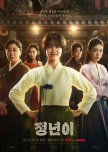
The stage of "Jeong Nyeon" is no common theatre. A theatre it is where women reign supreme and assume a duality. In their duality, they are the subject and object of romantic contemplation, the wooer and the wooed, the pursuer and the prize pursued, the lover and the beloved. They circle one another, and, unawares, trace the contours of homoerotic tension that hums under the mask of their performance
The removal of Bu Yong and the life she shared with Jeong Nyeon is a cowardly bow to societal prejudice. Nevertheless, the adaptation is worthy of acclaim for its deliberate construction of a homosocial sphere, in which same-sex longings find fertile ground to flourish
"The stars that once graced the [female] gukgeuk stage went on to continue their paths as artists, pansori singers, outdoor theatre performers, or even film actors. They have merely dispersed, not disappeared, and they will shine on in the vast night" (episode 12, 1:14:12)
The legacy of female gukgeuk slumbers in silence and neglect, awaiting but the breath of fresh voices to bid forth anew its sovereign might and elegance
"I never knew those two [women] could have such chemistry, they are bringing out the best in each other" (episode 6, 51:47)
The stage of "Jeong Nyeon" is no common theatre. A theatre it is where women reign supreme and assume a duality. In their duality, they are the subject and object of romantic contemplation, the wooer and the wooed, the pursuer and the prize pursued, the lover and the beloved. They circle one another, and, unawares, trace the contours of homoerotic tension that hums under the mask of their performance
The removal of Bu Yong and the life she shared with Jeong Nyeon is a cowardly bow to societal prejudice. Nevertheless, the adaptation is worthy of acclaim for its deliberate construction of a homosocial sphere, in which same-sex longings find fertile ground to flourish
"The stars that once graced the [female] gukgeuk stage went on to continue their paths as artists, pansori singers, outdoor theatre performers, or even film actors. They have merely dispersed, not disappeared, and they will shine on in the vast night" (episode 12, 1:14:12)
The legacy of female gukgeuk slumbers in silence and neglect, awaiting but the breath of fresh voices to bid forth anew its sovereign might and elegance
Was this review helpful to you?


