

 2
2 4
4 1
1 1
1 2
2 1
1 1
1



Comedy and bit of romance
Just what is needed to relax and laugh at the antics of the "superstar" actor YouXi (Kele Sun) and the "assistant" Yuchi YaoYao (Hanna/Lu YangYang) he roped in. It often feels like parody, clichés and tropes are gleefully taken on by the actors.There is a complicated word (enoclophobia) for the mental discomfort suffered by the FL character.
This is what a Rom com looks like. I thought I would be annoyed by the male character "abuse" or how childish he is, but he is not abusive, he is just demanding and fits perfectly with the comedy, and he being childish "at home" and "in private" is refreshing since that's how people are, instead of playing another role where the guy is perfect and flawless in public and in private!
And their interactions are cute and funny, to the point that I feel like maybe I found one drama where I don't feel like rushing until they "get together" to catch some romance!
Was this review helpful to you?
A Calm Sea and Beautiful Days with You
0 people found this review helpful
An arranged marriage in pre-war Japan — A Calm Sea… Until the Second Couple Saved the Day
Kind of cute if you can handle hyper extreme self-conscious ocd behaviour and overthinking to an insane degree (which I get was supposed to be comic)A cute, funny and heartwarming story of an arranged marriage in pre-war Japan, with an adorably awkward, reserved and innocent main couple, and an amusingly bantering and witty second couple.Watching them falling in love, bonding and supporting each other was a real pleasure to watch.“A Calm Sea and Beautiful Days with You” opened with a promising first half that pulled me in with its gentle pacing and emotional setup. The early episodes had an engaging charm, and for a while, I genuinely thought the story would stay steady all the way through.
But as the drama moved into the second half, the momentum softened and the main storyline began to lose its grip. What truly kept me going—and ultimately helped me complete the drama—was the second couple. They brought warmth, chemistry, and a much-needed spark when the main narrative started drifting.
Their presence added life back into the show, and they became the emotional anchor that made the later episodes worth watching.
Overall, this drama had a beautiful start and a memorable supporting romance, even if the main arc couldn’t maintain its initial promise. It’s a calm watch with standout moments thanks to its second couple, who quietly stole the spotlight.
Was this review helpful to you?
Love, Destiny, and the Pain of Choice
“Lost You Forever Season 2” continues the heart wrenching and beautifully written journey that began in Season 1, diving even deeper into the tangled web of love, destiny, and power. The story picks up right where it left off, with Xiao Yao and the three men who love her each facing impossible choices between duty and desire.
Yang Zi once again delivers an extraordinary performance the emotional range she brings to Xiao Yao is breathtaking. She captures strength and vulnerability in perfect balance, portraying a woman torn between love and self-preservation. Her chemistry with all three male leads is undeniable each relationship feels raw, distinct, and heartbreakingly real.
Every character in this season gets their moment to shine. Tushan Jing remains gentle and devoted, his love pure but burdened by circumstance. Cang Xuan’s ambition and protectiveness create both tension and sympathy, he’s the definition of a tragic hero. And Xiang Liu, with his quiet, sacrificial love, steals the spotlight with moments that are both poetic and devastating. Together, they form a love polygon that’s emotionally gripping without ever feeling repetitive or forced.
Visually, the drama is a masterpiece, the cinematography, costumes, and music elevate every scene, enhancing both its grandeur and intimacy. The OST perfectly echoes the bittersweet tone of the story, amplifying its emotional depth.
In the end, Lost You Forever Season 2 is a powerful continuation that makes you cry, ache, and yet fall in love all over again. It’s not a perfect story, but it’s one that leaves a lasting mark on the heart.A tale of fated souls who love deeply yet are bound by destiny.
An emotionally rich continuation that captures the beauty and pain of love, anchored by phenomenal performances and poetic storytelling.
Was this review helpful to you?
Lessons Beyond the Scalpel— The Mentor Who Heals More Than Wounds
Dr. Romantic 2 carries forward the heartfelt legacy of its predecessor, proving once again that medical dramas can be both emotionally rich and deeply inspiring. This season welcomes new faces and stories, yet retains the same core — the passion, sincerity, and wisdom embodied by Kim Sabu. Han Suk Kyu once again delivers a powerhouse performance, grounding every scene with quiet intensity and compassion.The new duo Seo Woo Jin (Ahn Hyo Seop) and Cha Eun Jae (Lee Sung Kyung) bring a fresh energy and contrast. Their chemistry starts off awkward yet evolves beautifully, showing how two flawed individuals can find strength in each other and rediscover purpose under Kim Sabu’s guidance. The dynamic between the trio mentor and mentees is what makes the series so emotionally rewarding.
Visually, Dr. Romantic 2 is stunning the surgical scenes are tense and well-directed, the hospital feels alive, and the OST perfectly amplifies the emotions. The writing shines in its ability to weave medical ethics, personal growth, and social realism into one cohesive narrative.
This season isn’t just about saving lives; it’s about rediscovering one’s belief in humanity, in medicine, and in oneself. It strikes a balance between heartwarming and heartbreaking moments, leaving you inspired long after the credits roll.
A powerful continuation that deepens the original’s spirit — Dr. Romantic 2 is heartfelt, mature, and beautifully human.
Was this review helpful to you?
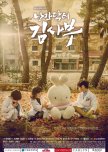
More Than a Doctor: The Humanity Behind Dr. Romantic
It is not just a medical drama . it’s a deeply emotional and inspiring story about purpose, compassion, and rediscovering what it means to truly save lives. Set in the humble Doldam Hospital, far away from the glamour of big city medicine, the show captures the raw essence of being a doctor through its complex characters and heart-touching cases.At the center is Kim Sabu (Han Suk-kyu), a genius yet unconventional surgeon whose wisdom and ideals guide everyone around him. His mentorship of Kang Dong-joo (Yoo Yeon-seok) and Yoon Seo-jung (Seo Hyun-jin) two young doctors driven by ambition but burdened by past regrets forms the emotional core of the series. Their journey from arrogance and self-doubt to empathy and purpose is beautifully written and powerfully acted.
The medical cases are intense, often mirroring real social issues and ethical dilemmas, while the storytelling blends tension, warmth, and moral reflection seamlessly. The cinematography and background score enhance the emotional depth, making every surgery and every quiet conversation equally compelling.
What truly sets Dr. Romantic apart is its heart. It doesn’t glorify medicine it humanizes it. It reminds viewers that healing isn’t just about skill; it’s about courage, kindness, and connection. By the end, you don’t just admire Kim Sabu as a doctor you respect him as a teacher and a symbol of integrity.
A masterpiece of storytelling and emotion, Dr. Romantic Season 1 is a must-watch that leaves you inspired and deeply moved a drama that heals your soul as much as it tells its story.
Was this review helpful to you?
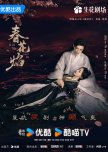
A Dark Yet Beautiful Tale of Love, Revenge, and Redemption
The story begins with Prince Murong Jing He is the proud and brilliant commander of the Weibei Army who wins back Qingzhou, only to be branded as the “Butcher General” after a devastating fire wipes out the city. His heroic act turns into infamy, and he becomes known as a cold-hearted killer.Then comes Mei Lin, a young woman who loses her family and home in that same fire. Devastated and filled with hatred, she vows to take revenge on Murong Jing He. She joins the secret assassin organization Shadow Works, endures years of brutal training and poison trials, and finally infiltrates his world disguised as one of the Xiyan beauties sent for a political alliance.
But fate plays a cruel trick the man she wants to kill is actually the very one who molded her into the assassin she has become. Murong Jing He had orchestrated everything, leading her into a path of vengeance that ultimately brings her right back to him. Their relationship becomes a dangerous dance of hate and desire, a mix of sword fights, poisoned tea, and smoldering looks that could kill or kiss at any moment.
The chemistry between Wu Jin Yan and Liu Xue Yi is absolute fire. Their push-and-pull dynamic, emotional tension, and raw attraction make every scene between them magnetic. Watching them together feels like witnessing a war between passion and pride.
Beyond the romance, the drama shines in its psychological depth exploring Mei Lin’s inner conflict between revenge and love, and Murong Jing He’s journey from a cold, emotionless leader to a man rediscovering his heart. The acting is phenomenal; both leads portray wrath and tenderness in equal measure. Supporting roles, especially Prince Yin Que and Crown Prince Murong Xuan Lie, add layers of deceit, loyalty, and manipulation that enrich the story.
Visually, the show is a masterpiece from breathtaking costumes and haunting landscapes to perfectly choreographed fight scenes that look like moving art. Every episode is cinematic and emotionally charged.
However, the only major flaw lies in the final episode. The drama’s ending takes an unnecessary tragic turn that deviates from the novel’s happy ending, making it feel forced and unsatisfying. After such intense emotional buildup, both characters deserved peace and happiness, not heartbreak.
— The violent encounter of two strong leads: the raw, tension-filled start and the pool scene were pure perfection.
— The character development was psychologically believable, especially Prince Jing’s transformation through love.
— Excellent directing, powerful performances, and captivating camera work.
— Duality between appearance and truth was brilliantly portrayed.
— Mei Lin’s action scenes were stunning and fierce.
— Yin Que served more as a cunning antagonist than a true second male lead.
Overall, Kill Me, Love Me is a dark, tragic, and passionate journey of two souls bound by vengeance and love. From violence to healing, it’s a visually stunning and emotionally intense experience that stays with you long after it ends.
⭐ Rating: 8.5/10 – Breathtaking performances, fiery chemistry, and haunting visuals only let down by its dragging in the sencond half after first prince's death and an unnecessary tragic ending.
Was this review helpful to you?
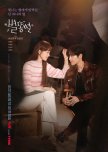
Behind the scenes of Entertainment Industry
It's a fun and easy watch. A behind-the-scenes look at the entertainment industry's PR teams, managers, and reporters as they scramble to clean up the messes created by their stars. I liked the back story of each charachter and how each relationship developed here.Not Everything is prefect but that's how life is right.Was this review helpful to you?

A Gentle Unraveling of Secrets
Coroner’s Diary stands out for the calm yet captivating way its story unfolds. Instead of relying on endless suffering or overdone drama, it takes a thoughtful and steady approach — one that draws you in with quiet intensity. Each episode peels back another layer of mystery with grace, balancing intrigue, intelligence, and heart.The female lead is the true anchor of the show — sharp, composed, and deeply humane. Her partnership with the male lead is built on mutual respect, trust, and intellect, making their teamwork both believable and heartwarming. The pacing is serene yet engaging, weaving together mystery, friendship, loyalty, and a touch of gentle romance.
"For a faithful partner, his every action represents a commitment.For an unfaithful partner, event the solemnest vows can't stop him from backtracking" (fl, epi 23)
Was this review helpful to you?
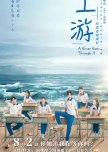
A Bittersweet Journey of Growing Up!
This drama is funny, heartfelt, and surprisingly realistic. I love how it shows that life doesn’t always unfold the way we hope, yet we still find ways to grow and make things work. It’s refreshing that it isn’t the usual love-triangle chaos—there’s so much more depth, friendship, and personal growth woven into the story.One YouTube comment perfectly captures the essence:
“Everyone is running towards each other without realizing someone’s running behind them too.”
This line beautifully reflects the youthful confusion, misaligned timing, and bittersweet innocence that define the drama and connect perfectly with its title, A River Runs Through It.
Was this review helpful to you?

This review may contain spoilers
Lighter & Princess — Why It Didn’t Work for Me
As a binge-watcher, the first 10–13 episodes pulled me in enough to watch them back-to-back, but after that point the drama completely lost its spark for me. I tried picking it up again several times (7–8 attempts!), but nothing made me want to continue.Why I dropped it:
The backstory dragged on too long. Instead of giving the essential emotional beats or explaining why the ML went to prison, the story spent multiple episodes on side interactions that didn’t add anything meaningful to the main plot or the romance.
No character development. Both Li Xun and Zhu Yun felt exactly the same from university to their adult lives—no growth, no depth. As a programmer myself, even the business/tech aspects didn’t feel engaging enough to keep me invested.
Toxic relationship dynamics. The ML’s behavior was written as “asshole for the sake of being an asshole,” and the FL just fell for him because the script demanded it. The romance had a good starting point, but by episode 21 it still felt stagnant.
Predictable plot. I could guess the story trajectory early on, so there wasn’t anything left to hook me despite wanting to at least finish it.
I’m glad others enjoyed it, but for me… it simply didn’t work. And I don’t think I’ll be picking it up again.
Was this review helpful to you?
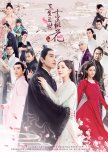
A Goddess, A Crown Prince, and a Love That Refused to Die
The drama is divided into three major arcs: Si Yin and Mo Yuan, Su Su and Ye Hua, and finally Bai Qian and Ye Hua.The first arc lays the foundation of the world and relationships. While some may find it slower, it builds the emotional depth that pays off later. The real emotional turning point begins in the mortal arc between Su Su and Ye Hua. Their love in the mortal realm is tender, soft, and deeply moving. However, once Su Su is taken to the Celestial Palace, the tone shifts dramatically. Miscommunication, secrets, palace politics, and Ye Hua’s misguided attempts to “protect” her lead to devastating consequences. That arc remains one of the most heartbreaking stretches in xianxia dramas.
The final arc between Bai Qian and Ye Hua is a mix of romance, frustration, and redemption. Their chemistry is undeniable, but the repeated misunderstandings and Ye Hua’s often forceful behavior can be difficult to overlook. Still, the emotional payoff, especially Ye Hua’s redemption arc, is powerful and memorable.
Acting & Performances
Mark Chao delivers a phenomenal performance as Ye Hua. He conveys emotion through his eyes with remarkable depth. His pain, longing, authority, and vulnerability feel authentic. Whether as a restrained Crown Prince or a desperate lover, he commands the screen. Some of the most powerful scenes in the entire drama belong to him.
Yang Mi shines in her triple portrayal of Si Yin, Su Su, and Bai Qian. Each version feels distinct. Her Su Su is fragile and tragic, while Bai Qian is composed and dignified, though sometimes emotionally obtuse. Yang Mi captures heartbreak beautifully, especially in the palace arc.
The child actor who played Ah Li was absolutely adorable and added warmth to the story. The supporting cast also deserves praise.
Maggie Huang as Su Jin made viewers truly despise her, which speaks to how well she embodied the manipulative antagonist.
Vin Zhang as Li Jing portrayed a flawed but layered character whose long, obsessive love felt tragic rather than purely villainous.
The side couple Feng Jiu and Dong Hua became so popular that they later received their own drama, Eternal Love of Dream.
Even minor characters, from Bai Qian’s fox family to the heavenly gossip trio, added charm and personality to the world.
Strengths
Deep emotional storytelling across multiple lifetimes
Strong performances, especially from Mark Chao
Beautiful costumes and cinematography
Memorable soundtrack
High emotional impact scenes that remain unforgettable
Complex relationships beyond the main couple
The chemistry between the leads is intense and believable. Some romantic scenes were passionate and mature, which is refreshing in the genre.
Weaknesses
Excessive miscommunication and secrecy that prolongs conflict
Ye Hua’s questionable choices in the Celestial Palace
Some CGI that reflects its 2017 production limitations
Certain side plots feel stretched or underdeveloped
Lack of a truly strong, overarching villain
Dragging pacing in some later episodes
At times, it feels like nearly all suffering could have been avoided with basic communication. While that is a common trope in melodramas, it can become frustrating over 58 episodes.
Overall Impression
Despite its flaws, this drama earns its status as a xianxia classic. It is dramatic, emotional, sometimes frustrating, but undeniably impactful. The love story is tragic yet devoted, flawed yet powerful. The redemption arc of Ye Hua, the heartbreak of Su Su, and the enduring bond between Bai Qian and Ye Hua leave a lasting impression.
It may not be perfect in writing or pacing, but it stands in a league of its own because of its emotional depth, performances, and unforgettable moments.
Was this review helpful to you?
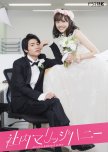
This Couple Gave Me Diabetes (In the Best Way)
I finished this drama in just a couple of hours and I was smiling from start to finish. It is my first jdrama of 2026 and honestly it was such a good way to start the year. This one gave me butterflies the whole time.The story is simple and familiar. Contract marriage, dating app meeting, girl trying to move on from a five year relationship, guy genuinely looking for a wife. Nothing groundbreaking. But it is done so well that you do not even care that you have seen this trope before. It starts fluffy and it ends fluffy. No villains, no heavy negativity, just pure heartwarming vibes.
What truly makes this drama special is the male lead. He is gentle, respectful, and completely swoon worthy. He respects boundaries and consent, communicates clearly, and never forces anything. Watching a couple actually talk about their feelings instead of dragging misunderstandings for episodes was so refreshing. Ami also grows a lot. She starts off a bit hesitant to open up, but her character development feels natural and satisfying.
The chemistry between the leads is honestly off the charts. Their expressions, their smiles, their small moments together all feel natural and adorable. I was giggling, kicking my feet, and questioning my single life in multiple languages. The side characters were also surprisingly mature. The ex was not toxic, and even the unrequited feelings were handled gracefully without pettiness.
It is short, sweet, and dangerously cute. Only seven episodes, but it delivers maximum warmth. If you want something light, comforting, and full of healthy romance, this is perfect. Just be prepared for a serious sugar overload.
Was this review helpful to you?
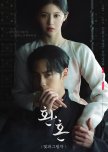
Alchemy of Souls Season 2: Light and Shadow
4 people found this review helpful
This review may contain spoilers
A Beautiful and Satisfying Conclusion
After finishing *Alchemy of Souls: Light and Shadow*, I can honestly say this is one of the most satisfying conclusions a fantasy drama could have given such a complicated storyline. Considering how many moving pieces the story had to resolve, from soul shifting and hidden identities to family secrets and ancient prophecies, I was impressed by how well everything ultimately came together.I know many viewers had mixed feelings about the female lead change, but personally, I loved it. In fact, I think it made the story even more powerful. Watching Jang Uk fall in love with someone who looked completely different but carried the soul of the woman he never stopped loving added a whole new emotional layer to the romance. His internal conflict felt believable. He wanted to move on, yet he was constantly drawn toward her. The longing, confusion, guilt, and emotional tension between them became one of the strongest aspects of the season.
I also disagree with the criticism that Jin Bu Yeon was simply a passive character. She was just as confused as everyone else. The memories returning to her did not fully feel like her own, and much of her journey revolves around understanding her identity and place in the world. There are far more layers to her character than many viewers give her credit for.
One thing I appreciated was how this season paid off the foundation that Season 1 spent twenty episodes building. While the first season focused heavily on world-building, character introductions, and establishing relationships, Season 2 allows those relationships to fully blossom. The romance between Jang Uk and Naksu finally receives the emotional payoff it deserves. Their relationship is filled with pain, longing, healing, and acceptance, making it one of the most rewarding parts of the drama.
Lee Jae Wook once again delivers an outstanding performance. This version of Jang Uk is very different from the young man we met in Season 1. He is colder, more isolated, and burdened by grief. Yet underneath that hardened exterior remains the same person we grew to love. Watching him slowly heal throughout the season was incredibly satisfying.
Go Youn Jung also deserves praise for stepping into such a difficult role. Replacing a beloved actress is never easy, but she made the character her own while still preserving the essence of who Naksu was. By the end of the season, I was fully invested in her portrayal.
Another aspect I loved was the friendships. Just like in Season 1, the drama avoids unnecessary betrayals and jealousy. Instead, it focuses on loyalty, trust, and genuine affection between friends. It was refreshing to watch characters consistently support one another rather than constantly creating conflict for the sake of drama.
The shorter ten-episode format worked surprisingly well. Unlike the first season, which occasionally struggled with pacing, this season feels more focused and direct. Every episode pushes the story forward while gradually answering the mysteries and questions left behind by Season 1.
I was also very satisfied with how the writers resolved the complicated situation involving Naksu, Mu Deok, and Jin Bu Yeon's identities. Given how confusing the soul and body-switching mechanics could become, I was worried the explanation would feel messy or incomplete. Instead, the drama managed to tie everything together in a way that felt emotionally satisfying and surprisingly easy to follow.
Visually, the series remains stunning. The cinematography, costumes, special effects, and soundtrack continue to create a magical atmosphere that perfectly complements the story's emotional moments.
Looking back, I believe splitting the story into two seasons was the correct decision. Part of that was likely due to production realities and the actress transition, but from a storytelling perspective it also allowed the romance, world-building, and character arcs enough room to breathe. Trying to fit everything into a single season would likely have made the story feel rushed.
Overall, Alchemy of Souls: Light and Shadow delivers exactly what a final season should. It answers important questions, resolves character arcs, strengthens the emotional core of the story, and gives viewers a rewarding conclusion. It may not be perfect, but for a fantasy drama built on such a complex foundation, I honestly could not have asked for a better ending.
Was this review helpful to you?
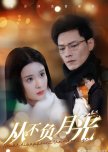
This review may contain spoilers
I watched “Miss Qiao’s Top White Moonlight” version of this story first, and I genuinely liked it — mainly because of the romance build-up between the characters. When I found out there were other versions, I decided to give this one a try, especially because the storyline was familiar and Megna, one of my favorite short vertical drama actresses, was part of it. I honestly thought, what could go wrong with a familiar story and a favorite actress?Well… I was very wrong.
This version completely ruined the slow-burn romance that made the story appealing in the first place. The emotional pacing felt off, and instead of letting feelings develop naturally, the drama made choices that were uncomfortable rather than romantic.
One particular aspect that really put me off was the portrayal of the uncle character. He is neither blood-related nor in any romantic commitment with the FL, yet repeatedly pulling her onto his lap and engaging in overly physical behavior felt unnecessary and disturbing. It didn’t come across as affectionate or protective — it was simply uncomfortable to watch. Honestly, I don’t think even a real-life father would behave this way with his grown daughter, let alone an uncle.
On top of that, the FL’s styling, especially her haircut, was extremely distracting — easily one of the worst I’ve seen, and it did her no favors.
Overall, this adaptation failed to capture what made the story special: emotional restraint, slow-burn tension, and respectful relationship dynamics. Compared to the “Miss Qiao’s Top White Moonlight” version, this one felt rushed, poorly executed, and tonally confusing. A disappointing watch, especially when the source material had so much potential.
Was this review helpful to you?

Between Past and Present, Love Finds a Way
Someday or One Day is one of those rare dramas where, within the first minute, you already know you are in for something special. By the time the OST starts playing, your heart is already hooked. This is not just a romance, but a carefully layered story about love, grief, identity, time travel, healing, and human connection. Every rewatch reveals something new because the writing, direction, and production are filled with subtle clues and foreshadowing that reward careful viewers.What makes this drama truly exceptional is its cross-genre storytelling. It is not only a romance, nor just a mystery, nor only a time-travel fantasy. It blends all of them together. At the same time, it becomes a reflection on loss, mental health, adolescence, and the longing to be understood. The pacing is tight, the structure is clever, and the puzzle of timelines never feels messy. Instead, the story slowly unfolds in a way that keeps you emotionally invested while constantly making you think.
Ko Chia Yen delivers a phenomenal performance. Because of the nature of the plot, she is not simply playing different ages of one character, but completely different personalities across timelines. At times she is an introverted, fragile teenager pretending to be a confident adult, while also being an adult trapped inside a teenager’s body. These layered performances could easily collapse in weaker hands, but Ko Chia Yen nails every emotional beat. You can recognize who she is playing instantly just by her posture, gaze, and tone.
The drama also works because the supporting cast rises to her level. Greg Hsu as Li Zi Wei brings warmth, sincerity, and emotional depth. His performance balances charm and vulnerability, making the romance feel natural instead of exaggerated. Patrick Shih deserves special praise as Mo Jun Jie. His role is complex, painful, and quietly tragic. He is not a typical second male lead, but a deeply layered character whose story touches on loneliness, mental illness, and misunderstood youth. His portrayal is moving and realistic, and he becomes one of the emotional anchors of the show.
The romance between Huang Yu Xuan and Li Zi Wei is one of the most mature and sincere relationships in dramaland. Their bond is built on trust, protection, and emotional safety rather than superficial attraction. They argue, they struggle, and they hurt, but they never stop choosing each other. It feels like the kind of relationship people hope for in real life. Their chemistry is palpable, warm, and believable in every timeline.
Another beautiful strength of Someday or One Day is its meaningful themes. The drama openly addresses grief, depression, identity confusion, bullying, and emotional breakdowns. It sends a powerful message about asking for help, caring for fragile adolescents, and not ignoring psychological pain. It also delivers subtle but important pro-LGBT and mental health awareness messages without forcing them. Every character feels human, flawed, and deserving of empathy.
The production quality is equally impressive. The cinematography is soft and emotional, while the sets and visual choices hide tiny details that connect the timelines together. The OST deserves special mention. From the opening song to the ending track, the music stays with you long after the episode ends. It becomes part of the story itself. This is one of the rare dramas where you never want to skip the intro or outro because the music carries the emotion of the entire narrative.
Overall, Someday or One Day is not just a drama you watch once. It is a story you experience, revisit, and slowly fall deeper into. With brilliant writing, unforgettable performances, a soul-touching soundtrack, and a love story rooted in sincerity and healing, it becomes one of those dramas that quietly stays with you forever.
If you want a series that makes your heart ache, your mind think, and your emotions overflow, this is truly a beautiful ride worth taking. 💙
Was this review helpful to you?


