

 2
2 2
2 1
1


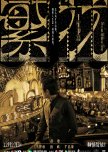
Wong Kar-wai’s first series - a must watch unique drama
As one professional review described it in the trailer, Blossoms Shanghai is the spiritual sequel to Wong Kar-wai's films, in the format of a TV series. And it's quite an accurate description, because you'll find the filmmaker's distinctive signature throughout the whole drama, adapted to the series format and with a rhythm and tone that are somewhat more uplifting than in his films.
If you like, enjoy or love Wong Kar-wai's portfolio, there's no doubt you'll like Blossoms Shanghai. The uniqueness of it all: the cinematography, movie-like quality, acting, incredible soundtrack, meticulous production, camera work, and storytelling, all worth the experience. On the contrary, if you like linear, very talkative and straightforward narratives, this might not be for you.
While in his movies the emotions linger with you long after they finish, the series format simply lets you dive into them throughout its 30 episodes, but ultimately lets you go at the end. Because if there's a difference between WKW's first series and his movies, it is not only the slightly faster pace but also the more positive overall tone and ending. The first 5 to 7 episodes set the premise, but then the drama finds its rhythm and keeps it up until the end; it all makes sense and wraps up nicely.
The technical aspects are, of course, magnificent and very personal in flavour, with the director's recurrent elements also present here: silences, looks and gestures that speak more than words, mirror frames, the role of lighting and soundtrack, slow-mo for certain takes, voice-over narration, you name it.
Acting is top notch and you wouldn´t expect less from this cast: Hu Ge, Xin Zhi Lei, Ma Li, Dong Yong, Wu Yue, Huang Jue and many more. Even my initial cavils with the monotone high-pitched voice of Tiffany Tang faded away and she grew on me eventually, although she never made it into my list of favourites.
Also, the fragmented storytelling that's one of Wong Kar-wai's signatures is here too. The story starts in the middle of the narrative told from the protagonist's perspective, and you'll only have the full picture by the end of the drama.
In that regard, the whole series is wrapped in a warm light that carries you to a world that no longer exists, as in a dream or a remembrance of things past that feels real, yet tamed by someone's lens. This is a love letter to Shanghai, to the blossoming side of the city and that era in the 90s, and the Shanghainese dialect adds to that atmosphere and to the overall flavour of the drama. There's no point in looking for the less positive side of that period here; WKW has no intention whatsoever of talking about it.
This is the story of the swag, savvy and handsome Ah Bao, who decided to surf the wave of China's financial and economic awakening in the late 80s and early 90s, and his journey from a fabric worker to a millionaire in the stock market and textile-retail industry in Shanghai during those years. Along the way, he crossed paths with business competitors and established several meaningful relationships, especially with three women – two of them involved in the restaurant industry – who were also striving to find not only love but their place in this new world.
This is told around WKW's common topics: unrequited love and longing, memory, nostalgia, the passage of time, loneliness, missed connections, the fleeting nature of happiness and human relationships. The difference this time is the addition of business aspects, and it's worth noting that Blossoms Shanghai leans heavily into them too.
All the characters in the drama, even the minor ones, are fleshed out. You have "antagonists", but there are no purely good or bad people; they're mostly multifaceted people with dreams, ambitions and struggles whose interests often merge or collide. You learn to cherish all of them, and every one has their moment of "glory".
Among them, I just want to give a special shout out to the female "laoban" restaurant gang and their leader Lu Mei Lin, and the three waitress-managers; while among the "main" ones my favourites were Mr. Jiang, Ling Zi and the precious Mr. Fan, besides, of course, Ah Bao.
And let me finish this review highlighting my favourite part among many favourite parts of Blossoms Shanghai: episode 14.
This feels like a Wong Kar-wai short film within the 30-episode series, something that only a creative mind like this director's could imagine and execute in such an exquisite way that you wish to rewatch it on loop for quite some time. It’s also a pivotal point in the story that gives meaning to the rest, but that you could also watch independently and still fall in love with it. Jackie Cheung and his "Broken Heart" – or "Stolen Heart" – adds to the magic.
----------
NOTE: The drama is now available worldwide on MUBI (plus Criterion on USA and Canada)
The drama is also available in Mandarin. I prefer the original Shanghainese version.
If you like, enjoy or love Wong Kar-wai's portfolio, there's no doubt you'll like Blossoms Shanghai. The uniqueness of it all: the cinematography, movie-like quality, acting, incredible soundtrack, meticulous production, camera work, and storytelling, all worth the experience. On the contrary, if you like linear, very talkative and straightforward narratives, this might not be for you.
While in his movies the emotions linger with you long after they finish, the series format simply lets you dive into them throughout its 30 episodes, but ultimately lets you go at the end. Because if there's a difference between WKW's first series and his movies, it is not only the slightly faster pace but also the more positive overall tone and ending. The first 5 to 7 episodes set the premise, but then the drama finds its rhythm and keeps it up until the end; it all makes sense and wraps up nicely.
The technical aspects are, of course, magnificent and very personal in flavour, with the director's recurrent elements also present here: silences, looks and gestures that speak more than words, mirror frames, the role of lighting and soundtrack, slow-mo for certain takes, voice-over narration, you name it.
Acting is top notch and you wouldn´t expect less from this cast: Hu Ge, Xin Zhi Lei, Ma Li, Dong Yong, Wu Yue, Huang Jue and many more. Even my initial cavils with the monotone high-pitched voice of Tiffany Tang faded away and she grew on me eventually, although she never made it into my list of favourites.
Also, the fragmented storytelling that's one of Wong Kar-wai's signatures is here too. The story starts in the middle of the narrative told from the protagonist's perspective, and you'll only have the full picture by the end of the drama.
In that regard, the whole series is wrapped in a warm light that carries you to a world that no longer exists, as in a dream or a remembrance of things past that feels real, yet tamed by someone's lens. This is a love letter to Shanghai, to the blossoming side of the city and that era in the 90s, and the Shanghainese dialect adds to that atmosphere and to the overall flavour of the drama. There's no point in looking for the less positive side of that period here; WKW has no intention whatsoever of talking about it.
This is the story of the swag, savvy and handsome Ah Bao, who decided to surf the wave of China's financial and economic awakening in the late 80s and early 90s, and his journey from a fabric worker to a millionaire in the stock market and textile-retail industry in Shanghai during those years. Along the way, he crossed paths with business competitors and established several meaningful relationships, especially with three women – two of them involved in the restaurant industry – who were also striving to find not only love but their place in this new world.
This is told around WKW's common topics: unrequited love and longing, memory, nostalgia, the passage of time, loneliness, missed connections, the fleeting nature of happiness and human relationships. The difference this time is the addition of business aspects, and it's worth noting that Blossoms Shanghai leans heavily into them too.
All the characters in the drama, even the minor ones, are fleshed out. You have "antagonists", but there are no purely good or bad people; they're mostly multifaceted people with dreams, ambitions and struggles whose interests often merge or collide. You learn to cherish all of them, and every one has their moment of "glory".
Among them, I just want to give a special shout out to the female "laoban" restaurant gang and their leader Lu Mei Lin, and the three waitress-managers; while among the "main" ones my favourites were Mr. Jiang, Ling Zi and the precious Mr. Fan, besides, of course, Ah Bao.
And let me finish this review highlighting my favourite part among many favourite parts of Blossoms Shanghai: episode 14.
This feels like a Wong Kar-wai short film within the 30-episode series, something that only a creative mind like this director's could imagine and execute in such an exquisite way that you wish to rewatch it on loop for quite some time. It’s also a pivotal point in the story that gives meaning to the rest, but that you could also watch independently and still fall in love with it. Jackie Cheung and his "Broken Heart" – or "Stolen Heart" – adds to the magic.
----------
NOTE: The drama is now available worldwide on MUBI (plus Criterion on USA and Canada)
The drama is also available in Mandarin. I prefer the original Shanghainese version.
Was this review helpful to you?


