

 2
2 2
2 1
1


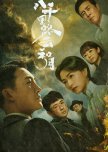
A magnificent Republican war drama depicting the resilience of ordinary people
Echoes of a Thousand Moons is a Republican-era war drama set between 1937 and 1944, during the Resistance War against the Japanese Invasion. Far from a generic production, this is a drama full of personality that depicts the war from the perspective of ordinary citizens; there are no big generals or remarkable lone heroes, just soldiers and civilians who convey the resilience of the people during that period.
Although the story of its characters is fictional, the background is historically accurate, and the attention to period details is outstanding for the most part. This amazingly paced drama is grounded and realistic while also artistic, with a poetic flavour that talks directly to the viewer´s heart. A very cinematic and textured experience directed by Zhang Yong Xin, enhanced by a poignant soundtrack and fantastic performances led by Wang Yang, Wan Qian, Huang CheChen, Yu Hewei, Bi Yan Jun and Cao Lei.
The English name holds up quite well against the original Chinese title "Ba Qian Li Lu Yun He Yue" (八千里路云和月), which can be translated as "Eight thousand miles of road, clouds and moon". This is taken directly from one famous poem of the Southern Song Dynasty, written by the general and national hero Yue Fei: "The River All Red" (满江红), which expresses ardent patriotism and the desire to reclaim lost territory. So, just from the start, the drama establishes a tone of sacrifice, long journey, and unwavering loyalty.
The story revolves around the growth arcs of a righteous KMT Brigade Commander fallen from grace (Zhang Yunkui), his family - formed by his scholar father (Zhang Qi Xian) and well‑educated, generous wife (Ding Yu Jiao) -, and a simple, uneducated cook (Meng Wanfu) that happened to cross paths with them. Along their journey, they encounter many other characters from different backgrounds and personalities, whether in the countryside or the big cities, a fact that allows the director to show all the different and complex realities of war, but mostly the painful and relentless power that historical events have on individuals' lives, dreams and desires.
The storytelling is organized into four arcs, with two main storylines: one on the battlefront which follows the main events of the war, and one focused on the lives of ordinary citizens, mainly set in Shanghai. This structure affects the screen presence of the characters throughout the whole drama, so if you're thinking of watching it because of a particular actor, be aware: you might be disappointed.
The first arc spans from the Battle of Shanghai to the fall of Nanjing, led mainly by Zhang Yunkui and Meng Wanfu. It is one of the most powerful sets of ten episodes I've seen so far – it holds the record of making me tear up in almost all of them, yet it is so poignant that I rewatch several. The battle scenes – with no gore - are stunningly composed and capture the essence of those devastating events that are kept in historical pictures, including a nod to the real-life missionary nuns who protected refugees during the massacre in that city.
From now on, although some characters might get on your nerves – especially in the following arc -, you won´t have such emotionally demanding storytelling in a row except for specific and short parts. But don´t get me wrong, it still isn´t for the faint of heart, yet its excellent pace and the humour and warm moments in between help balance things out.
The second arc is focused mainly on Ding Yujiao (the wife) and her newborn son, Meng Wanfu (the cook) and Zhang Qi Xian (the general´s scholar father) and their life as refugees on the Shanghai French Concession. After doing some research on this, I was in awe of how well the whole situation was portrayed. Meanwhile, the battlefront storyline has less time on screen but if you don´t know about this war, it will help you follow the events as it´s structured around the key battles of the war. Again, you´ll find quite faithful portraits of historical war records regarding the soldiers.
Another highlight of the drama is its portrayal of the Sichuan Army, which first appears near the end of the opening arc and remains present until the conclusion. What makes this depiction particularly compelling is that it reflects a fascinating historical reality that many viewers outside China may not be familiar with.
Before the war, the Sichuan Army was considered the absolute bottom of China's military forces, famously known as the "Two Guns Army" because they often carried a rifle in one hand and an opium pipe in the other - a habit from years of internal warlord conflicts-, or the "Straw Sandal Army" because their equipment was shockingly poor. They had virtually no artillery, armor, or air support and their food supplies were so bad they often survived on sweet potatoes and wild herbs.
Despite their terrible state, the Sichuan Army's courage on the battlefield completely rewrote their legacy. The scale of the sacrifice is staggering: of the approximately 3.5 million soldiers left Sichuan to fight the Japanese, over 640,000 were killed, wounded, or missing in action. 20% of all Chinese casualties, the highest of any province.
As the refugee storyline settles in, the third arc broadens the canvas, balancing Shanghai's political intrigue with the evolving battlefront – roughly 60% to 40%. On one side, the Shanghai storyline starts to focus on the increasing political complexity between the Japanese, Chiang Kai‑shek's government, the collaborationist government of Wang Jingwei, and the Communist Party, and the pressure suffered by Chinese businessmen to help the Japanese.
This is the arc ruled by Tian Jiatai, a romantic and idealistic businessman inspired by a mix of Saint‑Exupéry – the writer - and Don Quixote – the character. What I love about it is the explicit presence of the former novel in this part of the series, adding another poetic and touching universal reference to a fight against what seems impossible and pointless.
This political complexity paves the way for the final arc, with stronger focus on guerrilla warfare in the south and the convergence of the two storylines. When all of them collide again, it is devastatingly sad, evocative and complex. The tension building to the climax and the resolution return the power and emotional weight of the first arc, including another significant battle: Cheqiao. The ending is indeed satisfying, and just as the characters who reach that point are not the same as when the war started, neither are we as viewers.
All in all, this is a magnificent drama about the cruelty of war – and this particular war – on ordinary people, but mostly about their resilience, their love for their culture and for their land.
Although the story of its characters is fictional, the background is historically accurate, and the attention to period details is outstanding for the most part. This amazingly paced drama is grounded and realistic while also artistic, with a poetic flavour that talks directly to the viewer´s heart. A very cinematic and textured experience directed by Zhang Yong Xin, enhanced by a poignant soundtrack and fantastic performances led by Wang Yang, Wan Qian, Huang CheChen, Yu Hewei, Bi Yan Jun and Cao Lei.
The English name holds up quite well against the original Chinese title "Ba Qian Li Lu Yun He Yue" (八千里路云和月), which can be translated as "Eight thousand miles of road, clouds and moon". This is taken directly from one famous poem of the Southern Song Dynasty, written by the general and national hero Yue Fei: "The River All Red" (满江红), which expresses ardent patriotism and the desire to reclaim lost territory. So, just from the start, the drama establishes a tone of sacrifice, long journey, and unwavering loyalty.
The story revolves around the growth arcs of a righteous KMT Brigade Commander fallen from grace (Zhang Yunkui), his family - formed by his scholar father (Zhang Qi Xian) and well‑educated, generous wife (Ding Yu Jiao) -, and a simple, uneducated cook (Meng Wanfu) that happened to cross paths with them. Along their journey, they encounter many other characters from different backgrounds and personalities, whether in the countryside or the big cities, a fact that allows the director to show all the different and complex realities of war, but mostly the painful and relentless power that historical events have on individuals' lives, dreams and desires.
The storytelling is organized into four arcs, with two main storylines: one on the battlefront which follows the main events of the war, and one focused on the lives of ordinary citizens, mainly set in Shanghai. This structure affects the screen presence of the characters throughout the whole drama, so if you're thinking of watching it because of a particular actor, be aware: you might be disappointed.
The first arc spans from the Battle of Shanghai to the fall of Nanjing, led mainly by Zhang Yunkui and Meng Wanfu. It is one of the most powerful sets of ten episodes I've seen so far – it holds the record of making me tear up in almost all of them, yet it is so poignant that I rewatch several. The battle scenes – with no gore - are stunningly composed and capture the essence of those devastating events that are kept in historical pictures, including a nod to the real-life missionary nuns who protected refugees during the massacre in that city.
From now on, although some characters might get on your nerves – especially in the following arc -, you won´t have such emotionally demanding storytelling in a row except for specific and short parts. But don´t get me wrong, it still isn´t for the faint of heart, yet its excellent pace and the humour and warm moments in between help balance things out.
The second arc is focused mainly on Ding Yujiao (the wife) and her newborn son, Meng Wanfu (the cook) and Zhang Qi Xian (the general´s scholar father) and their life as refugees on the Shanghai French Concession. After doing some research on this, I was in awe of how well the whole situation was portrayed. Meanwhile, the battlefront storyline has less time on screen but if you don´t know about this war, it will help you follow the events as it´s structured around the key battles of the war. Again, you´ll find quite faithful portraits of historical war records regarding the soldiers.
Another highlight of the drama is its portrayal of the Sichuan Army, which first appears near the end of the opening arc and remains present until the conclusion. What makes this depiction particularly compelling is that it reflects a fascinating historical reality that many viewers outside China may not be familiar with.
Before the war, the Sichuan Army was considered the absolute bottom of China's military forces, famously known as the "Two Guns Army" because they often carried a rifle in one hand and an opium pipe in the other - a habit from years of internal warlord conflicts-, or the "Straw Sandal Army" because their equipment was shockingly poor. They had virtually no artillery, armor, or air support and their food supplies were so bad they often survived on sweet potatoes and wild herbs.
Despite their terrible state, the Sichuan Army's courage on the battlefield completely rewrote their legacy. The scale of the sacrifice is staggering: of the approximately 3.5 million soldiers left Sichuan to fight the Japanese, over 640,000 were killed, wounded, or missing in action. 20% of all Chinese casualties, the highest of any province.
As the refugee storyline settles in, the third arc broadens the canvas, balancing Shanghai's political intrigue with the evolving battlefront – roughly 60% to 40%. On one side, the Shanghai storyline starts to focus on the increasing political complexity between the Japanese, Chiang Kai‑shek's government, the collaborationist government of Wang Jingwei, and the Communist Party, and the pressure suffered by Chinese businessmen to help the Japanese.
This is the arc ruled by Tian Jiatai, a romantic and idealistic businessman inspired by a mix of Saint‑Exupéry – the writer - and Don Quixote – the character. What I love about it is the explicit presence of the former novel in this part of the series, adding another poetic and touching universal reference to a fight against what seems impossible and pointless.
This political complexity paves the way for the final arc, with stronger focus on guerrilla warfare in the south and the convergence of the two storylines. When all of them collide again, it is devastatingly sad, evocative and complex. The tension building to the climax and the resolution return the power and emotional weight of the first arc, including another significant battle: Cheqiao. The ending is indeed satisfying, and just as the characters who reach that point are not the same as when the war started, neither are we as viewers.
All in all, this is a magnificent drama about the cruelty of war – and this particular war – on ordinary people, but mostly about their resilience, their love for their culture and for their land.
Was this review helpful to you?


