

 2
2 2
2 1
1


This review may contain spoilers
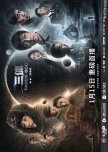
Three Body (Anniversary version), a hard sci-fi story that goes deep into human nature
It's difficult to summarize this series without giving spoilers and ruining much of the joy of watching it, as it's designed for the viewer to slowly discover the truth and experience the unfolding events and emotions alongside the protagonists. So, I'm sharing my spoiler-free impressions in the first part and using spoiler tags in the second one, with some reflections about the story.
Based on the first book of the acclaimed sci-fi trilogy The Three-Body Problem by Liu Cixin, the story starts with the mysterious deaths of prominent scientists around the world and follows our main duo: police officer Shi Qiang and nanophysicist Wang Miao as they investigate them and a series of increasingly strange events that challenge everything humans think they know.
This investigation eventually leads to a shocking discovery: an impending alien invasion from Trisolaris, a star system struggling to survive in its chaotic orbit, and humanity's fractured response to this discovery. The story unfolds across two main timelines: the past, set in the 1960s during the Cultural Revolution, and the present, around 2010.
The series: general thoughts
Being hard sci-fi, the series weaves a wide range of scientific, philosophical, metaphysical, environmental, and other theories and concepts into the story, particularly in the first half, which may feel dense or demanding at times. If you haven't read the books — my case — and even if you're familiar with the concepts, you might need to pause, slow down, and process everything that's being presented.
The second part of the series flows more smoothly, with more action mixed into the overall tense atmosphere as the previous mysteries start coming to light, while hinting that an even more threatening new phase is coming, mainly setting the stage for what's to come in future seasons.
I started watching the original 30-episode series, but it felt like a snooze-fest, mainly because many scenes seem to be a bit longer than they might require. "Artificially prolonged" is the best way to describe the feeling. So, I switched to the 26-episode Anniversary version available from episode 3 onward. Now the pace was perfect for me, and if you still haven't seen it, or dropped the previous one but still want to give it another try, I strongly recommend going straight to this new director's edition.
Which brings me to my main caveat with Three Body: the production is solid but I'm conflicted about the direction. While I constantly wanted to know what would happen next, I wasn't particularly drawn to or blown away by any technical aspect; on the contrary, besides the sometimes stretched takes, I think the choices were competent but conventional, with even a few cheap emotional beats scattered among a few beautifully composed scenes.
I do give credit to director Yang Lei since I know this kind of material is genuinely difficult to translate to the screen, and I´m still wondering whether such an average approach is exactly what this interesting and compelling story needs. Three Body feels somehow lacking in places, but those shortcomings didn't matter at all by the time the drama ended, and I found myself loving it. Contrary to love at first sight, this was the deep appreciation and love that comes through immersion and time; the more I watched, the more I enjoyed it and wanted more.
So, do I recommend this Anniversary version of Three Body? Absolutely. The story is compelling and complex, and if you like or are a fan of hard sci-fi with deep meanings, it's a must-watch without a second thought. In fact, the second and third books are now at the top of my reading list because I want to know how it continues and ends.
The Story: My Reflections on What Struck Me the Most (Full Spoilers)
I understand the impact of traumatic experiences on individual choices, but the story brings up a very important aspect: the scale of retaliation. In Ye Wenjie's case, it´s totally out of proportion. A deeply personal traumatic event leads to an action that represents the extinction of humankind forever.
Even if you stretch yourself in extreme mental gymnastics to understand her immediate response upon receiving the message back then, the disproportion of her revenge, the nature of her following actions, and the fact that she has remained the same ever since, are a clear sign of the danger of hate and the catastrophic consequences of lacking emotional and spiritual evolution in a human being. In the end, she has far surpassed the monstrosity of what and who she hates, becoming something worse. I'm totally on Shi Qiang's side here — there's no excuse.
And that brings me to the following reflection. The drama discusses how power, knowledge, and responsibility intersect, but meanwhile the intellectual point of view is widely brought into dialogues, and this discussion is framed from a cultural/societal worldview; the spiritual side of human beings is explicitly ignored and embodied instead by Wang Miao and Shi Qiang. I'm not talking about a religious approach nor about compassion toward the invaders, but rather an ethical and metaphysical one, as part of the individual and collective spiritual development.
I'm not sure whether the story lacks this aspect, or whether the blunt, explicit avoidance of compassion and love is intentional, meant to show the imbalance of a merely intellectual, aseptic approach, and trusting the audience will notice they are symbolized in those two characters.
Wang Miao is the moral and ethical anchor among those of higher intelligence (the elite) who blends wisdom and compassion; Shi Qiang is the absolute ethical one. The later embodies the idea that you don't need superior intellect to distinguish right from wrong: he protects lives, and he protects humankind. Without specialized knowledge, he is still the smartest guy in the room; he knows when and how to surround himself with the right and good people, and he is capable of sacrificing himself for the greater good.
Lastly, linked to the above, hubris is the other thing that strikes me most, a trait that has the power of destruction and turns wisdom into ignorance. So, I distinguish three groups here.
Evans is an interesting figure who mirrors Ye Wenjie. While empathy towards sentient beings, except humans, is the origin of his motives, I find him more honest within his own logic. He is fully conscious of who he is and what he wants to achieve, although still with a level of naivety and blindness — why would an invader willing to destroy a species spare others, eventually? Ye Wenjie, on the contrary, builds herself out of selfishness and individualism, not only feeling superior to the rest but also detaching from life; she deceives herself, unconsciously, and the ETO members, on many levels, consciously.
Finally, ETO members embody the most common form of hubris: not only are they being manipulated by both factions' leaders without realizing it, but they also deceive themselves about the whole picture: why on earth would the intellectual elite of the world think that the explicit warning of an invasion by a superior form of intelligence, and the destruction of humankind, would spare them? And that's without even mentioning the utter contempt in their minds and hearts for people of "ordinary" intelligence.
To sum up, knowledge isn't wisdom, and wisdom without compassion is shortsighted. Something that's been in the air for centuries.
Based on the first book of the acclaimed sci-fi trilogy The Three-Body Problem by Liu Cixin, the story starts with the mysterious deaths of prominent scientists around the world and follows our main duo: police officer Shi Qiang and nanophysicist Wang Miao as they investigate them and a series of increasingly strange events that challenge everything humans think they know.
This investigation eventually leads to a shocking discovery: an impending alien invasion from Trisolaris, a star system struggling to survive in its chaotic orbit, and humanity's fractured response to this discovery. The story unfolds across two main timelines: the past, set in the 1960s during the Cultural Revolution, and the present, around 2010.
The series: general thoughts
Being hard sci-fi, the series weaves a wide range of scientific, philosophical, metaphysical, environmental, and other theories and concepts into the story, particularly in the first half, which may feel dense or demanding at times. If you haven't read the books — my case — and even if you're familiar with the concepts, you might need to pause, slow down, and process everything that's being presented.
The second part of the series flows more smoothly, with more action mixed into the overall tense atmosphere as the previous mysteries start coming to light, while hinting that an even more threatening new phase is coming, mainly setting the stage for what's to come in future seasons.
I started watching the original 30-episode series, but it felt like a snooze-fest, mainly because many scenes seem to be a bit longer than they might require. "Artificially prolonged" is the best way to describe the feeling. So, I switched to the 26-episode Anniversary version available from episode 3 onward. Now the pace was perfect for me, and if you still haven't seen it, or dropped the previous one but still want to give it another try, I strongly recommend going straight to this new director's edition.
Which brings me to my main caveat with Three Body: the production is solid but I'm conflicted about the direction. While I constantly wanted to know what would happen next, I wasn't particularly drawn to or blown away by any technical aspect; on the contrary, besides the sometimes stretched takes, I think the choices were competent but conventional, with even a few cheap emotional beats scattered among a few beautifully composed scenes.
I do give credit to director Yang Lei since I know this kind of material is genuinely difficult to translate to the screen, and I´m still wondering whether such an average approach is exactly what this interesting and compelling story needs. Three Body feels somehow lacking in places, but those shortcomings didn't matter at all by the time the drama ended, and I found myself loving it. Contrary to love at first sight, this was the deep appreciation and love that comes through immersion and time; the more I watched, the more I enjoyed it and wanted more.
So, do I recommend this Anniversary version of Three Body? Absolutely. The story is compelling and complex, and if you like or are a fan of hard sci-fi with deep meanings, it's a must-watch without a second thought. In fact, the second and third books are now at the top of my reading list because I want to know how it continues and ends.
The Story: My Reflections on What Struck Me the Most (Full Spoilers)
I understand the impact of traumatic experiences on individual choices, but the story brings up a very important aspect: the scale of retaliation. In Ye Wenjie's case, it´s totally out of proportion. A deeply personal traumatic event leads to an action that represents the extinction of humankind forever.
Even if you stretch yourself in extreme mental gymnastics to understand her immediate response upon receiving the message back then, the disproportion of her revenge, the nature of her following actions, and the fact that she has remained the same ever since, are a clear sign of the danger of hate and the catastrophic consequences of lacking emotional and spiritual evolution in a human being. In the end, she has far surpassed the monstrosity of what and who she hates, becoming something worse. I'm totally on Shi Qiang's side here — there's no excuse.
And that brings me to the following reflection. The drama discusses how power, knowledge, and responsibility intersect, but meanwhile the intellectual point of view is widely brought into dialogues, and this discussion is framed from a cultural/societal worldview; the spiritual side of human beings is explicitly ignored and embodied instead by Wang Miao and Shi Qiang. I'm not talking about a religious approach nor about compassion toward the invaders, but rather an ethical and metaphysical one, as part of the individual and collective spiritual development.
I'm not sure whether the story lacks this aspect, or whether the blunt, explicit avoidance of compassion and love is intentional, meant to show the imbalance of a merely intellectual, aseptic approach, and trusting the audience will notice they are symbolized in those two characters.
Wang Miao is the moral and ethical anchor among those of higher intelligence (the elite) who blends wisdom and compassion; Shi Qiang is the absolute ethical one. The later embodies the idea that you don't need superior intellect to distinguish right from wrong: he protects lives, and he protects humankind. Without specialized knowledge, he is still the smartest guy in the room; he knows when and how to surround himself with the right and good people, and he is capable of sacrificing himself for the greater good.
Lastly, linked to the above, hubris is the other thing that strikes me most, a trait that has the power of destruction and turns wisdom into ignorance. So, I distinguish three groups here.
Evans is an interesting figure who mirrors Ye Wenjie. While empathy towards sentient beings, except humans, is the origin of his motives, I find him more honest within his own logic. He is fully conscious of who he is and what he wants to achieve, although still with a level of naivety and blindness — why would an invader willing to destroy a species spare others, eventually? Ye Wenjie, on the contrary, builds herself out of selfishness and individualism, not only feeling superior to the rest but also detaching from life; she deceives herself, unconsciously, and the ETO members, on many levels, consciously.
Finally, ETO members embody the most common form of hubris: not only are they being manipulated by both factions' leaders without realizing it, but they also deceive themselves about the whole picture: why on earth would the intellectual elite of the world think that the explicit warning of an invasion by a superior form of intelligence, and the destruction of humankind, would spare them? And that's without even mentioning the utter contempt in their minds and hearts for people of "ordinary" intelligence.
To sum up, knowledge isn't wisdom, and wisdom without compassion is shortsighted. Something that's been in the air for centuries.
Was this review helpful to you?


