



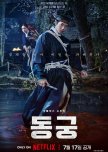
The East Palace takes a rather tried-and-true tale of vengeful ghosts as a metaphor for corruption, and the bloodstained hands that follow greed and litter the halls of those who rule and are desperate to hold on to power. The idea of a ghost haunting the palace because of former misdeeds of its ruler isn’t new within this genre.
The story is at its core rather simple, but it layers things quite effectively, so it has enough questions that need answers and things aren’t quite as it seems. There is enough escalation within the narrative, as the haunting mirrors the power grabs and struggles of those seeking control of the power within the palace, for the tension to slowly ramp up all the way to the end and keep the story engaging.
But it also keeps the storytelling tight enough while poring the focus on the characters, their journeys, and the complex relationships and guilt that comes with it that shape the story. In the end it Iall becomes symbolism for how cruelty and greed will eat you up and ultimately come back to haunt you.
The drama does a lot of storytelling just by evoking eerie atmosphere within the narrative and using stark color palettes and saturation, visually striking shots, and music to evoke mood and theme, as well as with just a look, or a scowl from the phenomenal cast of actors it had at its disposal. It manages to deliver a lot without words, and even the world building never feels too heavy or exposure. It is almost as if the drama relies on the viewer already knowing a bit of the myths surrounding ghosts.
The palace intrigue is kept relatively simple and a lot of it does feel eerie familiar, especially at the beginning, but as we got further into it one could appreciate how much the simplicity of the palace plot allowed the characters to breathe and come into their own. Despite the small number of episodes and running time compared to the standard kdrama, it did a lot of good character work within that tight frame. Truly no minute felt wasted.
And it manages to convey longing, love, and even romance in such a subtle way, as the leads sacrifice themselves to save the other repeatedly because they don’t have anyone else. And yet it always felt earned and never just because the story needed them to.
The action, visuals, creature design, and horror elements are all well executed, stunningly cinematic, and in general thrilling to watch. But I am not sure if it would have worked as well if the drama hadn’t done it’s due diligent to make the viewers care about and understand our two leads.
These two lost souls who have never once received respect or the love of their parents meeting a stranger who shows them the warmth they have been seeking, to the point that they want to fight the king, monsters, and even hell to hold onto that warmth just a little longer. That is the emotional tether of the drama and its heart, and the story utilizes that exceptionally.
It is rather obtuse about the ghosts and almost expects viewers to know, figure things out as they go along, or simply allow it all to remain shrouded in mist. That works here, because it helps the whole thing feel eerie, murky, and deeply atmospheric. And I for one enjoy media that trusts me as a viewer and doesn’t spoon-feed me info dumps. It also allows the atmosphere, character work, and relationships within the story to shine: the king and his daughter, the old women in the palace plotting behind the scenes, and the two leads all feels so raw and real. That brings out the emotional side of the story, which is where kdramas usually shine.
The East Palace keeps things simple but uses that to its advantage. You don’t need a crazy, new plot or endless twists and turns that shock the viewers. You need some heart and good characters to tell a story. And this story knew what to focus on, what to leave in shadow, and how to make its limited time frame count and what to make the narrative focus on so it never becomes just visually striking but hollow action-piece. For the horror and action to have actual stakes, the viewer must care about the characters, and that is where The East Palace succeeds most. Beneath the ghosts, some monsters of varying cuteness, palace politics, and blood spilling action, it is ultimately a story about two lonely people finding warmth in a world built on cruelty, and that emotional core is what lingers with the viewer long after the drama is finished.
The story is at its core rather simple, but it layers things quite effectively, so it has enough questions that need answers and things aren’t quite as it seems. There is enough escalation within the narrative, as the haunting mirrors the power grabs and struggles of those seeking control of the power within the palace, for the tension to slowly ramp up all the way to the end and keep the story engaging.
But it also keeps the storytelling tight enough while poring the focus on the characters, their journeys, and the complex relationships and guilt that comes with it that shape the story. In the end it Iall becomes symbolism for how cruelty and greed will eat you up and ultimately come back to haunt you.
The drama does a lot of storytelling just by evoking eerie atmosphere within the narrative and using stark color palettes and saturation, visually striking shots, and music to evoke mood and theme, as well as with just a look, or a scowl from the phenomenal cast of actors it had at its disposal. It manages to deliver a lot without words, and even the world building never feels too heavy or exposure. It is almost as if the drama relies on the viewer already knowing a bit of the myths surrounding ghosts.
The palace intrigue is kept relatively simple and a lot of it does feel eerie familiar, especially at the beginning, but as we got further into it one could appreciate how much the simplicity of the palace plot allowed the characters to breathe and come into their own. Despite the small number of episodes and running time compared to the standard kdrama, it did a lot of good character work within that tight frame. Truly no minute felt wasted.
And it manages to convey longing, love, and even romance in such a subtle way, as the leads sacrifice themselves to save the other repeatedly because they don’t have anyone else. And yet it always felt earned and never just because the story needed them to.
The action, visuals, creature design, and horror elements are all well executed, stunningly cinematic, and in general thrilling to watch. But I am not sure if it would have worked as well if the drama hadn’t done it’s due diligent to make the viewers care about and understand our two leads.
These two lost souls who have never once received respect or the love of their parents meeting a stranger who shows them the warmth they have been seeking, to the point that they want to fight the king, monsters, and even hell to hold onto that warmth just a little longer. That is the emotional tether of the drama and its heart, and the story utilizes that exceptionally.
It is rather obtuse about the ghosts and almost expects viewers to know, figure things out as they go along, or simply allow it all to remain shrouded in mist. That works here, because it helps the whole thing feel eerie, murky, and deeply atmospheric. And I for one enjoy media that trusts me as a viewer and doesn’t spoon-feed me info dumps. It also allows the atmosphere, character work, and relationships within the story to shine: the king and his daughter, the old women in the palace plotting behind the scenes, and the two leads all feels so raw and real. That brings out the emotional side of the story, which is where kdramas usually shine.
The East Palace keeps things simple but uses that to its advantage. You don’t need a crazy, new plot or endless twists and turns that shock the viewers. You need some heart and good characters to tell a story. And this story knew what to focus on, what to leave in shadow, and how to make its limited time frame count and what to make the narrative focus on so it never becomes just visually striking but hollow action-piece. For the horror and action to have actual stakes, the viewer must care about the characters, and that is where The East Palace succeeds most. Beneath the ghosts, some monsters of varying cuteness, palace politics, and blood spilling action, it is ultimately a story about two lonely people finding warmth in a world built on cruelty, and that emotional core is what lingers with the viewer long after the drama is finished.
Was this review helpful to you?


